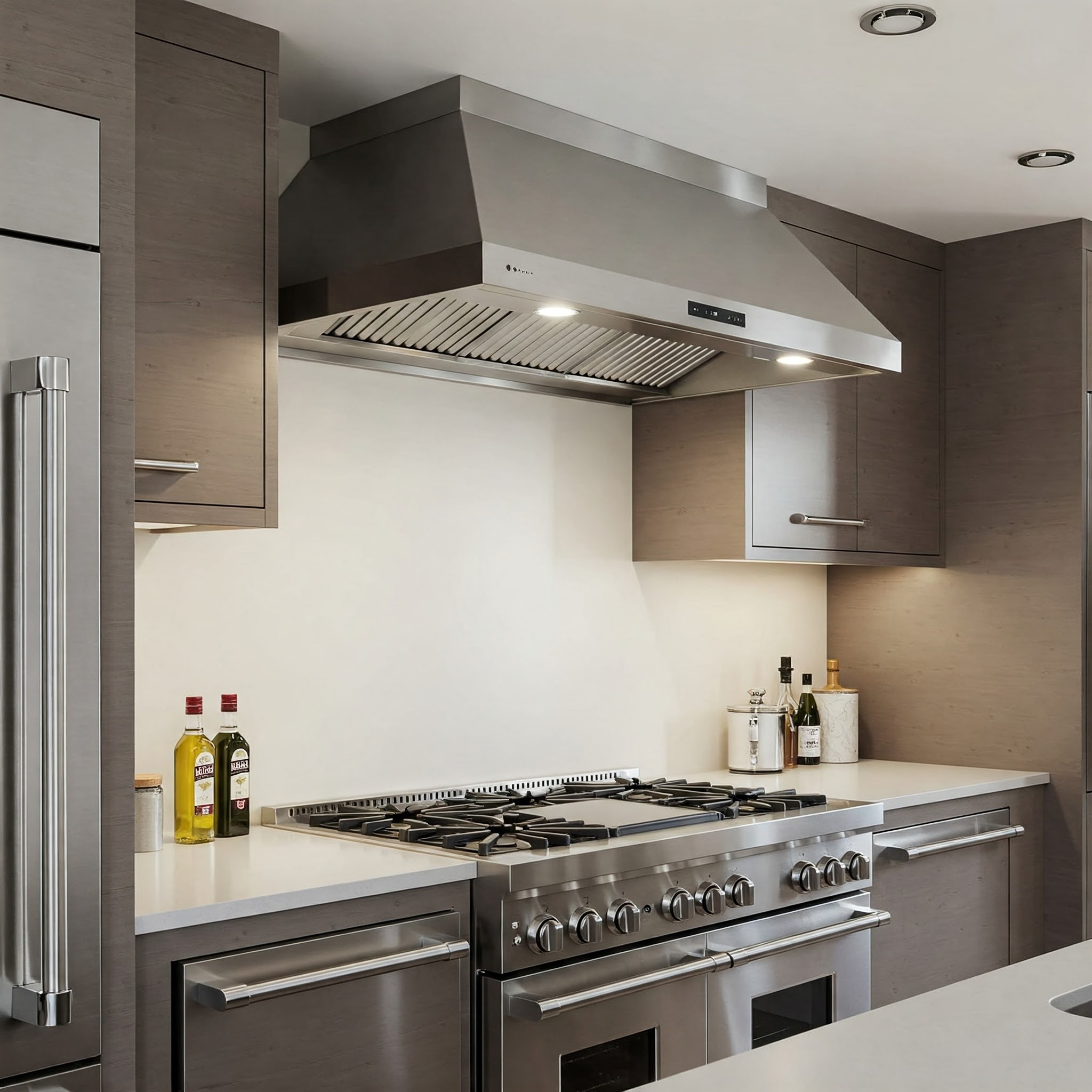
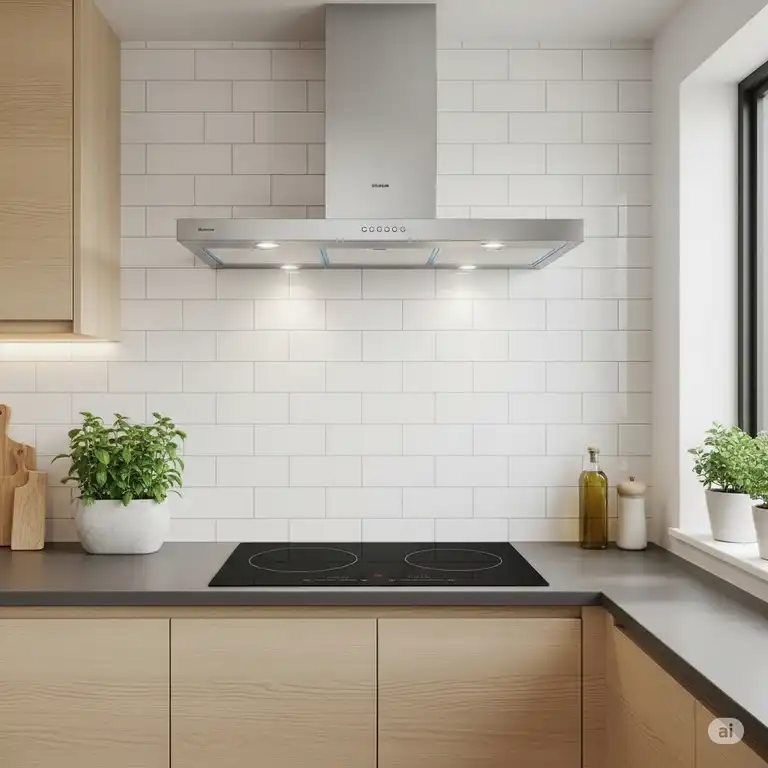
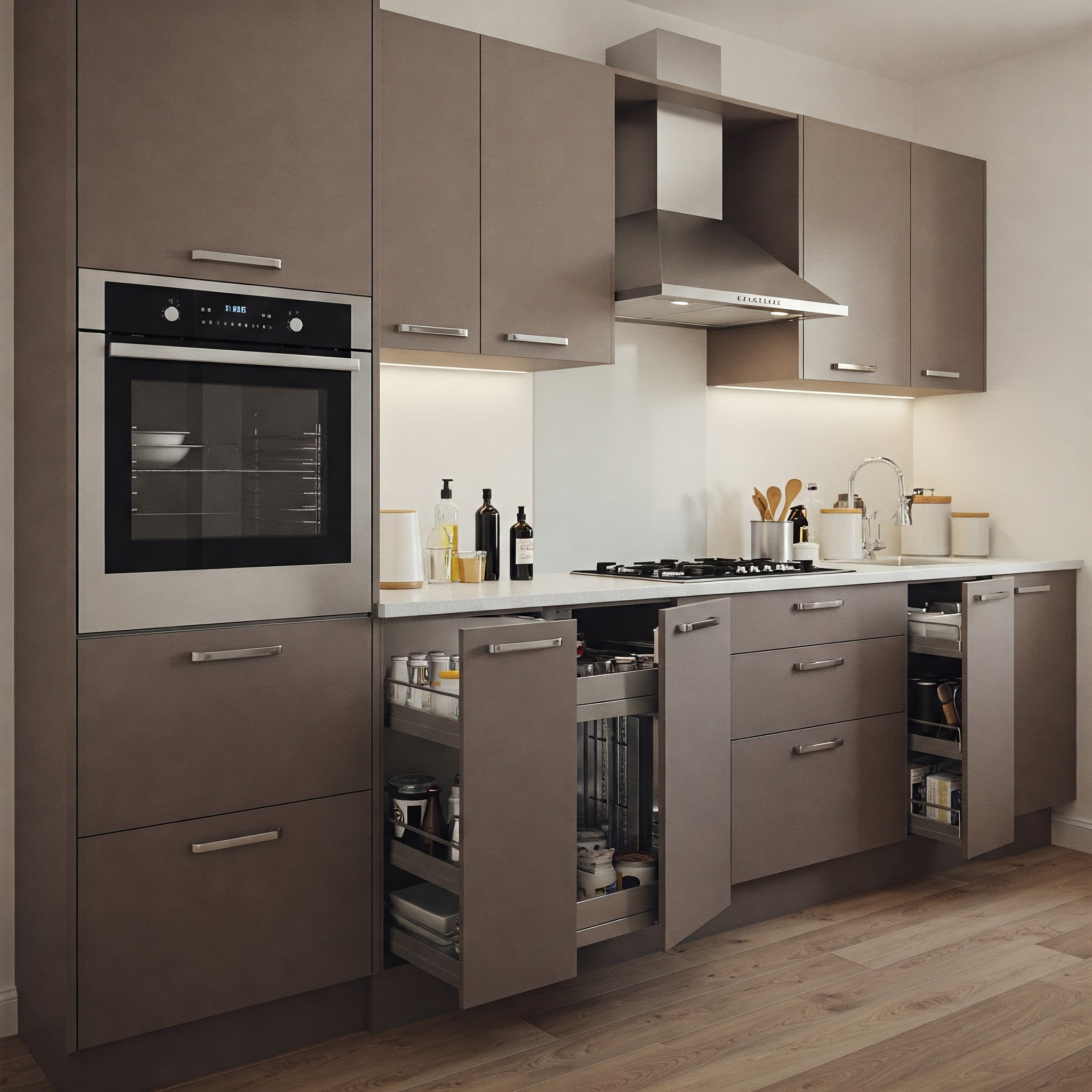
It’s easy to assume a recirculating range hood is just a ducted hood with the pipe left off: same fan, same results, simpler install. It isn’t. With no duct, the whole job lands on two filters, and the charcoal one is a consumable that quietly stops working long before the fan does. That’s why a recirculating range hood rewards a little homework before you buy.
Set up well, a ductless hood is a reasonable answer for a kitchen that can’t vent outside. Set up badly, it’s a light fixture that hums. The difference comes down to six steps, four avoidable mistakes and a short list of things worth buying.
I haven’t installed or cooked under any hood mentioned here. What follows comes from manufacturer pages, spec sheets, a Berkeley Lab paper, Consumer Reports and published roundups, and I say where the evidence thins out.
What a recirculating kitchen hood can and can’t clear
Short answer: it helps with grease and some airborne particles, and it does nothing for heat or humidity. Consumer Reports tested exactly one recirculating model, a 30-inch GE, and ranked it “by far the worst of the bunch” in overall performance and in airflow volume. Its explanation is simple: the hood can only trap contaminants in its filters instead of sending them outdoors. CR still says a ductless hood may help when venting outside isn’t possible, mainly by cutting grease, and it suggests opening windows while you cook.
A Berkeley Lab study paints a more hopeful picture. Researchers cooked the same meal on gas and induction cooktops in a lab room, with and without one of two filtered hoods, and reported that both hoods substantially reduced particles of every size, more so for gas. The authors put the cut at roughly 40% to 80%, depending on particle size and fuel. One of the two hoods also lowered some volatile organic compounds.
The two sources measure different things. CR measures how much air a hood moves; the lab measured pollutant levels in the room. Both can be true: a ductless hood moves less air than a ducted one and still scrubs the air it does move. One caution, though. The lab’s hoods were premium units with purpose-built carbon filters, priced in the paper at about $850 and $1,500 before filter add-ons. Nothing in the study says the budget hoods below perform the same.
What cooking produces
What a recirculating hood does with it
Grease
Traps it on the grease filter, which CR names as the main benefit
Fine particles
Cut substantially in the Berkeley Lab test, using premium hoods
Odors
Absorbed by the charcoal until the filter is spent
Heat, humidity and smoke
Returned to the room, according to HVI
Read the table as a job description. A recirculating kitchen hood is a grease-and-odor filter with a fan attached, which is why the Home Ventilating Institute (HVI) recommends ducting outdoors wherever possible and says high-BTU gas cooktops should always be ducted. If that’s not your situation, or ducting simply isn’t available, keep reading.
Six steps to a recirculating hood that earns its place
The first three happen before you spend money. The last three decide whether the hood still works in month seven.
Rule out a duct first. HVI recommends venting hoods outside, so check whether even a short run is possible: through the wall behind the range, or up and out. If it truly isn’t, as in many rentals and condos, a convertible model keeps the door open. Bob Vila notes that convertibles suit buyers who may add a duct later or who may move, though not every ducted hood can be converted.
Size the hood to the cooktop and the cooking. Choose a hood at least as wide as the cooktop so the rising plume has somewhere to go. A 30-inch hood over a 30-inch range is the standard pairing, and Broan sells a 36-inch version of its 41000 series for wider cooktops. Then be skeptical of airflow numbers. Broan’s page for the 413004 lists no CFM figure and shows it as not HVI certified, while a distributor listing gives 160 CFM. Broan’s own explainer separates the HVI-certified rating, measured at typical installed resistance, from a maximum rating measured with no resistance at all. A charcoal filter is resistance, so treat any open-air maximum as a ceiling, not a promise.
Buy the carbon filter with the hood. Proline Range Hoods’ guide puts it plainly: a hood is ductless if it ships with charcoal filters or a recirculating kit. Read the listing for “included” versus “sold separately.” A hood that has only mesh filters traps grease but leaves the odor stage out, because mesh or baffle filters capture grease while carbon handles the odor particles, as Bob Vila explains.
Those three happen at checkout. The next three happen in your kitchen, and they’re the ones people skip.
Install at the label’s height and set the mode. HVI says to mount the hood where the manufacturer specifies, noting that the instructions it reviewed averaged 20 to 30 inches. Bob Vila quotes 28 to 36 inches. The sources differ, so your manual wins. On a convertible, ductless mode also means setting the hood up for it. A retailer’s Q&A for the Cosmo COS-5MU30 describes fitting the included vent caps over the top and rear exhaust and switching the motor to its recirculating setting; look for your model’s equivalent.
Start the fan before the pan. Switch the hood on before the burner is hot. Because heat and moisture come back into the room, CR’s advice to crack a window while cooking matters more with a ductless hood than with a ducted one. If you can’t open one, expect steam from a boiling pot to linger.
Keep a filter calendar. Per HVI’s FAQ, aluminum mesh grease filters can go in the dishwasher about once a month, and more often if you fry or use a wok. Carbon filters in non-ducted hoods can’t be cleaned; HVI says to replace them every 3 to 6 months. Bob Vila says at least every six months, sooner with frequent cooking. A Sears Home Services explainer adds that clean grease filters keep the carbon from clogging. Write the install date on the filter’s edge and set a phone reminder.
Where ductless setups quietly go wrong, and how to recover
Expecting it to clear heat and steam
If windows fog and the kitchen stays warm after dinner, the hood isn’t broken. HVI says humidity, smoke and heat go back into the home with any non-ducted filter. Recovery: open a window while cooking, favor lower-heat methods when you can, and revisit step one if steam-heavy cooking is your habit.
Letting the charcoal wear out
Cooking smells that linger usually mean a spent filter. Charcoal can’t be washed, so the only fix is a new one. If the smell survives a fresh filter, check that the grease filter is clean and that a convertible hood is actually set to recirculate, with its exhaust openings capped as the manual describes.
Trusting the biggest CFM number
Open-air maximums flatter every hood, and filters take a bite out of them. Recovery: where a model is in HVI’s certified products directory, compare those figures; where it isn’t, compare sones and weigh the manufacturer’s installed-airflow claims more than any headline number.
Ordering the hood and forgetting the kit
The Cosmo COS-5MU30 needs its CFK4 carbon kit bought separately, and the standard island version of the Cosmo hood in the next section needs CFK1-TM. Recovery: order the kit now. Until it arrives, a hood in ductless mode with only mesh filters returns the odors it was supposed to remove.
The best recirculating range hood for each job, plus the filter
Roundups of the best recirculating cooker hoods keep returning to the same few models, and Bob Vila’s ductless range hood picks are typical: the Broan-NuTone 413004 for best overall, the Cosmo COS-5MU30 for bang for the buck, and the Cosmo COS-668ICS750 for best island. None of this is a ranking. Each pick below is tied to one of the steps above, and I haven’t verified aggregated owner ratings for any of them, so the case rests on specs, manuals and press picks. When you shop recirculating range hoods for kitchen islands, galleys or condo walls, the mounting style narrows things faster than any feature list.
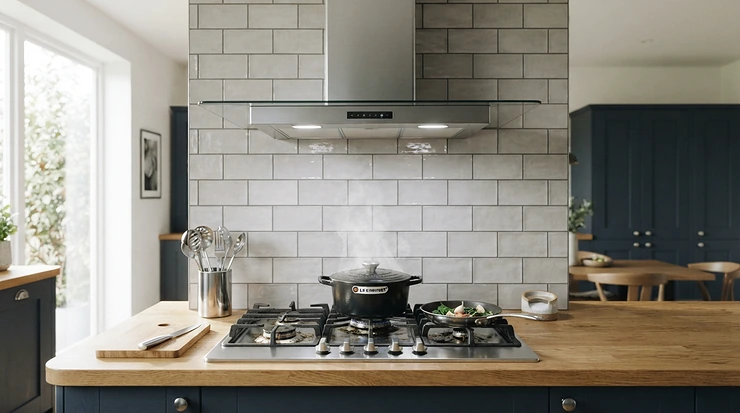
Step three is simplest here, because nothing else needs to be bought. The Broan-NuTone 413004 is a 30-inch under-cabinet hood, 17.5 inches deep and 6 inches tall, built for non-ducted use only, with a removable combination grease-charcoal filter already inside. Controls are two rocker switches, one for the two-speed fan and one for the light. Broan’s page lists 3.5 sones, well above the 1-sone quiet-refrigerator reference HVI uses, and no CFM figure.
Bob Vila praises the price, the permanently lubricated motor and the four finishes, and calls it a little noisy at high speed. The bulb isn’t included; Broan recommends an A19 LED of up to 75 watts, and there’s a single light level. Broan’s page shows a UL listing and a one-year warranty.
Pros:
✅ Filter included and UL listed, so there are no extra purchases to run ductless
✅ The same series comes in a 36-inch width for larger cooktops
Cons:
❌ Non-ducted only, so it can never be converted to vent outside
❌ No stated CFM, and not HVI certified
Compare the exact model number on the listing before you order. Broan sells near-identical 41000-series hoods, and different finishes and widths carry different numbers.
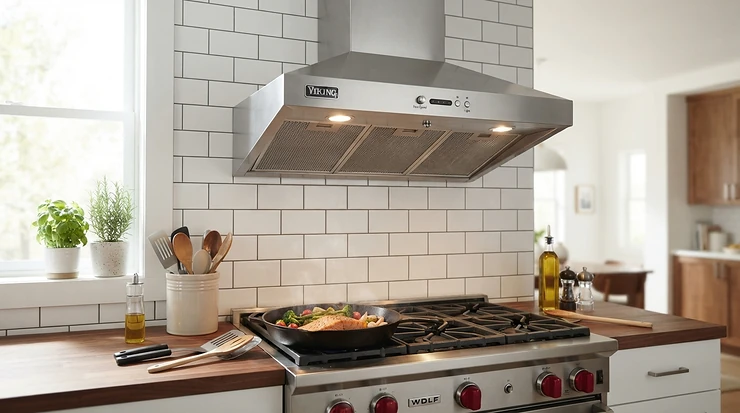
The trade-off with the Cosmo COS-5MU30: the box doesn’t include the charcoal. It ships as a ducted-capable 30-inch hood with two reusable aluminum mesh filters, and Cosmo sells the Carbon Filter Kit CFK4 separately for ductless use. Buy both, or skip it. In return you keep the option of ducting later, which the Broan can’t offer.
Cosmo’s page lists a three-speed motor, push-button controls, two 3-watt LED lights, 430-grade stainless steel and an ETL listing. Its spec sheet gives the size as 29.75 by 19.75 by 5.5 inches, a low profile for tight cabinets, and a 56 dB maximum. The page’s “as low as 50 dB” figure assumes rigid ducting under optimal conditions, so read both as ducted-mode numbers. Neither Cosmo nor Bob Vila states an airflow figure. Bob Vila says it works better ductless than ducted, a claim I couldn’t confirm from the spec sheets.
Look elsewhere if you want the filter in the box or you’re sure you’ll never duct.
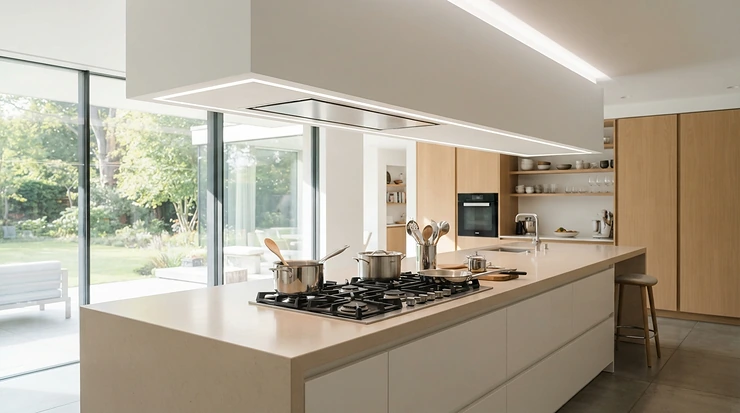
Islands are where ductless hoods earn their keep, because a duct up through the ceiling above an island is the hardest run to add. The Cosmo COS-668ICS750 is a 30-inch island-mount hood with a glass canopy, three fan speeds, digital touch controls and LED lighting. Cosmo lists 380 CFM, and its washable stainless baffle filters handle the grease stage. The odor stage is the CFK1-TM carbon kit, sold separately for the standard model. Retailer listings for the “-DL” version of this model number say the kit is included, so the suffix tells you what you’re getting.
Cosmo gives noise as low as 45 dB on the lowest speed with rigid ducting and 65 dB at maximum, and Bob Vila reports about the same, noting it gets loud on high. Height adjusts from 30.75 to 47 inches, so measure your ceiling. A retailer lists a two-year warranty. One conflict to watch: a couple of retailer listings show 900 CFM for this model number, while Cosmo’s own pages say 380. Trust the manufacturer’s sheet.
It’s the wrong tool if you have a standard wall range. Before buying, check whether your listing ends in “-DL” so you know whether the kit is in the box.
Not a hood, but the thing you’ll buy most often. The Broan-NuTone 41F is a non-duct charcoal replacement filter measuring 8.75 by 10.5 by 0.375 inches. Broan lists it for the 41000, 46000, ACS, F40000, RL6200, RL6200FH, SL6200H, BU3, BU4 and SM6500R series, so it fits the Broan-NuTone 413004 above, and it can be used in place of or alongside a hood’s aluminum filter. It won’t fit the Cosmo hoods, which use their own kits.
Pack size is where listings disagree. Broan’s page describes one filter, one retailer sells a single, and another lists a pack of six and says two filters are needed per replacement. Confirm how many your hood takes in its manual. One retailer says to replace every six months or sooner for greasy cooking, the far end of HVI’s 3-to-6-month window. For frequent frying, plan on the shorter interval.
Questions people ask before going ductless
❓ Do recirculating range hoods actually work?
✅ Partly. They catch grease and, with fresh charcoal, odors. A Berkeley Lab test found two filtered hoods cut particles substantially, while CR's lone recirculating model ranked far behind vented hoods on airflow. They don't remove heat or humidity, so plan on a window.
❓ How often should I replace the charcoal filter?
✅ HVI says every 3 to 6 months for carbon filters in non-ducted hoods, because they can't be washed. Bob Vila says at least every six months, sooner with frequent cooking. Washing the grease filter monthly helps the charcoal last.
❓ Is a recirculating cooker hood the same as a ductless range hood?
✅ In use, yes. Both terms describe a hood with no duct to the outdoors that returns filtered air to the room. 'Cooker hood' is the phrase some markets use; the US listings I read say ductless, non-ducted or recirculating range hood.
❓ Can I convert a ducted hood to a recirculating one?
✅ Sometimes. Bob Vila notes that not all ducted hoods convert, and those that do may need a carbon filter or recirculating kit. Look up the kit by part number, such as the CFK4 for the Cosmo COS-5MU30, before assuming a hood can go ductless.
❓ Is a recirculating hood enough over a gas range?
✅ Not as a substitute for venting. HVI says high-BTU gas cooktops should always be ducted, and CR says vented hoods, especially with a window open, may reduce some indoor pollution from gas stoves. If you can't duct, run the hood every time and open a window.
A rule for duct-free kitchens
If you can duct outside, do it; HVI recommends it, and every one of CR’s top picks is a vented model. If you can’t, a recirculating range hood is still worth buying as long as the charcoal comes with it and the replacement dates go on your calendar. For a standard 30-inch range, the Broan-NuTone 413004 is the least fuss. If you might duct someday, the Cosmo COS-5MU30 plus its CFK4 kit keeps that door open. For an island, the Cosmo COS-668ICS750 is the one to check. Whatever you choose, match the exact model number on the listing to the one you read about here before you pay, and keep a spare filter in the cabinet.
Disclaimer: This post contains affiliate links. As an Amazon Associate, I earn from qualifying purchases made through these links, at no additional cost to you.
Know a renter fighting the smell of last night’s dinner? Share this with them. 🍳
At SmartCookLab, we are passionate about cooking and helping you find the best kitchen appliances and tools. Our team provides expert reviews, buying guides, and practical tips to enhance your cooking experience.
Home » Recirculating range hood: Fixes, Mistakes, and Tools It’s easy to assume a recirculating range hood is just a ducted hood with the pipe left off: same fan, same
Home » Recirculating range hood: Fixes, Mistakes, and Tools It’s easy to assume a recirculating range hood is just a ducted hood with the pipe left off: same fan, same
Home » Recirculating range hood: Fixes, Mistakes, and Tools It’s easy to assume a recirculating range hood is just a ducted hood with the pipe left off: same fan, same