When it comes to cooking with precision and power, nothing beats a liquid propane kitchen stove. These versatile appliances combine the responsive heat control of gas cooking with the convenience of propane fuel, making them perfect for homes without natural gas connections or those seeking greater cooking flexibility. Whether you’re a professional chef or a passionate home cook, understanding the nuances of liquid propane kitchen stoves will help you make an informed decision that transforms your culinary experience.
✨Was this helpful? Spread the word! 🚀
The liquid propane kitchen stove market has evolved dramatically in 2025, offering innovative features like air fry capabilities, smart connectivity, and enhanced safety systems. From compact 24-inch models perfect for smaller kitchens to massive 60-inch commercial-style ranges, propane gas stoves deliver exceptional performance across all size categories.
Quick Comparison: Liquid Propane Kitchen Stove vs. Alternatives
| Feature | Liquid Propane Kitchen Stove | Natural Gas Range | Electric Range | Induction Range |
|---|---|---|---|---|
| Heat Response | Instant ⚡ | Instant ⚡ | Slow ⏳ | Very Fast ⚡⚡ |
| Installation | Moderate 🔧 | Complex 🔧🔧 | Simple ✅ | Simple ✅ |
| Operating Cost | Medium 💰 | Low 💰 | High 💰💰 | Medium 💰 |
| Portability | Yes ✅ | No ❌ | No ❌ | No ❌ |
| Power Outage Use | Yes ✅ | Yes ✅ | No ❌ | No ❌ |
| Precise Control | Excellent ⭐⭐⭐ | Excellent ⭐⭐⭐ | Good ⭐⭐ | Excellent ⭐⭐⭐ |
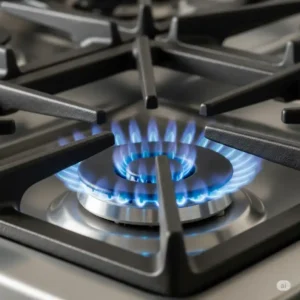
Top 7 Liquid Propane Kitchen Stoves: Expert Analysis
1. EMPURA 60″ Freestanding Liquid Propane Range (EGR60-G24_LP)
This commercial-grade powerhouse delivers an impressive 280,000 BTU total output, making it ideal for serious home cooks and small commercial kitchens. The EMPURA 60″ Freestanding Liquid Propane Range features six 30,000 BTU cast-iron burners, a 40,000 BTU griddle, and dual 30,000 BTU standard ovens.
Key Specifications:
- Total BTU Output: 280,000
- Burner Configuration: 6 open burners + 24″ griddle
- Oven Capacity: Dual standard ovens
- Dimensions: 60″W x 32-5/8″D x 60-3/8″H
- Construction: Stainless steel with 24-1/2″ backsplash
Customer Reviews: Professional users praise its robust construction and consistent heat distribution, though some note the learning curve for temperature control.
2. THOR Kitchen 36″ Professional Liquid Propane Range (ARG36LP)
The THOR Kitchen 36″ Professional Liquid Propane Range represents excellent value in the premium category. This stainless-steel machine offers professional features at a practical price point, with six burners ranging from 9,000 to 18,000 BTU.
Key Specifications:
- Burner Range: 9,000-18,000 BTU
- Oven Features: Convection fan, multiple cooking modes
- Construction: Heavy-duty stainless steel
- Grates: Continuous cast-iron design
- Safety: Automatic reignition system
Pros: Professional aesthetics, powerful burners, solid construction Cons: Limited warranty coverage, requires professional installation
3. THOR Kitchen 30″ Liquid Propane Range (LRG3001ULP)
Perfect for standard kitchens, the THOR Kitchen 30″ Liquid Propane Range offers 4.55 cubic feet of oven capacity with true convection technology. This model balances performance with space efficiency.
Key Specifications:
- Oven Capacity: 4.55 cu. ft.
- High-Power Burner: 18,000 BTU
- Simmer Capability: Down to 650 BTU
- Features: True convection, storage drawer
- Dimensions: 30″W x 27.5″D x 39″H
Customer Feedback: Users appreciate the precise temperature control and even heat distribution, making it excellent for both everyday cooking and special occasions.
4. THOR Kitchen TRG3601 36″ Professional with Tilt Panel
This innovative model features a unique tilt panel control system and air fry capability, representing the cutting edge of liquid propane stove technology. The THOR Kitchen TRG3601 combines traditional gas cooking with modern convenience features.
Key Specifications:
- Oven Capacity: 6.0 cu. ft.
- Special Features: Tilt panel controls, air fry mode
- Burner Power: Up to 18,000 BTU
- Cooking Modes: Bake, broil, roast, air fry, keep warm
- Smart Features: Built-in meat probe
5. Forimo 2 Burner Propane Gas Stove (Portable)
For those seeking portability or supplemental cooking power, the Forimo 2 Burner Propane Gas Stove delivers 19,000 BTU across two burners with tempered glass construction.
Key Specifications:
- Total Power: 19,000 BTU
- Surface: 0.28″ tempered glass
- Dimensions: 28.5″ x 15.1″ x 3″
- Features: Auto ignition, CSA certified regulator
- Portability: Lightweight, easy assembly
6. EMPURA Commercial Liquid Propane Range (60″ with Salamander)
This professional-grade unit features dual standard ovens and a salamander broiler, making it perfect for serious cooking enthusiasts who want restaurant-quality capabilities at home.
Key Specifications:
- Total Output: 276,000 BTU
- Configuration: 6 burners + salamander broiler
- Construction: Welded stainless steel frame
- Professional Features: 10″ deep top shelf, 4″ front ledge
- Temperature Range: 250-550°F ovens
7. THOR Kitchen 48″ Professional Range (Model 4801)
The largest in our lineup, this THOR Kitchen 48″ Professional Range offers maximum cooking capacity with professional styling and commercial-grade performance.
Key Specifications:
- Size: 48″ width for maximum cooking space
- Fuel: Natural gas/propane convertible
- Features: Multiple burner configurations
- Construction: Commercial-style stainless steel
- Warranty: Standard manufacturer coverage
💬 Just one click – help others make better buying decisions too!😊
🔍 Take Your Kitchen to the Next Level!
Ready to transform your cooking experience? These carefully selected liquid propane kitchen stoves offer professional performance for home cooks. Click on any highlighted model to check current pricing and availability! ✨
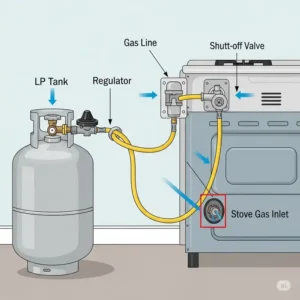
Understanding Liquid Propane Kitchen Stove Technology
Engineering Principles and Performance Metrics
Liquid propane kitchen stoves operate on fundamentally different principles than their natural gas counterparts. Propane (C3H8) burns hotter than natural gas, producing approximately 2,500 BTU per cubic foot compared to natural gas’s 1,000 BTU per cubic foot. This higher energy density means propane stoves can achieve more intense heat with smaller burner orifices.
The combustion process in a liquid propane kitchen stove involves precise air-to-fuel ratios. Modern LP gas ranges typically operate at a 24:1 air-to-propane ratio for optimal efficiency. This precise mixture ensures complete combustion, minimizing carbon monoxide production while maximizing heat output.
Advanced Burner Technology
Contemporary liquid propane kitchen stoves employ sophisticated burner designs that optimize heat distribution and fuel efficiency. Sealed burners prevent spills from reaching the burner box, while cast-iron grates provide superior heat retention and durability. Premium models feature brass burner caps that resist corrosion and maintain consistent flame patterns over time.
The latest innovations include dual-ring burners that provide both intense heat for searing and gentle warmth for simmering. These burners can typically range from 500 BTU for delicate sauces to 20,000+ BTU for rapid boiling or wok cooking.
Comprehensive Setup and Installation Guide
Pre-Installation Requirements
Before installing a liquid propane kitchen stove, several critical considerations must be addressed. First, ensure adequate ventilation according to local building codes. Most jurisdictions require a range hood capable of moving at least 100 CFM per linear foot of cooktop width.
Propane supply systems require careful planning. A typical residential liquid propane kitchen stove needs a 1/2-inch gas line with proper pressure regulation. The system must maintain 11″ water column pressure at the appliance inlet. Professional installation is mandatory for safety and warranty compliance.
Step-by-Step Installation Process
Phase 1: Preparation (30-45 minutes)
- Verify gas line capacity and pressure
- Install appropriate electrical connections (for ignition systems)
- Ensure proper clearances (typically 6″ from combustible surfaces)
- Prepare the installation area with appropriate flooring protection
Phase 2: Physical Installation (45-60 minutes)
- Position the range with proper spacing
- Connect the gas supply line using approved fittings
- Install the anti-tip bracket (mandatory safety requirement)
- Test all connections with leak detection solution
Phase 3: System Testing (15-30 minutes)
- Verify proper flame characteristics on all burners
- Test oven ignition and temperature accuracy
- Check safety systems including flame failure devices
- Calibrate controls if necessary
Environmental Requirements and Optimization
Liquid propane kitchen stoves perform optimally in specific environmental conditions. Ambient temperature affects propane vaporization rates, with performance decreasing below 0°F. Indoor installations typically maintain consistent performance, but outdoor kitchens may require tank heaters in cold climates.
Altitude also impacts performance, with burner orifices requiring adjustment above 2,000 feet elevation. Most manufacturers provide altitude adjustment kits for high-elevation installations.
Maintenance and Longevity Strategies
Daily and Weekly Maintenance Protocols
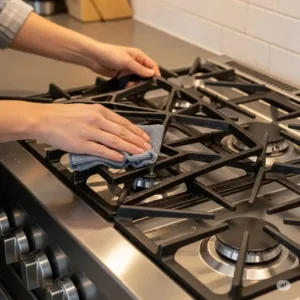
Proper maintenance significantly extends the lifespan of a liquid propane kitchen stove while ensuring optimal performance and safety. Daily care involves wiping down surfaces after use and checking burner caps for proper positioning.
Daily Maintenance Checklist:
✅ Clean spills immediately to prevent burner clogging
✅ Ensure burner caps are properly seated
✅ Wipe control knobs and surfaces
✅ Check for any gas odors
Weekly Maintenance Routine:
✅ Remove and clean burner grates thoroughly
✅ Clean drip pans and burner caps
✅ Inspect gas connections for wear or damage
✅ Test ignition systems on all burners
✅ Clean oven interior if needed
Monthly and Quarterly Deep Maintenance
Monthly maintenance involves more thorough cleaning and inspection procedures. Remove all removable components for deep cleaning, including grates, drip pans, and burner assemblies. Inspect the gas regulator and connections for any signs of wear or corrosion.
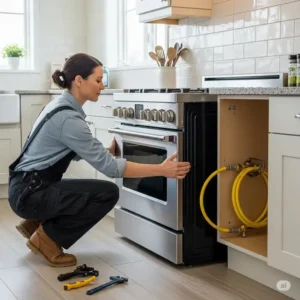
Monthly Deep Clean Process:
- Disconnect power and gas supply (if removing components)
- Soak grates and drip pans in warm, soapy water
- Clean burner ports with a thin wire or needle
- Inspect control knobs for proper operation
- Check oven calibration with an oven thermometer
Quarterly Professional Inspection: Every three months, consider professional inspection of critical safety systems. This includes pressure testing the gas connections, verifying proper combustion air ratios, and calibrating temperature controls.
Troubleshooting Common Issues
Uneven Flame Patterns:
- Cause: Clogged burner ports or misaligned caps
- Solution: Clean ports with appropriate tools, ensure proper cap alignment
Weak Flames:
- Cause: Low gas pressure or partially blocked supply line
- Solution: Check regulator settings, verify tank levels, clean supply components
Ignition Problems:
- Cause: Dirty electrodes or faulty ignition modules
- Solution: Clean electrode surfaces, replace batteries in battery-powered systems
Oven Temperature Variations:
- Cause: Miscalibrated controls or worn temperature sensors
- Solution: Recalibrate according to manufacturer instructions, replace sensors if necessary
Replacement Parts and Warranty Considerations
Most liquid propane kitchen stove manufacturers offer comprehensive parts availability for 10-15 years post-purchase. Common replacement items include:
- Burner caps and grates (2-5 year replacement cycle)
- Ignition electrodes (3-7 years)
- Temperature sensors (5-10 years)
- Control knobs and switches (variable, based on usage)
Warranty coverage typically includes parts and labor for the first year, with extended coverage available for major components. Professional-grade models often feature longer warranty periods reflecting their commercial-duty construction.
Comparative Analysis: Liquid Propane vs. Alternative Solutions
Traditional vs. Modern Cooking Approaches
The liquid propane kitchen stove represents a bridge between traditional gas cooking methods and modern convenience features. Unlike electric ranges that provide steady but slow-responding heat, propane stoves offer instant heat adjustment with visual flame indicators.
Performance Comparison Table:
| Cooking Method | Heat Response Time | Temperature Range | Energy Efficiency | Precision Control |
|---|---|---|---|---|
| Liquid Propane | Instant (0-1 sec) | 500-20,000 BTU | 85-90% | Excellent |
| Natural Gas | Instant (0-1 sec) | 500-18,000 BTU | 80-85% | Excellent |
| Electric Coil | Slow (30-60 sec) | Variable wattage | 75-80% | Good |
| Electric Glass | Medium (15-30 sec) | Variable wattage | 70-75% | Good |
| Induction | Fast (5-10 sec) | Precise wattage | 90-95% | Excellent |
Cost-Benefit Analysis Over Product Lifetime
When evaluating total cost of ownership, liquid propane kitchen stoves present a complex equation involving initial purchase price, installation costs, fuel expenses, and maintenance requirements.
Initial Investment Breakdown:
- Entry-level models: $800-$1,500
- Mid-range professional-style: $1,500-$4,000
- Commercial-grade units: $4,000-$15,000+
- Installation costs: $300-$800 (including gas line work)
Annual Operating Costs:
- Propane fuel: $300-$800 (depending on usage and local prices)
- Maintenance: $100-$300 (professional service and parts)
- Energy efficiency: 20-30% better than electric resistance heating
Integration with Existing Kitchen Systems
Modern liquid propane kitchen stoves integrate seamlessly with contemporary kitchen designs and smart home systems. Many premium models offer Wi-Fi connectivity, allowing remote monitoring and control through smartphone applications.
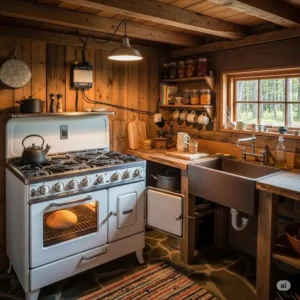
Smart Integration Features:
- Remote temperature monitoring and adjustment
- Maintenance reminders and diagnostic information
- Recipe guidance with automatic temperature settings
- Energy usage tracking and optimization suggestions
Ventilation System Compatibility: Liquid propane stoves require robust ventilation systems due to their high heat output. Range hoods should provide:
- Minimum 400 CFM for standard residential models
- 600-1200 CFM for professional-style ranges
- Variable speed controls for optimal air management
- Heat sensors for automatic operation
Industry-Specific Applications and Use Cases
Professional Culinary Applications
Commercial kitchens and professional culinary schools increasingly specify liquid propane kitchen stoves for their reliability and performance consistency. These environments demand equipment capable of sustained high-heat operation with minimal maintenance requirements.
Restaurant Industry Benefits:
- Consistent performance regardless of utility infrastructure
- Lower operating costs in areas with expensive natural gas
- Portability for catering and temporary kitchen setups
- Rapid heat recovery for high-volume cooking
Culinary Education Programs: Professional cooking schools prefer propane ranges for their predictable performance and lower infrastructure costs. Students learn on equipment that closely mirrors professional kitchen conditions while schools avoid expensive natural gas line installations.
Residential Market Segments
The residential liquid propane kitchen stove market serves diverse user groups with varying needs and preferences. Understanding these segments helps consumers select appropriate models for their specific requirements.
Suburban Homeowners: Typically choose mid-range models balancing performance with aesthetics. These users prioritize reliability, ease of use, and integration with existing kitchen designs.
Rural Property Owners: Often require high-capacity units capable of supporting large family meals and entertainment. These users value self-sufficiency and equipment independence from utility infrastructure.
Urban Apartment Dwellers: Increasingly select compact, high-efficiency models that maximize performance in limited spaces. Portable and countertop propane units serve as primary or supplemental cooking appliances.
Professional Home Cooks: Demand commercial-grade features including high BTU burners, precise temperature control, and professional aesthetics. These users often upgrade to 36-48 inch models with advanced features.
Advanced Technical Analysis
Combustion Efficiency and Environmental Impact
Modern liquid propane kitchen stoves achieve combustion efficiencies of 85-90%, significantly higher than older models. This efficiency improvement results from:
- Optimized burner designs that ensure complete fuel combustion
- Improved air intake systems that provide proper oxygen ratios
- Electronic ignition systems that eliminate pilot light waste
- Better insulation that retains heat within the cooking chamber
Environmental Considerations: Propane combustion produces approximately 12% fewer carbon emissions than natural gas and 50% fewer than coal-fired electricity. For environmentally conscious consumers, liquid propane kitchen stoves represent a cleaner alternative to electric ranges powered by fossil fuel electricity generation.
Emissions Profile:
- CO2 production: 5.6 pounds per million BTU
- NOx emissions: Minimal with proper combustion
- Particulate matter: Virtually zero
- Sulfur compounds: None (propane is sulfur-free)
Heat Transfer Dynamics and Cooking Performance
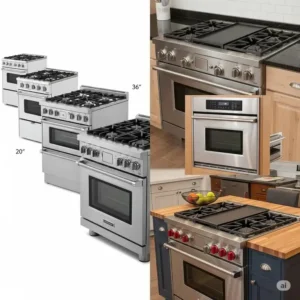
The physics of heat transfer in liquid propane kitchen stoves involves conduction, convection, and radiant heating mechanisms. Understanding these principles helps optimize cooking techniques and energy efficiency.
Conductive Heat Transfer: Direct contact between flame and cookware provides immediate heat transfer. Cast-iron grates enhance this process by storing and redistributing thermal energy, creating more even heating patterns.
Convective Heat Transfer: Hot combustion gases circulate around cookware, providing secondary heating. This mechanism becomes particularly important for large pots and pans that extend beyond the direct flame area.
Radiant Heat Transfer: Infrared radiation from hot surfaces contributes to overall heating efficiency. Professional-style ranges often incorporate radiant components that enhance heat distribution and retention.
Case Studies and Success Stories
Case Study 1: Rural Restaurant Conversion
Background: A 40-seat farm-to-table restaurant in rural Montana converted from electric to propane equipment to reduce operating costs and improve food quality.
Implementation: The restaurant installed two 36-inch liquid propane kitchen stoves with 6-burner configurations, replacing four electric ranges.
Results:
- 35% reduction in energy costs
- Improved cooking speed and temperature control
- Enhanced menu flexibility allowing for flame-based cooking techniques
- Customer satisfaction increased due to improved food quality
Lessons Learned: Professional installation and staff training were crucial for maximizing benefits. The restaurant also implemented energy management procedures that further optimized fuel consumption.
Case Study 2: High-End Residential Kitchen Renovation
Background: A professional chef renovated their home kitchen to accommodate serious cooking while entertaining guests.
Implementation: Installation of a 48-inch commercial-style liquid propane range with dual ovens, griddle, and high-BTU burners.
Results:
- Ability to prepare restaurant-quality meals at home
- Reduced cooking times for large dinner parties
- Enhanced property value through premium appliance installation
- Energy independence during utility outages
Investment Analysis:
- Initial cost: $8,500 (range + installation)
- Annual fuel savings: $400 (vs. electric)
- Property value increase: Estimated $12,000
- Payback period: 6.2 years including property value enhancement
Case Study 3: Apartment Complex Kitchen Upgrade
Background: A luxury apartment complex upgraded unit kitchens to attract upscale tenants in a competitive rental market.
Implementation: Standardized installation of 30-inch liquid propane ranges in 120 units, with centralized propane supply system.
Results:
- 15% increase in rental rates
- Reduced tenant turnover due to improved amenities
- Lower maintenance costs compared to electric ranges
- Positive tenant feedback on cooking performance
Financial Impact:
- Total investment: $480,000 (ranges, installation, infrastructure)
- Annual revenue increase: $216,000
- Return on investment: 45% annually
- Break-even achieved in 2.2 years
Future Trends and Market Evolution
Emerging Technologies and Innovation Directions
The liquid propane kitchen stove industry continues evolving with technological advancement and changing consumer preferences. Several key trends are shaping the future of this market segment.
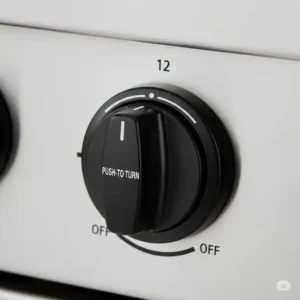
Smart Home Integration: Next-generation models incorporate advanced connectivity features including:
- Voice control compatibility with major smart home platforms
- Predictive maintenance using IoT sensors
- Recipe automation with precise temperature and timing control
- Energy usage optimization through machine learning algorithms
Safety Enhancement Systems: New safety technologies focus on preventing accidents and improving user confidence:
- Automatic shut-off systems with multiple sensor types
- Leak detection with smartphone notifications
- Child safety locks with biometric recognition
- Emergency response integration with home security systems
Market Trends and Consumer Behavior Shifts
Consumer preferences are driving significant changes in liquid propane kitchen stove design and marketing approaches. Key trends include:
Sustainability Focus: Growing environmental awareness influences purchasing decisions, with consumers seeking:
- Higher efficiency ratings and reduced emissions
- Sustainable manufacturing processes and materials
- End-of-life recycling programs
- Carbon offset programs for fuel consumption
Customization and Personalization: Modern consumers demand appliances that reflect their individual preferences:
- Modular configurations allowing component selection
- Custom color and finish options
- Programmable cooking profiles for different family members
- Adaptive interfaces that learn user preferences
Professional Features in Residential Settings: The line between commercial and residential equipment continues blurring:
- High-BTU burners becoming standard in residential models
- Commercial-style aesthetics in home kitchens
- Professional-grade construction and warranties
- Chef-inspired features and cooking modes
Industry Predictions and Future Developments
Technology Convergence: The next decade will likely see increased integration between liquid propane kitchen stoves and other kitchen appliances. Connected ecosystems will coordinate cooking processes across multiple devices, optimizing timing and energy usage.
Regulatory Evolution: Stricter efficiency and emissions standards will drive continued innovation in burner design and combustion technology. These regulations will likely accelerate adoption of advanced control systems and monitoring capabilities.
Market Expansion: Growing awareness of propane’s environmental advantages may expand market penetration in urban areas currently dominated by electric appliances. This expansion could drive infrastructure development and reduce installation costs.
Comprehensive Feature Comparison Matrix
| Feature Category | Entry Level Models | Mid-Range Professional | Commercial Grade |
|---|---|---|---|
| BTU Range | 5,000-15,000 | 9,000-20,000 | 15,000-30,000+ |
| Burner Count | 4-5 | 5-6 | 6-8+ |
| Oven Capacity | 4.5-5.2 cu. ft. | 5.0-6.0 cu. ft. | 6.0+ cu. ft. |
| Construction | Standard stainless | Heavy-duty stainless | Commercial stainless |
| Warranty | 1 year parts/labor | 2-3 year limited | 3-5 year comprehensive |
| Smart Features | Basic connectivity | Advanced app control | Professional monitoring |
| Installation Complexity | Standard | Moderate | Professional required |
| Price Range | $800-$1,500 | $1,500-$4,000 | $4,000-$15,000+ |
Selection Criteria and Decision Framework
Determining Your Cooking Needs
Selecting the optimal liquid propane kitchen stove requires careful assessment of your specific cooking requirements, kitchen constraints, and long-term goals. This systematic approach ensures you invest in equipment that truly enhances your culinary experience.
Cooking Volume Analysis:
- Daily meal preparation for household size
- Frequency of entertaining and special occasions
- Preferred cooking styles and techniques
- Multi-tasking requirements during meal preparation
Space and Infrastructure Constraints:
- Available kitchen space and configuration
- Existing ventilation capabilities
- Gas line installation requirements
- Budget for initial purchase and installation
Performance Priorities:
- Heat output requirements for specific cooking styles
- Temperature control precision needs
- Oven capacity and features
- Energy efficiency preferences
User Compatibility Assessment
Different user types benefit from specific liquid propane kitchen stove characteristics. Understanding these preferences helps narrow selection criteria.
Beginner Cooks:
- Simple, intuitive controls
- Safety features and automatic systems
- Easy maintenance and cleaning
- Comprehensive instruction and support materials
Experienced Home Cooks:
- Precise temperature control
- Multiple burner sizes and configurations
- Professional-style features and aesthetics
- Durability for frequent use
Professional or Serious Enthusiasts:
- High BTU capabilities
- Commercial-grade construction
- Advanced features and customization options
- Long-term reliability and service support
🛒 Transform Your Cooking Experience Today!
Don’t settle for ordinary cooking when you can have extraordinary results. These liquid propane kitchen stoves deliver professional performance that will elevate every meal you create. Check current prices and take advantage of limited-time offers! 🔥
Conclusion
The liquid propane kitchen stove represents the perfect fusion of traditional cooking methods and modern convenience. As we’ve explored throughout this comprehensive guide, these versatile appliances offer unmatched performance, energy efficiency, and cooking precision that can transform your culinary experience.
From the powerful EMPURA 60″ Freestanding Liquid Propane Range with its impressive 280,000 BTU output to the innovative THOR Kitchen TRG3601 with its tilt panel controls and air fry capabilities, today’s liquid propane stoves cater to every cooking style and kitchen configuration. Whether you’re a weekend cooking enthusiast or a serious culinary professional, there’s a propane gas stove designed to meet your specific needs.
The key advantages of liquid propane kitchen stoves – instant heat response, precise temperature control, energy independence, and superior cooking performance – make them an increasingly popular choice for modern kitchens. As technology continues to advance, we can expect even more innovative features and improved efficiency in future models.
Bottom Line: Investing in a quality liquid propane kitchen stove is an investment in your cooking future. These appliances offer the performance, reliability, and versatility that serious cooks demand, backed by the clean-burning efficiency that environmentally conscious consumers appreciate.
When selecting your ideal model, consider your cooking volume, space constraints, feature priorities, and long-term goals. Whether you choose a compact 30-inch model for everyday cooking or a professional-grade 48-inch range for entertaining, you’ll enjoy the superior performance that only propane can deliver.
Frequently Asked Questions
❓ How much propane does a liquid propane kitchen stove typically use per month?
✅ A typical liquid propane kitchen stove uses 15-30 gallons per month for average family cooking. Usage varies based on cooking frequency, burner size, and cooking methods. High-BTU professional models may consume 25-40 gallons monthly with heavy use. Energy-efficient models with electronic ignition use approximately 20% less fuel than pilot light systems...
❓ Can I convert my natural gas range to liquid propane safely?
✅ Yes, most gas ranges can be converted to liquid propane using manufacturer conversion kits. The process involves changing burner orifices, adjusting regulator pressure, and recalibrating safety systems. Professional installation is strongly recommended as improper conversion can create safety hazards. Conversion typically costs $200-400 including parts and labor...
❓ What's the difference between liquid propane and propane gas stoves?
✅ Liquid propane and propane gas refer to the same fuel in different states. Propane is stored as liquid under pressure but vaporizes to gas when released. Liquid propane kitchen stoves use the same technology as propane gas ranges - the terms are interchangeable. The fuel transitions from liquid storage to gas combustion automatically...
❓ Do liquid propane kitchen stoves require special ventilation requirements?
✅ Yes, liquid propane stoves require proper ventilation due to combustion byproducts. Range hoods should provide minimum 100 CFM per linear foot of cooktop width. Professional-style ranges need 400-600 CFM minimum. Adequate makeup air prevents negative pressure that can affect combustion efficiency and safety...
❓ How long do liquid propane kitchen stoves typically last?
✅ Quality liquid propane kitchen stoves last 15-25 years with proper maintenance. Commercial-grade models often exceed 20 years of service life. Regular cleaning, professional annual inspections, and prompt repairs extend lifespan significantly. High-end models with quality construction and components typically outlast budget alternatives by 5-10 years...
Recommended for You
- Kitchen Appliances Movers: 7 Best Tools for Safe & Easy Moving in 2025
- Electrolux Kitchen Appliances: 7 Best Models Reviewed 2025
- White Kitchen Hood: 7 Best Models 2025 + Expert Reviews
Disclaimer: This article contains affiliate links. If you purchase products through these links, we may earn a small commission at no additional cost to you.
✨ Found this helpful? Share it with your friends! 💬🤗