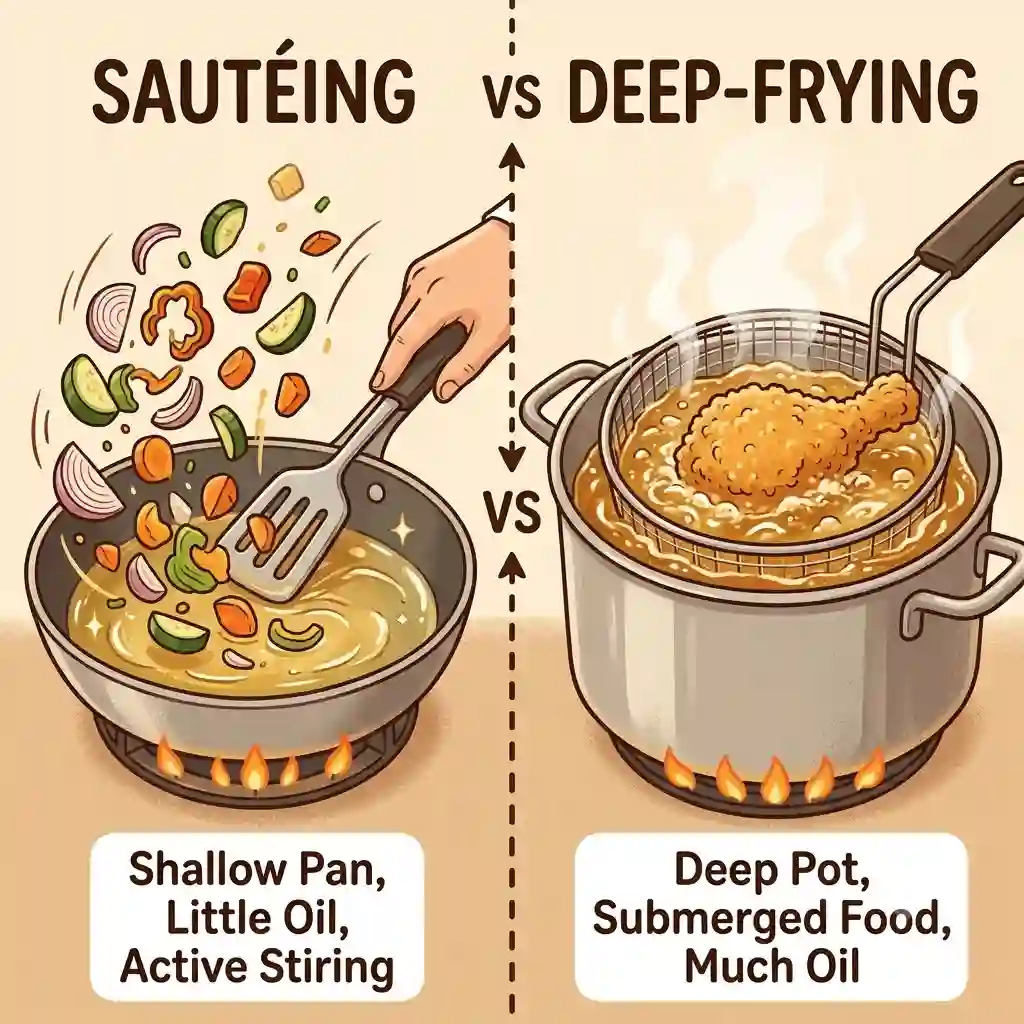
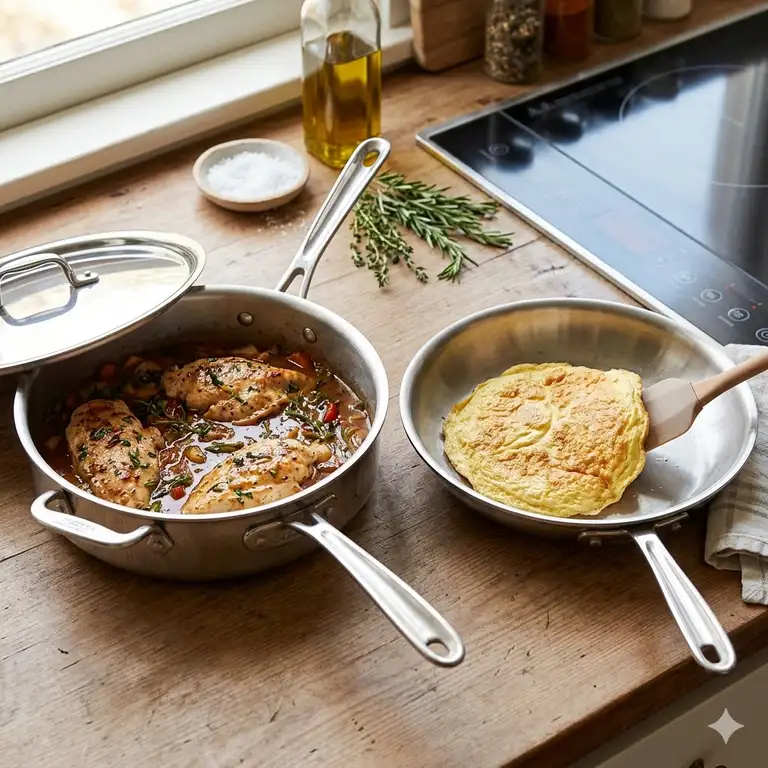
When you stand in your kitchen, staring at a recipe that demands a high-heat sear or a delicate reduction, the choice of vessel determines the fate of your dinner. Knowing how to use saute pan vs frying pan is the fundamental bridge between a home cook and a culinary artist. At its simplest, understanding how to use saute pan vs frying pan involves recognizing that while both can brown a chicken breast, their architecture dictates how heat and moisture interact with your ingredients.
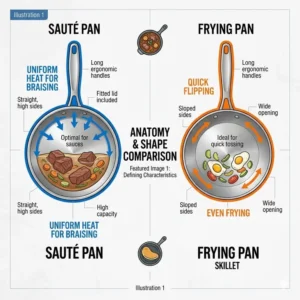
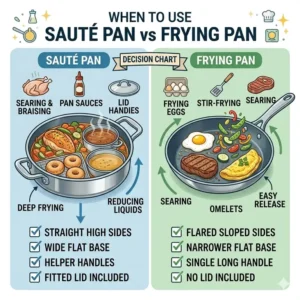
A frying pan, often called a skillet, is defined by its flared, sloped sides, designed for rapid evaporation and the effortless flipping of eggs or crepes. Conversely, a saute pan features straight vertical sides and a wider base, providing a larger surface area for searing and higher walls to contain liquids. As we move into 2026, the technology behind these pans—ranging from hybrid hex-patterns to advanced carbon steel—has evolved, but the core mechanics of how to use saute pan vs frying pan remain rooted in the physics of heat distribution and moisture management.
Quick Comparison: Saute Pan vs Frying Pan at a Glance
| Feature | Saute Pan | Frying Pan (Skillet) | Best For |
| Side Walls | Straight and vertical | Flared and sloped | Saute: Liquid-heavy meals / Frying: Tossing |
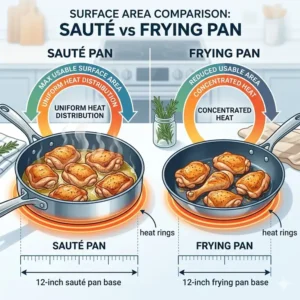
| Surface Area | Maximum base-to-wall ratio | Reduced base due to slopes | Saute: Large batches of protein |
| Lid Included? | Almost always | Rarely | Saute: Braising and poaching |
| Weight | Heavier, often with helper handle | Lighter, designed for one-hand use | Frying: Omelets and stir-fry |
| Moisture Control | Retains moisture for shallow frying | Encourages evaporation for crisping | Frying: Achieving a crust |
Analysis of Comparison Data:
The table above highlights the primary functional divergence: volume versus agility. While the frying pan is the king of the “toss” thanks to its sloped sides, the saute pan is the workhorse of the “simmer” because its vertical walls prevent liquids from splashing over during a vigorous stir. If you are cooking for a family of four, the extra surface area of the saute pan often makes it the more efficient daily driver.
💬 Just one click — help others make better buying decisions too!😊
Top 5 Pans for 2026: Expert Analysis
Selecting the right tool requires looking beyond the shiny exterior. In 2026, the market is saturated with “innovations,” but these five products represent the gold standard for durability and performance.
1. All-Clad D3 Stainless 3-Quart Saute Pan with Lid
The All-Clad D3 Stainless 3-Quart Saute Pan remains the benchmark for professional-grade stainless steel. Its tri-ply construction features an aluminum core sandwiched between layers of high-quality stainless steel, ensuring that there are no “cold spots” when you are trying to brown six chicken thighs at once.
-
Key Specs: 3-ply bonded construction, induction compatible, oven safe up to 600°F.
-
Real-World Meaning: The 600-degree threshold means you can start a thick ribeye on the stove and finish it under a high broiler without worrying about the pan warping or the handle degrading.
-
Expert Opinion: In my experience, this is the most reliable pan for deglazing. The straight sides allow you to scrape up every bit of fond (those tasty browned bits) without the liquid sloshing out. It is best for the “serious” home cook who wants a pan that will last thirty years.
-
Customer Feedback: Users consistently praise its weight and balance, though some note that stainless steel requires a learning curve regarding temperature control to prevent sticking.
-
Pros: Exceptional heat retention, lifetime warranty, easy to clean.
-
Cons: Higher price point, heavier than aluminum alternatives.
-
Value Verdict: Around $160-$190. This is a “buy it once” investment for your kitchen.
2. Lodge 12-Inch Cast Iron Skillet with Red Silicone Handle Holder
The Lodge 12-Inch Cast Iron Skillet is the quintessential frying pan. While it lacks the agility of stainless steel, its thermal mass is unmatched for high-heat searing. In the context of how to use saute pan vs frying pan, this tool represents the “frying” side of the spectrum perfectly.
-
Key Specs: Pre-seasoned with 100% natural vegetable oil, 12-inch diameter, includes silicone handle grip.
-
Real-World Meaning: “Pre-seasoned” means you can start cooking immediately, though the non-stick properties will only improve the more you use it. The silicone holder is a necessary safety feature for a pan that holds heat this intensely.
-
Expert Opinion: What most buyers overlook is the versatility of cast iron for baking. I use this for cornbread and deep-dish pizza just as often as I use it for searing steaks. It is the best budget-friendly option for someone who prioritizes a hard sear over weight.
-
Customer Feedback: Fans love the “indestructible” feel, though beginners often complain about the maintenance required to prevent rust.
-
Pros: Extremely affordable, incredible heat retention, naturally non-stick over time.
-
Cons: Very heavy, requires manual drying and oiling.
-
Value Verdict: Around $30-$50. The best performance-to-dollar ratio in the culinary world.
3. HexClad Hybrid Nonstick 12-Inch Pan
The HexClad Hybrid Nonstick 12-Inch Pan has revolutionized the middle ground of cookware. By laser-etching a hexagonal stainless steel grid over a non-stick surface, it offers the searing power of steel with the easy release of a traditional non-stick pan.
-
Key Specs: Tri-ply construction, metal utensil safe, PFOA-free non-stick.
-
Real-World Meaning: Being “metal utensil safe” is a game changer for non-stick. You can use a metal spatula to flip fish without fearing you are scraping chemicals into your dinner.
-
Expert Opinion: This is the pan for the “tech-forward” cook. The spec sheet says it’s a hybrid, and it really does behave like one. I find it excellent for delicate items like salmon where you want a crispy skin but don’t want the meat to tear.
-
Customer Feedback: Reviewers highlight the ease of cleanup, though some purists argue it doesn’t sear quite as deeply as pure stainless steel.
-
Pros: Very easy to clean, dishwasher safe, works on all cooktops.
-
Cons: Expensive for a non-stick category, distinct aesthetic isn’t for everyone.
-
Value Verdict: Around $150-$180. Ideal for those who hate scrubbing pans but want professional results.
4. Cuisinart Chef’s Classic Stainless 5-1/2-Quart Saute Pan with Helper Handle
If you are cooking for a large crowd, the Cuisinart Chef’s Classic Stainless 5-1/2-Quart Saute Pan provides the volume you need. The “helper handle” is a critical addition here, as 5.5 quarts of liquid plus the weight of the pan is a lot for one wrist to handle.
-
Key Specs: PowerBond high-impact bonded base, cool-grip handle, drip-free pouring rim.
-
Real-World Meaning: The “PowerBond” base ensures the bottom heats up quickly and stays flat, which is vital for electric and induction stoves where surface contact is everything.
-
Expert Opinion: This is my top recommendation for families. The sheer volume allows you to make a full batch of pasta sauce or a massive chicken fricassee in a single vessel. It’s less about “chef-y” technique and more about utilitarian capacity.
-
Customer Feedback: Users love the capacity for the price, though some mention the lid can get quite hot during long simmers.
-
Pros: Massive capacity, affordable for stainless steel, helper handle for safety.
-
Cons: Large footprint takes up a lot of cabinet space, base is thinner than All-Clad.
-
Value Verdict: Around $60-$85. A massive value for high-volume cooking.
5. Made In Cookware 12-Inch Carbon Steel Frying Pan
The Made In Cookware 12-Inch Carbon Steel Frying Pan is the bridge between cast iron and stainless steel. It’s the darling of the 2026 professional kitchen because it seasons like cast iron but handles like a lightweight skillet.
-
Key Specs: 12-inch French-style sloped sides, oven safe up to 1200°F, 2mm thick construction.
-
Real-World Meaning: An oven rating of 1200°F is essentially “overkill,” but it means this pan will never warp, even if you’re using it over an open campfire or a high-output professional range.
-
Expert Opinion: Carbon steel is the “pro’s secret.” It’s more responsive to temperature changes than cast iron. If you’re making a delicate reduction and the pan gets too hot, taking it off the flame results in an immediate temperature drop, which saves your sauce.
-
Customer Feedback: Professional chefs swear by it, but home cooks sometimes struggle with the initial seasoning process required to make it non-stick.
-
Pros: Professional-level performance, lighter than cast iron, heirloom quality.
-
Cons: Requires seasoning/maintenance, can rust if left wet.
-
Value Verdict: Around $100-$130. The choice for the culinary enthusiast who wants “chef-level” gear.
✨ Don’t Miss These Exclusive Deals!
🔍 Take your kitchen skills to the next level with these carefully selected products. Click on any highlighted item to check current pricing and availability. These tools will help you create authentic meals your family will love!
Top 5 Products: Comparative Analysis
| Product | Material | Weight | Primary Use Case | Price Range |
| All-Clad D3 Saute | Stainless | Heavy | Precision braising/searing | Premium ($160+) |
| Lodge Skillet | Cast Iron | Very Heavy | High-heat searing/baking | Budget (Under $50) |
| HexClad Hybrid | Hybrid | Medium | Versatile daily cooking | Mid-High ($150+) |
| Cuisinart Saute | Stainless | Medium | Family-sized batch cooking | Mid-Range ($60-$90) |
| Made In Carbon Steel | Carbon Steel | Medium-Light | Professional-style sautéing | Mid-High ($100+) |
Analysis of Product Data:
When choosing based on the table above, the Made In Carbon Steel pan offers a unique middle ground for those who want the sear of cast iron without the gym-level weight. However, for those focused specifically on how to use saute pan vs frying pan for sauces, the All-Clad D3 remains the superior choice due to its straight walls and lid-inclusion, which the carbon steel skillet lacks.
Practical Usage Guide: Mastering the “Jump” and the “Sear”
Learning how to use saute pan vs frying pan effectively requires mastering two distinct physical movements: the sauté (French for “to jump”) and the sear. Each pan is engineered to facilitate one of these better than the other.
The Art of the Sauté (Best for Frying Pans)
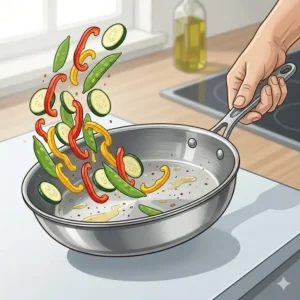
The sloped sides of a frying pan are not just for aesthetics; they are designed for the “toss.” To do this correctly, you push the pan forward and give it a sharp flick of the wrist upward. The ingredients hit the sloped wall and “jump” back toward the center. This ensures that every surface of your vegetables or small protein pieces hits the hot oil evenly.
-
Pro Tip: Do not attempt the “toss” in a straight-sided saute pan unless you want to spend the next hour cleaning peppers off your stovetop. The vertical walls are designed to keep food in, not to facilitate the jump.
The Power of the Sear (Best for Saute Pans)
When you are searing a large piece of meat, you want maximum contact with the heated surface. Because a 12-inch saute pan has a base that is actually 12 inches wide (unlike a 12-inch skillet, which might only have a 10-inch base due to the slopes), you can fit more food without crowding. Crowding leads to steaming rather than searing.
-
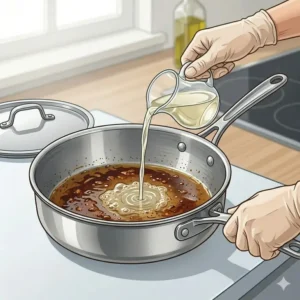
The Deglazing Step: Once your meat is browned in a saute pan, the vertical walls allow you to pour in a cup of wine or stock to deglaze safely. The high walls prevent the resulting steam and “spatter” from coating your kitchen in grease.
Maintenance Routine for Longevity
Regardless of which pan you choose, 2026’s high-end materials require specific care:
-
Cool Down: Never plunge a hot pan into cold water. This causes thermal shock and can warp even the thickest stainless steel.
-
The “Hand Wash” Rule: Even if a pan says “dishwasher safe” (like the HexClad), the harsh detergents and high heat of a dishwasher will eventually dull the finish and degrade the non-stick properties. Hand washing with a soft sponge is always better.
-
Dry Immediately: For carbon steel and cast iron, moisture is the enemy. After washing, place the pan on a warm burner for 60 seconds to ensure every molecule of water has evaporated before storing.
Buyer’s Decision Framework: Which Pan Should You Grab First?
If you are starting your kitchen from scratch in 2026, you might not have the budget for a 10-piece set. Here is how to decide which pan to buy first based on your specific lifestyle.
Scenario 1: The “One Pan to Rule Them All” Cook
If you only have space for one high-quality vessel, grab a 12-inch Saute Pan. Its versatility is unmatched. You can fry an egg in it (with enough butter), but you can also make a pasta sauce, braise short ribs, or sear steaks. Its lid makes it a mini-Dutch oven, expanding your cooking repertoire significantly.
Scenario 2: The Breakfast Enthusiast
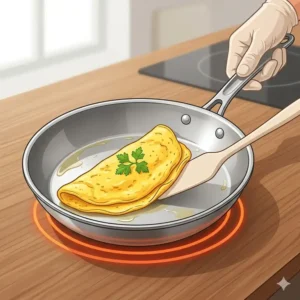
If your mornings consist of omelets, pancakes, or crepes, the Frying Pan (Skillet) is non-negotiable. The sloped sides allow a spatula to slide under the edges of an omelet effortlessly. Trying to flip a delicate crepe in a straight-sided saute pan is a recipe for frustration.
Scenario 3: The Steak & Potatoes Purist
If your diet revolves around a perfect crust on a steak or crispy smashed potatoes, the Cast Iron or Carbon Steel Frying Pan is your best friend. The heat retention of these materials allows for a Maillard reaction (browning) that stainless steel often struggles to replicate at lower home-kitchen temperatures.
Decision Checklist:
-
Do you cook mostly sauces? Choose Saute Pan.
-
Do you cook mostly eggs/tossed veggies? Choose Frying Pan.
-
Do you have limited storage? Choose 3-Quart Saute Pan (it covers more bases).
-
Are you sensitive to heavy lifting? Choose a Carbon Steel or Aluminum Frying Pan.
How to Choose Your Next Pan: 4 Professional Criteria
When navigating the aisles or online listings, don’t get distracted by “10-layer” gimmicks. Focus on these four pillars of quality.
1. Cladding and Construction
In 2026, we look for “fully clad” cookware. This means the conductive material (aluminum or copper) runs from the base all the way up the sides of the pan. Cheaper pans only have a “disk” at the bottom. A fully clad pan ensures that the sauce at the edges of your saute pan doesn’t burn while the center is still cold. This is a critical factor in how to use saute pan vs frying pan for precision cooking.
2. Handle Ergonomics and Safety
A pan is only as good as your ability to move it. Look for “stay-cool” handles that are riveted, not screwed, to the body. For larger saute pans, a helper handle (the small loop opposite the main handle) is essential. It provides the stability needed when moving a full pan of liquid from the stove to the oven.
3. Material Compatibility
With the rise of induction cooktops in 2026, you must ensure your pan is magnetic. Stainless steel, cast iron, and carbon steel are generally induction-compatible. However, many aluminum frying pans are not unless they have a specialized steel plate bonded to the bottom. Check for the induction symbol on the base before purchasing.
4. Wall Angle and Height
For a saute pan, look for walls at least 2.5 inches high. This depth is what allows for shallow frying and poaching. For a frying pan, a 45-degree slope is the “sweet spot” for flipping food without a spatula. If the slope is too steep, it acts like a saute pan; if it’s too shallow, you lose valuable cooking surface.
Common Mistakes When Buying Cookware
Even seasoned home cooks fall into these traps. Avoiding these mistakes will save you money and pantry space.
-
Buying for the Brand, Not the Material: A famous celebrity chef’s name on a pan doesn’t mean it’s good. Often, these are thin aluminum pans with poor heat distribution. Focus on the materials—18/10 stainless steel or heavy-gauge cast iron.
-
Overestimating Size Needs: A 14-inch saute pan sounds great until you realize it doesn’t fit on a standard 12-inch burner. This creates a massive cold ring around the edge of your pan. Match your pan size to your burner size.
-
Ignoring the Lid: A saute pan without a tight-fitting lid is just a heavy, awkward skillet. The lid is what allows you to control evaporation and finish cooking thick cuts of meat without drying them out.
-
Assuming Non-Stick is Forever: No matter how much you spend, non-stick coatings have a lifespan of 2 to 5 years. If you want an heirloom piece, go for stainless steel or cast iron. Use non-stick only for eggs and fish.
Saute Pan vs Frying Pan: The Physics of Heat Distribution
To truly master how to use saute pan vs frying pan, one must understand the relationship between surface area and evaporation.
Evaporation Rates
A frying pan’s sloped sides increase the surface area of the liquid exposed to the air. This causes moisture to evaporate rapidly. This is why frying pans are excellent for reducing a thin balsamic glaze or crisping up bacon—you want the water gone fast.
In contrast, the straight sides of a saute pan create a “chimney” effect. While some moisture escapes, much of it stays trapped near the food, especially if the pan is crowded. This creates a slightly more humid environment, which is perfect for softening aromatics like onions and garlic without them becoming brittle or burnt.
Heat Retention vs. Responsiveness
-
Heat Retention (Cast Iron/Saute): These pans are like a freight train; they take a while to get moving, but once they are hot, they stay hot. This is vital for maintaining temperature when you drop a cold piece of meat into the pan.
-
Responsiveness (Copper/Carbon Steel): These pans are like a sports car. When you turn the dial from “High” to “Medium,” the pan reacts almost instantly. This is the secret to making delicate sauces that can break or curdle if they stay at a boil for even 10 seconds too long.
Long-Term Cost & Maintenance of Premium Pans
Investing in high-quality cookware is an exercise in Total Cost of Ownership (TCO). A $30 non-stick pan that you replace every 2 years will cost you $300 over 20 years. A $180 All-Clad pan will cost you $180 over that same 20 years.
The Maintenance “Tax”
The “cost” of professional gear is often paid in time, not just money.
-
Stainless Steel: Requires “Barkepers Friend” or a similar oxalic acid cleaner to maintain its luster and remove heat tints.
-
Cast Iron/Carbon Steel: Requires the “re-seasoning” ritual. If you aren’t willing to spend 15 minutes a month oiling and baking your pans, these are a bad investment for you.
-
Ceramic/Hybrid: These are the most expensive in the long run because while they are easy to clean now, their performance degrades, and they cannot be “repaired” like steel or iron.
Features That Actually Matter (And Those That Don’t)
Marketing in 2026 is full of buzzwords. Here is the expert filter on what to ignore.
What Matters:
-
Riveted Handles: Screws loosen; rivets stay forever.
-
Flared Rims: This allows you to pour liquids without them running down the side of the pan and onto your counter.
-
Weight: A heavy pan usually indicates better heat retention. If it feels like a toy, it will cook like one.
What Doesn’t Matter:
-
“Diamond-Infused” Coatings: This is almost always a marketing gimmick with negligible impact on actual thermal conductivity or durability.
-
Number of Plies (Past 5): 3-ply and 5-ply are excellent. By the time you get to “7-ply” or “9-ply,” the extra layers are so thin they provide no measurable benefit over a high-quality 3-ply construction.
-
Stay-Cool Glass Lids: While seeing through a lid is nice, glass is prone to shattering under high heat or if dropped. A professional stainless steel lid is much more durable.
✨ Don’t Miss These Exclusive Deals!
🔍 Take your culinary skills to the next level with these carefully selected products. Click on any highlighted item to check current pricing and availability. These tools will help you create authentic meals your family will love!
Conclusion
Understanding how to use saute pan vs frying pan is less about memorizing rules and more about understanding the “why” of kitchen design. The frying pan is your agile partner for breakfast and quick stir-frys, while the saute pan is your reliable workhorse for family dinners, braises, and complex sauces. By choosing a pan based on its construction, material, and your specific cooking habits, you aren’t just buying a tool—you are upgrading your ability to nourish yourself and your loved ones. Whether you choose the indestructible Lodge Cast Iron or the precision of All-Clad, the right pan will make every moment at the stove a more joyful, productive experience.
FAQs
❓ Can I use a frying pan instead of a saute pan?
✅ Yes, for most tasks. However, if a recipe calls for more than an inch of liquid, a frying pan’s sloped sides may cause spilling. You will also need to reduce the amount of food to avoid overcrowding the smaller base…
❓ Which pan is better for induction cooktops?
✅ Both work well if they have magnetic bases. Stainless steel (like All-Clad) and cast iron (like Lodge) are naturally induction-ready. Always check for the induction symbol on the bottom of the pan before purchasing…
❓ How do I prevent food from sticking to stainless steel?
✅ Use the “Leidenfrost Effect” test. Heat the pan, then drop a bead of water on it. If the water dances and skitters across the surface, it’s hot enough. Add your oil, then your food…
❓ Is carbon steel better than cast iron?
✅ It depends on your strength and style. Carbon steel is lighter and more responsive, making it better for tossing. Cast iron retains heat longer, making it better for heavy searing and baking…
❓ Why does my saute pan have two handles?
✅ Because the vertical sides allow it to hold more volume, a full saute pan can be quite heavy. The “helper handle” allows you to use both hands to safely move the pan…
Recommended for You
- How to Use Ceramic Pan First Time: 7 Expert Tips for a Perfect Start
- How to Preheat Pan Correctly for Cooking: 7 Pro Secrets for Success
- 7 Best stainless steel sauce pan with lids for 2026 Professional Chefs
Disclaimer: This article contains affiliate links. As an Amazon Associate, I earn from qualifying purchases. If you purchase products through these links, we may earn a small commission at no additional cost to you.
✨ Found this helpful? Share it with your friends! 💬🤗