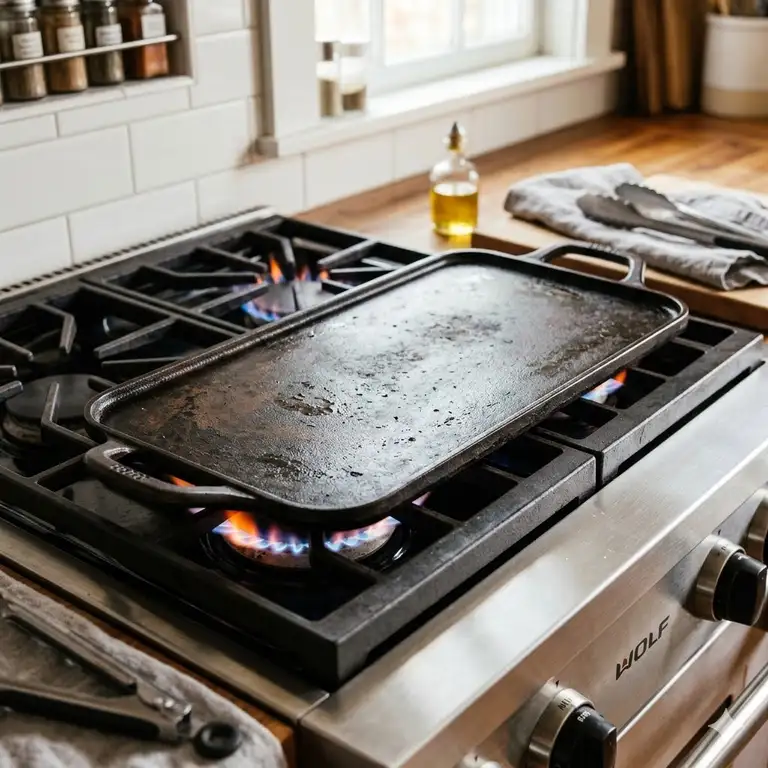
There is a specific kind of magic that happens in a professional diner—that rhythmic hiss and sizzle as a spatula flips a perfectly browned burger or a stack of golden pancakes. For many home cooks, replicating that experience starts with understanding how to use griddle pan on stove setups effectively. Whether you are working with a sleek induction cooktop or a rugged gas range, a griddle pan provides a massive, flat surface area that standard frying pans simply cannot match. In 2026, as we lean further into precision home cooking, the griddle has evolved from a heavy hunk of metal into a specialized tool capable of delicate temperature management.
What is how to use griddle pan on stove?
Knowing how to use griddle pan on stove involves preheating the pan over medium heat for 5-10 minutes, aligning it correctly over your burners, and maintaining a light coating of high-smoke-point oil. This technique ensures even heat distribution across a large flat surface, allowing you to cook multiple items like steaks, vegetables, or breakfast meats simultaneously with professional-grade searing…
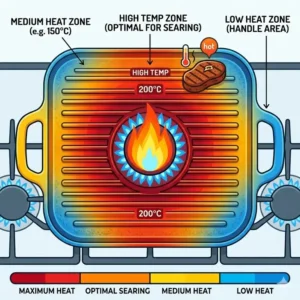
In my years of testing kitchen gear, I’ve found that the biggest hurdle for beginners isn’t the recipe; it’s the physics of the pan itself. Because griddles often span two burners or feature a large square footprint, they behave differently than your average skillet. You aren’t just heating a circle; you are managing a heat “zone.” Mastering this tool opens up a world of high-volume cooking that makes hosting brunch or a taco night significantly less stressful.
Quick Comparison: Griddle Pan Materials and Heat Performance
Before we dive into the specific techniques, it is essential to understand that the material of your pan dictates your strategy. A cast-iron griddle requires a long “soak” time for heat, while a non-stick aluminum version responds almost instantly.
| Material | Best For | Heat Retention | Weight | Durability |
| Cast Iron | High-heat searing & Steaks | Exceptional | Very Heavy | Lifetime |
| Hard-Anodized | Daily breakfast & Eggs | Moderate | Medium | 5-10 Years |
| Carbon Steel | Professional responsiveness | High | Medium | Lifetime |
| Enameled Iron | Low-maintenance searing | High | Heavy | Decades |
Expert Analysis: Looking at the data above, cast iron remains the king for those who prioritize a crusty sear on proteins, but the weight can be a deterrent for users with glass-top stoves. If you are a beginner, the hard-anodized options provide a much shallower learning curve because they react quickly if you accidentally crank the heat too high. Carbon steel is the “pro’s choice”—it offers the durability of iron with the agility of a lighter pan.
💬 Just one click — help others make better buying decisions too! 😊
Top 5 Griddle Pans: Expert Analysis for 2026
When learning how to use griddle pan on stove, the hardware you choose is your foundation. I have selected these five models based on their performance across gas, electric, and induction ranges in 2026.
1. Lodge LDP3 Reversible Grill/Griddle
The Lodge LDP3 is the “old reliable” of the culinary world, and for good reason. It features a flat griddle side and a ribbed grill side, spanning two burners on most standard ranges.
-
Key Specs: 16.75-inch seasoned cast iron; reversible dual-surface design.
-
Expert Commentary: What most buyers overlook is the “thermal mass” of this unit. Because it is thick cast iron, it won’t drop in temperature when you throw four cold steaks on it. This prevents the dreaded “steaming” effect and ensures a crusty Maillard reaction. It’s perfect for the “weekend warrior” cook who wants a tool that can transition from the stovetop to a campfire.
-
Customer Feedback: Users consistently praise its “indestructibility,” though some note it requires careful seasoning to remain non-stick.
-
Pros:
-
Incredible heat retention for searing
-
Dual-purpose (Grill + Griddle)
-
Works on all heat sources
-
-
Cons:
-
Requires manual seasoning
-
Very heavy to handle
-
-
Value Verdict: Around $35-$50; arguably the best ROI for any piece of cookware you will ever buy.
2. Le Creuset Enameled Cast Iron Skinny Griddle
If you want the power of cast iron without the maintenance of seasoning, the Le Creuset Enameled Cast Iron Skinny Griddle is the gold standard.
-
Key Specs: Durable black satin enamel coating; slim profile for single-burner use.
-
Expert Commentary: The satin enamel isn’t just for looks—it is designed to withstand high-surface temperatures without chipping. In my experience, this pan is the best for smaller kitchens or those using glass-top stoves, as the bottom is exceptionally smooth and won’t scratch the surface. It’s for the cook who values aesthetics as much as performance.
-
Customer Feedback: Reviews highlight the “easy cleanup” compared to raw iron, noting that even burnt-on sugars from bacon wipe away with minimal effort.
-
Pros:
-
No seasoning required
-
Stunning color options
-
Safe for all stovetops
-
-
Cons:
-
Premium price point
-
Smaller cooking surface
-
-
Value Verdict: Around $150-$210; a “buy it for life” luxury item that simplifies the griddle experience.
3. All-Clad HA1 Hard Anodized Nonstick Double Burner Griddle
For those who prioritize a “slidey egg” experience, the All-Clad HA1 offers a massive surface area with a high-tech non-stick finish.
-
Key Specs: PFOA-free non-stick coating; heavy-gauge aluminum core; stainless steel base.
-
Expert Commentary: The “HA1” stands for hard-anodized, which means the aluminum is hardened to be as tough as steel but way more conductive. I recommend this specifically for induction users; many griddles fail on induction due to warping, but this model’s bonded base stays perfectly flat. It’s the ultimate pancake machine for large families.
-
Customer Feedback: Owners love the “edge-to-edge heating,” stating they don’t see the “cold spots” typically found in cheaper double-burner pans.
-
Pros:
-
Superior non-stick release
-
Induction compatible
-
Dishwasher safe (though hand-wash is better)
-
-
Cons:
-
Not for high-heat searing
-
Non-stick will eventually wear out
-
-
Value Verdict: Around $60-$100; the most practical choice for everyday family breakfasts.
4. Made In Cookware Carbon Steel Griddle
Carbon steel is the secret weapon of professional chefs, and the Made In Carbon Steel Griddle brings that utility to the home stove.
-
Key Specs: 12-gauge carbon steel; half the weight of cast iron; rapid heat response.
-
Expert Commentary: Think of this as the “sports car” of griddles. It heats up significantly faster than the Lodge but holds heat better than the All-Clad. The spec sheet says it’s rated for 1200°F, which is overkill for a stove, but it means you can use it under a broiler for finishing pizzas or melts. It’s best for the “serious enthusiast” who enjoys the ritual of maintaining their gear.
-
Customer Feedback: Reviewers often mention the “patina” it develops, noting that the more you use it, the better it performs.
-
Pros:
-
Lighter than cast iron
-
Extremely responsive to temperature changes
-
Chef-grade durability
-
-
Cons:
-
Will rust if not dried properly
-
Requires initial seasoning
-
-
Value Verdict: Around $130-$160; professional performance that bridges the gap between iron and aluminum.
5. Cuisinart Chef’s Classic Nonstick 11-Inch Square Griddle
If you are on a budget or have a very small stove, the Cuisinart Chef’s Classic is a space-saving powerhouse.
-
Key Specs: Hard-anodized construction; stay-cool handle; 11-inch square surface.
-
Expert Commentary: Don’t let the “budget” label fool you. This single-burner griddle is perfectly sized for two grilled cheese sandwiches or a single large ribeye. The handle is remarkably ergonomic, which is a detail many overlook until they are trying to drain grease from a hot pan. This is the ideal starter pan for a college student or a couple.
-
Customer Feedback: Most users appreciate that it “heats up in seconds,” making it great for quick weekday meals.
-
Pros:
-
Very affordable
-
Compact and easy to store
-
Excellent handle design
-
-
Cons:
-
Too small for large batches
-
Thin walls lose heat quickly
-
-
Value Verdict: Around $25-$40; an essential, low-cost addition to any kitchen.
✨ Don’t Miss These Exclusive Deals!
🔍 Take your home cooking to the next level with these carefully selected products. Click on any highlighted item to check current pricing and availability. These tools will help you create authentic restaurant-quality meals your family will love!
The 10-Minute Ritual: A Practical Usage Guide
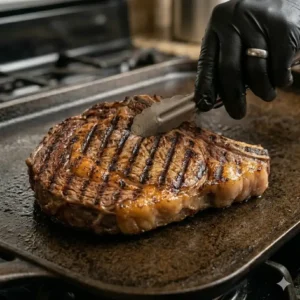
Knowing how to use griddle pan on stove setups isn’t just about turning on the heat; it’s about a specific sequence of actions that prevents sticking and ensures safety.
Step 1: The Alignment Phase
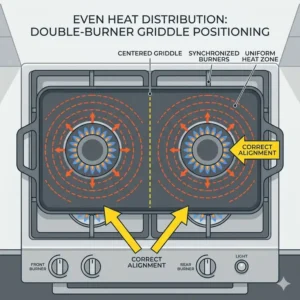
If you are using a double-burner griddle, center it carefully over your two burners. For gas ranges, ensure the flames aren’t licking up the sides, which can damage handles. For induction or electric, the pan must have direct contact with the glass.
Step 2: The Tempering (Preheat)
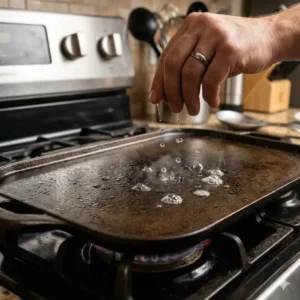
Never put food on a cold griddle. I recommend a “staged preheat.” Start your burners on low for 3 minutes, then move to medium for another 4-5 minutes. This allows the heat to migrate from the burner “hot spots” to the edges of the pan. You can test the heat by flicking a drop of water; it should dance and evaporate instantly.
Step 3: The Oil Barrier
Even non-stick pans benefit from a tiny amount of fat. Use an oil with a high smoke point (like avocado or grapeseed oil). If the oil starts to smoke aggressively, your pan is too hot—remove it from the heat immediately. According to the USDA Food Safety guidelines, maintaining proper temperature is vital for both food quality and safety.
Step 4: Cooking and Cleaning
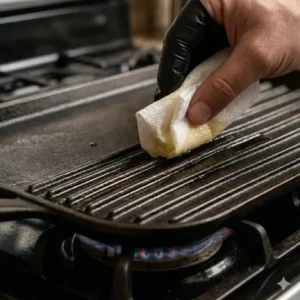
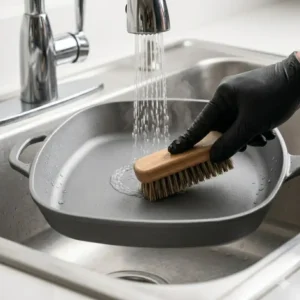
Once the food is down, leave it alone! Let the crust form before attempting to flip. When finished, let the pan cool slightly before washing. Splashing cold water on a piping hot griddle can cause “thermal shock,” which may warp or crack even the toughest cast iron.
Problem → Solution: Troubleshooting Your Griddle Experience
Even with the best gear, things can go wrong. Here is how to fix the three most common griddle gripes.
-
Problem: My food is sticking even though the pan is seasoned.
-
Solution: You are likely flipping too early. The Maillard reaction actually helps food “release” from the pan once a crust has formed. Wait an extra 60 seconds before your next attempt. Also, ensure you aren’t using “cold” oil; the oil needs to be shimmering before the food hits the surface.
-
-
Problem: The middle of my double-burner griddle is cold.
-
Solution: This is the “bridge” issue. Most home stoves have a gap between burners. To solve this, use a longer preheat time (10-12 minutes) on lower heat. This allows the metal’s natural conductivity to bridge the gap. Alternatively, some modern 2026 ranges have a “bridge” element specifically for this—check your stove’s manual!
-
-
Problem: There is too much smoke in my kitchen.
-
Solution: You are likely using butter or extra virgin olive oil, which have low smoke points. Switch to a high-heat oil. Also, check for “carbon buildup.” If you don’t scrub off the black bits from the previous meal, they will burn and smoke the next time you cook.
-
How to Choose the Right Griddle Material
When deciding how to use griddle pan on stove hardware, you must match the material to your cooking style. It isn’t just about price; it’s about the chemistry of the metal.
Cast Iron: The Heat Battery
Cast iron acts like a battery for heat. It takes a long time to “charge” (heat up), but once it’s there, it stays there. This is why it’s the best for steaks. If you put a cold piece of meat on a thin aluminum pan, the pan’s temperature drops instantly, and you get gray, boiled-looking meat. Cast iron fights back, maintaining that 450°F+ surface temperature needed for a deep sear.
Hard-Anodized Aluminum: The Morning Hero
Aluminum is a fantastic conductor—it moves heat 15 times faster than stainless steel. If you are making pancakes or eggs on a Tuesday morning before work, you don’t want to wait 15 minutes for a pan to preheat. Hard-anodized pans are perfect here. They provide “even” heat without the “weighty” commitment of iron.
Carbon Steel: The Professional Hybrid
Professional kitchens love carbon steel because it’s “seasonable” like cast iron but “responsive” like aluminum. If you see your onions are browning too fast, you can turn down the gas, and a carbon steel griddle will cool down within a minute. A cast iron griddle would stay hot for another five minutes, likely burning your food.
Common Mistakes: Why Your Griddle Isn’t Performing
After years of observing home cooks, I’ve identified the “Great Griddle Sins” that ruin the experience.
-
The Cold Start: Putting food on before the pan is hot. This leads to massive sticking and uneven cooking. Always use the “water drop” test or an infrared thermometer (look for 375°F for most foods).
-
Overcrowding: If the pieces of meat are touching, they will steam instead of sear. Leave at least an inch of “breathing room” between items. This allows moisture to evaporate rather than pooling.
-
Using Metal Utensils on Non-stick: Even in 2026, “metal-safe” non-stick is often a marketing exaggeration. Stick to silicone or wood to preserve the life of your All-Clad HA1 or Cuisinart.
-
Improper Cleaning: For cast iron and carbon steel, “soap is the enemy” is a myth (modern soaps are fine), but “moisture is the killer.” You must dry these pans on a warm burner for 2 minutes after washing to ensure every molecule of water is gone, preventing rust.
Griddle Pan vs. Outdoor Grill: Which is Better?
Many people ask if learning how to use griddle pan on stove is worth it if they already have an outdoor grill. The answer lies in the “Surface Contact.”
An outdoor grill uses infrared heat and hot air (convection). Because the food sits on grates, only about 10% of the meat’s surface is actually touching the hot metal. This gives you those “grill marks” but leaves the rest of the meat relatively un-seared.
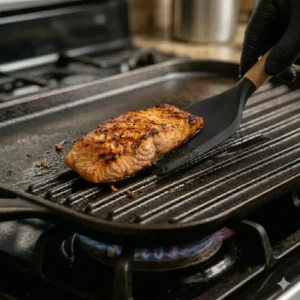
A griddle pan offers 100% surface contact. This means the entire face of the burger or steak is undergoing the Maillard reaction. This results in more flavor, more “crust,” and a juicier interior as the crust helps lock in juices. Furthermore, a griddle allows you to cook things a grill can’t—like eggs, chopped onions, or pancakes—without them falling through the grates.
Maintenance and Long-Term Cost Analysis
When buying a griddle, look at the “Cost Per Meal.”
-
Cast Iron/Carbon Steel: These are $50-$150 investments that literally last 100 years. My grandmother’s cast iron is still better than most new pans. The maintenance is about 2 minutes of drying and oiling after each use.
-
Non-stick: These are “disposable” high-performance tools. Even the best All-Clad non-stick will likely need replacing in 7-10 years as the coating degrades. If you use it every day, that’s about $10 per year—still a great value, but something to keep in mind.
Research from Healthline regarding iron cookware suggests that cooking in cast iron can even slightly increase your iron intake, adding a minor nutritional benefit to the durability factor.
Features That Actually Matter (and Marketing Hype to Avoid)
In the 2026 market, you will see a lot of buzzwords. Here is what actually helps you learn how to use griddle pan on stove better:
-
Matter: Handle Length. You need a handle that stays cool. Stainless steel “hollow” handles are best because they don’t conduct heat as quickly as solid ones.
-
Matter: Sidewall Height. A “low-profile” wall (under 1 inch) makes flipping easy. If the walls are too high, your spatula will hit the side, and you’ll break your yolks.
-
Hype: “Diamond-Infused” or “Granite” Coatings. These are usually just standard non-stick with a bit of texture. They don’t significantly change the cooking performance. Focus on the base material (aluminum vs. steel) instead.
-
Hype: “Self-Cleaning” Claims. No griddle is truly self-cleaning. The ones that claim to be often have coatings that can’t handle high-heat searing, which defeats the purpose of owning a griddle.
Safety and Regulations: The 2026 Standards
Safety is paramount when dealing with heavy, high-heat cookware.
-
Weight Awareness: If you have a glass-top stove, never “slide” a cast iron griddle. This can cause micro-scratches that eventually lead to the glass shattering. Always lift the pan straight up.
-
Smoke Management: High-heat cooking produces particulates. Always run your range hood on its highest setting when searing.
-
Handle Safety: Cast iron handles get hot—period. I recommend keeping a silicone handle holder or a dry kitchen towel dedicated to that pan so you don’t reflexively grab it and get a second-degree burn.
✨ Don’t Miss These Exclusive Deals!
🔍 Take your griddle game to the next level with these carefully selected products. Click on any highlighted item to check current pricing and availability. These tools will help you create authentic meals your family will love!
Conclusion: Elevating Your Home Kitchen
Mastering how to use griddle pan on stove is a rite of passage for any home cook looking to move beyond basic boiling and sautéing. It is a tool of efficiency, flavor, and versatility. By choosing the right material—whether the rugged durability of the Lodge LDP3 or the non-stick ease of the All-Clad HA1—you are setting yourself up for years of better breakfasts and superior sears. Remember, the secret isn’t in the price tag, but in the patience of the preheat and the care of the cleanup. With the tips provided in this 2026 guide, you are well on your way to becoming the “chef of the house.”
FAQs
❓ Can I use a griddle pan on a glass top stove?
✅ Yes, but you must be careful. Use a griddle with a perfectly flat bottom, like the All-Clad HA1 or Le Creuset, to ensure even contact. Avoid sliding heavy cast iron to prevent scratches. Always lift the pan when moving it…
❓ How do I prevent my griddle from smoking?
✅ Switch to an oil with a high smoke point, such as avocado oil (520°F) or refined coconut oil. Also, ensure you have thoroughly cleaned the pan of any old food residue, as leftover carbon is the primary cause of kitchen smoke…
❓ Do I need to season an enameled griddle?
✅ No. Enameled pans like the Le Creuset have a glass-like coating that doesn’t require seasoning. In fact, trying to “season” it will just create a sticky, burnt layer of oil that is difficult to remove. Just wash with soap and water…
❓ Why is my double-burner griddle warping?
✅ Warping usually happens when a cold pan is placed on a “High” heat burner or if a hot pan is plunged into cold water. Always preheat gradually on medium-low and allow the pan to cool naturally before cleaning…
❓ Can I use a griddle pan in the oven?
✅ Most cast iron and stainless steel griddles are oven-safe up to at least 500°F. However, check your specific model, especially if it has non-stick coating or silicone handles, which usually have lower heat limits (around 400°F-450°F)…
Recommended for You
- How to Preheat Pan Correctly for Cooking: 7 Pro Secrets for Success
- 7 Best Teal Pots and Pans Set for a Stunning 2026 Kitchen Upgrade
- 7 Best Griddle for Electric Stove Top Picks: 2026 Pro Guide Booyah!
Disclaimer: This article contains affiliate links. As an Amazon Associate, I earn from qualifying purchases. If you purchase products through these links, we may earn a small commission at no additional cost to you.
✨ Found this helpful? Share it with your friends! 💬🤗