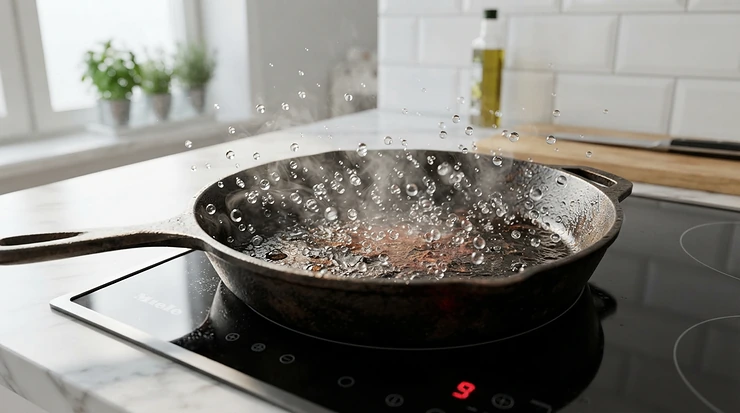
The usual advice on deep skillets is to buy the deepest pan on the shelf, and the test kitchens say that backfires. America’s Test Kitchen prefers sides of about 2 inches on a 12-inch skillet, and in its stainless-steel testing a pan with high walls trapped steam and browned steaks unevenly. Taller pans do have a job, which is frying and braising, so the smart move for anyone shopping for deep skillets in 2027 is to settle the job first and the depth second.
The findings below draw on America’s Test Kitchen’s skillet reviews, a USDA fact sheet on frying, maker and retailer spec pages, and customer-review pages at Target, Walmart and Calphalon. Lodge’s own product page would not open, so its numbers are taken from retail listings, and where those disagree the article says so. Prices appear as ranges only.
Why two to three inches beats the deepest pan in the aisle
For most kitchens the answer is a 12-inch pan with 2 to 3 inches of wall and a lid that ships with it. America’s Test Kitchen calls 12 inches the best size for most cooks, with room for as many as six people. In its enameled cast-iron test the preferred sidewall was about 2 inches on a 12-inch pan, and the same review notes that very deep pans suit deep-frying and braising better than skillet work.
Depth numbers on listings are slippery. Retailer pages give the Lodge 12-inch deep skillet as 3.06 inches deep on one site, 3.4 on another and 3.5 on a third, while two more list its height as 3.9 and 4 inches, which most likely reflects exterior height with the rim and base included. A pan sold as “deep” can therefore sit anywhere from 2 inches to nearly 4, depending on who measured.
The best deep skillets in these sources share three traits: a 12-inch rim, roughly 2 to 4 inches of wall, and a lid sold with the pan. The rest of this guide checks each of those in turn, then matches four real pans to the checks.
A pan-matching method: depth first, then metal, lid and oil
Each step feeds the next, so run them in order. Every step is also tied to a pan in the product section.
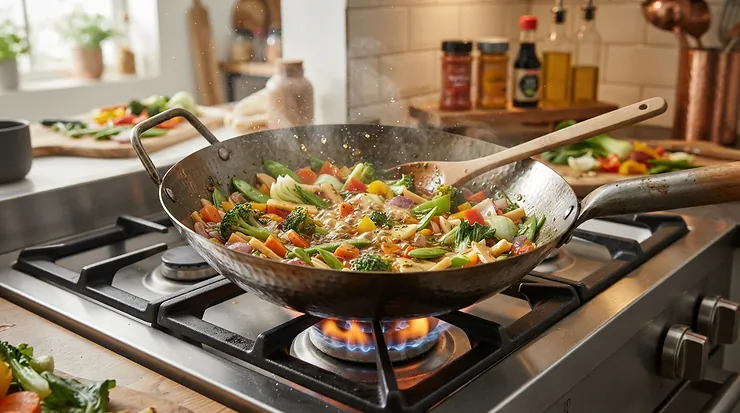
Choose the wall height by the job. America’s Test Kitchen’s stainless-steel skillet review says flared sides encourage evaporation for better browning, while tall straight sides trap condensation and steam the food. Frying chicken, braising and one-pan dinners want more wall. For a pan that has to do both, the target is a large, deep skillet, 12 inches across and 2 to 3 inches deep, with a lid. Measure from the inside floor to the rim, not the exterior height on the listing.
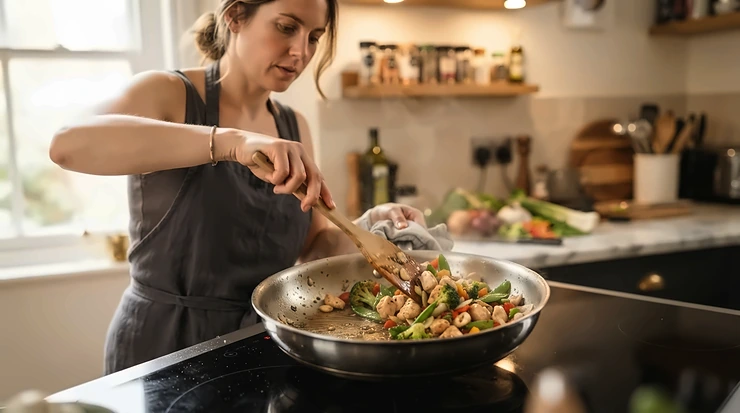
Match the metal to how you will lift and clean it. America’s Test Kitchen’s cast-iron testing found that lighter, thin pans did not retain and conduct enough heat for deep, even browning, and the price of that heat is weight. Hard-anodized aluminum with a nonstick floor is lighter and releases eggs and fish, though its makers limit heat and cleaning methods. Stainless steel suits searing and pan sauces, which is why America’s Test Kitchen’s stainless review frames it around exactly those jobs.
Read the pan’s oven rating and the lid’s as two numbers. The table shows the limits as listings give them.
Pan
Depth as listed
Weight as listed
Pan oven limit
Lid limit
Lodge L10CF3 12-Inch Cast Iron Covered Deep Skillet
3.06 to 4 inches, depending on the retailer
9.28 lb for the uncovered pan; the iron cover adds more
No figure on the listings opened
Iron cover, no figure listed
Cuisinart Chef’s Classic Nonstick Hard Anodized 12-Inch Deep Frying Pan with Cover
About 4.5 inches overall, unlabeled
7.13 to 7.6 lb
500°F
350°F on one listing, 450°F on another
Cuisinart Classic 12-Inch Stainless Steel Everyday Pan with Cover
About 2 inches (Target Q&A)
5.46 lb
350°F and 500°F both appear on the listing
370°F in a Q&A answer based on outside research
Calphalon Hard-Anodized Nonstick 12-Inch Jumbo Frying Pan with Lid
Not listed
Not listed
450°F, broiler safe
Not broken out
The lowest number in each row is the one a recipe has to respect. The Cuisinart Chef’s Classic Nonstick Hard Anodized 12-Inch Deep Frying Pan with Cover is the clearest disagreement, with a 100-degree gap between listings for the same glass cover, so plan around 350°F until the lid in your box says otherwise. Cast iron sidesteps the glass question because its cover is iron too, though none of the listings opened gives a temperature for it.
Confirm the lid belongs to that pan. America’s Test Kitchen’s lid roundup notes that the All-Clad D5 12-inch pan ships without a lid and needs a 15-inch flat one from another line, and that an irregular 12.75-inch Anolon made its bundled lid welcome. Searches for “skillet lids deep” usually come from someone whose lid sits too high, too low or not at all. Buy a deep skillet with lid in the title, and remember that the 12 inches is a rim measurement: the Lodge’s bottom diameter is listed at 8.75 inches, and America’s Test Kitchen liked 12-inch stainless pans with a flat floor of about 9.25 to 10.5 inches.
Set the oil level before the pan heats. A deep skillet for frying holds hot oil, not just food, so the fill line matters more than the brand. America’s Test Kitchen’s frying-safety tip says never to fill the pot more than halfway, and a thermometer keeps the oil from drifting past the target temperature.
Lift it loaded before you commit. America’s Test Kitchen called stainless skillets over 4 pounds empty prohibitively heavy and noted that most of its recommended models weigh around 3 pounds. That line was drawn for stainless pans without food, yet it is a useful warning here, since the stainless pan in this guide lists at 5.46 pounds and the cast-iron one at 9.28 before its cover. One reviewer on WebstaurantStore’s page for the uncovered Lodge calls it hearty but not so hard to lift when full, which is a single person’s view and depends on who is lifting. Long handles are the other issue: reviewers on the Walmart and Perigold pages for the Cuisinart deep frying pan advise two hands when moving it in and out of the oven.
Where these pans go wrong, and the fix for each
Deep skillets reviews on test-kitchen and retailer pages circle five problems, and each has an inexpensive fix.
Depth bought for a job the pan can’t do. In America’s Test Kitchen’s stainless testing, one pan’s high walls trapped steam and caused uneven browning on steaks, and another was described as “more like a bowl than a skillet.” Its enameled cast-iron review reached the same conclusion for pans with sides well over 2 inches. The fix is to sear in the shallowest pan you own and keep the deep one for frying, braising and one-pan dinners.
A lid rating read from the pan’s headline. The Cuisinart deep frying pan shows 500°F for the pan and either 350°F or 450°F for the glass cover, depending on the retailer, and the Target page for the Cuisinart stainless pan lists 350°F and 500°F side by side. Use the lowest figure, and take the lid off for the hot stretch of a roast.
A glass lid that cracks. Several reviewers on Target’s page for the Cuisinart Classic 12-Inch Stainless Steel Everyday Pan with Cover report lids cracking or shattering and call it a safety concern. That is one retailer’s reviews for one model, so treat it as a flag rather than a failure rate. Cuisinart’s care text, quoted on Perigold’s page for the nonstick deep pan, says to let cookware cool before cleaning, which is the sensible habit for any glass cover.
Oil that sits too high. The USDA’s deep fat frying fact sheet warns that frying oil can pass 400°F, tells skillet cooks to leave room for the oil to rise when food goes in, explains that water turns to steam almost instantly in hot oil, and recommends keeping a fire extinguisher nearby. Never use water on a grease fire.
A coated pan pushed too hard. Cuisinart’s care text says to cook on low to medium heat and never leave the pan empty on a hot burner. Reviewers on Calphalon’s own page for its jumbo frying pan describe the pan as thinner and flimsier than earlier Calphalon versions, with one report of warping and one of an uneven base on a glass-top stove. Moderate heat and a flat-base check on a glass-top range are the fix, and cast iron or stainless suits cooks who expect to run hot.
The pans that fit each step, from 2 inches to nearly 4
Each pan below is a 12-inch model sold with a lid. They are tools for the steps above, not a ranking, and which of them counts among the best deep skillets for you depends on the job from step 1.
As a deep skillet for frying chicken, baking a deep-dish loaf or braising for hours, this is the most committed pan of the four, and the heat-retention argument from step 2 applies here more than to any other pick. It holds 5 quarts, carries a helper handle, and its iron cover has self-basting tips that, per Home Depot’s listing, lock in moisture. Retailer pages describe it as induction-friendly and suitable for the oven, grill and campfire.
The floor is narrower than the rim: WebstaurantStore lists a bottom diameter of 8.75 inches against a 12.1-inch width, and Farm & Fleet gives a cooking surface area of 67.17 square inches. The uncovered pan weighs 9.28 pounds there. It is made in the USA with a lifetime warranty listed by retailers, and the uncovered pan runs around $40 while the covered version is around $70 on a Tractor Supply listing. Home Depot shows 4.6 out of 5 across 21 reviews for the covered L10CF3.
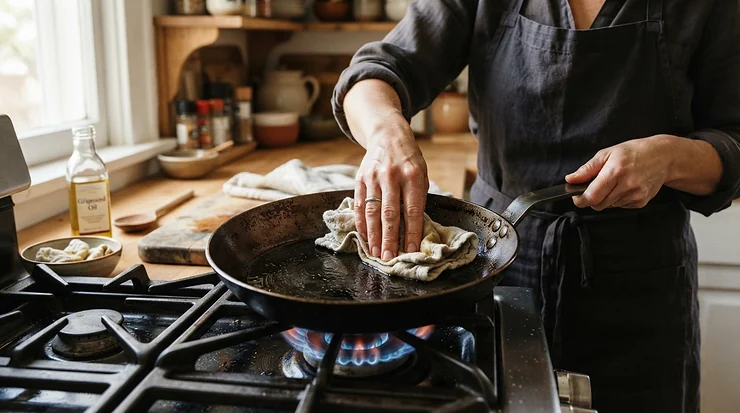
Care instructions conflict across listings: Ace Hardware lists the pan as dishwasher safe, while WebstaurantStore says hand wash only. Lodge’s care line for its seasoned 12-inch skillets reads hand wash, dry, oil, and that is the safer instruction for iron.
Pros:
✅ The most wall of the four, with an iron cover that adds no glass to crack
✅ Works on induction, per retailer listings, and goes from stovetop to oven
Cons:
❌ The heaviest pan here, at 9.28 pounds before the cover is counted
❌ Needs hand washing, drying and oiling after each use
At roughly 7.1 to 7.6 pounds with its glass cover, depending on the retailer, this deep skillet with lid is the lighter of the two truly deep pans here, and Walmart’s listing describes sloped sides. Buydig’s page gives model 622-30DFP1, a hard-anodized aluminum body, a riveted stainless handle and a break-resistant glass cover, with overall dimensions of about 22.9 by 12.4 by 4.5 inches that the page does not label. Capacity and induction compatibility are not listed on the pages opened.
The coating is where sources part. Buydig and Over the Moon describe a PFAS-free PURELYCERAMIC interior, while Walmart’s listing describes Quantanium nonstick reinforced with titanium, so two coatings circulate under similar names. Care guidance splits as well: Buydig lists it as dishwasher safe while recommending hand washing, and Cuisinart’s care text on Perigold says no dishwasher, low to medium heat and no steel wool.
Retail listings put it around $65 to $70. Walmart shows 4.4 out of 5 from 19 ratings, and the three written reviews visible praise even heating, easy cleanup and the move from stovetop to oven. Perigold’s page shows 4.8 from 9 reviews. The 500°F pan limit is generous, and the glass cover’s 350°F or 450°F reading is the number to settle before roasting.
Read the lid’s own oven line on the listing before ordering.
At around $40 on Target’s page, this is the cheapest pan here and the only stainless one. Target’s Q&A puts the depth at about 2 inches, the capacity is 3.53 quarts, and the pan weighs 5.46 pounds. The page also explains that the 12 inches is measured across the top rim, with a smaller base. Cooktops listed include gas, electric coil and smooth-surface induction, a brand-expert answer gives the steel as 18/0, and the warranty is a lifetime limited one.
Two inches is the sidewall height America’s Test Kitchen’s testers preferred for browning, so this pan sears and builds pan sauces better than the two deeper ones, while holding less than the Lodge’s 5 quarts. Target shows 4.3 out of 5 from 207 reviews, with 77 percent recommending it. Reviewers praise even heating, good searing, easy cleanup and value for the weight. The complaints include glass lids cracking or shattering, a few reports of grey staining, scratches from metal utensils, a sharp rim in one case, and sticking in at least one. Buyers who expected a deep pan say the sides are thin and the depth less than they hoped, which is the cost of the 2-inch design.
Calphalon’s own page splits its 95 reviews, rated 4.5 out of 5, along an unusual line: reviewers like the cleanup and the suitability for dishes such as stroganoff and curried shrimp, and the complaints are about the build. Reviewers describe the pan as thinner and flimsier than earlier Calphalon versions, one reports warping when heated, another an uneven base that rocks on a glass-top, and one says a warranty replacement for warping was denied.
The page lists model 2205416 as a two-piece pan and lid, hard-anodized aluminum with nonstick, a long stainless handle, pour spouts, measure marks and a tempered glass lid with a straining function. It is oven safe to 450°F, broiler safe and dishwasher safe for pan and lid, with a limited 10-year warranty, and electric, glass and gas stoves are named while induction is not. It sells for around $70 and was out of stock on Calphalon’s page when opened, and depth and weight are not listed at all, so the table’s blanks are the first question to settle.
A separate Macy’s listing for a Calphalon Classic 12-inch Jumbo Fryer with Cover gives 21.25 by 12.25 by 4.5 inches, a lifetime warranty and 4.8 out of 5 from 146 reviews. It carries different warranty terms, so its numbers should not be borrowed for this pan.
Pros:
✅ Pan and lid are dishwasher safe, and the pan is broiler safe per Calphalon’s page
✅ Pour spouts, measure marks and a straining lid come in one pan
Cons:
❌ Reviewers describe a thinner build, with warping and an uneven base reported
❌ The page lists no depth, weight or induction compatibility
Check that the title says “with lid” and that the depth appears in inches before you order.
Oil headroom, lid ratings and wall height: short answers
❓ How deep should a deep skillet be?
✅ About 2 inches suits searing, according to America's Test Kitchen, which also says much taller pans work better for deep-frying and braising. For a pan that does both, 2 to 3 inches is a workable compromise. Measure interior depth, because retailers often list exterior height.
❓ How full can you fill a deep skillet with oil for frying?
✅ Leave plenty of headroom. USDA's frying fact sheet says oil can pass 400°F and needs room to rise when food goes in, and America's Test Kitchen says never to fill past halfway. Keep water away from the oil and use a thermometer.
❓ What is the difference between a deep skillet and a sauté pan?
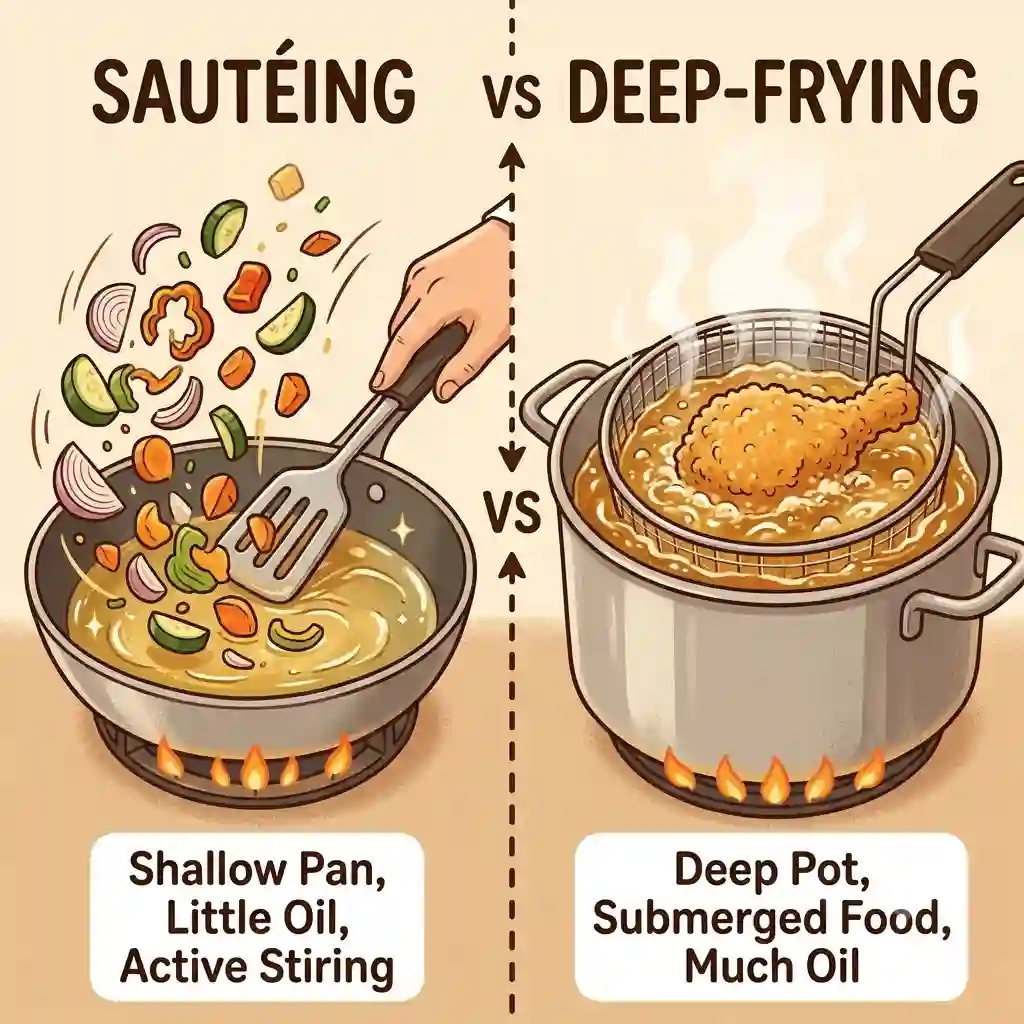
✅ America's Test Kitchen says tall, straight sides trap condensation, which suits braises but steams food, and that tall-sided sauté pans suit braising. Names overlap between makers, so go by the listed depth and the wall shape in the photos, not the label.
❓ Can the lid on a deep skillet go in the oven?
✅ Treat the lid as its own rating. Listings for the Cuisinart deep frying pan show the pan at 500°F, while the glass lid reads 350°F on one retailer and 450°F on a Cuisinart care text quoted by another. Use the lower figure when pages disagree.
❓ Can you use a universal lid on a deep skillet?
✅ Often not well. America's Test Kitchen notes that All-Clad's D5 12-inch pan ships without a lid and needs a 15-inch flat lid from another line, so one size rarely fits all. Buy a pan sold with its lid, or match the maker's lid to the model.
The decision rule: job first, lid second, weight last
Start with what the pan will do most often. For frying chicken and long braises, the Lodge L10CF3 12-Inch Cast Iron Covered Deep Skillet gives the most wall and the heaviest mass for holding heat, at the cost of weight. The Cuisinart Chef’s Classic Nonstick Hard Anodized 12-Inch Deep Frying Pan with Cover suits cooks who want less to lift and a nonstick floor. For searing and pan sauces with some depth, the Cuisinart Classic 12-Inch Stainless Steel Everyday Pan with Cover sits at the 2-inch mark, and the Calphalon Hard-Anodized Nonstick 12-Inch Jumbo Frying Pan with Lid fits anyone who values dishwasher and broiler allowances and accepts the build complaints. Whichever of these deep skillets you choose, the lid’s own temperature limit should decide how you roast.
Compare the exact model number before buying, since the L10CF3 includes the iron cover and the uncovered L10DSK3 does not.
Disclaimer: This post contains affiliate links. As an Amazon Associate, I earn from qualifying purchases made through these links, at no additional cost to you.
Measure the inside wall, check the lid’s own limit, and the pan will handle the rest. 🥘
At SmartCookLab, we are passionate about cooking and helping you find the best kitchen appliances and tools. Our team provides expert reviews, buying guides, and practical tips to enhance your cooking experience.