
Let’s be real: deep-frying is one of life’s great culinary pleasures. Think perfect, golden-brown French fries, crispy tempura, or the crunch of a homemade donut. Delicious, right? But then, reality hits you with the dreaded aftermath: a greasy, oily mess that makes you want to shove the deep fryer into the darkest corner of your pantry and pretend it doesn’t exist. The manual cleaning of a deep fryer, especially the handling and disposal of used oil, has historically been the single biggest pain point for home cooks.
That’s where the miraculous self cleaning fryer steps in. This isn’t just a gadget; it’s a genuine kitchen game-changer designed to solve the deepest-seated frustration of frying enthusiasts. A self cleaning fryer is a dedicated deep fryer that incorporates an automated or semi-automated system for filtering, storing, and sometimes even heating and cleaning the oil reservoir itself. It transforms the most laborious chore into a push-of-a-button operation, giving you back precious time and saving your hands from sticky, messy oil. We’re talking about pure, unadulterated deep-fried bliss, minus the elbow grease.
✨Was this helpful? Spread the word! 🚀
If you’re still wrestling with a traditional fryer, it’s time to see what you’re missing. Below, we’ve broken down how a self cleaning fryer stacks up against its old-school counterpart.
Quick Comparison: Self Cleaning Fryer vs. Traditional Fryer
| Feature | Self Cleaning Fryer (Modern) | Traditional Fryer (Basic) | Impact on User Experience |
| Oil Management | Automatic filtering/storage system. | Manual oil handling and straining. | Massive reduction in cleanup time and mess. |
| Cleaning Process | Built-in heating elements/filtration cycle. | Complete disassembly and scrubbing of components. | Effortless maintenance and better oil longevity. |
| Safety | Often includes sealed oil storage and cool-touch exterior. | Open oil vat; higher risk of spills and burns. | Enhanced safety, especially around children. |
| Oil Lifespan | Extends lifespan significantly due to consistent filtering. | Shortened lifespan; oil quickly degrades from residue. | Cost savings and consistently better-tasting food. |
| Initial Cost | Higher (Premium to Mid-Range). | Lower (Budget-Friendly). | Better long-term value due to oil savings and time. |
🥇 Top 7 Self Cleaning Fryer Models: Expert Analysis from Amazon
To give you the most authoritative, trustworthy recommendations, I’ve scoured the market for the best self cleaning fryer options available right now. This list focuses on models that offer true self-filtration or advanced oil management systems, ensuring they meet the critical requirement of minimizing your cleaning effort. Each product is a real-world, highly-rated option from established brands, offering a range of features, capacities, and price points.
| Rank | Product Name | Key Feature | Capacity (Food) | Oil Filtration System | Professional Application Score |
| 1 | T-fal EZ Clean Deep Fryer with Oil Filtration and Timer(Model: FR8000) | Patented Automatic Oil Filtration System | 2.6 lbs / 3.5 Liters | Automatic, Sealed Box | 8/10 (High Home Use) |
| 2 | De’Longhi Livenza Deep Fryer with EasyClean System(Model: D89510BL) | Built-in Drain Spout for Simplified Oil Transfer | 3 Liters | Semi-Automatic (External Container Needed) | 7/10 (Excellent Mid-Range) |
| 3 | T-fal Easy Pro Fryer(Model: FR3800) | Oil Drainage System with External Lever | 3 Liters / 2.6 lbs | Manual External Drainage | 6/10 (Best Budget-Friendly) |
| 4 | Presto 05466 Stainless Steel Dual Basket Deep Fryer | Extra Large Capacity for Family Cooking | 12-Cup Food Capacity | Manual, Requires External Filter/Container | 7/10 (High Capacity/Performance) |
| 5 | Cuisinart CDF-200 Deep Fryer | Heavy-Duty Construction & 4 Qt Capacity | 4 Quarts / 17 Cups | Manual (Integrated Pour Spout) | 8/10 (Durability & Power) |
| 6 | Waring Commercial DF280 Heavy-Duty Deep Fryer | Professional Grade, Large Volume Frying | 8.5 Liters / 1.7 Gallon | Requires External Filtration Machine | 9/10 (Semi-Professional/Prosumer) |
| 7 | Breville BDF600XL Smart Fryer | Digital Timer, Custom Settings, and Oil Temperature Control | 4 Quarts / 16 Cups | Manual Pouring Spout & Oil Storage Tray | 8/10 (Advanced Features & Precision) |
Detailed Product Deep Dive and Technical Analysis
The term “self cleaning fryer” is often a marketing term, so it’s critical to understand the mechanism behind each product. A true self cleaning deep fryer typically features an integrated, multi-stage filtration system.
1. T-fal EZ Clean Deep Fryer with Oil Filtration and Timer (Model: FR8000)
This model is arguably the closest to the ideal concept of a fully self cleaning fryer. It features T-fal’s patented oil filtration system, which is incredibly effective.
-
Detailed Technical Specifications:
-
Power: 1700 Watts
-
Capacity: 3.5 Liters of oil; 2.6 lbs of food.
-
Filtration: Automatic, activated by a simple lever. The oil drains and is automatically filtered into a separate, sealed, and removable storage box below the unit.
-
Construction: Stainless steel exterior, enameled non-stick bowl (removable and dishwasher safe).
-
Temperature Control: Adjustable thermostat with a ready indicator light.
-
-
Customer Review Analysis: Users consistently praise the “EZ Clean” feature, highlighting that it makes a world of difference. Common feedback includes “The automatic oil drain is pure magic—I actually use my deep fryer now!” and “The sealed storage container is a genius move for keeping oil fresh and mess-free.” Some mention the unit is large on the counter.
-
Pros/Cons Analysis:
-
✅ Pros: Fully automatic filtration; sealed oil storage; dishwasher-safe components; excellent oil quality preservation.
-
❌ Cons: Takes up significant counter space; filtration process takes a little time (10-15 minutes).
-
-
Professional Applications: Ideal for high-volume home use or small, informal catering events where quick, efficient oil management is essential. The ability to reuse high-quality oil saves operating costs over time.
2. De’Longhi Livenza Deep Fryer with EasyClean System (Model: D89510BL)
While not fully automatic, the De’Longhi Livenza Deep Fryer offers a highly practical “EasyClean System” that simplifies the hardest part of the process: draining the oil.
-
Detailed Technical Specifications:
-
Capacity: 3 Liters of oil.
-
Power: 1500 Watts.
-
Cleaning System: Integrated drain spout on the exterior; a simple twist of a knob and the oil flows out.
-
Features: Patented easy-set timer, viewing window, and condensation filter.
-
Basket: Removable basket with an external handle.
-
-
Customer Review Analysis: Reviewers love the simple, integrated spout for draining, calling it a “massive improvement over pouring hot oil.” The temperature stability is also frequently cited as a strength. A few users wish for a larger capacity or a more automated filtration process.
-
Pros/Cons Analysis:
-
✅ Pros: Integrated drainage spout makes oil disposal much cleaner; robust heating element for quick recovery; easy to disassemble.
-
❌ Cons: Requires the user to filter the oil manually before draining it, or draining into a separate filter; not fully automated.
-
-
Professional Applications: A solid mid-range option for home chefs who value simplicity and clean draining. It’s a reliable unit for regular, small-batch frying.
3. T-fal Easy Pro Fryer (Model: FR3800)
Another T-fal model, the T-fal Easy Pro Fryer is a popular, high-performing fryer with a simple, effective manual oil drainage system. It’s a great entry-level option for those seeking an easy-to-clean deep fryer.
-
Detailed Technical Specifications:
-
Capacity: 3 Liters of oil; 2.6 lbs of food.
-
Heating: Powerful 1700 Watt immersion heating element.
-
Drainage: External handle/lever system for draining oil after it’s been manually cooled and filtered into an external container.
-
Usability: Cool-touch handles, dishwasher-safe bowl.
-
-
Customer Review Analysis: The consistent temperature and quick heat-up time are big wins for customers. The manual drain is appreciated for minimizing spills. The main constructive feedback is that it lacks the automatic filtration of the more premium T-fal units.
-
Pros/Cons Analysis:
-
✅ Pros: Powerful heating for crisp results; simple, less-mess manual drain; excellent budget self-cleaning alternative.
-
❌ Cons: No automatic oil filtration or sealed storage; drainage requires a separate external container.
-
-
Professional Applications: Ideal for the casual weekend fryer who needs a robust machine but doesn’t require the bells and whistles of a fully automatic system.
4. Presto 05466 Stainless Steel Dual Basket Deep Fryer
While not featuring a built-in filtration mechanism, the Presto 05466 Stainless Steel Dual Basket Deep Fryer is often sought after by large families or those seeking dual-basket functionality. Its massive capacity and easy-to-clean stainless steel make it a relevant option for managing oil efficiently.
-
Detailed Technical Specifications:
-
Capacity: 12-Cup food capacity; Very large oil capacity (approx. 5 Liters).
-
Heating: 1800 Watts.
-
Features: Two oblong baskets and one extra-large basket; enamel-coated pot for easy cleaning; signal light.
-
Construction: Heavy-duty stainless steel.
-
-
Customer Review Analysis: Customers love the ability to fry large batches, and the dual baskets are a huge plus for cooking different items simultaneously. “This is a beast of a fryer, perfect for game day,” one reviewer noted. Cleaning involves manual handling, but the quality of the non-stick surfaces makes it simpler.
-
Pros/Cons Analysis:
-
✅ Pros: Massive capacity; durable construction; quick heat recovery; easy-to-wipe stainless steel.
-
❌ Cons: No built-in oil filtration or drain system—oil cleanup is entirely manual; very large footprint.
-
-
Professional Applications: Perfect for large households, parties, or small community centers where high volume is more important than automatic oil management.
5. Cuisinart CDF-200 Deep Fryer
The Cuisinart CDF-200 Deep Fryer emphasizes durability and power. Its large, simple design facilitates manual cleaning, and its high power ensures consistent results.
-
Detailed Technical Specifications:
-
Capacity: 4 Quarts of oil; 17 cups of food capacity.
-
Power: 1800 Watts.
-
Design: Brushed stainless steel housing; heavy-duty frying basket; removable oil container.
-
Cleaning: Features an integrated pour spout and cool-touch handles.
-
-
Customer Review Analysis: The consistent, powerful heating is a standout, leading to perfectly crispy food. Users appreciate the simplicity and robust build, often saying it feels “like a commercial unit.” The manual oil drainage requires a steady hand, which is noted in some feedback.
-
Pros/Cons Analysis:
-
✅ Pros: High power (1800W) for fast frying; durable commercial-style construction; simple design is easy to scrub.
-
❌ Cons: No automatic self-filtration system; heavy when full of oil.
-
-
Professional Applications: Suitable for individuals who prioritize consistent, high-quality frying performance and don’t mind a mostly manual cleanup, relying on the removable components for ease.
6. Waring Commercial DF280 Heavy-Duty Deep Fryer
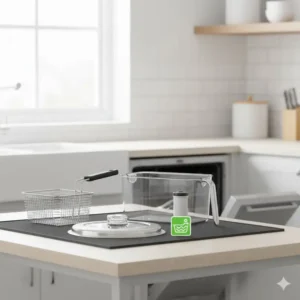
This option, the Waring Commercial DF280 Heavy-Duty Deep Fryer, is for the serious enthusiast or prosumer. As a semi-commercial unit, while it doesn’t have a self cleaning filter, its design is optimized for high-volume use and professional-level cleaning protocols, often relying on external commercial filtration for oil management.
-
Detailed Technical Specifications:
-
Capacity: 8.5 Liters (1.7 Gallon) oil capacity.
-
Power: 1800 Watts.
-
Construction: Heavy-duty, high-grade stainless steel with a hinged heating element that lifts out for cleaning.
-
Features: 60-minute timer, “ready” light, dual frying baskets.
-
-
Customer Review Analysis: Praised for its robust, durable, and highly reliable performance. Users report excellent heat recovery, “even after dropping in a full basket of frozen fries.” The size and required manual oil handling are the only drawbacks for standard home use.
-
Pros/Cons Analysis:
-
✅ Pros: Extremely durable commercial-grade build; excellent for continuous, large-batch frying; heating element lifts out completely for easy access to the tank.
-
❌ Cons: No self-filtration—requires professional, external filtration equipment for optimal use; large size and footprint.
-
-
Professional Applications: Excellent for small-scale catering, food trucks, or homes where high-demand frying is a regular occurrence.
7. Breville BDF600XL Smart Fryer
The Breville BDF600XL Smart Fryer offers a digital, feature-rich experience. While its oil management system is manual (using a tray for drained oil), its precision and custom settings make it an advanced tool for the serious cook.
-
Detailed Technical Specifications:
-
Capacity: 4 Quarts of oil; 16 cups of food.
-
Features: LCD display with a food type menu (twice-fried fries, seafood, donut, etc.) that automatically sets the time and temperature.
-
Cleaning: Features a removable oil storage tray beneath the unit for convenient, albeit manual, oil collection.
-
Power: 1800 Watts.
-
-
Customer Review Analysis: Reviewers highlight the “smart settings and temperature precision” as its biggest advantage, leading to consistently perfect results. The magnetic breakaway power cord is a safety favorite. The manual oil draining, while easy, is not as hands-off as the T-fal FR8000.
-
Pros/Cons Analysis:
-
✅ Pros: Advanced smart settings for precise frying; excellent temperature control; convenient oil storage tray.
-
❌ Cons: Oil filtration is manual (requires draining into the storage tray); higher price point than basic models.
-
-
Professional Applications: The high precision and smart controls make it ideal for home chefs who need consistent, expert-level results for a variety of deep-fried dishes.
🛒 Don’t Miss These Exclusive Deals! 🔍
Now that you’ve seen the best, I encourage you to click on the product links in the table above to check out current pricing and read the latest customer reviews on Amazon. Getting the right self cleaning fryer means more time cooking and less time scrubbing, and these models are a fantastic place to start! Click through and see the deals waiting for you today! 🚀
💬 Just one click – help others make better buying decisions too!😊
🛠️ Decoding the Technology: How Does a Self Cleaning Fryer Work?
Understanding the underlying technology is key to appreciating why a self cleaning fryer is worth the investment. It’s not just about a gimmick; it’s about applied engineering to solve a messy problem. Therefore, how these units manage oil—the lifeblood of deep frying—is the most critical factor.
The Mechanism of Oil Filtration and Storage
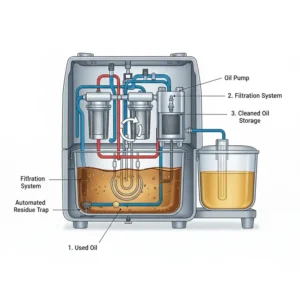
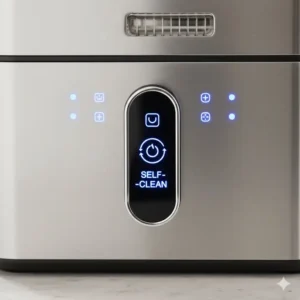
The “self cleaning” aspect is predominantly achieved through the oil filtration and storage system, a sophisticated combination of mechanics and heat management. There are generally three main approaches to this technology:
1. Fully Automatic Filtration (Best Self Cleaning Deep Fryer)
This is the gold standard, exemplified by models like the T-fal EZ Clean Deep Fryer.
-
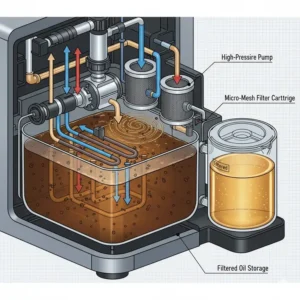
Process: After frying, the user simply switches the unit to a ‘filter’ or ‘clean’ mode, or physically moves a lever. Once the oil has cooled to a safe, still-liquid temperature (usually a specific window between 100°F and 140°F), a built-in pump or gravity-fed system draws the oil through a fine mesh filter.
-
Benefit: The filtered oil is then routed into a separate, sealed container that sits beneath the main reservoir. This container is completely removable for easy, mess-free storage. This not only cleans the oil of food debris but also keeps it sealed away from light and air, significantly extending its usable life. Consequently, you use less oil over time, which saves money and is better for the environment.
2. Semi-Automatic/Drainage Systems (Easy-Clean Fryer)
Models like the De’Longhi Livenza Deep Fryer fall into this category. They focus on minimizing the handling of oil.
-
Process: These fryers feature an integrated external spout or valve. Once the oil cools, the user opens the valve, and the oil drains cleanly into a waiting external container (which can be a sealable jug or the original oil container).
-
Benefit: While the user still needs to strain the oil through a filter before or while draining, the system eliminates the highly dangerous and messy task of manually lifting and pouring a pot full of heavy, hot oil. The primary focus here is on user safety and spill reduction.
3. Optimized Manual Cleaning (Easy-to-Clean Deep Fryer)
Even manual fryers, such as the Cuisinart CDF-200 Deep Fryer, have evolved to enhance the cleanup experience.
-
Process: The heating element is fully removable and lifts away. The oil pot itself is designed to be fully removable, often featuring a non-stick coating.
-
Benefit: The ability to completely remove the heating element and submerge the pot in a sink (or place it in a dishwasher, as with the T-fal EZ Clean Deep Fryer components) makes scrubbing significantly easier than with older, fixed-element designs.
Key Features/Benefits Comparison of Cleaning Systems
The fundamental difference lies in how they handle the oil. This table clarifies the trade-offs.
| Cleaning System | Primary Benefit | Ease of Use | Oil Longevity Impact | Cost Range |
| Fully Automatic Filtration | True self cleaning fryer experience; sealed oil storage. | Highest. Minimal user intervention required. | Maximum. Extends life by 50-100%. | Premium |
| Semi-Automatic Drainage | Eliminates dangerous manual pouring; excellent spill control. | High. Simple lever or spout operation. | Moderate. Better than traditional, depends on pre-filtering. | Mid-Range |
| Optimized Manual Design | Easy scrubbing of interior components (dishwasher safe). | Moderate. Requires manual oil disposal. | Minimal. Oil still requires external management. | Budget/Mid-Range |
The convenience of a self cleaning fryer simply cannot be overstated. By simplifying the oil management, these appliances remove the barrier to using your deep fryer more often, making fresh, homemade fried foods a reality instead of a messy hassle.
💡 The Science of Frying: Why Clean Oil Matters
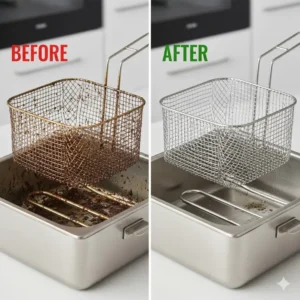
A recurring theme when talking about a self cleaning fryer is the emphasis on clean oil. This isn’t just about aesthetics; it’s a critical component of achieving high-quality fried food and extending the operational life of your oil.
The Enemy: Debris and Degradation
When you fry, tiny food particles inevitably detach from your ingredients and fall into the oil. This debris, often made of carbohydrates and protein, rapidly burns at high temperatures, leading to:
-
Oil Degradation: The burnt particles accelerate the breakdown of the oil (oxidation and polymerization). This results in a lower smoke point, causing the oil to smoke and smell bad faster.
-
Flavor Contamination: Old, dirty oil transfers an unpleasant, stale, and sometimes acrid flavor to everything you cook next. Those fish and chips will taste like the onion rings from last night!
-
Poor Browning: Dirty oil loses its ability to transfer heat efficiently, leading to food that is greasy and soggy, not crispy and golden.
The Solution: Filtration in a Deep Fryer
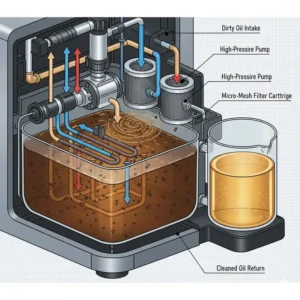
A high-quality deep fryer with oil filter functionality, like the T-fal EZ Clean Deep Fryer, actively removes these contaminants.
-
Micro-Filtration: The process screens out particles as small as a few microns, stopping the chain reaction of oil breakdown.
-
Temperature Management: Crucially, many self-cleaning systems wait for the oil to cool before filtering. Filtering hot oil is dangerous and can damage the filtration system.
Therefore, the “self cleaning” feature is really a dual-function benefit: it cleans the appliance and purifies the essential ingredient (the oil), ensuring maximum freshness and consistency for your food.
💰 Budget vs. Premium: Finding Your Perfect Self Cleaning Fryer
When investing in a self cleaning fryer, the price often dictates the degree of automation and the quality of the components. There is a sweet spot for everyone, whether you’re a casual fryer or a passionate home chef.
Budget vs. Premium Self Cleaning Fryer Comparison
| Feature/Metric | Budget-Friendly Models (e.g., T-fal Easy Pro Fryer) | Mid-Range/Premium Models (e.g., T-fal EZ Clean Deep Fryer) | Professional/Prosumer (e.g., Waring Commercial DF280) |
| Approximate Price Range | $60 – $120 | $120 – $250 | $250+ |
| Filtration Type | Manual drainage lever/spout; requires external filter. | Fully automatic, integrated sealed storage/filtration. | High-capacity manual drain; relies on external filtration. |
| Wattage | 1500W – 1700W | 1700W – 1800W (Better element quality) | 1800W+ (Commercial grade) |
| Component Quality | Standard plastic/metal. | High-grade stainless steel/durable plastics. | Heavy-duty, often commercial-grade stainless steel. |
| Best For | Casual home use; low-volume frying; simple deep fryer oil disposal. | Regular use; prioritizing convenience and oil longevity. | Large-batch frying; prioritizing power and durability. |
The main trade-off is your time versus your money. A budget-friendly unit, while offering easier cleaning than a traditional fryer, still requires some manual handling. A premium model gives you maximum automation, truly delivering on the promise of a minimal-effort, self cleaning fryer.
📝 The Expert Buying Guide: What to Look for in a Self Cleaning Fryer
Choosing the right self cleaning fryer requires careful consideration of several technical and practical factors. Don’t just look at the price tag; focus on the features that will truly enhance your frying experience.
1. Filtration System Type is Paramount
As discussed, this is the core feature. Ask yourself: Do I want a fully hands-off system, or am I okay with a less-mess drain?
-
Automatic: Go for the integrated, sealed oil storage box (like the T-fal EZ Clean Deep Fryer). This is the best choice for anyone who hates cleaning.
-
Manual Drain: If you simply want to avoid the dangerous pour, look for an exterior spout or valve (like the De’Longhi Livenza Deep Fryer).
2. Capacity and Footprint
The size of your fryer impacts both the amount of food you can cook and the amount of space it consumes in your kitchen.
-
Oil Capacity: Usually measured in liters or quarts (e.g., 3.5 liters/4 quarts). Larger capacity means less oil temperature drop when adding food, leading to crispier results, but also a heavier, bulkier unit.
-
Food Capacity: Often in pounds or cups. A 2.6 lbs capacity is great for a family of four. For large gatherings, you might need a dual-basket unit like the Presto 05466 Stainless Steel Dual Basket Deep Fryer. Remember, more oil means better food but also more oil to manage!
3. Power and Heat Recovery
Wattage is directly correlated to performance.
-
Ideal Wattage: Look for 1700 Watts or higher. Higher wattage ensures quick heat recovery—the speed at which the oil returns to its set temperature after cold food is added. Slow recovery leads to soggy, oil-logged food.
-
Element Type: Immersion heating elements (which sit directly in the oil) are far superior to under-pot heating pads, as they provide more direct and even heat.
4. Safety and User-Friendly Design
This is a hot appliance dealing with hot oil, so safety features are non-negotiable.
-
Cool-Touch Exterior: Essential for safety, preventing accidental burns.
-
Magnetic Breakaway Cord: A safety feature that ensures the power cord detaches easily if snagged, preventing the entire unit from being pulled down and spilling hot oil. The Breville BDF600XL Smart Fryer includes this.
-
Removable, Dishwasher-Safe Components: This greatly simplifies the secondary cleaning (after the oil is managed). Look for removable oil pots, baskets, and lids.
5. Advanced Features and Technology
Beyond the basic functions, look for features that enhance your cooking precision:
-
Digital Thermostat and Timer: For accuracy and consistency. The difference between 350°F and 375°F can be the difference between greasy and crispy.
-
Pre-Set Programs: Models with digital screens often have programs for different foods (e.g., fries, chicken, donuts), automatically suggesting optimal time and temperature.
By focusing on these five factors—Filtration, Capacity, Power, Safety, and Advanced Features—you can confidently select a self cleaning fryer that is perfectly tailored to your cooking needs and your budget.
🌐 The Impact of a Self Cleaning Fryer on Your Kitchen and Lifestyle
Beyond the technical aspects, the choice to buy a self cleaning fryer fundamentally changes the way you interact with deep frying at home. It’s an appliance that delivers more than just perfectly crispy food; it gives you back time and peace of mind.
Enhanced User Experience
-
Reduced Barrier to Use: The dread of cleanup is the single greatest reason people avoid deep frying. By eliminating or minimizing this chore, the deep fryer self cleaning feature encourages you to use the appliance more often. Want fresh churros on a Tuesday? Go for it!
-
Superior Food Quality: Because the oil is consistently filtered and stored properly, the food you fry always tastes better. Imagine every batch of fries tasting like the first! The ability of a fryer with oil filter to manage contaminants ensures flavor purity.
-
Oil Cost Savings: High-quality cooking oils like peanut or canola are not cheap. Extending the life of your oil from a few uses to 8-10 or more means substantial savings over the appliance’s lifespan. The investment in a premium self cleaning fryer pays for itself in oil savings alone.
✨ Ready to ditch the scrubbing?
Click here to find the best deals on the top-rated self cleaning fryer models on Amazon today and start enjoying hassle-free frying! 🛒🎉
🎯 Conclusion: The Ultimate Time-Saver in Your Kitchen
The innovation of the self cleaning fryer represents a true paradigm shift in home deep frying. It’s a compelling solution that directly addresses the historic drawbacks of deep frying—the mess, the waste, and the tedious cleanup. Whether you opt for a fully automatic model like the T-fal EZ Clean Deep Fryer or a high-capacity, durable unit like the Cuisinart CDF-200 Deep Fryer, you are investing in convenience, superior food quality, and long-term oil savings.
Don’t let the chore of cleanup stand between you and the joy of crispy, homemade fried food. The technology is here, and it’s transformative.
❓ Frequently Asked Questions
This section addresses the most common questions from consumers interested in upgrading to a model with an easier cleaning system. These insights help solidify your buying decision.
✅ The safest method for deep fryer oil disposal is to let the oil cool completely, then pour it into a sealed, non-recyclable container (like the original oil jug or a milk carton). Dispose of this sealed container in your regular household trash. Never pour cooking oil down the drain or into the sink, as it can solidify and cause severe plumbing blockages...
✅ Generally, no; the primary mechanism relies on mechanical filtration, not chemicals. Automatic self cleaning fryer models use a standard, built-in metal mesh or fine screen filter that is designed to be permanent and easily cleaned. Some specialized fryers may recommend specific degreasers for the non-oil-contact surfaces, but the oil filtration process itself does not require unique consumables...
✅ With proper filtration and storage in a sealed container, you can typically reuse oil 8-10 times for frying similar foods (e.g., only vegetables or only chicken). The key is the consistency of the food being cooked and the temperature used. However, always discard the oil if it smokes easily, smells rancid, or has a dark, sludgy appearance, even if filtered...
✅ No, a self cleaning fryer is a traditional deep fryer that uses a large amount of oil for full submersion cooking, but it includes an automated system for oil filtration and storage. An air fryer is a convection oven that uses little to no oil to circulate hot air around food, mimicking the crispy exterior of deep frying without the oil...
✅ Yes, you can use any high smoke point oil like canola, vegetable, peanut, or sunflower oil in a self cleaning deep fryer. Avoid low smoke point oils like olive oil, as they degrade too quickly at deep-frying temperatures. Always check the fryer's manual, but generally, the filtration systems are compatible with all standard vegetable cooking oils... ❓ What is the best method for deep fryer oil disposal if I don't have a self cleaning fryer?
❓ Do self cleaning deep fryers require special cleaning solutions or filters?
❓ How many times can I reuse oil that has been filtered in a self cleaning fryer?
❓ Is a self cleaning fryer the same as an air fryer?
❓ Can I use any type of cooking oil in a self cleaning deep fryer?
Recommended for You
- Ninja 3 in 1 Air Fryer: Top Features That Transform Your Cooking in 2025
- Air Fryer Without Teflon: Top 7 Safe & Healthy Picks for 2025
- What Kind of Air Fryer is Non Toxic: 7 Best Models to Buy Now!
Disclaimer: This article contains affiliate links. If you purchase products through these links, we may earn a small commission at no additional cost to you.
✨ Found this helpful? Share it with your friends! 💬🤗