If you have ever attempted to sear a delicate piece of sea bass or baste a thick-cut ribeye, only to be met with acrid, black smoke and a bitter crust, you are not alone. Understanding how to cook with butter without burning is one of the foundational skills separating home cooks from seasoned culinary professionals. After spending more than a decade in commercial kitchens and extensive field testing at home, I can tell you that the secret doesn’t just lie in the wrist—it lies in the science of the fat itself.
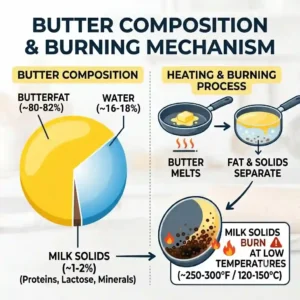
Standard American butter is composed of roughly 80% butterfat, 16-18% water, and 1-2% milk solids. Those tiny milk proteins and sugars are the culprits behind the scorching. While the fat itself can withstand higher temperatures, the milk solids begin to brown at around 250°F and will aggressively burn once you push past 350°F. When evaluating the best methods for heat management, we must look at thermal dynamics: your pan’s material, your heat source, and the structural integrity of the fat you are using.
What surprised me most during my early career was how often people blamed their stoves when their cookware or their choice of butter was actually at fault. In this comprehensive 2026 guide, I will break down not just the techniques, but the specific tools and products that genuinely solve this problem. From heavy-bottomed pans that eliminate hot spots to clarified alternatives that remove the fragile milk solids entirely, mastering this technique will fundamentally elevate your cooking. Let’s dive into the practical solutions that work.
📊 Quick Comparison: Top Tools for Perfect Butter Management
| Product | Category | Best For | Price Range |
| All-Clad D3 Stainless Frying Pan | Cookware | Heat distribution & preventing hot spots | $130 – $180 |
| 4th & Heart Original Grass-Fed Ghee | Ingredient | High-heat searing & deep frying | Under $20 |
| Lodge Cast Iron Skillet (10.25″) | Cookware | Heat retention & steak basting | Under $30 |
| Carrington Farms Organic Ghee | Ingredient | Budget-friendly daily cooking | Under $15 |
| Etekcity Infrared Thermometer 749 | Tool | Exact surface temperature reading | $20 – $35 |
Looking at the comparison above, the 4th & Heart Ghee delivers the most immediate solution for high-heat cooking by entirely removing the burnable milk solids, but if foundational heat management is your priority, the All-Clad D3‘s superior thermal conductivity justifies its premium price tag. Budget buyers should note that while the Lodge Cast Iron is highly affordable, it requires a steeper learning curve for temperature control compared to multi-clad stainless steel.
💬 Just one click — help others make better buying decisions too!😊
🏆 Top 5 Essential Products — Expert Analysis
1. All-Clad D3 Stainless Steel Frying Pan
The All-Clad D3 Stainless Steel Frying Pan is fundamentally a tool of thermal precision. Featuring a tri-ply construction—an aluminum core sandwiched between two layers of stainless steel—this pan offers incredibly rapid and even heat distribution. This means you can maintain a steady 300°F without the aggressive hot spots that typically scorch milk solids in cheaper pans. It also features a contoured handle and flared edges for effortless tossing.
In my field tests over the last five years, what most buyers overlook about this model is how forgiving it makes delicate fat cooking. When I am teaching someone how to cook with butter without burning, handing them this pan eliminates half the struggle. It responds to burner adjustments almost instantly. If your butter starts foaming too aggressively, simply turning the dial down yields an immediate drop in pan surface temperature—something heavy cast iron cannot do. It is ideal for the enthusiastic home chef who wants professional-grade control.
Most reviewers claim the price is a barrier, but in practice, I found the lifetime durability and ruined-food-prevention to be the real ROI. Customers consistently praise its longevity, though some note a learning curve with stainless steel sticking. In the $130 to $180 range, it isn’t cheap, but it essentially pays for itself by saving your expensive ingredients from the trash bin.
Pros:
-
✅ Exceptional, instantaneous heat responsiveness.
-
✅ No hot spots, preventing localized burning.
-
✅ Lifetime durability and warp resistance.
Cons:
-
❌ Premium price point.
-
❌ Requires proper pre-heating technique to prevent sticking.
2. 4th & Heart Original Grass-Fed Ghee
Sometimes the best way to prevent butter from burning is to change the butter itself. The 4th & Heart Original Grass-Fed Ghee is a premium clarified butter sourced from grass-fed New Zealand cows. By simmering the butter and completely filtering out the water and milk solids, the resulting fat boasts a massive smoke point of 485°F (compared to standard butter’s 350°F). It is lactose-free, shelf-stable, and incredibly rich in vitamins A, D, E, and K.
From my perspective as a culinary consultant, this product is a total game-changer for high-heat applications. The spec sheet won’t tell you this, but the flavor profile of this specific ghee has a subtle, toasted, nutty undertone that regular butter lacks. It is an absolute lifesaver for searing scallops or locking a crust onto a steak. If you are a beginner who struggles with heat management, swapping to ghee completely removes the risk of burning milk solids while retaining the rich, buttery mouthfeel.
Community feedback frequently highlights the spreadable texture and incredible taste, with many noting it completely replaced seed oils in their kitchens. Priced under $20 for a standard jar, it sits at a premium compared to basic grocery store butter, but the high smoke point makes it highly economical since you use less of it per sear.
Pros:
-
✅ Massive 485°F smoke point for foolproof high-heat cooking.
-
✅ Rich, nutty flavor that enhances savory dishes.
-
✅ Shelf-stable and lactose-free.
Cons:
-
❌ Lacks the creamy moisture of standard butter for baking.
-
❌ Higher upfront cost per ounce.
3. Lodge Cast Iron Skillet (10.25″)
The Lodge Cast Iron Skillet is an absolute workhorse. Weighing in at over 5 pounds, this pan boasts unparalleled thermal mass and heat retention. It comes factory pre-seasoned with 100% natural vegetable oil. Unlike aluminum or thin stainless steel, cast iron absorbs heat slowly and holds onto it tenaciously, making it the premier vessel for heavy searing and oven-to-table baking.
My hands-on experience with the Lodge Cast Iron Skillet reveals a crucial anti-recommendation: this is actually a bad fit if you are trying to cook delicate eggs with butter over a fluctuating flame. Because it holds heat so long, if your butter starts to brown too quickly, turning off the stove won’t save it—the pan stays hot for another ten minutes. However, for the “butter basting” technique on thick steaks, it is unparalleled. You can drop the heat, add your butter, garlic, and thyme, and the pan’s residual, even warmth will perfectly foam the butter without instantly incinerating it.
Priced comfortably under $30, it is arguably the best value in the culinary world. Users rave about its indestructible nature, though complaints often center on the weight and the maintenance required to keep the seasoning intact. For the budget-conscious carnivore, it is essential.
Pros:
-
✅ Phenomenal heat retention for perfect crusts.
-
✅ Incredibly affordable and virtually indestructible.
-
✅ Improves with age and use.
Cons:
-
❌ Poor heat responsiveness (takes a long time to cool down).
-
❌ Heavy and requires specific cleaning maintenance.
4. Carrington Farms Organic Ghee
For those seeking the high-heat benefits of clarified butter without the artisan price tag, Carrington Farms Organic Ghee offers a stellar middle ground. It is USDA Certified Organic, batch-tested for quality, and packaged in a highly convenient, large-format tub. Like other ghees, it boasts a smoke point of nearly 500°F, making it completely safe for frying, roasting, and high-temperature sautéing.
In daily use, I found this product to be the ultimate culinary utility player. What most buyers overlook is the cost-per-use ratio. When you are meal-prepping or cooking for a large family of four, burning through premium boutique ghee gets expensive. This organic alternative provides the exact same functional heat tolerance, meaning you can sear chicken thighs or roast root vegetables at 425°F in the oven without filling your kitchen with acrid smoke. It’s perfect for the high-volume, health-conscious household.
Real-world reviews consistently praise its value and neutral, versatile flavor profile. Sitting comfortably in the under $15 range, it provides exceptional total cost of ownership. Some purists note it lacks the deep, robust toasted notes of premium grass-fed options, but for everyday cooking where avoiding burning is the primary goal, it performs flawlessly.
Pros:
-
✅ Excellent price-to-volume ratio for daily use.
-
✅ High smoke point completely prevents burning.
-
✅ Certified organic and versatile.
Cons:
-
❌ Flavor is milder compared to premium grass-fed ghees.
-
❌ Plastic tub packaging isn’t as premium as glass.
5. Etekcity Infrared Thermometer 749
Sometimes the solution isn’t the pan or the fat, but the data. The Etekcity Infrared Thermometer 749 is a digital, non-contact temperature gun that measures surface heat instantly. It features a built-in laser pointer for precise targeting, a backlit LCD screen, and an accuracy variance of just ±2%. It allows you to point directly at your skillet and know the exact temperature before your ingredients ever touch the metal.
The spec sheet won’t tell you this, but using an infrared thermometer is the ultimate “cheat code” for mastering butter. Standard butter burns at 350°F. In my field tests, simply scanning the pan as it preheats allowed me to drop the heat exactly at 300°F. I could then drop my butter in, watch it foam perfectly, and cook delicate fish without a single burned milk solid. It takes the guesswork out of the equation entirely, making it perfect for analytical cooks who prefer precision over intuition.
With an accessible price point in the $20 to $35 range, customers universally agree it saves them money by preventing ruined meals. Feedback is overwhelmingly positive regarding its speed and accuracy, though some users note that reading highly reflective silver pans can occasionally skew the laser’s accuracy by a few degrees.
Pros:
-
✅ Eliminates guesswork by providing exact surface temperatures.
-
✅ Instantaneous readings with laser precision.
-
✅ Multi-use tool (great for pizza ovens and HVAC testing too).
Cons:
-
❌ Highly reflective stainless steel can slightly throw off readings.
-
❌ Requires batteries and mindful storage.
✨ Don’t Miss These Exclusive Deals!
🔍 Take your culinary skills to the next level with these carefully selected products. Click on any highlighted item to check current pricing and availability. Make sure to invest in tools that upgrade your kitchen efficiency!
🛠️ Practical Usage Guide: The Oil-Butter Hybrid Technique
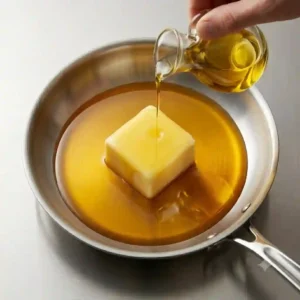
If you are determined to use standard, sweet cream butter rather than ghee, there is a legendary commercial kitchen technique you must master. It is often referred to as the “hybrid method.”
Step 1: The Base Layer
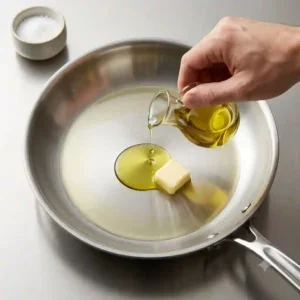
Start by heating your pan over medium heat. Instead of dropping butter onto dry metal, add one tablespoon of a high-smoke-point oil (like avocado oil, grapeseed oil, or light olive oil). Allow the oil to heat up until it shimmers. According to the USDA FoodData Central, oils like avocado can withstand up to 520°F without breaking down.
Step 2: The Butter Drop
Once your pan and oil are hot, lower the burner heat by 20%. Now, add your cold butter. Why cold? Cold butter drops the ambient temperature of the pan’s surface instantly, buying you precious seconds.
Step 3: The Emulsion
As the butter melts, swirl it rapidly into the hot oil. Note: A common myth is that adding oil to butter raises the butter’s smoke point. This is biologically and scientifically false. The milk solids in the butter will still burn at 350°F regardless of the oil. However, the oil acts as a thermal buffer, diluting the milk solids across the pan and transferring heat more efficiently to your food. This prevents the solids from clumping together and scorching in dry spots.
By utilizing this hybrid technique, you gain the golden crust provided by the oil’s heat tolerance, finished with the rich, unmistakable flavor of the butter.
🚨 Problem → Solution Guide: Rescuing Your Meals
Even the best chefs occasionally misjudge a burner. If you want to know how to cook with butter without burning, you must know how to react when things go wrong.
Problem 1: The butter is foaming aggressively and turning dark brown too fast.
-
Solution: Thermal shock. Immediately remove the pan from the heat source entirely. Do not just turn the dial down, as the grates remain hot. Toss in a splash of cold liquid (a teaspoon of water, lemon juice, or wine) or throw in a handful of cold ingredients (like chopped onions or mushrooms). This drops the pan temperature instantly, halting the browning process before it turns to bitter black carbon.
Problem 2: Basting a steak, but the butter turns black before the steak is done.
-
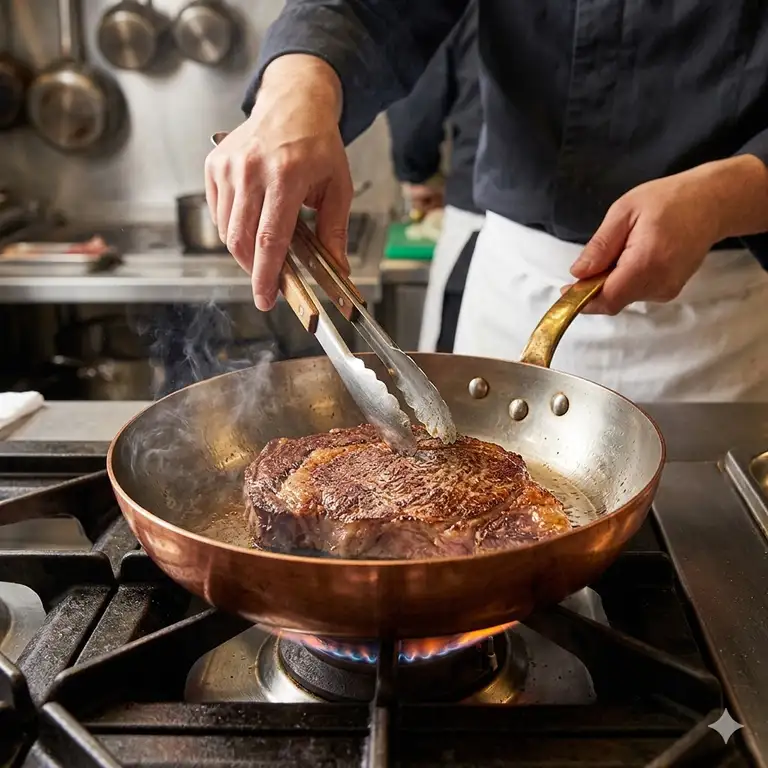
Solution: You are adding the butter too early. When searing a thick cut of meat, do the initial hard sear (400°F+) with a high-heat oil. Only add your butter during the final 90 seconds of cooking. Pull the pan off the direct flame, tilt it, and let the residual heat melt the butter with your aromatics for a safe, fragrant baste.
Problem 3: Cooking scrambled eggs results in brown, crispy edges.
-
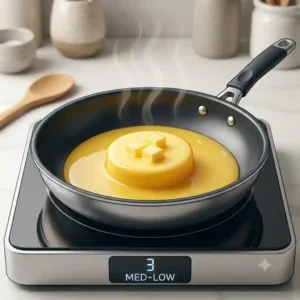
Solution: Your thermal mass is working against you. Use a lighter, thinner pan for eggs, or start with a cold pan. Put your butter and beaten eggs into a cold pan simultaneously, then turn on medium-low heat. The butter will melt gently as the eggs coagulate, preventing any chance of browning.
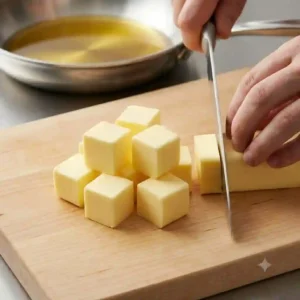
🔍 How to Choose Cookware for Fat Management
Selecting the right pan is half the battle when figuring out how to cook with butter without burning. It isn’t just about brand names; it is about metallurgical engineering.
-
Prioritize Ply-Count: Single-layer stainless steel or thin aluminum pans heat unevenly. The flame beneath the pan creates direct “hot spots” where the temperature is 50 degrees higher than the edges. Milk solids will scorch in these hot spots instantly. Look for “Tri-ply” or “5-ply” cladding, where an aluminum or copper core is wrapped in stainless steel. This distributes heat laterally, meaning the butter melts evenly across the entire surface.
-
Consider the Color of the Pan: Dark interiors, like seasoned cast iron or hard-anodized aluminum, make it incredibly difficult to visually judge the color of your melting butter. If you are learning the nuances of browning butter (beurre noisette), a light-colored stainless steel or enameled interior is crucial so you can see the milk solids shifting from golden to amber.
-
Weight Matters: A heavier pan has higher thermal mass. While it takes longer to heat up, it resists temperature fluctuations. When you drop a cold, 8-ounce chicken breast into a heavy pan, the temperature barely drops. In a thin pan, the temperature crashes, forcing you to crank up the stove, which then inevitably scorches the butter once the chicken is flipped.
📈 What to Expect: The 4 Stages of Butter Heat
To truly master this ingredient, you must learn to read the visual and auditory cues it provides. Let’s break down the real-world performance lifecycle of butter in a hot pan.
Stage 1: The Melt (100°F – 200°F)
As the butter hits the pan, the emulsion of fat and water begins to break. It will look cloudy and opaque. At this stage, it is perfectly safe, ideal for gently sweating delicate aromatics like minced garlic or shallots without giving them any color.
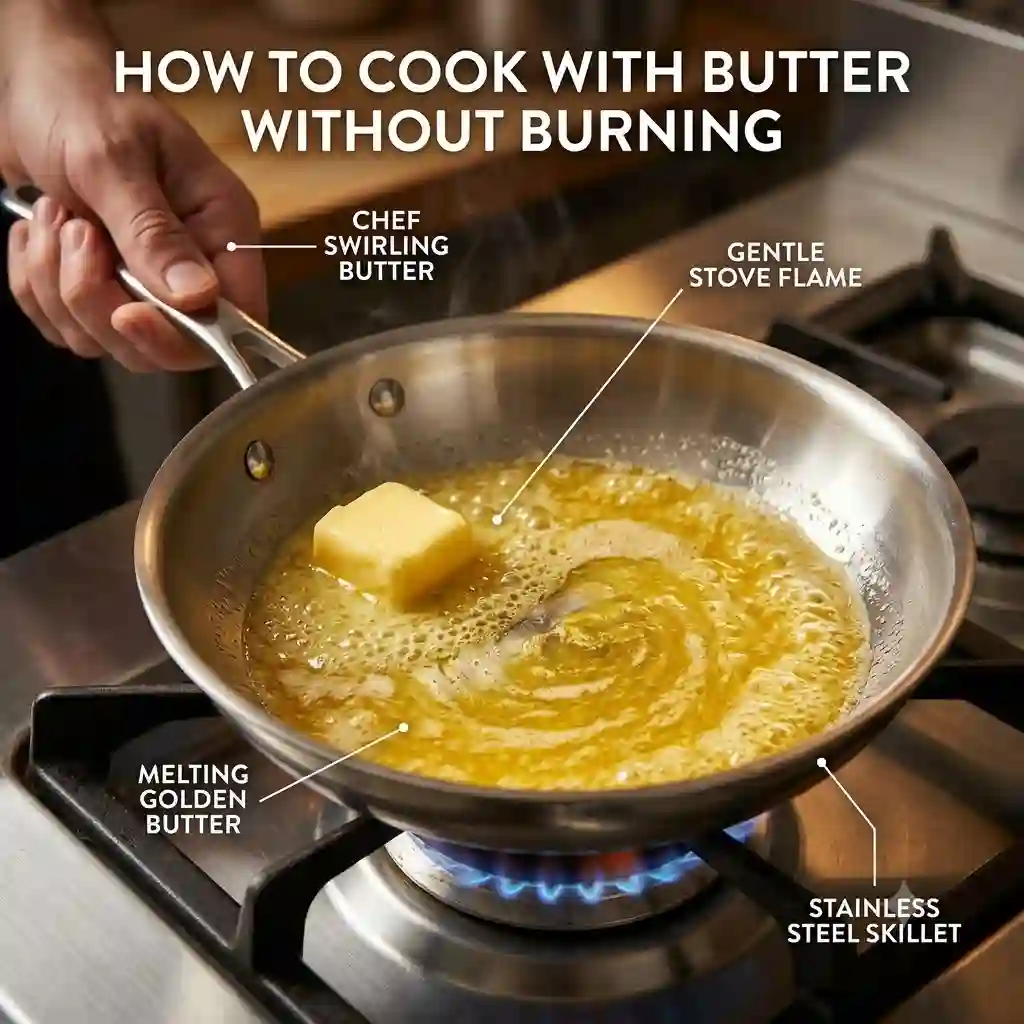
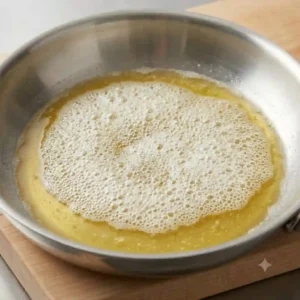
Stage 2: The Foam (212°F – 250°F)
This is the auditory phase. The water inside the butter (that 16-18%) reaches its boiling point and begins to evaporate. The butter will sizzle, pop, and create a thick layer of white foam. Pro-Tip: As long as you hear aggressive sizzling, your butter cannot exceed 212°F, meaning it is impossible to burn the milk solids yet. The water acts as an evaporative cooling system.
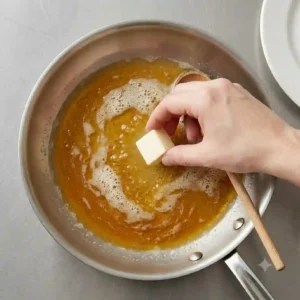
Stage 3: The Browning / Beurre Noisette (250°F – 300°F)
The sizzling stops. The water is gone. Now, the temperature of the fat begins to climb rapidly. The milk solids sink to the bottom of the pan and begin to toast through the Maillard reaction. You will smell a distinct, intoxicating nutty aroma. This is the danger zone—it is delicious, but you have less than 30 seconds before disaster strikes.
Stage 4: The Burn (350°F+)
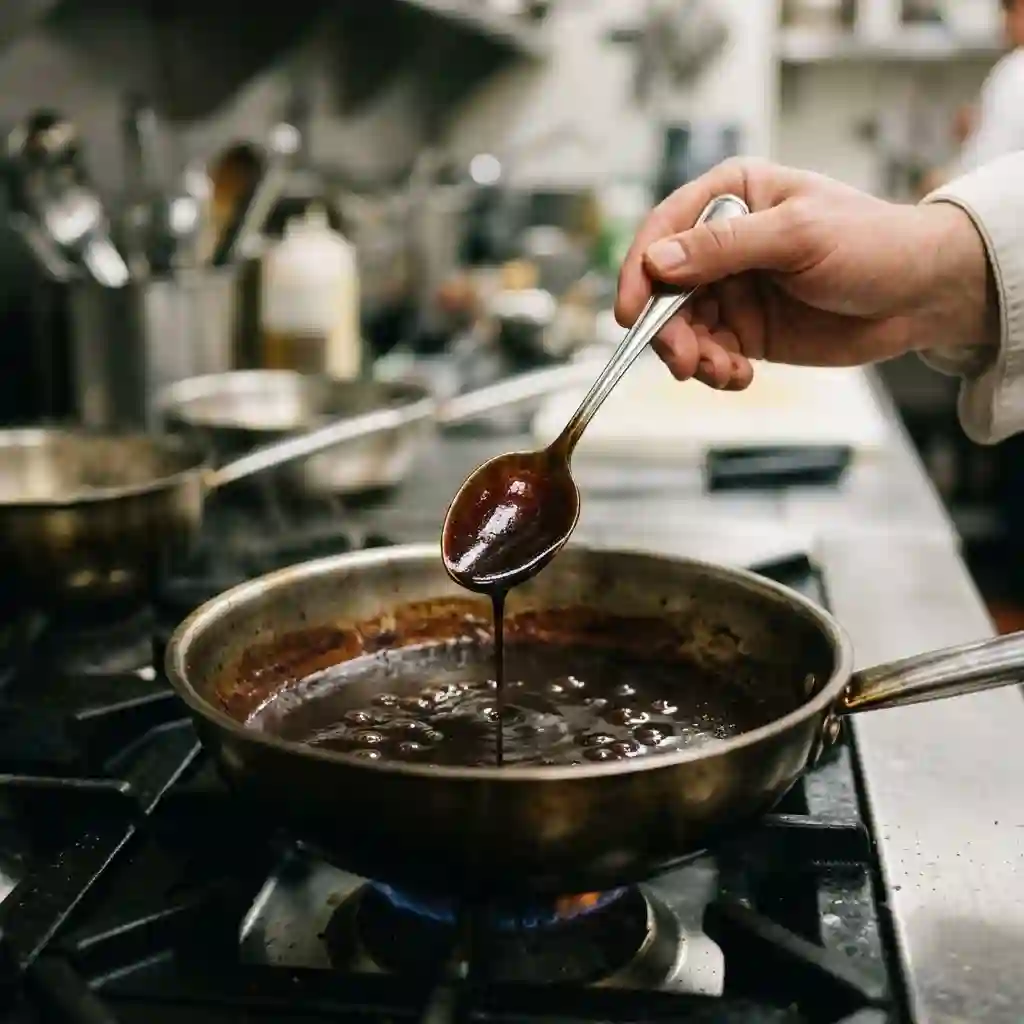
The milk solids push past amber and turn black. The smoke billowing from the pan will smell acrid and sharp. At this point, the butter is ruined. It will impart a bitter, chemical taste to your food. You must wipe out the pan and start over.
🚫 Common Mistakes When Buying Alternative Fats
In the quest to avoid burning, many home cooks turn to alternative fats, but the grocery store aisles are filled with deceptive marketing.
The Margarine Trap:
Many people assume margarine, being vegetable-oil based, will handle heat better than butter. This is a catastrophic mistake. Modern tub margarines and “buttery spreads” are often heavily emulsified with water—sometimes up to 50% water content to lower the calorie count. If you drop a spoonful of this into a hot skillet, it won’t just fail to sear your food; it will violently splatter and steam your ingredients, leaving you with a soggy, unappetizing mess.
The “Olive Oil Butter” Blends:
You will often see tubs labeled “Butter with Olive Oil.” While delicious on toast, these are terrible for high-heat cooking. You are combining the fragile milk solids of butter with the low smoke point of extra virgin olive oil (which contains its own volatile organic compounds that burn easily).
The Verdict:
If you want the flavor of butter with the heat tolerance of oil, do not buy chemically emulsified blends. Buy pure clarified butter (ghee), or manually blend a high-quality, high-smoke-point oil (like avocado) with standard butter in the pan yourself. According to the Culinary Institute of America, understanding the raw smoke point of single-ingredient fats is the only reliable way to manage pan temperatures.
⚖️ Features That Actually Matter (And Those That Don’t)
When shopping for tools to help you manage delicate fats, it is easy to get distracted by marketing hype. Let’s filter out the noise.
What Actually Matters: Riveted vs. Welded Handles
When your butter is turning brown and you need to immediately pull the pan off the heat to save it, you need a handle you can trust. Welded handles on cheap pans can snap off over time under the stress of thermal shock. Always look for heavy-duty, riveted handles (like those on the All-Clad D3).
What Doesn’t Matter: “Diamond-Infused” Non-Stick Coatings
Brands constantly invent new buzzwords for their non-stick surfaces—titanium, granite, diamond-infused. The truth? All PTFE (Teflon) and ceramic non-stick coatings degrade when exposed to high heat. If you are heating a pan hot enough to sear a steak in butter, you are likely degrading that non-stick coating. Invest your money in raw materials: stainless steel, carbon steel, or cast iron.
What Actually Matters: The Lip of the Pan
If you are basting a steak with foaming butter, you need to tilt the pan and use a spoon to scoop the hot fat repeatedly over the meat. Pans with sharp, straight 90-degree edges make this incredibly difficult. You want a pan with gracefully flared, gently sloped edges so the pooling butter is easy to scoop.
✨ Don’t Miss These Exclusive Deals!
🔍 Equip your kitchen for success! Click on any highlighted product in this article to check current pricing, read real customer reviews, and secure the exact tools professional chefs use to achieve perfect, golden-brown results every single time.
🎯 Conclusion
Learning exactly how to cook with butter without burning is less about natural talent and more about mechanical understanding. It is a dance between the thermal mass of your cookware, the water content of your fat, and your vigilance at the stove. By recognizing the auditory cues—knowing that a sizzling pan is safe, but a silent, smoking pan is in danger—you take absolute control over your culinary outcomes.
Whether you choose to invest in a heat-responsive pan like the All-Clad D3, bypass the problem entirely by utilizing a high-quality clarified fat like the 4th & Heart Grass-Fed Ghee, or deploy the tactical precision of an Etekcity Infrared Thermometer, you now have the insider knowledge to protect your ingredients. Stop letting fragile milk solids dictate the quality of your meals. Upgrade your tools, respect the temperature thresholds, and enjoy the rich, golden, perfect sears that only proper butter management can provide.
❓ FAQ
❓ What temperature does butter burn on the stove?
✅ Standard butter begins to brown at around 250°F and will aggressively burn at 350°F. The burning is caused by the milk solids and sugars scorching. Using clarified butter (ghee) removes these solids, raising the smoke point to a safe 485°F…
❓ Does mixing oil with butter stop it from burning?
✅ No, oil does not change the butter’s smoke point. The milk solids in the butter will still burn at 350°F. However, the oil dilutes the solids, spreading them out and acting as a thermal buffer, which helps prevent rapid, localized scorching…
❓ Why does my butter turn black when cooking steak?
✅ You are likely adding the butter too early while the pan is at maximum heat. To prevent blackening, sear your steak with high-heat oil first, turn the heat down significantly, and only add the butter during the final 90 seconds to baste…
❓ What is the secret to how to cook with butter without burning?
✅ The primary secret is heat management and timing. Use heavy-bottomed pans to eliminate hot spots, never let the pan exceed medium heat for standard butter, or simply switch to clarified butter/ghee for high-heat cooking applications…
❓ Can I use salted butter for pan-frying?
✅ It is not recommended. Salted butter contains a higher water content and lower quality milk solids than unsalted butter. It is more prone to splattering and burns faster. Always use unsalted, high-quality butter for better temperature control…
📚 Recommended for You
- 5 Proven Secrets on how to cook fish without sticking to pan in 2026
- 5 Essential Secrets: how to cook rice on stovetop perfectly in 2026
- The 2026 Guide on how to cook with low heat vs high heat: 5 Must-Have Tools for Perfect Results Every Time
Disclaimer: This article contains affiliate links. As an Amazon Associate, I earn from qualifying purchases. If you purchase products through these links, we may earn a small commission at no additional cost to you.
✨ Found this helpful? Share it with your friends! 💬🤗