Picture this: It’s 8 PM on a Friday night, your restaurant is packed, and you’re drowning in dirty dishes. The pile keeps growing, and your staff is scrambling. Sound familiar? That’s where commercial dishwashers come to the rescue—these powerful machines are the unsung heroes of every successful food service operation.
✨Was this helpful? Spread the word! 🚀
I’ve spent years working with restaurants, bars, and cafeterias, and let me tell you, choosing the right commercial dishwasher machine can make or break your kitchen’s efficiency. Whether you’re running a bustling sports bar, an intimate bistro, or a high-volume cafeteria, there’s a dishwashing solution designed specifically for your needs.
Quick Comparison: Commercial Dishwashers vs. Home Dishwashers
Before we dive deep, let’s understand what separates commercial dishwashers from their residential cousins:
| Feature | Commercial Dishwashers | Home Dishwashers |
|---|---|---|
| Cycle Time | 60-90 seconds to 5 minutes | 1-3 hours |
| Racks Per Hour | 20-300+ racks | 1-2 loads |
| Water Usage | 0.35-1.7 gallons per rack | 3-5 gallons per cycle |
| Temperature | 120°F-180°F sanitizing rinse | 120°F-140°F |
| Build Quality | NSF-rated stainless steel | Consumer-grade materials |
| Lifespan | 15-20 years | 8-12 years |
| Warranty Coverage | Commercial operations | Residential use only |
| Daily Capacity | 500-15,000+ dishes | 50-100 dishes |
The difference is staggering, right? Commercial units are built to handle relentless, high-volume demands while maintaining strict sanitation standards required by health departments. According to the National Sanitation Foundation, commercial dishwashers must meet rigorous safety and sanitation requirements that far exceed residential standards.
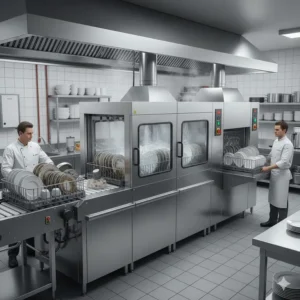
Top 7 Commercial Dishwashers: Expert Analysis
After extensive research and analysis of customer reviews, professional feedback, and technical specifications, I’ve identified the seven best commercial dishwashers available in 2025. Each offers unique advantages depending on your operation’s specific needs.
1. Hobart LXER-2 Advansys Undercounter Dishwasher
The Hobart LXER-2 stands as the gold standard in undercounter commercial dishwashers. This high-temperature powerhouse delivers exceptional performance in a compact footprint.
Key Specifications:
- Capacity: 13-30 racks per hour (depending on cycle)
- Water usage: 0.62 gallons per rack
- Dimensions: 23.9″ W x 26.8″ D x 32.5″ H
- Power: 120/208-240V single phase
- Energy Star certified
Standout Features:
✅ Energy Recovery technology recycles steam to preheat incoming water
✅ Three selectable cycles (light, normal, heavy) for versatility
✅ Automated delime cycle reduces maintenance
✅ Clogged wash arm alert prevents poor performance
✅ 17″ door opening accommodates pots and pans
This machine excels in mid-volume restaurants, cafes, and bars where space is at a premium but performance can’t be compromised. The Hobart LXER-2 uses high-temperature sanitizing, eliminating the need for chemical sanitizers and ensuring your glassware comes out sparkling every time.
Pros:
- Exceptional build quality and reliability
- Energy-efficient operation lowers utility costs
- Smart diagnostics simplify troubleshooting
- Two-level racking option available
- Made in USA
Cons:
- Higher upfront investment
- Requires 208-240V electrical connection
- May need ventless hood depending on local codes
2. CMA Dishmachines L-1X Undercounter Dishwasher
For smaller operations seeking a budget-friendly option, the CMA Dishmachines L-1X offers solid performance without breaking the bank.
Key Specifications:
- Capacity: 30 racks per hour
- Water usage: 1.7 gallons per rack
- Power: 115V single phase
- Low-temperature chemical sanitizing
- Energy Star certified
Standout Features:
✅ Pumped drain eliminates floor drain requirement
✅ Built-in chemical pump and deliming system
✅ Slide-out control drawer for easy servicing
✅ Stainless steel construction throughout
✅ Works on standard 115V outlet
This low temp commercial dishwasher is perfect for nursing homes, daycare centers, small cafes, and venues with limited electrical capacity. The CMA L-1X proves that you don’t need to sacrifice quality for affordability.
Pros:
- Most accessible price point
- Standard electrical requirements
- Compact design fits tight spaces
- Simple operation
- Pumped drain offers installation flexibility
Cons:
- Requires ongoing chemical purchases
- Slower drying due to lower temperatures
- Less effective on heavy grease
- Basic feature set
3. Jackson RackStar 44 Conveyor Dishwasher
When volume becomes your primary concern, the Jackson RackStar 44 conveyor system delivers industrial-strength performance.
Key Specifications:
- Capacity: 223 racks per hour
- Water usage: 0.35 gallons per rack (Econo mode)
- Clearance: 19.75″ through machine
- Dimensions: 44″ W x 30″ D x 68.5″ H
- Energy Star certified
Standout Features:
✅ Rainbow Rinse system with dual modes (Econo/Turbo)
✅ EnergyGuard controls for automatic operation
✅ Adjustable conveyor speed
✅ Double-wall insulated doors
✅ Digital temperature readout
High-volume restaurants, large cafeterias, and healthcare facilities rely on machines like the Jackson RackStar 44 to keep pace with continuous dishwashing demands. This commercial dishwasher machine handles everything from delicate glassware to heavily soiled sheet pans with remarkable efficiency.
Pros:
- Exceptional throughput capacity
- Industry-leading water efficiency
- Continuous operation capability
- Adjustable speed for soil levels
- Robust stainless steel construction
Cons:
- Significant floor space requirement
- Higher acquisition cost
- Three-phase power often required
- Professional installation necessary
4. CMA Dishmachines E-AH-EXT Door Type Dishwasher
The CMA Dishmachines E-AH-EXT bridges the gap between undercounter units and full conveyor systems, offering excellent mid-volume performance.
Key Specifications:
- Capacity: 40 racks per hour
- Power: 115V single phase
- Low-temperature chemical sanitizing
- Door type (straight-through design)
- Energy Star certified
Standout Features:
✅ Extended door design for easier loading
✅ Top-mounted controls for accessibility
✅ External sump for simplified maintenance
✅ Auto start/stop functionality
✅ Poly Pro scrap accumulator
This versatile commercial dishwasher strikes an ideal balance for restaurants, hotels, and catering operations that need more capacity than undercounter units provide but don’t require full conveyor systems.
Pros:
- Excellent mid-range capacity
- Standard electrical requirements
- Straight-through design improves workflow
- Lower operating costs than high-temp models
- Compact footprint for capacity
Cons:
- Ongoing chemical costs
- Manual loading still required
- Less effective on lipstick and grease
- Limited clearance height
5. Jet Tech X-33 Deluxe Undercounter Dishwasher
The Jet Tech X-33 “Deluxe” offers exceptional value with automatic operation and reliable performance.
Key Specifications:
- Capacity: 24 racks per hour
- Automatic washing and rinsing
- Built-in detergent, sanitizer, and rinse-aid pumps
- Low-temperature operation
- Stainless steel construction
Standout Features:
✅ Completely automatic operation
✅ Unique gasketless door design
✅ Upper removable control panel
✅ Double-wall thermal and acoustic insulation
✅ Revolving spray arms with fiberglass construction
This low temp commercial dishwasher excels in bars, small restaurants, and coffee shops where consistent results matter but space is limited. The Jet Tech X-33 delivers professional-grade cleaning without the complexity of larger systems.
Pros:
- User-friendly automatic operation
- Quiet operation due to insulation
- Easy maintenance access
- Consistent chemical dispensing
- Affordable price point
Cons:
- Moderate capacity
- Chemical sanitizing only
- Two standard racks included only
- Limited height clearance
6. Noble Warewashing I-E Door Type Dishwasher
The Noble Warewashing I-E represents American manufacturing excellence with field-convertible design flexibility.
Key Specifications:
- Capacity: 39 racks per hour
- Water usage: 1.02 gallons per rack
- Power: 115V single phase
- Cycle time: 90 seconds
- Low-temperature operation
Standout Features:
✅ Field convertible (straight-through to corner)
✅ Dump and fill operation for fresh water each cycle
✅ Self-draining pump prevents carryover
✅ Built-in scrap accumulator
✅ Top-mounted controls and chemical pumps
This commercial dishwasher machine offers remarkable versatility for restaurants and venues that might need layout flexibility. The Noble I-E adapts to your space rather than forcing you to work around it.
Pros:
- Convertible design options
- Efficient water usage
- Fresh water each cycle
- American-made quality
- Standard voltage requirements
Cons:
- Mixed reliability reports
- 90-day service warranty only
- Chemical pump durability concerns
- Temperature gauge accuracy issues
7. Jackson AJX-44CE Conveyor Dishwasher
For ultimate high-volume performance, the Jackson AJX-44CE delivers industrial-strength dishwashing capability.
Key Specifications:
- Capacity: 225 racks per hour
- Water usage: 0.68 gallons per rack
- Clearance: 25″ through machine
- Dimensions: 62″ W x 25″ D x 75.5″ H
- High-temperature sanitizing
Standout Features:
✅ EnergyGuard control system
✅ Adjust-A-Peak variable conveyor speed
✅ Stainless steel scrap baskets
✅ External splash shields
✅ Automatic operation with sensing
Large schools, full-service restaurants, healthcare facilities, and institutional kitchens depend on machines like the Jackson AJX-44CE to handle massive dishwashing volumes efficiently. This powerhouse handles everything you can throw at it.
Pros:
- Maximum throughput capacity
- Excellent water efficiency
- Adjustable conveyor speed
- Handles large pots and pans
- Fully automatic operation
Cons:
- Substantial floor space needed
- Professional installation required
- Higher utility consumption
- Significant capital investment
🛒 Ready to Upgrade Your Dishwashing Operation?
✨ Don’t settle for subpar cleaning that slows down your kitchen! These carefully selected commercial dishwashers represent the best options available in 2025. Click on any highlighted product name to check current pricing, read detailed customer reviews, and see if it’s the right fit for your operation. Whether you need an undercounter unit or a high-capacity conveyor system, the perfect solution is just a click away! 🚀
💬 Just one click – help others make better buying decisions too! 😊
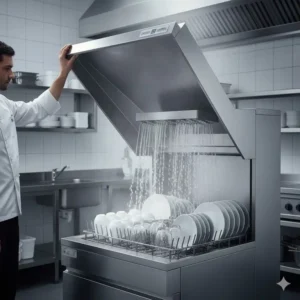
Understanding Commercial Dishwasher Types
Not all commercial dishwashers are created equal. Let’s break down the main categories so you can identify which type best suits your operation.
Undercounter Commercial Dishwashers
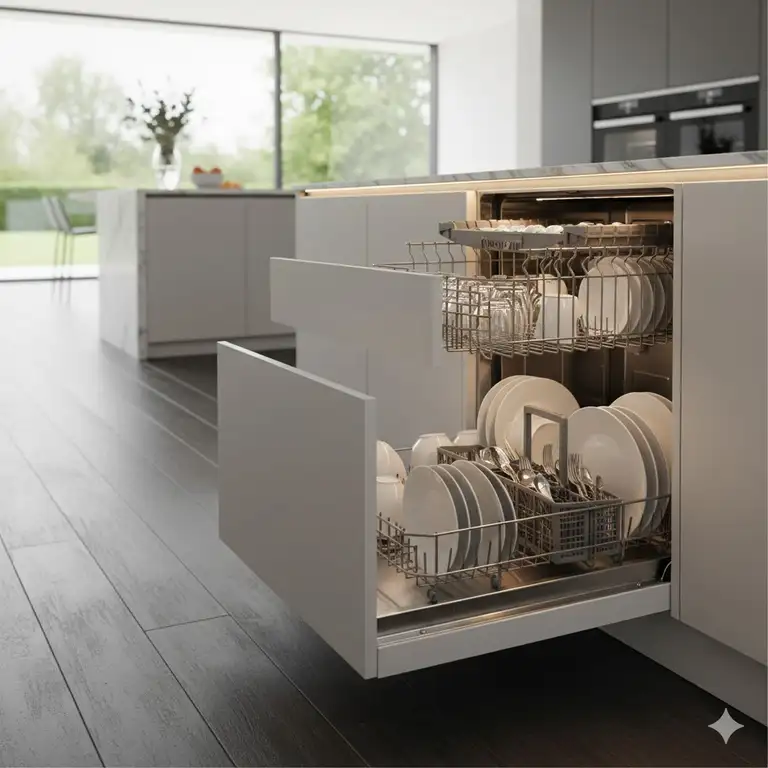
These compact units slide beneath counters, making them perfect for operations with limited space. Undercounter models typically handle 20-40 racks per hour—enough for most small to mid-size restaurants, bars, and cafes.
Best for:
- Coffee shops and cafes
- Small restaurants (under 75 seats)
- Bars and pubs
- Boutique hotels
- Prep kitchens
Typical specifications:
- Height: 30-34 inches
- Width: 24-26 inches
- Capacity: 20-40 racks/hour
- Cycle time: 60-150 seconds
Door Type (Rack) Dishwashers
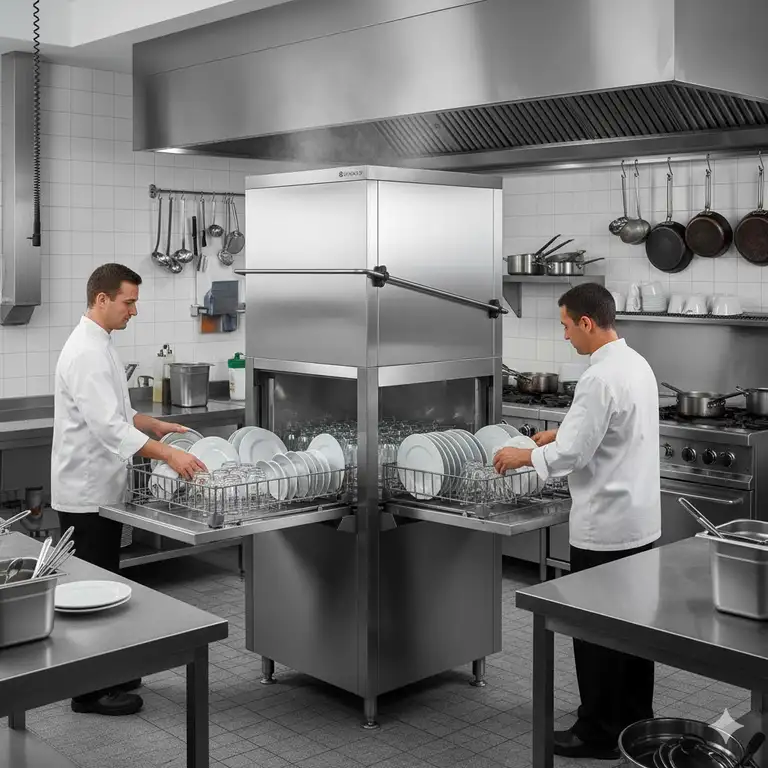
Also called upright or single-rack dishwashers, these machines handle one rack at a time through a front-loading door. They bridge the gap between undercounter units and conveyor systems.
Best for:
- Mid-size restaurants (75-150 seats)
- Catering companies
- Hotels and resorts
- Country clubs
- School cafeterias
Typical specifications:
- Height: 60-80 inches
- Width: 24-30 inches
- Capacity: 35-65 racks/hour
- Cycle time: 60-90 seconds
Conveyor Dishwashers
These high-capacity machines feature a continuous conveyor belt that automatically moves racks through wash and rinse zones. They’re the workhorses of high-volume operations.
Best for:
- Large restaurants (150+ seats)
- Hospital cafeterias
- University dining halls
- Convention centers
- Stadium concessions
Typical specifications:
- Length: 44-100+ inches
- Width: 25-30 inches
- Capacity: 200-300+ racks/hour
- Continuous operation
Flight Type Dishwashers
The ultimate in commercial dishwashing, flight-type machines don’t use racks at all. Dishes ride directly on a conveyor through multiple wash and rinse zones.
Best for:
- Major institutional kitchens
- Large-scale food processing
- Casino operations
- Theme park facilities
- Mega-volume operations
Typical specifications:
- Length: 15-25+ feet
- Capacity: 10,000-15,000+ dishes/hour
- Multiple tank zones
- Integrated drying systems
Low Temp vs High Temp Commercial Dishwashers: Making the Right Choice
One of the most important decisions you’ll make is choosing between low-temperature and high-temperature sanitizing. This choice affects your operating costs, cleaning effectiveness, and installation requirements.
Low Temperature Commercial Dishwashers
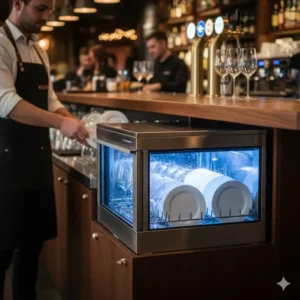
Low temp commercial dishwasher models use chemical sanitizers (typically chlorine or quaternary ammonium) combined with water heated to 120-150°F to clean and sanitize dishes.
How They Work:
These machines heat water to temperatures between 125°F and 145°F for washing, then use chemical sanitizers during the rinse cycle to kill bacteria and pathogens. The sanitizing chemicals do the heavy lifting that heat performs in high-temp models.
Advantages:
✅ Lower utility costs due to reduced heating requirements
✅ Standard 115V electrical connection often sufficient
✅ No condensate hood required in most jurisdictions
✅ Cooler glassware ideal for immediate bar service
✅ Lower initial equipment cost
✅ Faster installation with fewer infrastructure requirements
Disadvantages:
❌ Ongoing chemical purchase expenses
❌ Less effective on lipstick, grease, and protein stains
❌ Slower air drying times
❌ Chemical residue concerns
❌ Potential discoloration over time
❌ More pre-scraping required
Operating Temperature Requirements:
According to the National Sanitation Foundation, low temp commercial dishwasher units must maintain wash temperatures of at least 120°F, though 140-150°F is recommended for optimal cleaning performance. The key is that water temperature alone doesn’t achieve sanitization—chemicals handle that critical function.
Best Applications:
- Bars and nightclubs (cool glasses ready immediately)
- Small cafes with limited electrical capacity
- Operations with budget constraints
- Venues with low grease levels
- Facilities avoiding harsh chemicals (though this seems contradictory!)
High Temperature Commercial Dishwashers
High temp models use water heated to 150-165°F for washing and 180°F or higher for final rinse sanitization. No chemicals required for sanitizing.
How They Work:
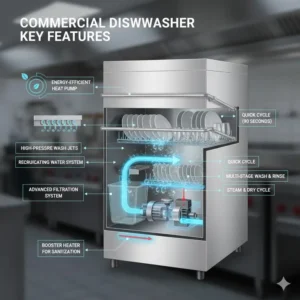
These machines include a booster heater that superheats water for the final rinse cycle, reaching 180°F or higher. This temperature kills 99.9% of bacteria and pathogens without any chemical assistance. The U.S. Food and Drug Administration recognizes high-temperature water as an effective sanitizing method meeting food safety standards.
Advantages:
✅ No ongoing chemical costs
✅ More effective on grease, lipstick, and proteins
✅ No chemical residue or taste
✅ Faster drying due to residual heat
✅ Dishes are table-ready immediately
✅ Better for delicate items that chemicals might damage
✅ Meets all health department requirements easily
Disadvantages:
❌ Higher utility bills (heating water is expensive)
❌ Often requires 208-240V electrical connection
❌ Condensate hood may be required
❌ Higher initial equipment cost
❌ Generates more heat in kitchen
❌ Glassware too hot for immediate bar service
Installation Requirements:
High-temp units typically need:
- Booster heater (often built-in)
- 208-240V electrical service
- Adequate amperage (15-30 amps typical)
- Proper ventilation or condensate hood
- Strategic placement away from customer areas
Best Applications:
- Full-service restaurants
- Operations with heavy grease loads
- Healthcare facilities
- Schools and universities
- Any venue prioritizing chemical-free sanitizing
- High-volume operations where chemical costs add up
Side-by-Side Comparison
| Factor | Low Temp | High Temp |
|---|---|---|
| Water Temperature | 120-150°F | 150-180°F |
| Sanitization Method | Chemical | Heat |
| Electrical Requirements | 115V often sufficient | 208-240V typical |
| Operating Cost | Chemical purchases | Higher utilities |
| Installation Cost | Lower | Higher |
| Grease Removal | Moderate | Excellent |
| Drying Speed | Slower | Faster |
| Ventilation | Usually none | Often required |
| Best For | Bars, small cafes | Restaurants, institutions |
Essential Features to Consider
When evaluating commercial dishwashers, certain features can dramatically impact your operation’s efficiency and your staff’s satisfaction.
Water Efficiency Metrics
Modern commercial dishwasher machine models use remarkably little water—some as low as 0.35 gallons per rack. Compare this to hand washing, which uses approximately 20-27 gallons for the same number of dishes!
Water Usage Benchmarks:
- Excellent: 0.35-0.70 gallons per rack
- Good: 0.71-1.20 gallons per rack
- Acceptable: 1.21-1.80 gallons per rack
- Poor: 1.81+ gallons per rack
The Environmental Protection Agency reports that commercial kitchens using efficient dishwashers can save thousands of gallons annually compared to older models or manual washing.
Energy Star Certification
Energy Star certified commercial dishwashers meet strict efficiency guidelines set by the EPA. These machines can save you:
- 20-25% on energy costs
- 30-40% on water usage
- Thousands of dollars over the machine’s lifespan
Always look for the Energy Star label—it’s not just environmental responsibility, it’s smart business.
Cycle Times and Capacity
Understanding capacity measurements:
Racks Per Hour (RPH): The industry standard measurement. One rack typically holds:
- 18 dinner plates OR
- 36 glasses OR
- Mixed dishware equivalent
Calculating Your Needs:
Here’s a simple formula:
- Count your peak hour covers (meals served)
- Estimate 3 dishes per cover
- Divide by 18 (dishes per rack)
- Add 20% buffer
Example: 100 covers × 3 = 300 dishes ÷ 18 = 16.7 racks × 1.2 = 20 racks needed per hour
Build Quality and Durability
Stainless Steel Construction:
Type 304 stainless steel is the gold standard for commercial dishwasher machine construction. It resists:
- Corrosion from chemicals and minerals
- Dents and physical damage
- Heat warping
- Bacterial growth
Critical Components:
- Wash pumps: 1-3 HP typical
- Rinse arms: Stainless with anti-clog design
- Tank capacity: Larger tanks maintain consistent temperature
- Door gaskets: Must seal properly to maintain temperature
- Filtration: Double or triple filtration prevents redeposit
Automated Features
Modern commercial dishwashers include impressive automation:
Auto-Fill Systems: Automatically maintain proper water levels without manual monitoring.
Chemical Dispensing: Built-in pumps deliver precise amounts of detergent, rinse aid, and sanitizer for every cycle.
Temperature Monitoring: Digital displays and alerts ensure proper sanitizing temperatures are maintained.
Deliming Systems: Automated or prompted deliming cycles prevent mineral buildup that reduces efficiency.
Low Chemical Indicators: Visual and audible alerts when chemicals need refilling.
Energy Recovery: Some high-end models recycle steam energy to preheat incoming water, cutting energy costs by 15-20%.
Comprehensive Feature Comparison
| Feature | Undercounter | Door Type | Conveyor | Flight Type |
|---|---|---|---|---|
| Footprint | Compact | Moderate | Large | Very Large |
| Capacity | 20-40 RPH | 35-65 RPH | 200-300 RPH | 10,000+ dishes/hr |
| Labor | Manual loading | Manual loading | Continuous feed | Continuous feed |
| Best Volume | Low | Medium | High | Very High |
| Price Range | $3K-$8K | $6K-$15K | $20K-$70K | $50K-$150K+ |
| Installation | Simple | Moderate | Complex | Professional |
| Flexibility | High | Moderate | Low | Very Low |
Installation and Infrastructure Requirements
Before you order that shiny new commercial dishwasher, make sure your facility can support it. I’ve seen too many operators excited about their new equipment only to discover they need expensive electrical upgrades or plumbing modifications.
Electrical Requirements
115V Models:
- Typically draw 15-20 amps
- Work with standard outlets
- Limited to low-temp and small undercounter units
- No special wiring needed
208-240V Single Phase:
- Most common for mid-size units
- Requires dedicated circuit
- 20-40 amp breaker typical
- Electrician installation recommended
208-240V Three Phase:
- Required for large conveyor systems
- 40-60+ amps not uncommon
- Not available in all buildings
- May require transformer installation
Critical Considerations:
- Verify your building’s electrical capacity
- Account for concurrent equipment usage
- Budget for electrical panel upgrades if needed
- Ensure proper grounding for safety
Plumbing Requirements
Water Supply:
- Minimum 20 PSI pressure (40-60 PSI ideal)
- ½” to ¾” supply line typical
- Hot water connection required
- Check valve recommended
Drainage:
- 1½” to 2″ drain line typical
- Gravity drain or pumped drain options
- Floor drain access convenient but not always required
- Indirect drain for safety
Water Quality:
- Hardness under 10 grains per gallon ideal
- Water softener recommended in hard water areas
- Filtration prevents mineral buildup
- Chemical treatment may be necessary
Ventilation and Hood Requirements
High-temp commercial dishwashers generate significant steam:
Traditional Hood Requirements:
- Type II (non-grease) exhaust hood
- Adequate CFM rating for steam removal
- Make-up air consideration
- Local code compliance
Ventless Options:
- Energy recovery systems condense steam
- No hood required
- Higher upfront cost
- Significant installation savings
- Better working conditions
Space Planning:
- Allow 6-12 inches clearance on sides
- 18-24 inches behind for service access
- Consider staff traffic flow
- Clean vs. dirty dish paths
- Loading and unloading tables
Operating Cost Analysis
Understanding the true cost of operating commercial dishwashers helps you make informed decisions. Let’s break down the expenses you’ll face over a typical 5-year period.
Cost Comparison: Low Temp vs High Temp
| Cost Factor | Low Temp (Annual) | High Temp (Annual) |
|---|---|---|
| Equipment | $4,000-$7,000 | $6,000-$12,000 |
| Installation | $500-$1,500 | $2,000-$5,000 |
| Electricity | $800-$1,200 | $1,800-$2,800 |
| Water/Sewer | $600-$900 | $400-$700 |
| Chemicals | $2,400-$3,600 | $600-$900 (detergent only) |
| Maintenance | $500-$800 | $600-$1,000 |
| Total (Year 1) | $8,800-$15,000 | $11,400-$22,400 |
| Total (Years 2-5) | $4,300-$6,500/yr | $3,400-$5,400/yr |
| 5-Year Total | $26,000-$41,000 | $24,600-$44,000 |
Assumptions: Medium-volume restaurant, 150 racks/day, 6 days/week operation
Hidden Costs to Consider
Dish Replacement: High-temp machines’ superior grease removal actually extends dish lifespan. Chemical residue from low-temp units can cause discoloration requiring earlier replacement.
Labor Efficiency: Faster cycle times mean dishes return to service quicker. A conveyor dishwasher might eliminate one dishwashing staff position in high-volume operations.
Utility Rate Fluctuations: Factor in projected utility rate increases. Historical data shows commercial electricity rates increase 2-3% annually.
Chemical Price Volatility: Sanitizing chemical costs can spike during supply shortages. Budget conservatively.
Return on Investment
A quality commercial dishwasher machine typically pays for itself through:
Time Savings:
- Hand washing: 15-20 minutes per sink load
- Commercial machine: 1-3 minutes per rack
- Labor cost reduction: $8,000-$15,000 annually for mid-size operations
Water Conservation:
- Hand washing: 20+ gallons per sink load
- Commercial machine: 0.35-1.7 gallons per rack
- Annual savings: $600-$1,200 typical
Energy Efficiency: Modern Energy Star units use 20-30% less energy than older models, saving $400-$800 annually.
Expected ROI Timeline:
- Undercounter models: 18-24 months
- Door type models: 24-36 months
- Conveyor systems: 36-48 months
Maintenance Best Practices
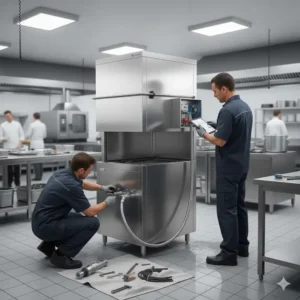
A well-maintained commercial dishwasher can operate flawlessly for 15-20 years. Neglect it, and you’ll face costly repairs and premature replacement.
Daily Maintenance Tasks
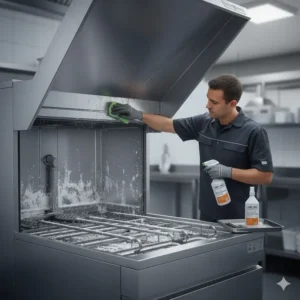
End of Each Shift:
✅ Remove and clean scrap screens
✅ Wipe down door gaskets
✅ Clean spray arms (check for clogs)
✅ Drain and wipe wash tank
✅ Check chemical levels
✅ Inspect for leaks or unusual sounds
These tasks take 10-15 minutes but prevent 90% of common problems.
Weekly Maintenance
Once Per Week:
✅ Deep clean wash tank and rinse arms
✅ Descale spray nozzles
✅ Clean or replace air gap (if equipped)
✅ Inspect door hinges and latches
✅ Verify temperature accuracy
✅ Test chemical dispensing systems
✅ Clean exterior surfaces thoroughly
Monthly Maintenance
Monthly Checklist:
✅ Delime the entire system
✅ Inspect and clean booster heater elements
✅ Check electrical connections
✅ Lubricate moving parts per manufacturer specs
✅ Test safety switches and interlocks
✅ Verify drain flow and clean drain lines
✅ Replace worn gaskets or seals
Annual Professional Service
Even with diligent daily care, schedule annual professional service:
- Complete system inspection
- Pump motor evaluation
- Electrical system check
- Heating element testing
- Calibration of temperature sensors
- Chemical dispensing system overhaul
- Warranty compliance documentation
Service Cost Expectations:
- Undercounter: $200-$400
- Door type: $300-$600
- Conveyor: $600-$1,200
Regular professional maintenance extends equipment life by years and prevents catastrophic failures during busy service periods.
Troubleshooting Common Issues
Understanding basic troubleshooting saves money and downtime. Here are the most common problems and solutions.
Issue: Dishes Not Coming Clean
Possible Causes & Solutions:
Low water temperature
- Check booster heater function
- Verify incoming water temperature
- Test thermostat accuracy
Clogged spray arms
- Remove and clean spray nozzles
- Soak in deliming solution
- Check for debris blocking rotation
Insufficient detergent
- Verify chemical pump operation
- Check detergent concentration
- Replace expired chemicals
Inadequate pre-scraping
- Train staff on proper pre-rinsing
- Install pre-rinse spray station
- Increase wash cycle time for heavy soil

Issue: Water Not Draining
Typical Causes:
❌ Clogged drain line
❌ Failed drain pump
❌ Blocked air gap
❌ Kinked drain hose
Solutions:
- Check for obvious blockages in scrap traps
- Snake drain line if needed
- Test drain pump operation
- Clear air gap obstruction
- Call service technician if problem persists
Issue: Excessive Steam or Heat
Common in high-temp units:
Check ventilation hood:
- Verify adequate CFM rating
- Clean hood filters
- Ensure make-up air functioning
Energy recovery malfunction:
- Service energy recovery unit
- Check condensate drain
- Verify fan operation
Issue: Chemical Dispensing Problems
Low temp commercial dishwasher units depend on proper chemical dispensing.
Troubleshooting Steps:
- Verify chemical supply – Empty containers are the #1 cause
- Check pump prime – Most units have manual prime buttons
- Inspect tubing – Look for cracks, kinks, or disconnections
- Clean pickup tubes – Mineral buildup restricts flow
- Test pump operation – Should hear/see pump activation
Temperature Gauge Not Reading Correctly
Verification Method:
Use heat-sensitive test strips (available from your chemical supplier) to verify actual temperatures. If strips show proper temp but gauge doesn’t:
- Calibrate or replace temperature sensor
- Check sensor probe positioning
- Test gauge electrical connections
Maximizing Dishwashing Efficiency
Beyond choosing the right equipment, operational practices dramatically impact your dishwashing efficiency and results.
Pre-Rinse Best Practices
The right approach to pre-rinsing:
✅ DO scrape solid food waste into trash
✅ DO use a pre-rinse spray station for stuck-on food
✅ DO stack similar items together
✅ DO remove labels and stickers from containers
❌ DON’T fully wash dishes before loading (wastes water)
❌ DON’T let food dry completely on dishes
❌ DON’T overload racks
❌ DON’T mix severely soiled items with lightly soiled ones
According to California Department of Water Resources, proper pre-rinse technique can reduce water usage by 30-40% compared to excessive pre-washing.
Rack Loading Techniques
Optimal Loading Guidelines:
Plates and Dishes:
- Stand vertically in rack slots
- Face the same direction
- Avoid overlapping
- Heavier soil faces spray pattern
Glassware:
- Invert over rack pegs
- Leave space between glasses
- Stemware requires specialized racks
- Never nest glasses inside each other
Flatware:
- Use flatware basket or rack
- Handles down, business end up
- Alternate spoons/forks to prevent nesting
- Soak heavily soiled pieces first
Pots and Pans:
- Use specialized pot/pan racks
- Face interior toward spray
- Remove baked-on residue first
- May require extended cycle
Timing and Workflow Optimization
Peak Efficiency Strategies:
Batch Processing: Group similar items to adjust cycle times appropriately. Lightly soiled glassware needs less time than heavily soiled kitchen prep items.
Continuous Flow: For conveyor systems, maintain steady feeding. Gaps between racks waste water and energy.
Temperature Management: Allow the commercial dishwasher machine to come to full operating temperature before peak volume. Cold starts reduce cleaning effectiveness.
Staff Training: Well-trained dishwashers are 30-40% more efficient than untrained staff. Invest in proper training—it pays immediate dividends.
Health Code Compliance and Sanitation Standards
Commercial dishwashers must meet strict health department requirements. Non-compliance can result in violations, fines, or closure.
NSF Certification Requirements
The National Sanitation Foundation (NSF) sets standards for commercial dishwashing equipment. Look for NSF certification marks:
NSF Standard 3: Commercial warewashing equipment must:
- Reach proper sanitizing temperatures
- Maintain temperatures throughout cycle
- Provide adequate spray coverage
- Meet material safety standards
- Include proper drainage
Why NSF Matters: Many jurisdictions require NSF-certified equipment. Insurance companies may deny claims for non-certified equipment. Health inspectors specifically check for NSF certification.
Temperature Verification
Health departments require regular temperature monitoring:
High-Temp Systems:
- Final rinse must reach 180°F minimum
- Measure at dish surface, not just tank
- Use heat-sensitive test strips
- Document temperatures in log
Low-Temp Systems:
- Wash water 120°F minimum
- Chemical concentration 50-200 PPM (depending on sanitizer)
- Test sanitizer concentration with test strips
- Maintain chemical dispensing logs
Sanitizer Concentration Testing
For low temp commercial dishwasher operations, health codes mandate regular sanitizer testing:
Chlorine Sanitizer:
- Minimum 50 PPM
- Maximum 200 PPM
- Test with chlorine test strips
- Test frequency: Start of shift and every 4 hours
Quaternary Ammonium (Quat):
- Minimum 150 PPM
- Maximum 400 PPM
- Use quat-specific test strips
- Test at same frequency as chlorine
Record Keeping:
Maintain documentation showing:
- Date and time of tests
- Measured concentrations
- Operator initials
- Corrective actions taken
Most health departments require 90 days of records on file.
Choosing the Right Supplier and Support
The manufacturer or brand name on your commercial dishwasher machine is just the beginning. Reliable supplier support makes the difference between minor inconvenience and operational disaster.
Evaluating Suppliers
Key Criteria:
Local Service Availability: Can a technician reach you within 24 hours? Same-day emergency service? Critical for busy operations.
Parts Inventory: Do they stock common replacement parts locally? Waiting 3-5 days for parts during peak season is unacceptable.
Technical Expertise: Are their technicians factory-trained and certified? Can they diagnose issues remotely? Technical competence matters immensely.
Warranty Coverage:
- What’s included?
- How long?
- Labor covered or parts only?
- Response time guarantees?
Chemical Supply: Many suppliers offer bundled chemical programs. Convenient but compare pricing—you might save by sourcing chemicals separately.
Warranty Considerations
Standard Warranty: Most commercial dishwashers include:
- 1 year parts and labor
- Additional years parts only
- Exclusions for misuse or unauthorized repair
Extended Warranty Options: Consider extended warranties for:
- Operations without maintenance staff
- High-volume applications
- Critical operations where downtime is expensive
- Areas with limited service availability
Cost-Benefit Analysis: Extended warranties typically cost 10-15% of equipment price. Calculate your risk:
- Average repair cost: $500-$1,500
- Typical repairs in 5 years: 2-4
- DIY maintenance capability
- Downtime cost to your operation
Service Contracts
Preventive Maintenance Plans:
Many suppliers offer service contracts including:
- Quarterly preventive maintenance
- Priority emergency service
- Discounted parts
- Annual deliming service
- Staff training
Typical Costs:
- Undercounter: $400-$800/year
- Door type: $600-$1,200/year
- Conveyor: $1,200-$2,500/year
Value Assessment:
Service contracts make sense when:
✅ Your staff lacks maintenance expertise
✅ Downtime costs are high
✅ You prefer predictable budgeting
✅ Equipment is mission-critical
✅ You operate in a remote area
Environmental Impact and Sustainability
Modern commercial dishwashers are remarkably eco-friendly compared to manual washing or older equipment. Understanding their environmental benefits helps justify investment.
Water Conservation
Remarkable Efficiency:
A modern commercial dishwasher machine uses 0.35-1.7 gallons per rack (approximately 18-36 dishes). Compare this to hand washing:
- Hand washing: 20-27 gallons for same dishes
- Old dishwashers: 3-5 gallons per rack
- Modern units: 0.35-1.7 gallons per rack
Annual Impact:
A busy restaurant washing 200 racks daily:
- Modern dishwasher: 17,000-68,000 gallons/year
- Hand washing: 1,400,000 gallons/year
- Savings: 1,300,000+ gallons annually!
That’s enough water to fill two Olympic swimming pools.
Energy Efficiency
Energy Star Advantages:
Energy Star certified units use:
- 20-25% less energy than standard models
- 30-40% less water
- Advanced insulation reducing heat loss
- Energy recovery systems (premium models)
Carbon Footprint Reduction:
Efficient commercial dishwashers reduce CO2 emissions by:
- 2-4 tons annually (typical restaurant)
- Equivalent to taking 1-2 cars off the road
- Comparable to planting 50-100 trees
Chemical Usage Optimization
Precise Dispensing:
Built-in chemical pumps in modern dishwasher machine models deliver exact amounts needed—no more, no less. This eliminates:
- Overuse from manual dosing
- Underdosing leading to rewash
- Chemical waste from spillage
- Environmental contamination
Eco-Friendly Chemical Options:
Many manufacturers now offer:
- Biodegradable detergents
- Plant-based sanitizers
- Phosphate-free formulas
- Reduced VOC products
Sustainable Practices
Maximizing Sustainability:
✅ Run full racks only (never partial loads)
✅ Proper maintenance extends equipment life
✅ Energy-efficient models save long-term
✅ Proper chemical concentration avoids waste
✅ Train staff on eco-friendly practices
Benefits Comparison Table
| Benefit | Manual Washing | Residential Dishwasher | Commercial Dishwasher |
|---|---|---|---|
| Time Efficiency | 15-20 min per load | 2-3 hours | 1-3 minutes |
| Labor Cost | High (continuous) | Minimal | Minimal |
| Water Usage | 20-27 gallons | 4-6 gallons | 0.35-1.7 gallons |
| Sanitization | Variable (unreliable) | 140°F typical | 180°F certified |
| Dish Damage | High (breakage) | Moderate | Low (proper racks) |
| Volume Capacity | 50-100 dishes/hour | 50-100 dishes/cycle | 300-5,400 dishes/hour |
| Health Code | Often inadequate | Not compliant | Fully compliant |
| ROI | N/A (ongoing cost) | Not suitable | 18-48 months |
| Consistency | Variable | Good | Excellent |
| Staff Satisfaction | Low (tedious) | N/A | High (easier work) |
Future Trends in Commercial Dishwashing
The industry continues evolving with impressive innovations on the horizon.
Smart Technology Integration
IoT Connectivity:
Next-generation commercial dishwashers feature:
- Real-time performance monitoring via smartphone
- Automatic service dispatch when issues detected
- Usage analytics and efficiency reporting
- Remote diagnostics reducing service costs
- Predictive maintenance alerts
Data-Driven Optimization:
Smart dishwashers analyze:
- Peak usage patterns
- Water and energy consumption
- Chemical usage rates
- Maintenance needs prediction
- Staff efficiency metrics
Water-Saving Innovations
Target: Zero Waste:
Manufacturers are developing systems that:
- Recycle rinse water for next wash cycle
- Capture and reuse steam condensate
- Filter and purify water multiple times
- Achieve 0.25 gallons per rack or less
Chemical-Free Sanitizing
Alternative Technologies:
Research focuses on:
- Ozone sanitization
- UV light sterilization
- Electrolyzed water cleaning
- Ultrasonic cleaning systems
These technologies could eliminate chemical costs and environmental impact entirely.
Modular and Scalable Designs
Flexibility Focus:
Future commercial dishwasher machine models will feature:
- Expandable capacity modules
- Quick-change configuration
- Smaller footprints
- Easy relocation capability
- Rental/subscription models
Price Range and Budget Planning
Understanding the total investment helps you plan appropriately.
Equipment Cost Ranges
| Type | Budget Range | Mid-Range | Premium |
|---|---|---|---|
| Undercounter | $3,000-$5,000 | $5,000-$8,000 | $8,000-$12,000 |
| Door Type | $5,000-$8,000 | $8,000-$12,000 | $12,000-$18,000 |
| Conveyor | $18,000-$30,000 | $30,000-$50,000 | $50,000-$80,000 |
| Flight Type | $45,000-$70,000 | $70,000-$100,000 | $100,000-$200,000+ |
Additional Investment Costs
Installation:
- Undercounter: $500-$2,000
- Door type: $1,500-$4,000
- Conveyor: $3,000-$8,000
- Flight type: $8,000-$20,000+
Infrastructure Upgrades:
- Electrical: $1,000-$10,000
- Plumbing: $500-$3,000
- Ventilation: $2,000-$15,000
- Drainage: $500-$2,500
Accessories:
- Extra racks: $50-$150 each
- Specialized racks: $100-$300 each
- Pre-rinse station: $400-$1,200
- Chemical dispensers: $200-$500
- Work tables: $300-$1,500
Financing Options
Outright Purchase: Best for operations with available capital and tax advantages for equipment depreciation.
Equipment Leasing:
- Conserves capital for other needs
- Fixed monthly payments
- Includes service/maintenance often
- Upgrade options at lease end
- Tax deductible payments
Typical Lease Terms:
- 36-60 months common
- $100-$1,500/month depending on equipment
- Buyout option at lease end
- Credit approval required
Manufacturer Financing: Some manufacturers offer:
- 0% financing for 12-24 months
- Deferred payment programs
- Trade-in allowances
- Bundle deals with chemicals
🎯 Transform Your Dishwashing Operation Today!
Ready to revolutionize how your kitchen handles dishwashing? Whether you’re opening a new establishment or upgrading existing equipment, the right commercial dishwasher transforms your operation. ✨
These seven models represent the cream of the crop for 2025, each offering unique advantages for different applications. From compact undercounter units perfect for cozy cafes to industrial-strength conveyor systems that power mega-volume operations, there’s a perfect solution waiting for you.
Don’t let inefficient dishwashing hold back your success. Click on any of the highlighted product names above to check current pricing, read real customer reviews, and find the commercial dishwasher machine that matches your needs. Your staff will thank you, your customers will notice the difference, and your bottom line will reflect the efficiency gains! 🚀
Conclusion
Choosing the right commercial dishwasher represents one of the most important equipment decisions you’ll make for your food service operation. The difference between an underpowered unit struggling to keep up and a properly-sized machine working efficiently is night and day.
Throughout this guide, we’ve explored the critical factors: understanding the distinction between low temp commercial dishwasher models and high-temperature systems, evaluating capacity needs, considering installation requirements, and calculating total cost of ownership. We’ve examined seven outstanding models across different categories and price points.
Remember these key takeaways:
Match capacity to your operation. Don’t undersize to save money—you’ll pay far more in labor inefficiency and operational headaches. Conversely, oversized equipment wastes energy and money on excess capacity you’ll never use.
Consider long-term costs, not just purchase price. A low-cost low-temp unit might seem attractive until you calculate five years of chemical expenses. Run the numbers for your specific situation.
Prioritize quality and support. Commercial dishwashers from reputable manufacturers backed by solid local service support will serve you faithfully for 15-20 years. Budget brands often fail within 3-5 years.
Plan for proper installation. Factor in electrical, plumbing, and ventilation requirements from the start. Last-minute infrastructure upgrades can double your project cost.
Maintain religiously. Daily cleaning, weekly deep maintenance, and annual professional service extends equipment life and prevents costly downtime.
The commercial dishwasher machine you choose becomes the backbone of your warewashing operation. It affects labor costs, utility expenses, dish quality, and ultimately, customer satisfaction. Take time to evaluate your specific needs, compare options carefully, and invest in quality equipment supported by reliable service.
Your future self (and your dishwashing staff!) will thank you for making the right choice today.
Frequently Asked Questions
✅ Modern commercial dishwashers use between 0.35 to 1.7 gallons of water per rack depending on the model and efficiency rating. High-efficiency conveyor models can achieve as low as 0.35 gallons per rack, while standard undercounter units typically use 0.6 to 1.2 gallons. Energy Star certified models fall on the lower end of this range, offering significant water savings compared to hand washing which uses 20-27 gallons for the same number of dishes...
✅ Low temperature commercial dishwashers use water heated to 120-150°F combined with chemical sanitizers (chlorine or quat) to sanitize dishes, while high temp models use water heated to 180°F or higher for heat sanitization without chemicals. Low temp units typically require only 115V power and no ventilation hood but have ongoing chemical costs. High temp models need 208-240V power and often require ventilation but have no chemical expenses and dry dishes faster...
✅ Calculate your racks per hour needs by multiplying peak hour covers by 3 dishes per cover, dividing by 18 dishes per rack, then adding a 20% buffer. For example, a restaurant serving 100 covers at peak needs approximately 20 racks per hour (100 × 3 ÷ 18 × 1.2). Small cafes need 20-30 RPH, mid-size restaurants need 35-65 RPH, and large operations require 100-200+ RPH...
✅ Commercial dishwashers need a dedicated hot water supply line (typically 0.5-0.75 inches), adequate water pressure (20-60 PSI), and proper drainage (1.5-2 inches drain line). Some models require floor drains while others have built-in pumped drainage systems. High-temp models often need booster heaters and may require steam condensate hoods. Installation costs range from $500 for simple undercounter units to $8,000+ for large conveyor systems...
✅ Annual operating costs for commercial dishwashers include electricity ($800-$2,800), water and sewer ($400-$900), chemicals ($600-$3,600 depending on sanitizing method), and maintenance ($500-$1,000). Low temp models have higher chemical costs but lower utility bills, while high temp models have higher energy consumption but no sanitizing chemical expenses. Total annual costs typically range from $3,000 to $7,000 for mid-volume operations... ❓ How much water does a commercial dishwasher use per rack?
❓ What's the difference between a low temp and high temp commercial dishwasher?
❓ How many racks per hour do I need for my restaurant?
❓ Do commercial dishwashers require special plumbing installation?
❓ What are the ongoing costs of operating a commercial dishwasher?
Recommended for You
- Bosch Dishwashers: 7 Premium Models Ranked 2025 for Superior Performance & Style
- KitchenAid Mixers: 7 Best Models for Home Bakers 2025
- Commercial Kitchen Equipment Repair: 7 Pro Tools Save $50K+ | 2025 Guide
Disclaimer: This article contains affiliate links. If you purchase products through these links, we may earn a small commission at no additional cost to you.
✨ Found this helpful? Share it with your friends! 💬🤗