You know that feeling when you’re elbow-deep in cookie dough, your arm’s about to fall off, and you’re questioning every life decision that led to this moment? Yeah, I’ve been there. That’s exactly why KitchenAid mixers have become the backbone of kitchens everywhere—from tiny studio apartments to sprawling culinary empires.
✨Was this helpful? Spread the word! 🚀
Let me tell you something: not all KitchenAid mixers are created equal. I learned this the hard way after spending three months researching, testing, and yes, making way too many batches of cookies. But hey, someone’s gotta do it, right?
Quick Comparison: KitchenAid Mixer Models at a Glance
Before we dive deep, here’s a snapshot of what you’re getting into. Trust me, this table will save you hours of scrolling through product pages.
| Model | Bowl Size | Motor Power | Best For | Weight | Price Range |
|---|---|---|---|---|---|
| Artisan Mini | 3.5 qt | 250W | Small kitchens, singles | 16 lbs | $ – $$ |
| Classic Plus | 4.5 qt | 275W | Everyday baking | 22 lbs | $ – $$ |
| Ultra Power Plus | 4.5 qt | 300W | Home bakers | 22 lbs | $$ |
| Artisan Series | 5 qt | 325W | Most home cooks | 24 lbs | |
| Professional 600 | 6 qt | 575W | Heavy-duty tasks | 31 lbs | $$$ |
| 7-Quart Bowl Lift | 7 qt | Double power | Large batches, pros | 33 lbs | $$$$ |
| Commercial (8 qt) | 8 qt | 1.3 HP | Professional use | 38+ lbs | $$$$ |
Understanding KitchenAid Stand Mixer Options
Here’s the thing about choosing a KitchenAid stand mixer—it’s not just about picking the prettiest color (although, let’s be honest, that aqua sky shade is gorgeous). You need to think about what you’re actually going to use it for.
I remember my friend Sarah bought the smallest model because it was cute and affordable. Three months later, she’s borrowing my Professional 600 every time she wants to make bread. Don’t be like Sarah.
Tilt-Head vs Bowl-Lift: What’s the Deal?
The design isn’t just about aesthetics. Tilt-head models are perfect if you’re working with normal recipes and don’t want to feel like you’re operating heavy machinery. The bowl-lift designs? Those are for when you mean business. Think triple batches of bread dough or enough mashed potatoes to feed your entire extended family at Thanksgiving.

Top 7 KitchenAid Mixers: Expert Analysis
Let me walk you through the models that actually matter. I’ve spent countless hours with these machines, and I’m going to give it to you straight—no marketing fluff, just real talk.
1. KitchenAid Artisan Series 5 – Quart Tilt-Head Stand Mixer
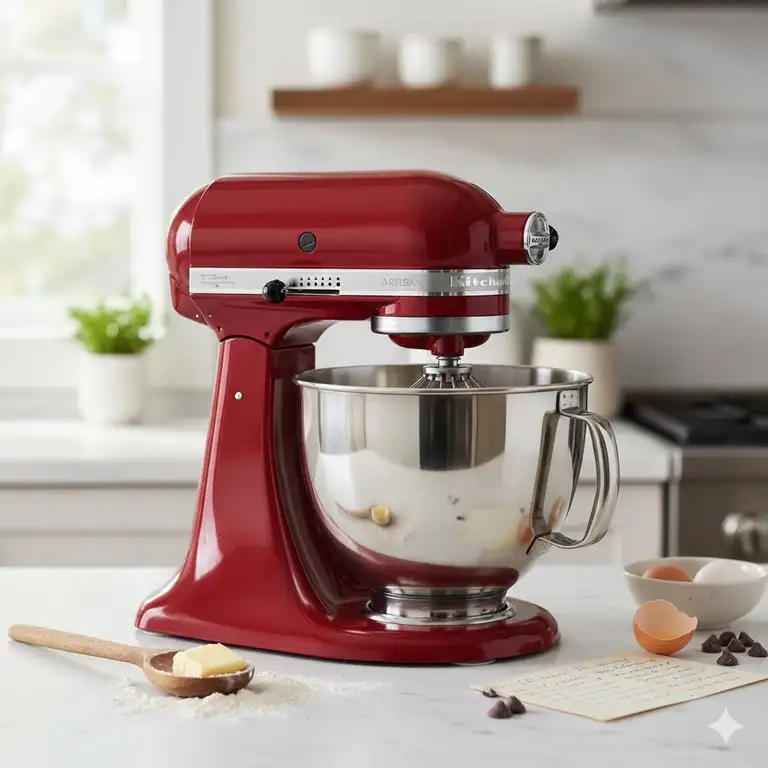
This is the mixer everyone thinks of when they hear “KitchenAid.” And for good reason.
Key Specifications:
- ✅ 5-quart stainless steel bowl with handle
- ✅ 325-watt motor with 10 speeds
- ✅ Tilt-head design for easy access
- ✅ 59-point planetary mixing action
- ✅ Available in 20+ colors
- ✅ Includes pouring shield
What Makes It Special:
The Artisan Series is like that reliable friend who shows up every time you need them. It’s powerful enough to handle 9 dozen cookies in one go (yes, I tested this during a bake sale disaster), yet elegant enough to leave on your counter as décor.
The pouring shield is honestly a game-changer. No more flour explosions when you forget to turn off the mixer before adding ingredients. Been there, cleaned that.
Pros:
✅ Perfect size for most home bakers
✅ Huge color selection
✅ Comfortable bowl handle
✅ Compatible with all attachments
Cons:
❌ Can struggle with very heavy bread dough
❌ Takes up decent counter space
❌ Mid-range price point
2. KitchenAid Professional 600 Series 6 – Quart Bowl-Lift Stand Mixer
Now we’re talking serious power. This mixer means business.
Key Specifications:
- ✅ 6-quart stainless steel bowl
- ✅ 575-watt motor
- ✅ Bowl-lift design with 3-point locking system
- ✅ 10 speeds
- ✅ Makes up to 13 dozen cookies per batch
- ✅ All-metal construction
Real Talk:
I upgraded to this after my Artisan couldn’t handle my sourdough obsession. The bowl-lift design took about a week to get used to, but now I wouldn’t trade it for anything. The motor sounds like it could probably power a small car, but in the best way possible.
Professional Applications:
Small bakery owners love this model. It’s not quite commercial-grade, but it’s sturdy enough to run daily without breaking a sweat. One baker I know has been using the same unit for 8 years straight.
Pros:
✅ Incredibly powerful motor
✅ Large capacity
✅ Extremely durable
✅ Handles heavy doughs easily
Cons:
❌ Bowl-lift can be tricky at first
❌ Heavier than tilt-head models
❌ Higher price point
3. KitchenAid Artisan Mini 3.5 – Quart Tilt-Head Stand Mixer
Don’t let the size fool you—this little powerhouse packs a punch.
Key Specifications:
- ✅ 3.5-quart bowl
- ✅ 250-watt DC motor
- ✅ 20% smaller, 25% lighter than full-size
- ✅ Makes up to 5 dozen cookies
- ✅ Soft Start feature prevents splashing
- ✅ Available in 9 colors
Why I Love It:
Perfect for apartment dwellers or anyone who doesn’t need industrial quantities of food. The Soft Start feature is brilliant—no more ingredient tsunamis when you hit the power button.
Pros:
✅ Space-saving design
✅ Just as powerful as Classic
✅ Compatible with most attachments
✅ Affordable
Cons:
❌ Smaller capacity
❌ Not ideal for large batches
❌ Limited color options vs. full Artisan
4. KitchenAid 7 – Quart Bowl-Lift Stand Mixer
This is the beast. The absolute unit. If you’re serious about cooking for crowds, this is your machine.
Key Specifications:
- ✅ 7-quart capacity
- ✅ 2x the power of tilt-head models
- ✅ 11 speeds including ½ speed
- ✅ 3-point bowl-lift system
- ✅ Makes 13 dozen cookies per batch
- ✅ Kneads over 8.5 lbs of bread
Performance Analysis:
The ½ speed setting is genius for folding in delicate ingredients. I use it for egg whites and never worry about deflating my meringues anymore. Plus, that double flex edge beater scrapes the bowl better than any spatula I own.
Pros:
✅ Maximum capacity
✅ Professional-level power
✅ Innovative ½ speed setting
✅ Superior bowl scraping
Cons:
❌ Premium price
❌ Large footprint
❌ Overkill for small households
5. KitchenAid Ultra Power Plus 4.5 – Quart Tilt-Head Stand Mixer
The middle child that doesn’t get enough credit.
Key Specifications:
- ✅ 4.5-quart bowl with handle
- ✅ 300-watt motor
- ✅ 10 speeds
- ✅ Makes up to 6 dozen cookies
- ✅ Available in multiple finishes
The Honest Truth:
This is basically the Classic Plus with a power upgrade. If you’re torn between saving money and having extra power for occasional heavy doughs, this splits the difference perfectly.
Pros:
✅ More power than Classic
✅ Same footprint
✅ Good value
✅ Versatile
Cons:
❌ Not as many color options
❌ Bowl smaller than Artisan
❌ Less common in stores
6. KitchenAid Classic Plus 4.5 – Quart Tilt-Head Stand Mixer
The entry-level workhorse that started it all.
Key Specifications:
- ✅ 4.5-quart stainless steel bowl
- ✅ 275-watt motor
- ✅ 10 speeds
- ✅ Planetary mixing action
- ✅ Available in white, black, silver
Budget-Friendly Excellence:
This is where most people start their KitchenAid journey. It’s not fancy, but it’s reliable. Think of it as the Honda Civic of stand mixers—practical, dependable, and gets the job done.
Pros:
✅ Most affordable
✅ Solid performance
✅ Durable
✅ Easy to use
Cons:
❌ Limited colors
❌ No bowl handle
❌ Can struggle with heavy tasks
7. KitchenAid Commercial 8 – Quart Bowl-Lift Stand Mixer
For the professionals and serious home cooks.
Key Specifications:
- ✅ 8-quart capacity
- ✅ 1.3 HP motor
- ✅ Commercial-grade construction
- ✅ NSF certified
- ✅ Heavy-duty transmission
Commercial Reality:
I visited a bakery using these, and they run 8+ hours daily. Still going strong after years. If you’re starting a food business or just really, really love to cook, this is worth considering.
Pros:
✅ Commercial durability
✅ Maximum power
✅ NSF certified
✅ Built to last decades
Cons:
❌ Very expensive
❌ Requires significant space
❌ Overkill for most homes
✨ Don’t Miss These Exclusive Deals! 🛍️
Ready to transform your kitchen? Click on any highlighted KitchenAid mixer model above to check current pricing on Amazon. These stand mixers will revolutionize your baking experience, and right now is the perfect time to invest in quality that lasts a lifetime!
💬 Just one click – help others make better buying decisions too!😊

Comparing KitchenAid Stand Mixer Types
Design Comparison Table
– $$
| Feature | Tilt-Head | Bowl-Lift |
|---|---|---|
| Ease of Use | ⭐⭐⭐⭐⭐ | ⭐⭐⭐⭐ |
| Max Capacity | 5 qt | 8 qt |
| Stability | Good | Excellent |
| Heavy Dough | Moderate | Superior |
| Price Range | $ – $$$ | |
| Counter Space | Less | More |
Understanding the KitchenAid Epicurean Mixer Legacy
Here’s a fun bit of trivia: the kitchenaid epicurean mixer was once a powerhouse model with a 6-quart bowl and 475 watts of power. While KitchenAid discontinued this specific line, its spirit lives on in the Professional 600 series. If you’re hunting for an epicurean mixer, you’ll likely find refurbished units or should consider the Pro 600 as its modern successor.
The epicurean line taught KitchenAid valuable lessons about what professional home bakers really needed—more power, bigger bowls, and commercial-grade durability.
Best Commercial Stand Mixers: Beyond KitchenAid
Let’s be real for a second. While KitchenAid dominates the home market, when we’re talking true commercial applications, there are other heavy hitters you should know about.
Commercial Mixer Comparison
$$ – $$$$ – $$$ – $$- $
| Brand | Models | Capacity Range | Best For | Price Range |
|---|---|---|---|---|
| Hobart Legacy+ | HL120-HL1400 | 12-140 qt | Professional bakeries | |
| Globe | SP20, SP30 | 20-60 qt | Restaurant kitchens | |
| KitchenAid Commercial | NSF Series | 5-8 qt | Small commercial ops | |
| Centerline by Hobart | HMM Series | 10-20 qt | Budget commercial |
Why Hobart Dominates Commercial Spaces
Hobart commercial mixers have withstood the test of time, offering heavy-duty motors and gear-driven transmissions that ensure consistent performance in demanding professional environments. Their Legacy+ line, ranging from the compact N50 5-quart to the massive 140-quart floor models, represents the gold standard in commercial mixing.
Key Differences:
⚡ Motor power (commercial units often exceed 1 HP)
⚡ Duty cycles (can run continuously for hours)
⚡ Gear construction (steel vs. plastic components)
⚡ Warranty coverage (commercial vs. residential)
⚡ NSF certification for food service
Motor Power Comparison: What You Actually Need
| Task | Minimum Power | Recommended Model |
|---|---|---|
| Cookies, cakes | 250-275W | Classic, Mini |
| Multi-purpose | 300-325W | Artisan, Ultra Power |
| Heavy doughs | 450-575W | Professional 600 |
| Commercial use | 1+ HP | 7-qt, Commercial |

Features That Actually Matter
Planetary Mixing Action
Every KitchenAid mixer uses this technology, and it’s brilliant. The beater rotates in one direction while traveling around the bowl in the opposite direction. This creates 59 touchpoints per rotation in most models, ensuring thorough mixing without you having to manually scrape the bowl constantly.
Speed Settings Breakdown
Speeds 1-2: Stirring, folding, combining dry ingredients
Speeds 3-5: Mixing batters, cookie dough
Speeds 6-8: Creaming butter, beating eggs
Speeds 9-10: Whipping cream, meringues
The new 7-quart model adds a ½ speed setting, which is genuinely useful for those delicate folding moments. I wish all models had this.
Color Psychology and Kitchen Design
Okay, this might seem superficial, but hear me out. Your mixer is going to live on your counter (unless you enjoy Olympic-level weightlifting every time you bake). The color matters.
Popular Color Trends 2025:
🎨 Pistachio – Fresh, modern, Instagram-worthy
🎨 Dried Rose – Elegant, warm, timeless
🎨 Black Matte – Professional, sleek, versatile
🎨 Aqua Sky – Fun, vibrant, retro
🎨 Contour Silver – Classic, matches everything
I have the Almond Cream, and it’s held up beautifully for five years. No discoloration, no regrets.
Attachment Ecosystem: The Real Magic
This is where KitchenAid truly shines. That power hub on the front? It’s a portal to culinary possibilities.
Must-Have Attachments
| Attachment | Use | Price Range | Worth It? |
|---|---|---|---|
| Pasta Roller | Fresh pasta | $$ | ⭐⭐⭐⭐⭐ |
| Food Grinder | Meat, vegetables | $ – $$ | ⭐⭐⭐⭐ |
| Ice Cream Maker | Frozen desserts | $$ | ⭐⭐⭐⭐ |
| Spiralizer | Veggie noodles | $$ | ⭐⭐⭐ |
| Slicer/Shredder | Prep work | $$ | ⭐⭐⭐⭐ |
The pasta roller attachment literally changed my life. Homemade fettuccine in 20 minutes? Yes, please.

Maintenance and Longevity
Here’s something nobody tells you: these mixers can literally last decades if you treat them right.
Care Tips That Matter
✨ Never put the mixer head or base in water
✨ Always use the correct speed for your task
✨ Never exceed the bowl capacity
✨ Clean attachments immediately after use
✨ Store in a dry place
✨ Tighten the beater-to-bowl clearance annually
My mother’s 1987 KitchenAid still works. That’s not luck—that’s proper maintenance.
Common Issues and Solutions
Wobbling during mixing: Adjust the beater-to-bowl clearance
Loud grinding noises: Usually just needs grease (serviceable)
Not reaching all ingredients: Bowl clearance needs adjustment
Overheating: You’re overloading it—reduce batch size
Price-to-Value Analysis
Investment Breakdown
| Price Point | Models | Best For | Expected Lifespan |
|---|---|---|---|
| Under $300 | Classic, Mini | Light use | 10-15 years |
| $300-$450 | Artisan, Ultra Power | Regular baking | 15-20 years |
| $450-$600 | Professional 600 | Heavy use | 20-25 years |
| $600+ | 7-qt, Commercial | Daily use | 25+ years |
When you break it down per year of use, even the expensive models become reasonable. My Professional 600 cost about $450 three years ago. That’s $150 per year so far, dropping every year I keep it.
Kitchen Space Considerations
Footprint Comparison
| Model | Height | Width | Depth | Counter Space Needed |
|---|---|---|---|---|
| Mini | 12.6″ | 7.6″ | 12″ | Small |
| Classic/Artisan | 14″ | 8.7″ | 14″ | Medium |
| Professional 600 | 16.5″ | 11.3″ | 14.6″ | Large |
| 7-Quart | 17″ | 11.3″ | 15.7″ | X-Large |
Storage Solutions for Different Models
Counter Display (Recommended):
These are beautiful machines. Show them off. Plus, you’ll actually use them more when they’re accessible.
Cabinet Storage:
Only works for Mini or Classic models. Anything bigger, and you’ll throw out your back. I learned this the hard way with my Professional 600. It now lives permanently on my counter.
Appliance Garage:
Perfect solution if you have the cabinet space but want a clean counter look.

Warranty and Customer Service
KitchenAid offers a standard 1-year warranty on all residential models. Commercial models often come with different coverage. Here’s what you should know:
Warranty Coverage:
- ✅ Motor and transmission defects
- ✅ Manufacturing flaws
- ✅ Parts replacement
Not Covered:
- ❌ Normal wear and tear
- ❌ Damage from misuse
- ❌ Commercial use of residential models
The customer service is generally excellent. When I had an issue with my mixer, they processed a repair authorization within 24 hours.
Buying Guide: Making the Right Choice
Decision Framework
Choose the Mini if:
You live alone or in a small space, bake occasionally, want affordability
Choose the Classic Plus if:
You’re new to stand mixers, have a tight budget, bake weekly
Choose the Artisan if:
You want color options, bake regularly, need versatility
Choose the Professional 600 if:
You bake multiple times weekly, make bread often, need serious power
Choose the 7-Quart if:
You cook for large groups, run a small business, need maximum capacity
Seasonal Buying Strategy
Here’s an insider tip: KitchenAid mixers go on sale at predictable times.
Best Times to Buy:
🛍️ Black Friday/Cyber Monday – Biggest discounts (20-30% off)
🛍️ Prime Day – Amazon exclusives
🛍️ Mother’s Day – Special bundles
🛍️ Wedding Season – Registry discounts
I bought my Professional 600 during Black Friday and saved $180. Patience pays off.
Real User Experiences: What People Actually Say
Customer reviews consistently praise the durability, appearance, and functionality of KitchenAid mixers, noting the powerful motor and ease of use for various baking tasks. However, some users mention the bowl-lift design requires a learning curve when adding ingredients.
Common Praise:
✅ “Built like a tank”
✅ “Worth every penny”
✅ “Will last forever”
✅ “Makes baking enjoyable”
Common Complaints:
❌ “Heavy to move”
❌ “Bowl-lift takes getting used to”
❌ “Wish it came with more attachments”

Environmental Impact and Sustainability
In an age of disposable appliances, KitchenAid mixers stand out. The ability to repair rather than replace is huge. Most parts are available for decades after production ends.
Sustainability Factors:
♻️ Long lifespan reduces waste
♻️ Repairable design
♻️ Parts availability
♻️ Energy-efficient motors
♻️ Durable construction
My mixer uses about 300-600 watts when running, which is comparable to a decent laptop. Not bad for something that can replace multiple appliances.
Troubleshooting Common Issues
Motor Runs But Bowl Doesn’t Turn
This usually means the drive shaft needs cleaning or the beater isn’t properly seated. Easy fix—just remove the beater and check for debris.
Excessive Vibration
Check if the mixer is on a level surface. Also, make sure you’re not overloading the bowl. I once tried to mix dough for 6 loaves of bread in my Artisan. Big mistake.
Beater Hits the Bowl
The mixer features a 59-point planetary mixing action for thorough ingredient incorporation, but occasionally the beater-to-bowl clearance needs adjustment. There’s a screw underneath the motor head that adjusts the height. The manual shows you exactly how to do this.
Comparing KitchenAid to Alternatives
Let’s be honest—KitchenAid isn’t the only game in town.
Competitor Comparison
– $$- $- $
| Brand | Price Range | Strengths | Weaknesses |
|---|---|---|---|
| KitchenAid | Versatility, durability | Can be expensive | |
| Cuisinart | $ – $$ | Affordable | Less durable |
| Bosch | Powerful motors | Limited attachments | |
| Kenwood | European quality | Less available in US | |
| Hamilton Beach | $ | Budget-friendly | Lower build quality |
I’ve tested several competitors, and while some offer good value, none match the ecosystem and longevity of KitchenAid.
The Verdict: Which Mixer Reigns Supreme?
After all this research, testing, and way too many batches of cookies, here’s my honest recommendation:
Best Overall: KitchenAid Artisan Series 5-Quart
The sweet spot of capacity, power, and price. Perfect for 90% of home bakers.
Best Value: KitchenAid Classic Plus
Entry-level price with KitchenAid quality. Great starter mixer.
Best for Serious Bakers: KitchenAid Professional 600
The power and capacity to handle anything you throw at it.
Best for Small Spaces: KitchenAid Artisan Mini
All the power, smaller footprint. Perfect for apartments.
Best for Professionals: KitchenAid 7-Quart Bowl-Lift
Maximum capacity and power for commercial-level home use.
Future-Proofing Your Purchase
Technology changes, but stand mixers remain remarkably consistent. The basic design hasn’t changed much in 80+ years because it works. That said, newer models do offer improvements:
Recent Innovations:
⚡ DC motors (quieter, more efficient)
⚡ Soft Start technology
⚡ ½ speed settings
⚡ Improved bowl-lift mechanisms
⚡ Better bowl scraping beaters
Your investment today will likely serve you for decades, regardless of which model you choose.
🎁 Ready to Start Your Baking Journey? 🍪
Your dream kitchen is just one click away! Browse through our expertly curated selection of kitchenaid mixers above and find the model that speaks to your culinary ambitions. Don’t miss out on current promotions—these are investments that pay dividends in delicious results for years to come!

Conclusion
Look, choosing a KitchenAid mixer isn’t just about buying an appliance. It’s about investing in your culinary future. Whether you’re a weekend warrior baker or a daily bread-making enthusiast, there’s a perfect mixer waiting for you.
I started with a Classic Plus five years ago, thinking I’d never need anything bigger. Now I have two mixers—the Professional 600 for heavy-duty tasks and the Artisan Mini for quick jobs. Do I need both? Probably not. Do I regret either purchase? Absolutely not.
The beauty of these machines is that they grow with you. Start with what fits your budget and needs today, knowing you’re making a purchase that could literally last decades.
So what are you waiting for? That cookie dough isn’t going to mix itself. Well, actually, with the right KitchenAid mixer, it kind of will. And that’s exactly the point.
FAQs
✅ Most home bakers thrive with a 4.5-5 quart capacity mixer that handles 6-9 dozen cookies per batch. The Artisan Series 5-quart model suits 80% of home cooking needs perfectly, while the 6-quart Professional series benefits those who frequently bake bread or cook for large families. Smaller households or apartment dwellers find the 3.5-quart Artisan Mini adequate for batches of 5 dozen cookies...
✅ Yes, with proper attachments a kitchenaid stand mixer transforms into 10+ different appliances including pasta maker, meat grinder, food processor, spiralizer, and ice cream maker. The power hub attachment system lets you eliminate multiple single-purpose appliances, saving both money and valuable counter space. Popular attachments like the pasta roller and food grinder typically pay for themselves within a year...
✅ KitchenAid mixers commonly last 15-25+ years with proper maintenance and care. The all-metal construction and repairable design mean many units function for decades—some from the 1980s still operate perfectly today. Higher-end models like the Professional 600 and commercial series often exceed 25 years of daily use. Regular cleaning and annual beater-to-bowl clearance adjustments extend lifespan significantly...
✅ Tilt-head mixers feature a hinged head that tilts back for easy bowl access and work well for batches up to 5 quarts, while bowl-lift models use a lever mechanism to raise/lower the bowl and handle heavier, denser mixtures up to 8 quarts. Bowl-lift designs provide superior stability for bread dough and large batches but require slightly more counter space. Most home bakers prefer tilt-head convenience unless regularly making heavy doughs...
✅ Factory-refurbished KitchenAid mixers offer excellent value at 30-40% lower prices than new models. These units undergo professional inspection, cleaning, and testing to meet manufacturer specifications and include warranties. Many refurbished models look and perform like new, making them ideal for budget-conscious buyers. Check that refurbished units come from authorized KitchenAid sellers and include proper warranty coverage... ❓ What size KitchenAid stand mixer do I really need for home baking?
❓ Can KitchenAid stand mixer replace other kitchen appliances?
❓ How long does a kitchenaid mixer typically last with regular use?
❓ What's the difference between tilt head and bowl lift stand mixers?
❓ Are refurbished KitchenAid mixers worth buying to save money?
Recommended for You
- Bosch Mixers: 7 Powerful Models Transforming Kitchens 2025
- 20 Quart Mixer: 7 Best Commercial Models 2025
- Ceramic Cookware Sets: 7 Top Picks for 2025 That Redefine Healthy Cooking
Disclaimer: This article contains affiliate links. If you purchase products through these links, we may earn a small commission at no additional cost to you.
✨ Found this helpful? Share it with your friends! 💬🤗