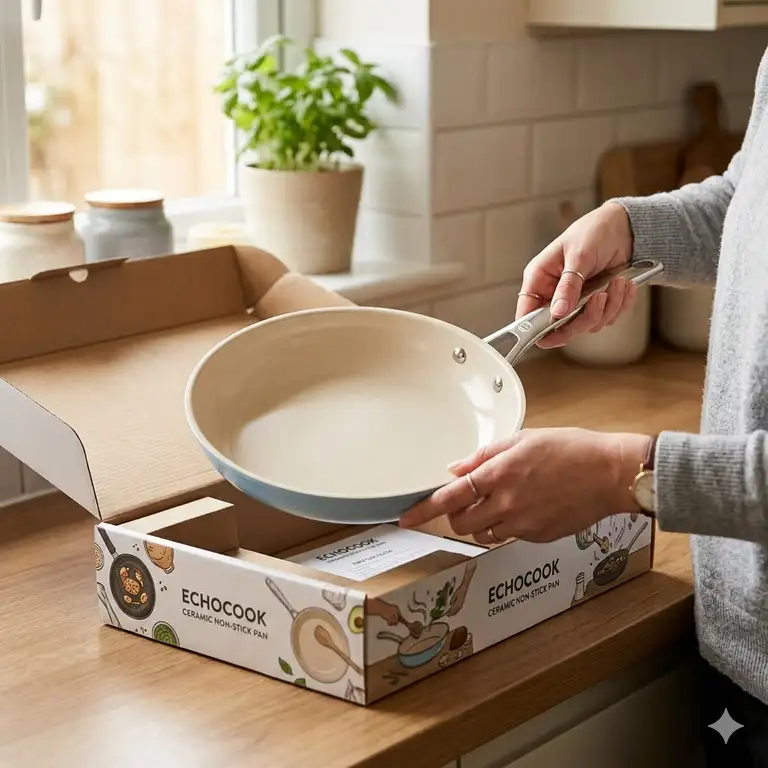
So, you finally did it. You ditched the old, flaking “mystery meat” non-stick pans and leveled up to the sleek, glossy world of ceramic. I remember the first time I unboxed a high-end ceramic skillet—it felt like holding a piece of futuristic tech rather than a kitchen tool. But here’s the thing: ceramic isn’t like your old Teflon. If you treat it like a cast-iron beast or a cheap disposable pan, you’ll be looking for a replacement by next Christmas. Learning how to use ceramic pan first time is the difference between a lifetime of sliding eggs and a sticky, scorched mess.
✨Was this helpful? Spread the word! 🚀
In this guide, I’m going to walk you through exactly what I do every time a new piece of ceramic cookware enters my kitchen. We’ll look at the science of the “sol-gel” coating, why heat management is your new best friend, and which pans are actually worth your hard-earned cash in 2026.
Quick Comparison: Ceramic vs. The World
Before we dive into the nitty-gritty of how to use ceramic pan first time, let’s see how ceramic stacks up against the old-school options. Understanding these differences helps you appreciate why that first-time prep is so vital.
| Feature | Ceramic (Sol-Gel) | Traditional Non-Stick (PTFE) | Cast Iron |
| Heat Tolerance | High (up to 450°C) | Low (toxic fumes >260°C) | Extreme |
| Non-Stick Life | 1-3 Years (with care) | 2-5 Years | Lifetime (improves) |
| Chemical Safety | PFOA/PFAS Free | Contains PTFE | Chemical Free |
| Maintenance | Delicate Hand Wash | Easy Wash | Heavy Maintenance |
| Weight | Moderate | Lightweight | Heavy |
Top 7 Ceramic Pans: Expert Analysis
If you haven’t bought your pan yet, or you’re looking to add to your collection, these are the top performers for 2026. Each one requires a slightly different approach when you’re figuring out how to use ceramic pan for the first time.
1. GreenPan Lima Healthy Ceramic Nonstick Frying Pan
The GreenPan Lima Healthy Ceramic Nonstick Frying Pan is the industry standard for a reason. GreenPan pioneered the ceramic movement, and the Lima series remains a workhorse. It features the signature Thermolon coating, which is derived from sand.
-
Technical Specifications:
-
Material: Hard-anodized aluminum with Thermolon coating.
-
Size: 12-inch (also available in 8 and 10-inch).
-
Oven Safety: Up to 600°F (315°C).
-
Handle: Contoured stainless steel.
-
-
Customer Review Analysis: Users consistently praise the “weight-to-balance” ratio. However, a common complaint is that the non-stick property fades if you use high heat—this is why knowing how to use ceramic pan first time is so critical.
-
Warranty: Limited lifetime warranty.
-
Pros: Incredible heat resistance, metal utensil safe (mostly), very lightweight.
-
Cons: Coating can chip if stacked without protection.
2. Caraway Non-Stick Ceramic Sauté Pan
If aesthetics are your thing, the Caraway Non-Stick Ceramic Sauté Pan is the “influencer” of the kitchen. But it’s not just a pretty face; the heat retention is surprisingly good for a ceramic pan.
-
Technical Specifications:
-
Material: Aluminum core, stainless steel base, ceramic coating.
-
Size: 4.5-quart.
-
Induction Compatible: Yes.
-
Colors: Navy, Sage, Perracotta, Cream, etc.
-
-
Customer Review Analysis: Customers love the “unboxing experience” and the organized storage solutions. Some note the exterior can stain if used on gas stoves with high flames.
-
Warranty: 1-year limited warranty.
-
Pros: Absolutely gorgeous, deep sides for versatility, non-toxic.
-
Cons: Expensive, requires strict hand-washing.
3. Our Place Always Pan 2.0
The Our Place Always Pan 2.0 is designed to replace eight pieces of cookware. It’s the ultimate “apartment dweller” pan. When using ceramic pan for the first time with this model, pay attention to the built-in spoon rest.
-
Technical Specifications:
-
Material: Recycled aluminum with Thermoceram™ coating.
-
Features: Includes steamer basket and modular lid.
-
Weight: 3 lbs.
-
-
Customer Review Analysis: High marks for versatility. Some pro-chefs find it “gimmicky,” but home cooks adore the one-pan-does-all approach.
-
Warranty: 1-year limited warranty.
-
Pros: Replaces multiple pans, eco-friendly materials, comes with accessories.
-
Cons: Ceramic coating wears faster than dedicated pro-pans.
4. T-fal G919S264 Initiatives Ceramic Nonstick Fry Pan
The T-fal G919S264 Initiatives Ceramic Nonstick Fry Pan is the budget king. It’s perfect for those just learning how to use ceramic pans first time without a massive investment.
-
Technical Specifications:
-
Material: Aluminum with ceramic interior.
-
Heat Indicator: Thermo-Spot (specific models).
-
Dishwasher Safe: Yes (though hand-wash is better).
-
-
Customer Review Analysis: “Unbeatable for the price.” It’s a great starter pan, though it lacks the premium feel of Caraway or GreenPan.
-
Warranty: Lifetime limited warranty.
-
Pros: Very affordable, heat indicator is helpful for beginners.
-
Cons: Thinner construction leads to hot spots.
5. Calphalon Classic Oil-Infused Ceramic Fry Pan
The Calphalon Classic Oil-Infused Ceramic Fry Pan is unique because it’s “oil-infused,” claiming to need less oil over time.
-
Technical Specifications:
-
Material: PTFE and PFOA-free ceramic.
-
Handle: Stay-cool long handle.
-
Oven Safe: Up to 450°F.
-
-
Customer Review Analysis: Users note it stays non-stick longer than traditional ceramic, likely due to the infusion.
-
Warranty: 10-year warranty.
-
Pros: Enhanced non-stick life, trusted brand.
-
Cons: Interior color stains easily.
6. Tramontina Ceramic 01 Fry Pan
The Tramontina Ceramic 01 Fry Pan (specifically model 80110/061DS) offers a professional, heavy-duty feel. It’s often used in culinary schools to teach students how to use ceramic pan 1st time.
-
Technical Specifications:
-
Material: Cold-forged aluminum.
-
Exterior: Metallic red/black porcelain enamel.
-
Origin: Made in Italy.
-
-
Customer Review Analysis: Praised for its thickness and “heft.” It feels more like a professional tool than a lifestyle product.
-
Warranty: Lifetime warranty.
-
Pros: Superior heat distribution, very durable exterior.
-
Cons: Can be heavy for some users.
7. Blue Diamond Toxin-Free Ceramic Nonstick Safe Open Frypan
The Blue Diamond Toxin-Free Ceramic Nonstick Safe Open Frypan uses diamond particles in the coating for better heat conduction and durability.
-
Technical Specifications:
-
Material: Aluminum with diamond-infused ceramic.
-
Hardness: Claimed 5x harder than other coatings.
-
Oven/Broiler Safe: Yes.
-
-
Customer Review Analysis: “Surprisingly tough.” Many users report using it for over a year with no degradation, which is rare for ceramic.
-
Warranty: Limited lifetime warranty.
-
Pros: Very affordable, great heat conduction, tough coating.
-
Cons: Handle can get warm.
✨ Don’t Miss These Exclusive Deals!
🔍 Take your kitchen to the next level with these carefully selected products. Click on any highlighted item to check current pricing and availability. These tools will help you master ceramic cooking like a pro! 🍳
💬 Just one click – help others make better buying decisions too!😊
Detailed Feature Matrix: Ceramic Pan Comparison
To really understand which pan fits your lifestyle, let’s break down the specs in a way that matters for your first-time use.
| Product Name | Core Material | Induction Ready? | Max Temp (Oven) | Weight Class |
| GreenPan Lima | Hard-Anodized | No | 600°F | Medium |
| Caraway Sauté | Aluminum/Steel | Yes | 550°F | Heavy |
| Always Pan 2.0 | Recycled Aluminum | Yes | 450°F | Light |
| T-fal Initiatives | Standard Aluminum | No | 350°F | Ultra-Light |
| Calphalon Classic | Aluminum | No | 450°F | Medium |
| Tramontina 01 | Cold-Forged Alum | No | 350°F | Heavy |
| Blue Diamond | Diamond-Infused Alum | No | 600°F+ | Light |
The Step-by-Step Guide: How to Use Ceramic Pan First Time
Alright, let’s get down to business. You’ve got your new pan. It’s shiny. It’s perfect. Don’t just throw a steak on it. Follow these steps for preparing ceramic pan for first time.
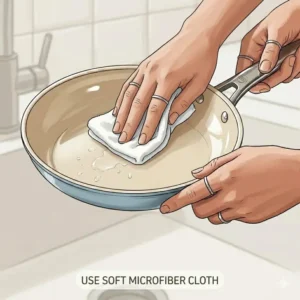
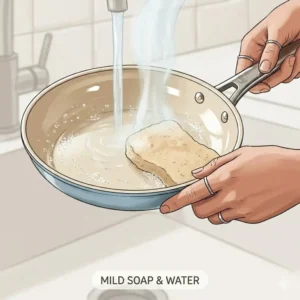
Step 1: The Maiden Voyage Wash
When a pan leaves the factory, it’s often coated in a very fine layer of manufacturing dust or machine oils. You don’t want that in your omelet.
-
Use warm, soapy water.
-
Use a soft sponge or microfiber cloth. Never, ever use steel wool or the abrasive side of a sponge on your ceremic pan first use.
-
Dry it thoroughly with a soft towel.
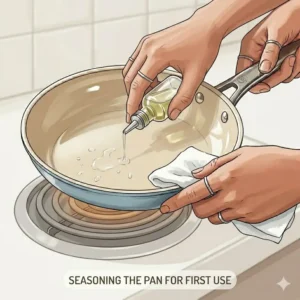
Step 2: To Season or Not to Season?
This is a hot topic. Traditional non-stick doesn’t need seasoning. Cast iron requires it. Ceramic is in a weird middle ground. While most manufacturers say it’s not necessary, I’ve found that a light “priming” helps.
-
The Pro Move: Rub a teaspoon of high-smoke-point oil (like avocado or grapeseed) onto the surface. Heat it on low for 2 minutes. Let it cool, then wipe away the excess. This fills any microscopic pores in the sol-gel coating.
Step 3: Understanding the “Low and Slow” Philosophy
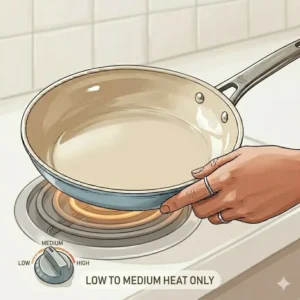
The biggest mistake people make when first time using ceramic pan is cranking the heat to “High.” Ceramic is incredibly efficient at retaining heat.
-
The Rule: Medium heat on ceramic is equivalent to High heat on stainless steel.
-
The Danger: Excessive heat causes the natural sugars in food and the oils to “carbonize” (turn into a sticky brown film). Once this happens, your non-stick is basically dead.
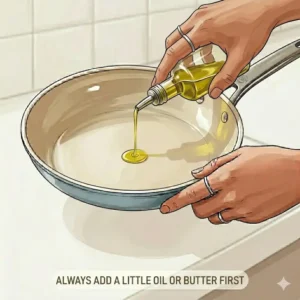
Step 4: The Oil Dilemma
I cannot stress this enough: Never use aerosol cooking sprays. Brands like Pam contain soy lecithin, which leaves a gummy residue on ceramic that is nearly impossible to remove without damaging the pan.
-
Use: Butter, olive oil, or coconut oil.
-
Quantity: You only need a tiny bit. That’s the whole point of ceramic!
Benefits Quantification: Why Choose Ceramic?
Why go through the trouble of learning how to use ceramic pan first time? Let’s quantify the benefits compared to traditional PTFE (Teflon) pans.
| Benefit | Ceramic Pan | Traditional PTFE Pan |
| Health Impact | 0% PFAS/PFOA risk | Potential “Teflon Flu” fumes |
| Eco-Friendliness | Sol-gel is sand-based | Petroleum-based production |
| Thermal Efficiency | Heats 20% faster | Standard heating |
| Aesthetic Retention | High (variety of colors) | Low (mostly black/grey) |
| Sear Quality | Better (holds heat) | Poor (designed for low heat) |
Maintenance and Care: Keeping the Magic Alive
Once you’ve mastered how to use ceramic pan for the first time, the goal is to keep it in that “out of the box” condition.
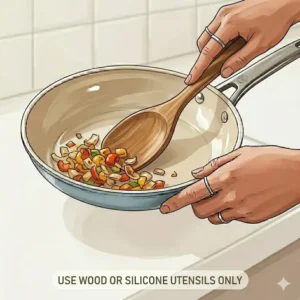
Utensil Selection
I know the box might say “metal utensil safe.” Don’t believe it. Even diamonds can be scratched. Stick to:
-
Silicone: The gold standard.
-
Wood: Great, but ensure it’s smooth.
-
Nylon: Acceptable, but keep it away from direct high heat.
Storage Secrets
If you’re stacking your pans in a cabinet, you’re begging for chips. I use felt pan protectors or even just a thick paper towel between layers. This is a crucial part of ceramic pan care that people often ignore.
The Thermal Shock Trap
“I’ll just rinse this hot pan in the sink!” Stop right there.
Taking a screaming hot ceramic pan and hitting it with cold water causes thermal shock. The metal base and the ceramic coating expand and contract at different rates. If you do this, the coating can actually crack or lose its bond to the metal. Always let the pan cool to room temperature before washing.
Budget vs. Premium: Is it Worth the Splurge?
When considering how to use a ceramic pan for the first time, you might wonder if a $150 pan acts differently than a $30 one.
| Category | Typical Price | Top Example | Best For |
| Budget | $20 – $40 | T-fal Initiatives | Students, first-time owners |
| Mid-Range | $50 – $90 | GreenPan Lima | Daily family cooking |
| Premium | $100 – $180 | Caraway Sauté | Home chefs, design lovers |
| Specialty | $120+ | Always Pan 2.0 | Small kitchens, multi-tasking |
🔍 Expert Tip: The “Water Drop” Test
Before you start cooking, how do you know if the pan is ready without a thermometer? Splash a tiny drop of water on it. If the water dances and “beads” up (the Leidenfrost effect), your pan is actually too hot. You want the water to sizzle and evaporate within 2-3 seconds. This is the sweet spot for ceramic.
User Compatibility: Which Pan Fits Your Style?
Not everyone cooks the same way. Some of us are “set it and forget it,” while others are flipping pans like we’re on Food Network.
| User Type | Recommended Feature | Best Match |
| The Health Nut | Maximum non-toxic certs | GreenPan Lima |
| The Minimalist | Multi-functionality | Always Pan 2.0 |
| The Busy Parent | Easy cleaning/Durability | Blue Diamond |
| The Professional | Heavy-duty construction | Tramontina Ceramic 01 |
| The Style Icon | Aesthetics/Storage | Caraway |
Advanced Troubleshooting: When Things Go Wrong
Even if you know how to use ceramic pan first time, mistakes happen. Here’s how to fix common issues.
“My pan is sticking already!”
This is usually caused by carbonized oil. You can often fix this by making a paste of baking soda and a little water. Rub it gently on the sticky spots with a soft cloth. This “exfoliates” the surface without scratching the ceramic.
“There are brown stains on the bottom.”
This is common on gas stoves. Use a specialized ceramic cleaner or a “Bar Keepers Friend” (the liquid version, not the powder) on the exterior only to keep it looking fresh.
“The handle is wobbling.”
Ceramic pans are often heavier than PTFE. Check the screws once every few months. A quick turn with a screwdriver keeps your ceramic pan maintenance on track.
Why Ceramic is the Future of American Kitchens
In the USA, we are seeing a massive shift toward “clean cooking.” According to research by groups like the Environmental Working Group (EWG), consumers are increasingly wary of the chemicals used in traditional non-stick coatings. Ceramic offers a “sol-gel” alternative that is essentially a glass-like coating made from silica.
According to Wikipedia’s entry on Ceramic Cookware, the material is naturally inert, meaning it won’t react with acidic foods like tomato sauce or lemon juice. This is a huge win for flavor purity. Additionally, the USDA’s guidelines on kitchen safety emphasize that using the right tool for the job prevents contamination—and ceramic’s ease of cleaning makes it one of the most hygienic options available.
✨ Don’t Miss These Exclusive Deals!
🔍 Take your kitchen to the next level with these carefully selected products. Click on any highlighted item to check current pricing and availability. These tools will help you create authentic, delicious flavors that your family will absolutely love! 🌟
Conclusion: Cooking with Confidence
Learning how to use ceramic pan first time isn’t rocket science, but it does require a bit of a mindset shift. If you remember three things—Wash it first, keep the heat low, and skip the aerosol sprays—you’ll be a ceramic superstar.
I’ve seen too many people buy a gorgeous Caraway Non-Stick Ceramic Sauté Pan only to ruin it in a week by searing a steak on the “Power Burner” setting. Don’t be that person. Treat your ceramic with the respect a precision tool deserves, and it will reward you with years of effortless, healthy cooking. Whether you’re a pro using a Tramontina Ceramic 01 Fry Pan or a beginner with a T-fal Initiatives skillet, the principles remain the same.
Happy cooking, and may your eggs forever slide!
Frequently Asked Questions
✅ While not strictly mandatory like cast iron, a light seasoning helps. Rub a small amount of oil onto the surface and heat on low for two minutes. This 'primes' the sol-gel coating for better long-term non-stick performance...
✅ Yes, regular olive oil is fine, but avoid extra virgin olive oil at high heats. EVOO has a low smoke point and can leave a sticky residue (carbonization) that ruins the ceramic's non-stick properties over time...
✅ Sticking is usually caused by invisible buildup of burnt fats or using heat that is too high. Try a deep clean with a baking soda paste to remove carbonized oils and restore the smooth, glassy surface of the pan...
✅ Most manufacturers claim they are dishwasher safe, but it's a trap. Harsh detergents and high-pressure water can dull the coating and cause it to lose its non-stick power much faster than gentle, manual hand-washing with soap...
✅ Silicone and wood are your best friends. Even if a pan is marketed as 'metal utensil safe,' the repetitive scraping of metal can create micro-scratches that eventually lead to food sticking and the coating chipping off entirely... ❓ Do I need to season a ceramic pan before the first use?
❓ Can I use olive oil in my ceramic pan?
❓ Why is my ceramic pan sticking even though I follow the rules?
❓ Is it okay to put my ceramic pan in the dishwasher?
❓ What utensils are best for ceramic cookware?
Recommended for You:
- How to Season a Stainless Steel Pan Properly: 7 Easy Steps for a Perfect Non-Stick Finish
- How to use stainless steel pan without sticking: 7 Pro Secrets!
- 7 Best stainless steel sauce pan with lids for 2026 Professional Chefs
Disclaimer: This article contains affiliate links. If you purchase products through these links, we may earn a small commission at no additional cost to you.
✨ Found this helpful? Share it with your friends! 💬🤗