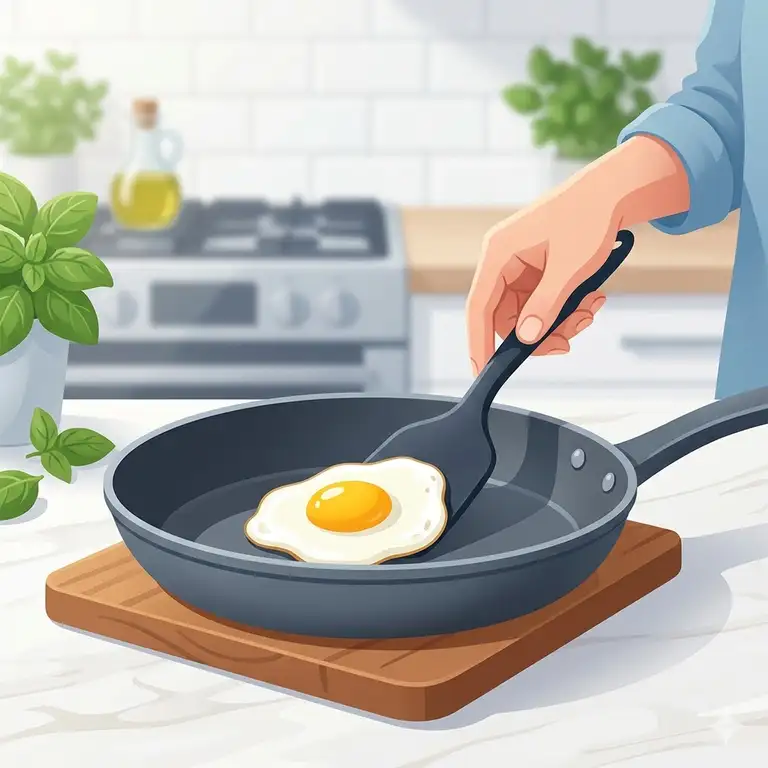
Let’s be honest for a second. We have all been there—standing over the kitchen sink, frantically scrubbing a piece of charred salmon off a pan that promised it was “100% nonstick.” I’ve spent more hours than I care to admit wondering why my expensive cookware started peeling like a bad sunburn after just six months. If you are tired of throwing money away on pans that lose their “slip,” you are in the right place. Knowing how to use nonstick pan safely without damage isn’t just about being gentle; it is a science that involves heat management, proper chemistry, and a little bit of common sense.
✨Was this helpful? Spread the word! 🚀
The reality is that nonstick surfaces are delicate ecosystems. Whether you are using a classic PTFE (Teflon) coating or a trendy ceramic one, these layers are sensitive to temperature spikes and abrasive tools. In this guide, I am going to walk you through everything I have learned as a kitchen gear nerd to help you master how to use nonstick pan safely without damage. We will look at real-world products, dive into technical specs, and debunk those myths that are killing your skillets. 🍳
Quick Comparison: Nonstick vs. Traditional Cookware
| Feature | Nonstick (PTFE/Ceramic) | Stainless Steel | Cast Iron |
| Primary Use | Eggs, fish, delicate foods | Searing, deglazing | Frying, baking, high heat |
| Heat Tolerance | Low to Medium (up to 500°F) | Very High | Extremely High |
| Maintenance | Hand wash only, soft tools | Dishwasher safe, metal safe | Seasoning required, no soap |
| Longevity | 2-5 years | Lifetime | Multiple lifetimes |
| Ease of Use | 10/10 (No sticking) | 5/10 (Requires oil/technique) | 7/10 (Requires seasoning) |
Top 7 Nonstick Pans: Expert Analysis
If you want to master how to use nonstick pan safely without damage, you need to start with high-quality gear. I have researched the top-performing pans on the market for 2026 to see which ones actually hold up to daily use.
1. T-fal Professional Total Nonstick E93808
This is the workhorse of many American kitchens. The T-fal Professional Total Nonstick E93808 features the iconic Thermo-Spot heat indicator that turns solid red when the pan is perfectly preheated.
-
Technical Specifications: Titanium-reinforced nonstick coating, induction-compatible stainless steel base, riveted silicone handles, oven safe to 400°F.
-
Customer Review Analysis: Users love the “idiot-proof” heat indicator, but some note that the center can slightly crown over years of high-heat use.
-
Pros: Very affordable, great heat distribution, clear preheat signal.
-
Cons: Not suitable for extremely high-heat searing.
-
Warranty: Limited Lifetime Warranty.
2. GreenPan Rio Ceramic Nonstick CC000044-001
If you are worried about chemicals, the GreenPan Rio Ceramic Nonstick CC000044-001 is a top-tier choice. It uses Thermolon ceramic coating, which is free of PFAS, PFOA, lead, and cadmium.
-
Technical Specifications: 8-inch, 10-inch, and 12-inch variants, heavy-gauge aluminum construction, stay-cool Bakelite handles.
-
Customer Review Analysis: Reviewers rave about the health benefits and the aesthetic colors, though ceramic requires even lower heat than PTFE.
-
Pros: Eco-friendly, toxin-free, beautiful design.
-
Cons: Ceramic is more prone to chipping if banged against other pans.
-
Warranty: 2-Year Limited Warranty.
3. All-Clad HA1 Hard Anodized E785S264
For those who want a professional feel, the All-Clad HA1 Hard Anodized E785S264 set offers heavy-duty construction that resists warping better than standard aluminum.
-
Technical Specifications: 3-layer PFOA-free nonstick, induction-compatible bonded base, stainless steel handles, oven safe to 500°F.
-
Customer Review Analysis: Chefs appreciate the weight and balance. It feels like a “grown-up” pan that can handle a bit more rigor.
-
Pros: Extremely durable, high walls for tossing food, warp-resistant.
-
Cons: Heavier than most nonstick options.
-
Warranty: Limited Lifetime Warranty.
4. Ninja Foodi NeverStick Premium C30026
The Ninja Foodi NeverStick Premium C30026 claims its coating won’t flake or peel because it is manufactured at 30,000°F. It is one of the few pans that feels truly rugged.
-
Technical Specifications: Shot-peened hard-anodized exterior, cold-forged aluminum, metal-utensil safe (though I still recommend silicone!).
-
Customer Review Analysis: Many users report that this pan lasts significantly longer than cheaper alternatives without losing its slickness.
-
Pros: Incredible durability, dishwasher safe, heavy-duty build.
-
Cons: Takes a bit longer to heat up due to its thickness.
-
Warranty: 10-Year NeverStick Guarantee.
5. Carote Granite Nonstick Frying Pan C00001
For a budget-friendly, “earthy” look, the Carote Granite Nonstick Frying Pan C00001 is a viral favorite. It uses a stone-derived coating that is surprisingly effective.
-
Technical Specifications: Die-cast aluminum alloy, wood-effect grain handle, 5-layer nonstick system.
-
Customer Review Analysis: Users adore the look and the price point. It’s perfect for those who want a minimalist kitchen vibe.
-
Pros: Excellent value, very lightweight, easy to wipe clean.
-
Cons: The handle can loosen over time; needs occasional tightening.
-
Warranty: 1-Year Limited Warranty.
6. Calphalon Contemporary Nonstick 1943318
The Calphalon Contemporary Nonstick 1943318 is known for its sleek, curved design that makes flipping omelets a breeze.
-
Technical Specifications: Hard-anodized aluminum, 3 layers of nonstick, stay-cool long handles, dishwasher safe.
-
Customer Review Analysis: Consistent praise for its even heating and the ergonomics of the handle.
-
Pros: Professional aesthetics, great for “pan-flipping” techniques.
-
Cons: Large footprint takes up more cabinet space.
-
Warranty: Full Lifetime Warranty.
7. Amazon Basics Hard Anodized Non-Stick B07481LPMF
If you need a reliable starter set without the “brand-name” markup, the Amazon Basics Hard Anodized Non-Stick B07481LPMF performs surprisingly well in tests.
-
Technical Specifications: Multi-layer nonstick coating, contoured handles, oven safe to 350°F.
-
Customer Review Analysis: High marks for being a “bang for your buck” option. It does exactly what it says on the tin.
-
Pros: Very affordable, widely available, decent lifespan.
-
Cons: Not induction-ready.
-
Warranty: 1-Year Limited Warranty.
✨ Don’t Miss These Exclusive Deals!
🔍 Take your kitchen to the next level with these carefully selected products. Click on any highlighted item to check current pricing and availability. These tools and ingredients will help you create professional results your family will love! ✨
💬 Just one click – help others make better buying decisions too!😊
Technical Specifications Matrix (Spec Matrix)
| Product Name | Coating Type | Base Material | Oven Safe Temp | Induction Ready? |
| T-fal Professional | Titanium-PTFE | Aluminum/SS | 400°F | Yes |
| GreenPan Rio | Thermolon Ceramic | Aluminum | 350°F | No |
| All-Clad HA1 | 3-Layer PTFE | Hard Anodized | 500°F | Yes |
| Ninja Foodi NeverStick | Plasma-fused PTFE | Hard Anodized | 500°F | Yes |
| Carote Granite | Stone-derived | Die-cast Alum | 350°F | Yes |
| Calphalon Contemporary | 3-Layer PTFE | Hard Anodized | 450°F | No |
| Amazon Basics | Standard PTFE | Hard Anodized | 350°F | No |
The Golden Rules: how to use nonstick pan safely without damage
Now that you have the right tools, let’s talk about technique. Using a nonstick skillet safely is not difficult, but it requires breaking some bad habits we’ve picked up from using stainless steel or cast iron.
1. Temperature is Everything 🌡️
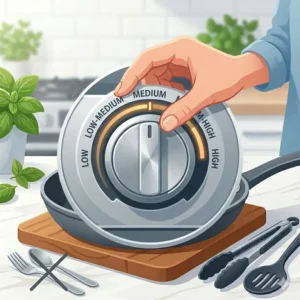
Most people treat their pans like a race car—they want to go from 0 to 60 as fast as possible. However, high heat is the absolute enemy of nonstick coatings. When a PTFE pan exceeds 500°F, the molecular bonds begin to break down. This not only destroys the “slip” but can also release fumes that are harmful to pets (especially birds).
I always recommend the “Water Drop Test.” If you flick a drop of water onto the pan and it sizzles and evaporates quickly, you are at a perfect medium. If the water dances and explodes, your pan is too hot. Furthermore, never preheat a dry pan. Always add a tiny bit of fat (oil or butter) to help distribute the heat and protect the surface. According to the USDA Food Safety guidelines, monitoring cooking temperatures is vital for both food safety and equipment longevity.
2. Ditch the Aerosol Sprays 🚫
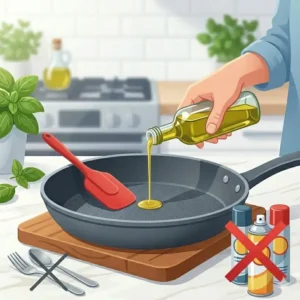
This is a secret that many manufacturers don’t emphasize enough. Those “nonstick cooking sprays” like Pam contain soy lecithin. At high heat, this lecithin bonds to the nonstick coating, creating a sticky, gummy residue that is nearly impossible to remove without damaging the pan. Instead, use a small amount of butter, olive oil, or avocado oil. If you are learning how to use nonstick pan safely without damage, switching to real fats is the easiest upgrade you can make.
3. Utensil Choice: The Silicon Revolution 🛠️
Even if a brand like Ninja Foodi NeverStick says it is “metal utensil safe,” please, I beg of you—don’t do it. Every time a metal fork or spatula scrapes against that surface, it creates microscopic fissures. Over time, moisture and fat seep into these cracks, causing the coating to lift and peel.
Stick to:
-
High-heat silicone spatulas.
-
Wooden spoons.
-
Heat-resistant nylon tools.
Features & Benefits Comparison: Materials Matter
| Material | Heat Retention | Weight | Surface Smoothness | Durability |
| Hard-Anodized | High | Medium | Excellent | Very High |
| Pressed Aluminum | Low | Light | Good | Medium |
| Ceramic Coating | Medium | Light | Superior (initially) | Low-Medium |
| Titanium Infused | High | Medium | Excellent | High |
Detailed Maintenance: Cleaning and Storage
If you want to know how to use nonstick pan safely without damage, the work doesn’t end when the meal is cooked. How you treat the pan in the sink and the cabinet determines its lifespan.
The Hand-Wash Manifesto 🧼
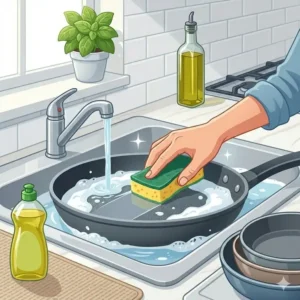
I know, I know—the box says “Dishwasher Safe.” But let’s be real: dishwasher detergents are incredibly abrasive. They contain harsh chemicals and grit designed to blast food off plates. This will dull your nonstick finish faster than you can say “omelet.”
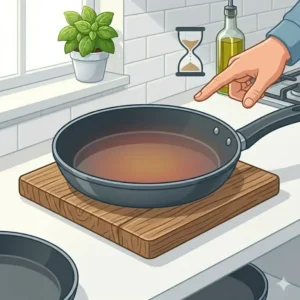
Wait for the pan to cool completely before washing. Submerging a hot pan in cold water causes “thermal shock,” which can warp the base and crack the coating. Once cool, use a soft sponge (never steel wool!) and a mild dish soap. If you have stubborn burnt-on bits, make a paste of baking soda and water and let it sit for 15 minutes. It works like magic without the scratching.
Storage: Stop the Stacking War 🛡️
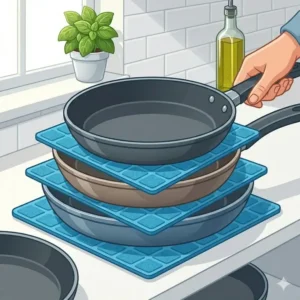
Cabinet space is a premium in American kitchens, so we tend to stack our pans like a game of Tetris. But the bottom of one pan is often rough and will scratch the delicate interior of the pan beneath it.
If you must stack, use a “pan protector.” You can buy felt liners, or honestly, just use a paper towel or a scrap of cardboard. It’s a $0 fix that saves a $50 pan. When I started doing this, the lifespan of my pans doubled. You can find more tips on kitchen organization at Consumer Reports.
Requirements Analysis: Longevity vs. Effort
| Maintenance Step | Effort Level (1-5) | Impact on Lifespan | Why it Matters |
| Hand Washing | 3 | High | Prevents chemical degradation. |
| Using Soft Tools | 1 | Critical | Avoids physical scratches. |
| Low-Med Heat Only | 2 | Critical | Prevents coating breakdown. |
| Pan Protectors | 1 | Medium | Prevents storage damage. |
| Oil vs. Spray | 1 | Medium | Prevents gummy buildup. |
Exploring Variations: how to use non stick pan safely without damaging
When we search for tips, we often look for variations like how to use non stick pan safely without damaging or simply nonstick skillet care. The principles remain the same regardless of the terminology. Whether you call it a pan nonstick usage tips search or how to cook with nonstick, the core goal is maintaining the integrity of the surface.
One variation people often overlook is how to clean nonstick pans. Most people focus so much on the cooking that they ignore the “carbonization” of oils that happens during the cleaning process. If you don’t get all the fat off, the next time you heat the pan, that fat “bakes” into the coating. This is why some pans feel sticky even when they look clean.
Benefits Quantification: Why Protect Your Pans?
| Benefit Category | With Proper Care | Without Proper Care |
| Financial | Pan lasts 5+ years ($10/year) | Pan lasts 6 months ($100/year) |
| Food Quality | Perfect release, even browning | Food sticks, tears, and burns |
| Health | No fumes, no coating flakes | Risk of ingesting PTFE flakes |
| Cleaning Time | 30 seconds (wipe and go) | 10 minutes (scrubbing) |
Performance Metrics: Value vs. Premium
When deciding which pan to buy, you have to weigh the initial cost against how long it will last under your care.
| Category | Budget (Carote/Amazon) | Mid-Range (T-fal/Calphalon) | Premium (All-Clad/Ninja) |
| Coating Thickness | 1-2 Layers | 2-3 Layers | 3+ Layers / Plasma Fused |
| Warp Resistance | Low | Moderate | High |
| Heat Distribution | Average | Good | Excellent |
| Expected Lifespan | 1-2 Years | 3-4 Years | 5-10 Years |
🔍 Don’t Miss These Exclusive Deals!
Take your kitchen to the next level with these carefully selected products. Click on any highlighted item to check current pricing and availability. These tools will help you create perfect meals your family will love! ✨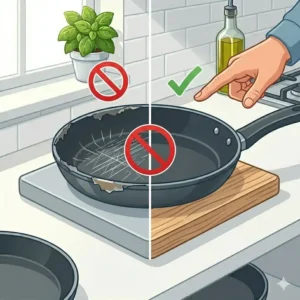
Conclusion: Mastery of the Pan
Learning how to use nonstick pan safely without damage is a journey of habit-shifting. It’s about realizing that “more heat” doesn’t mean “faster food,” and “dishwasher safe” doesn’t mean “dishwasher recommended.” By choosing a quality product like the All-Clad HA1 Hard Anodized or the GreenPan Rio, and following the rules of low heat and hand-washing, you can turn a disposable kitchen item into a long-term investment.
I’ve found that when I treat my pans with respect, they return the favor by making my mornings easier. No one wants to fight with a stuck egg at 7:00 AM. So, take these tips, grab a silicone spatula, and enjoy the effortless glide of a well-maintained pan!
Frequently Asked Questions
✅ While some pans like the Ninja Foodi NeverStick are designed to withstand metal, it is still not recommended. Metal will always cause microscopic scratches that eventually lead to the coating failing prematurely. Stick to silicone or wood for longevity...
✅ This is usually due to a buildup of carbonized oil or burnt-on protein residues. If you use aerosol sprays or don't clean thoroughly, a microscopic film develops. Try a baking soda paste to gently lift the residue without scratching...
✅ If the coating is significantly peeling or flaking into your food, it is time to replace it. While modern PTFE is generally inert if swallowed, the loss of nonstick properties makes cooking frustrated and uneven. Always prioritize safety...
✅ Unfortunately, a warped pan cannot be easily fixed because the metal has undergone structural change from thermal shock. To prevent this, never put a hot pan under cold water. Always let your cookware cool naturally to room temperature first...
✅ High smoke point oils like avocado, grapeseed, or refined olive oil are best. Avoid extra virgin olive oil for high heat as it smokes easily, and never use aerosol sprays containing soy lecithin, which ruins the coating... ❓ Can I use metal utensils if the pan says it is metal-safe?
❓ Why is my nonstick pan sticking even though it looks clean?
❓ Is it safe to cook on a scratched nonstick pan?
❓ How do I fix a warped nonstick pan?
❓ What is the best oil to use for nonstick cooking?
Recommended for You:
- Viking Nonstick Cookware: 7 Top-Rated Sets for Effortless Cooking in 2025
- Copper Sauce Pans: 7 Best Picks That Transform Cooking
- Copper Skillet Pan: 7 Best Options That Transform Cooking
Disclaimer: This article contains affiliate links. If you purchase products through these links, we may earn a small commission at no additional cost to you.
✨ Found this helpful? Share it with your friends! 💬🤗