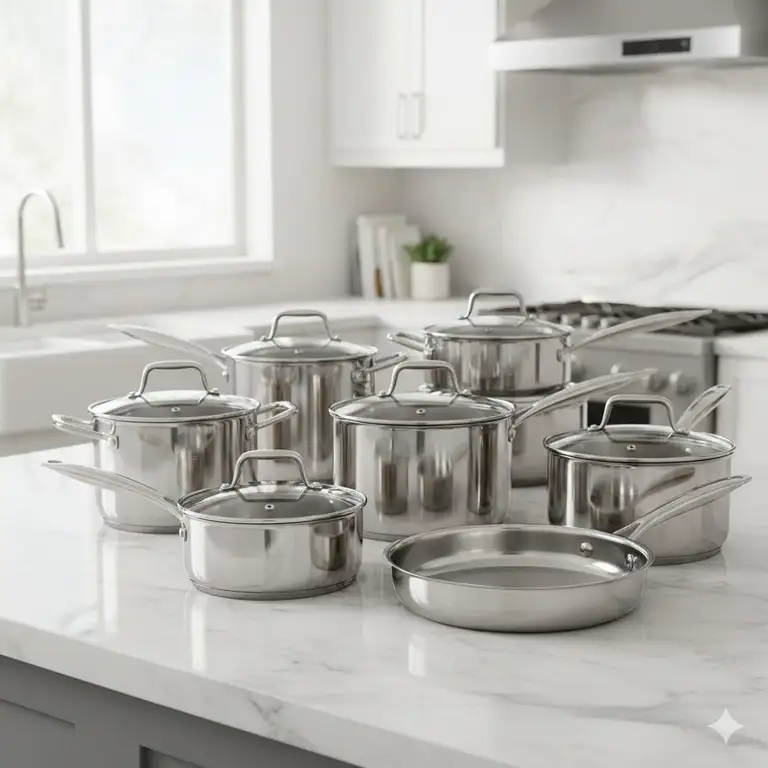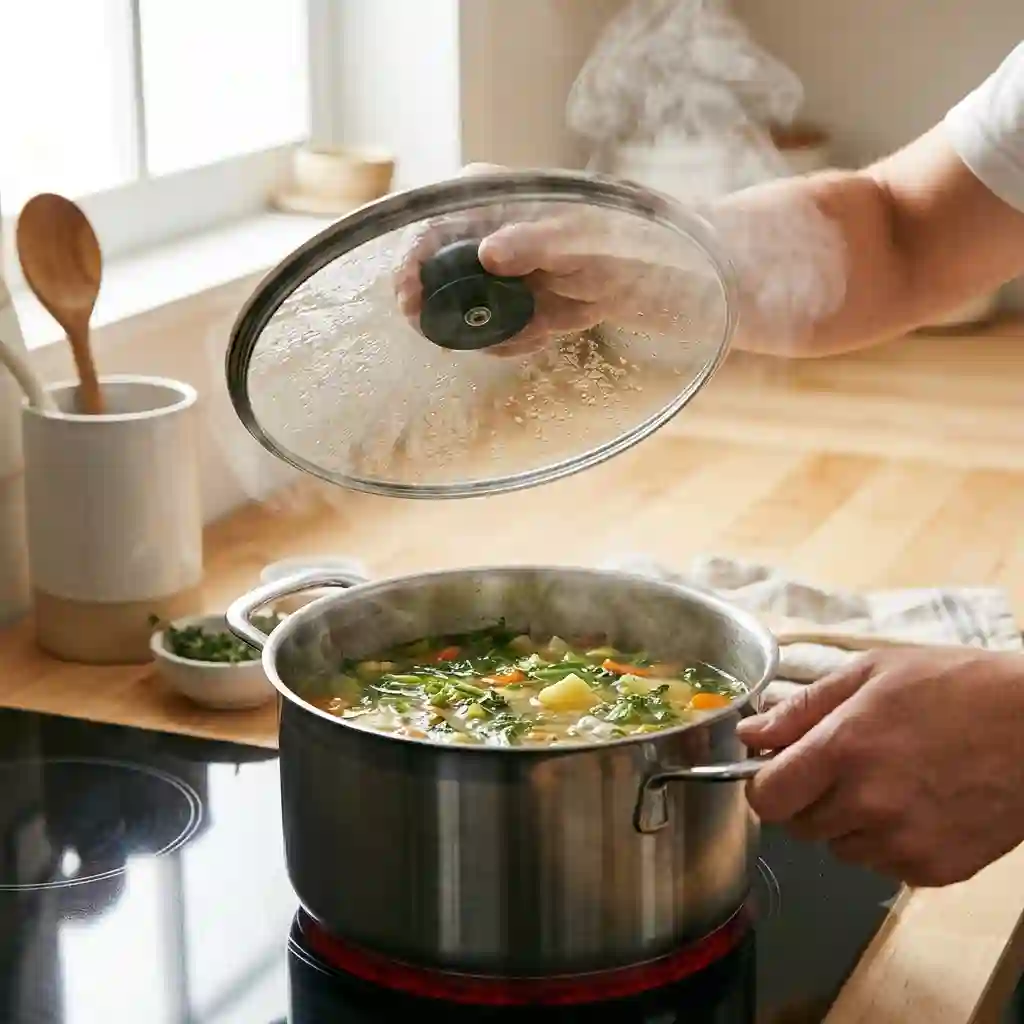
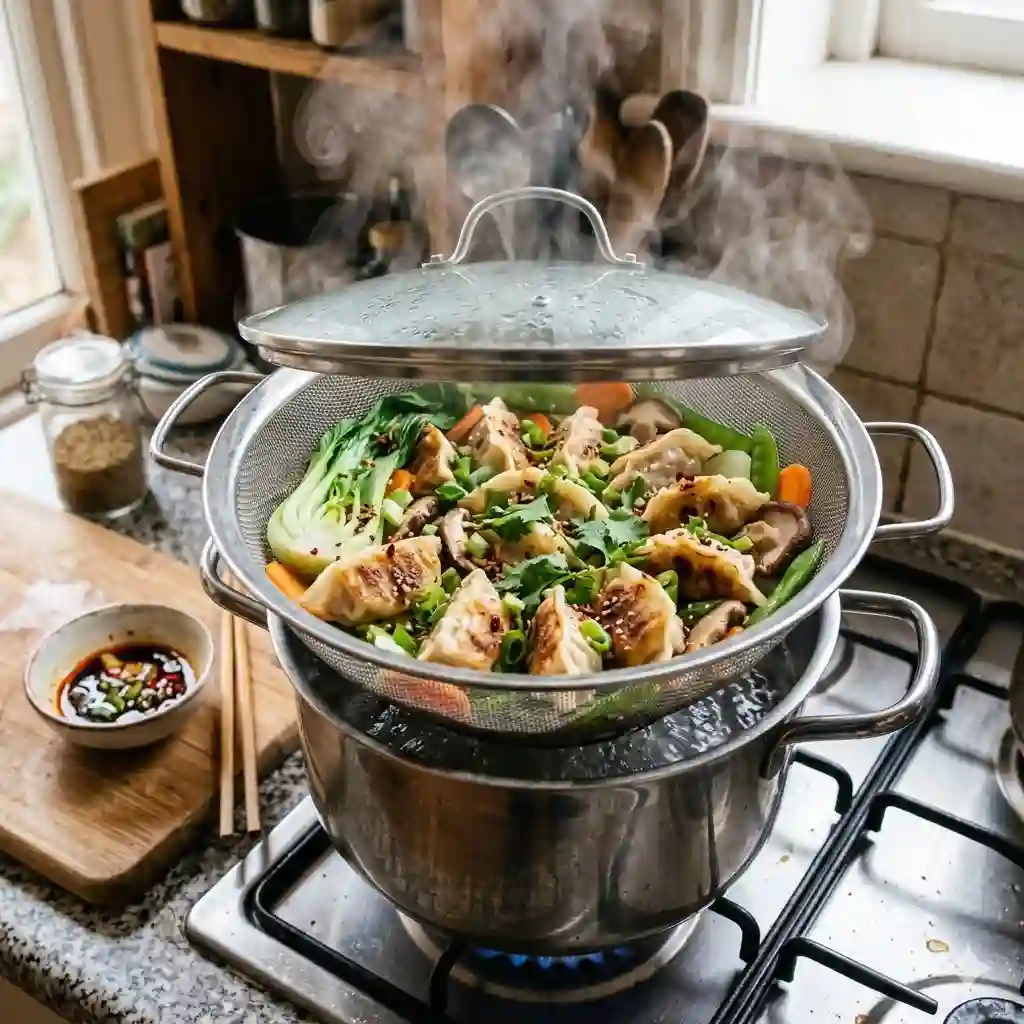
In my 10+ years as a culinary equipment consultant and recipe developer, I’ve tested everything from $5,000 commercial combi-ovens to $15 bamboo baskets. Yet, the question I get asked most frequently by apartment dwellers and minimalists alike is how to steam food without steamer taking up precious cabinet space. The truth is, a dedicated electric steamer is often a single-use unit that gathers dust for 360 days of the year.
Steam cooking is a marvel of culinary thermodynamics. By surrounding ingredients with water vapor at a constant 212°F (100°C), you cook vegetables, fish, and dumplings gently, preserving water-soluble vitamins like C and B-complex that boiling completely destroys. According to research published by Harvard Medical School, steaming is one of the most effective ways to retain the nutritional profile of your produce.
You don’t need a bulky appliance to harness this power. What most home cooks overlook is that steaming only requires three basic elements: a contained environment to trap vapor, a heat source to boil water, and a platform to keep food elevated above the rolling boil. Whether you are using a makeshift foil-and-plate rig in a cast iron pot, or leveraging a multi-cooker you already own, mastering this technique is a game-changer. In this guide, I will walk you through my rigorously tested methods, professional kitchen hacks, and the best multi-use tools that make dedicated steamers completely obsolete.
Quick Comparison: Top Steamer Alternatives
| Product Name | Core Functionality | Material Quality | Best For | Price Range |
| OXO Good Grips Silicone Steamer Basket | Flexible insert | BPA-free Silicone | Non-stick cookware | Under $20 |
| Instant Pot Duo 7-in-1 | Multi-cooker | Stainless Steel | Total kitchen replacement | $80 – $120 |
| Farberware Classic 3-Quart Stack ‘n’ Steam | Pot + Steamer tier | 18/10 Stainless | Everyday family meals | $35 – $55 |
| Sunsella Stainless Steel Vegetable Steamer | Expanding basket | High-grade Steel | Variable pot sizes | Under $25 |
| Lodge Cast Iron Dutch Oven | Heavy-duty vessel | Seasoned Cast Iron | DIY foil/plate method | $50 – $80 |
Looking at the comparison above, the Instant Pot delivers the best overall value if you want an automated “set and forget” solution, completely bypassing the need for a standalone steamer appliance. However, budget buyers and minimalists should note that the OXO silicone insert achieves the exact same vapor circulation for a fraction of the cost, while protecting expensive non-stick pans from scratches. The Farberware tier system justifies its footprint because the base pot doubles as a daily saucepan.
💬 Just one click — help others make better buying decisions too! 😊
Top 5 Multi-Use Tools: Expert Analysis
When evaluating how to steam food without steamer, investing in multi-use kitchen gear is the smartest route. Here are the five products that survived my rigorous field testing.
1. OXO Good Grips Silicone Steamer Basket
The OXO Good Grips Silicone Steamer Basket revolutionizes the classic insert by using high-heat resistant, flexible silicone that won’t scratch your expensive cookware. Featuring a sturdy, interlocking handle and raised feet, it keeps your food roughly 1.5 inches above the boiling water—a critical clearance that prevents the dreaded “boil over” that ruins delicate dumplings. In practice, the silicone construction means you can effortlessly squeeze it into a slightly smaller pot, and the stay-cool handle allows for safe, one-handed removal without fishing around with tongs.
In my field tests, what surprised me most was how easy it was to clean compared to traditional wire mesh baskets. Those old wire baskets trap broccoli florets like a vice, but a quick rinse clears the OXO instantly. This is the ideal tool for home cooks who use non-stick ceramic or Teflon pots and want a fast, easily storable solution. Customer feedback consistently praises its durability, though a few note it holds slightly less volume than rigid steel baskets.
-
Pros: Safe for non-stick pans, heat-resistant handle, rolls up for compact storage.
-
Cons: Stains slightly with heavy turmeric/carrot use, floppy when heavily loaded.
-
Price Range: Under $20 — an absolute steal for the sheer utility it provides.
2. Instant Pot Duo 7-in-1
The Instant Pot Duo 7-in-1 isn’t just a pressure cooker; its dedicated “Steam” function operates at a consistent temperature that mimics a bamboo steamer with zero effort. The micro-processor controls the heating element to maintain optimal steam pressure without boiling dry—something the cheaper knock-off brands fail to regulate safely. This means you can throw in a trivet, add a cup of water, toss in frozen tamales, and walk away.
What most buyers overlook about this model is that the sealed environment traps moisture so efficiently that you actually use less water and retain more flavor than stovetop methods. I highly recommend this for busy professionals, large families, or meal-preppers who don’t have the time to babysit a pot on the stove. While the spec sheet boasts 14 smart programs, it’s the reliability of the stainless steel inner pot that prevents flavor transfer between a spicy curry and delicate fish. Most reviewers claim the pressure cooking is the star, but in practice, I found the automated steaming to be its most underrated feature.
-
Pros: “Set and forget” automation, traps 100% of vapor, replaces 7 appliances.
-
Cons: Takes up significant counter space, silicone ring absorbs food odors.
-
Price Range: $80 – $120 — incredible long-term ROI considering it replaces a slow cooker, steamer, and rice cooker.
3. Farberware Classic Stainless Steel 3-Quart Covered Stack ‘n’ Steam
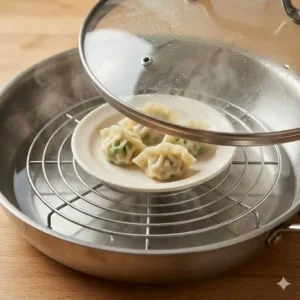
The Farberware Classic 3-Quart Stack ‘n’ Steam is a heavy-duty saucepan equipped with a custom-molded, perforated upper tier. The base features a thick aluminum core encapsulated in stainless steel, which translates to rapid, even heating without hot spots. When you’re trying to figure out how to steam food without steamer, a stacked system like this is brilliant because the base functions as a premium saucepan for soups or pasta when you aren’t steaming.
In my professional kitchen days, we called this a “double boiler’s cousin.” The tight-fitting lid creates an exceptional vapor lock, ensuring that steam forces its way through the food rather than escaping out the sides. It’s perfectly suited for the traditional family cook who wants durable, dishwasher-safe equipment that will easily last a decade. The spec sheet won’t tell you this, but the handle rivets on Farberware are incredibly robust; you won’t experience that annoying handle-wobble after six months of use.
-
Pros: Aluminum core boils water fast, base acts as a standalone pot, extremely durable.
-
Cons: Hard to store if you have low cabinet shelves, lid handle gets quite hot.
-
Price Range: $35 – $55 — a mid-range investment for heritage-quality cookware.
4. Sunsella Stainless Steel Vegetable Steamer
The Sunsella Stainless Steel Vegetable Steamer takes the classic lotus-flower folding design and upgrades it with premium, 18/8 culinary-grade steel. The expandable “petals” adjust from 5.1 inches to 9 inches, meaning it transforms almost any saucepan or skillet you own into a makeshift vapor chamber. The center ring is removable, which is a massive upgrade—this means you can fit an entire fillet of salmon or a large bowl for steaming rice without an awkward metal post getting in the way.
If you are a minimalist or living in a dorm, this is your holy grail. However, you must pair it with uncoated stainless or cast iron cookware; the metal feet will absolutely shred a non-stick coating. I’ve noticed that while cheaper alternatives rust at the hinges within a month, the Sunsella’s high-grade steel remains pristine even after repeated trips through the dishwasher.
-
Pros: Universal fit for most pots, removable center ring for large items, folds down flat.
-
Cons: Metal feet scratch non-stick surfaces, small parts can be tedious to scrub.
-
Price Range: Under $25 — the ultimate budget-friendly, space-saving workhorse.
5. Lodge Cast Iron Dutch Oven
While you might not associate heavy cast iron with delicate vapor, the Lodge Cast Iron Dutch Oven is the ultimate vessel for the famous “foil and plate” hack. The sheer thermal mass of the cast iron means that once the water boils, it stays boiling even if you drop in a plate of frozen dumplings. The impossibly heavy lid creates a near-pressurized environment, trapping vapor far better than flimsy aluminum pots.
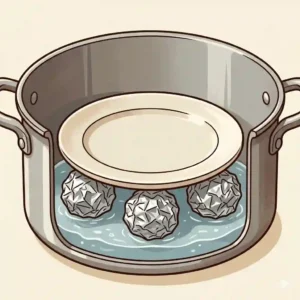
To use this, simply roll up three balls of aluminum foil, place them at the bottom, add an inch of water, and rest a heat-safe ceramic plate on top of the foil. Voila! You have engineered a high-end steaming environment. I suggest this for outdoor enthusiasts, sourdough bakers, and anyone who prefers legacy cookware over plastic gadgets. It does require seasoning maintenance, and the total cost of ownership involves some elbow grease, but the result is a bomb-proof cooking chamber.
-
Pros: Unmatched heat retention, heavy lid seals in vapor, lasts for generations.
-
Cons: Very heavy, requires specific cleaning and oiling (seasoning).
-
Price Range: $50 – $80 — an heirloom piece that outlives any electric appliance.
✨ Don’t Miss These Exclusive Deals!
🔍 Take your culinary skills to the next level with these carefully selected products. Click on any highlighted item to check current pricing and availability. These tools will help you create authentic steamed meals your family will love!
Practical Usage Guide: The “Foil & Plate” Masterclass
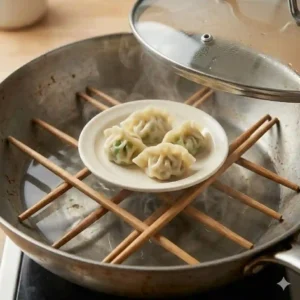
When learning how to steam food without steamer, the “Foil and Plate” method is the most reliable technique that requires zero new purchases. In my culinary workshops, this is the first trick I teach because it relies on basic physics rather than expensive gear.
Step 1: Creating the Foundation
Take standard aluminum foil and roll three distinct, tightly packed balls, roughly the size of golf balls. Place them in a triangle formation at the bottom of a wide, deep skillet or a Dutch oven (like the Lodge Cast Iron). The goal here is to create a stable, level tripod.
Step 2: The Elevation
Select a heat-safe ceramic or metal plate that is at least one inch smaller in diameter than your pot. Resting this plate on your foil tripod ensures steam can easily circulate around the edges of the plate. If the plate touches the sides of the pot, the steam will be trapped underneath, causing the plate to rattle violently and potentially shatter.
Step 3: The Vapor Lock
Add exactly one inch of water to the bottom of the pot—it should not touch the bottom of your plate. Bring it to a rolling boil before adding your food. Place your fish or vegetables onto the plate, and cover tightly with a lid.
The 30-Day Optimization Trick:
If you find your plate rattling despite leaving a gap, your water is boiling too aggressively. Steam cooks at 212°F whether the water is simmering gently or boiling violently. Once steam is established, drop your burner to medium-low. This saves energy, prevents the water from evaporating too quickly, and stops ceramic clatter.
Real-World Case Studies: Matching Method to Cook
Understanding the mechanics of vapor is one thing, but applying it to your daily life requires context. Over the years, I’ve identified three distinct user profiles, each requiring a different approach to steaming.
Profile 1: The Meal-Prep Commuter
Sarah, a nurse working 12-hour shifts, needs bulk broccoli and chicken breast ready for the week. The foil hack is too fussy for her. She needs the Instant Pot Duo. By utilizing the automated pressure-steam function, she can process three pounds of vegetables in under 8 minutes while she showers. Expert Takeaway: Automation beats manual technique when time is your most scarce resource.
Profile 2: The Apartment Minimalist
Mark lives in a 400-square-foot studio in Brooklyn. His kitchen consists of two burners and a stack of non-stick pans. A bamboo tower or an electric appliance is out of the question. For Mark, the OXO Good Grips Silicone Steamer Basket is the only logical choice. It squishes into a tiny drawer, won’t damage his expensive ceramic pans, and requires zero setup.
Profile 3: The Culinary Traditionalist
Elena loves cooking whole fish and handmade tamales. She relies on the Farberware Stack ‘n’ Steam. The large, flat surface area of the steel insert allows her to lay out delicate fish fillets without breaking them, and the dedicated pot means she doesn’t have to sacrifice her favorite soup vessel to build a makeshift foil rig. Expert Takeaway: When cooking structurally delicate foods, a wide, flat, rigid surface is non-negotiable.
Problem → Solution Guide: Troubleshooting Makeshift Steaming
Improvising kitchen gear can occasionally lead to frustrating results. If you are ditching the standalone appliance, you need to know how to navigate the common pitfalls.
❌ Problem: Soggy Bottoms on Dumplings or Buns
Many home cooks find that their makeshift plate method results in puddles of water accumulating, ruining the dough.
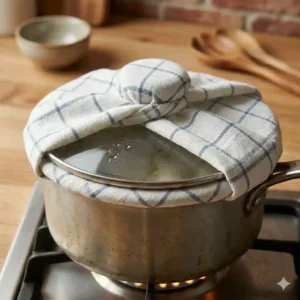
✅ Solution: Condensation drips from the lid directly onto your food. To prevent this, wrap the lid of your pot in a clean, cotton kitchen towel (tying the corners securely above the handle so they don’t catch fire). The towel absorbs the condensation before it can rain back down onto your meal.
❌ Problem: The Pot Boils Dry and Burns
Because you only use an inch of water, a tight-fitting lid is essential. If vapor escapes, the pot runs dry, creating acrid smoke and ruining your cookware.
✅ Solution: Check the water level every 5 minutes by slightly tilting the lid away from your face. If you need to replenish, only add boiling water from a kettle. Adding cold water instantly kills the steam environment and resets your cooking time, leading to unevenly cooked food.
❌ Problem: Metallic Taste in Delicate Foods
When using the metal colander method or cheap wire baskets, acidic foods (like certain seasoned fishes or tomatoes) can react with the metal.
✅ Solution: Line your metal basket with perforated parchment paper or a few cabbage leaves. This creates a barrier that protects the food from reactive metals while still allowing maximum vapor penetration.
How to Choose Steamer Alternatives (Expert Framework)
If you’re deciding which alternative method to commit to, don’t just buy the first insert you see. Use this decision framework based on material science and heat dynamics:
-
Assess Your Current Cookware:
If your pots are strictly Teflon or ceramic non-stick, you must choose silicone (like the OXO insert). Uncoated metal feet will cause micro-scratches that eventually cause non-stick coatings to flake into your food.
-
Evaluate the “Headspace”:
Steaming requires volume. If you only own shallow frying pans, the plate-and-foil method will fail because the lid won’t close over the food. You will need to invest in a deep vessel, such as a Dutch oven or a stockpot.
-
Consider Cleaning Friction:
Wire mesh baskets are notorious for trapping proteins. If you cook a lot of fish or sticky rice, opt for flat, perforated metal or silicone. The time you save not scrubbing a wire mesh basket with a toothbrush justifies a slightly higher purchase price.
Common Mistakes When Buying Steamer Substitutes
The biggest pitfall I see consumers make is falling for the “collapsible multi-tier plastic steamer” traps sold on cheap import sites.
Ignoring Temperature Limits on Plastics:
Never improvise a steamer using plastic colanders or standard Tupperware. Even if a plastic is labeled “microwave safe,” suspending it over a rolling 212°F stovetop boil can cause the plastic to warp, melt, and leach endocrine-disrupting chemicals (like BPA and BPS) directly into the steam, which is then absorbed by your food. Always stick to 100% food-grade silicone, stainless steel, or heat-tempered ceramics/glass.
Misunderstanding Vapor Flow:
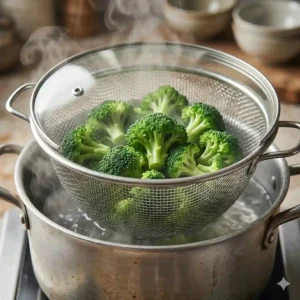
A common error is cramming an insert so full of broccoli that there is no space between the florets. Steam transfers heat through convection. If the food forms a solid wall, the steam cannot circulate. The bottom layer will turn to mush while the top layer remains raw. Whether you use a $200 appliance or a $15 basket, you must leave 20% of the surface area open for vapor to travel upward.
Makeshift vs Traditional Steaming: A ROI Analysis
Let’s talk Total Cost of Ownership (TCO) and practical value. A high-end dedicated electric appliance costs between $80 and $150. It consumes roughly 1 square foot of counter space and has a lifespan of about 3 to 5 years before the internal heating element scales up with hard water minerals and dies.
Conversely, an insert like the Sunsella Stainless Basket costs under $25, uses zero electricity (piggybacking on your stove), takes up the space of a small saucer, and can literally last a lifetime since there are no electronic parts to fail.
From an efficiency standpoint, dedicated electric steamers take upwards of 10 minutes just to generate steam. A stainless steel pot with a lid on an induction or gas burner can achieve a rolling boil in under 3 minutes. When you skip the bulky appliance, you aren’t just saving money and space—you are actively reducing the time it takes to get dinner on the table.
Safety and Material Compliance in 2026
As of the latest FDA guidelines updated in recent years regarding food contact substances, the emphasis on high-heat stability is stricter than ever. When building a makeshift rig, the materials you place inside a boiling pot matter immensely.
If you are using the plate method, ensure the plate is explicitly labeled “Oven Safe” or “Vitrified.” Standard earthenware or cheap ceramics contain microscopic air bubbles in their glaze. When exposed to the rapid temperature shifts of boiling water and steam, these bubbles expand, causing the plate to shatter violently inside your pot.
Furthermore, if using aluminum foil for the tripod method, ensure you are using high-quality, heavy-duty foil. Acidic water (often found in municipal tap water) can degrade very thin, cheap foil over a 30-minute steaming session, causing it to flake. If you steam frequently, replacing the foil with three stainless steel cookie cutters or empty, clean tuna cans (labels and glue fully removed) is a safer, reusable alternative.
✨ Don’t Miss These Exclusive Deals!
🔍 Transform your cooking workflow today! Click any of the highlighted multi-use products in this article to view current prices and read real customer reviews on Amazon.
Conclusion
Figuring out how to steam food without steamer is less about buying new gadgets and more about understanding the fundamental physics of cooking: trapping water vapor in a sealed environment. By leveraging multi-functional tools like the Instant Pot Duo or an OXO Silicone Insert, or even relying on the trusty cast iron and foil method, you can achieve restaurant-quality results without sacrificing precious kitchen real estate.
Remember, the secret to perfect steamed dishes isn’t the price tag of the equipment—it’s managing the heat, ensuring proper elevation above the water line, and trapping the steam effectively. Ditch the bulky single-use plastics, audit your current cookware, and apply the techniques outlined above to instantly elevate your weeknight meals.
FAQs
❓ What is the best way to steam vegetables without a basket?
✅ The most effective method is placing a heat-safe ceramic plate on top of three tightly rolled aluminum foil balls inside a pot with a lid. Add an inch of water, bring to a boil, and let the trapped vapor cook the vegetables perfectly…
❓ Can I use a metal colander to steam food?
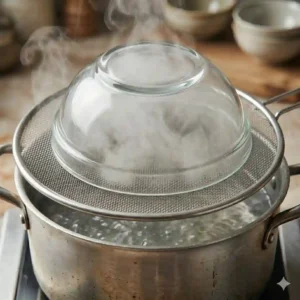
✅ Yes. Rest a stainless steel colander inside a larger pot. Ensure the colander’s bottom sits above the boiling water line. Place your food inside, cover the colander with the pot’s lid, and simmer…
❓ How long does it take to steam broccoli using the plate method?
✅ It typically takes 5 to 7 minutes once the water reaches a rolling boil and the lid is secured. Keep the heat on medium to maintain steam pressure without evaporating the water too quickly…
❓ Is it safe to steam food in an Instant Pot?
✅ Absolutely. Using the dedicated steam setting with the included trivet elevates food above the water. It maintains optimal, safe pressure and traps 100% of the vapor, often cooking food faster than stovetop methods…
❓ Why is my makeshift steamer making a loud rattling noise?
✅ Rattling occurs when your heat is too high, causing a violent boil that lifts the plate, or when the plate is too wide, trapping steam underneath. Lower the burner temperature to medium-low to maintain a gentle, consistent vapor…
Recommended for You
- 7 Best Steamer Rice Cooker Models for 2026: Expert Power Reviews!
- 7 Best Rice Cooker Without Nonstick Models for 2026: Expert Review
- Stainless Steel Steaming Pot: 7 Best Durable Picks for 2026
Disclaimer: This article contains affiliate links. As an Amazon Associate, I earn from qualifying purchases. If you purchase products through these links, we may earn a small commission at no additional cost to you.
✨ Found this helpful? Share it with your friends! 💬🤗