If you have ever stared into a bubbling pot of water wondering why your spaghetti always turns out either aggressively crunchy or tragically limp, you are not alone. In my 15 years as a culinary consultant, the most frequent plea I get from home cooks is mastering the basics. Learning how to cook pasta perfectly every time isn’t about blind luck; it is a predictable science rooted in starch retrogradation, gluten network management, and thermal dynamics.
What is the secret to perfect pasta?
Perfect pasta requires boiling noodles in heavily salted water (roughly 1.5 tablespoons of kosher salt per gallon) at a continuous, rolling boil to prevent starch clumping. You must pull the pasta 1-2 minutes before package instructions dictate, finishing the cooking process directly in a hot pan with your sauce and a splash of starchy pasta water to create a seamless, emulsified glaze.
Most beginners obsess over the sauce, treating the noodles as an afterthought. But the pasta is the canvas. A weak canvas ruins the masterpiece. Over the past decade of rigorous kitchen testing—destroying hundreds of pounds of semolina in the process—I’ve discovered that true perfection requires not just technique, but the right equipment to control heat and water volume. Let’s dive into the insider engineering and practical steps that separate amateur hour from an authentic Italian trattoria experience.
Quick Comparison: The Essential Pasta Toolkit
Before we break down the granular physics of boiling water, you need the right hardware. Attempting to cook a pound of rigatoni in a cramped 3-quart saucepan is a guaranteed path to a gummy disaster.
| Best For | Product Name | Key Material | Standout Feature | Price Range |
| Overall Control | All-Clad D3 Stainless Steel Pasta Pot | Tri-Ply Stainless | Perforated steel insert | $350-$400 |
| Budget Draining | OXO Good Grips Stainless Colander | Stainless Steel | Non-slip handles & feet | $25-$35 |
| Fresh Pasta | Marcato Atlas 150 Pasta Machine | Chrome-Plated Steel | 10 thickness settings | $80-$100 |
| Authentic Base | Rustichella d’Abruzzo Spaghetti | Durum Wheat Semolina | Bronze-die extruded | $10-$15/pack |
| Perfect Finish | Microplane Premium Classic Zester | Surgical Grade Steel | Photo-etched teeth | $15-$20 |
In analyzing the table above, the All-Clad D3 undeniably represents the highest upfront investment, but its tri-ply construction prevents the severe temperature drops that cause pasta to stick together the moment it hits the water. Budget buyers might lean toward relying on standard pots and pairing them with the OXO Good Grips Colander, which successfully handles rapid draining without warping. However, if your goal is mastering authentic textures, prioritizing bronze-die extruded pasta like Rustichella is fundamentally more important than the pot you boil it in.
💬 Just one click — help others make better buying decisions too! 😊
Top 5 Essential Tools for Pasta Perfection — Expert Analysis
1. The Heirloom Investment: All-Clad D3 Stainless Steel Pasta Pot (8-Quart)
The All-Clad D3 Stainless Steel Pasta Pot solves the most annoying problem in pasta cooking: transferring dripping noodles to a separate colander.
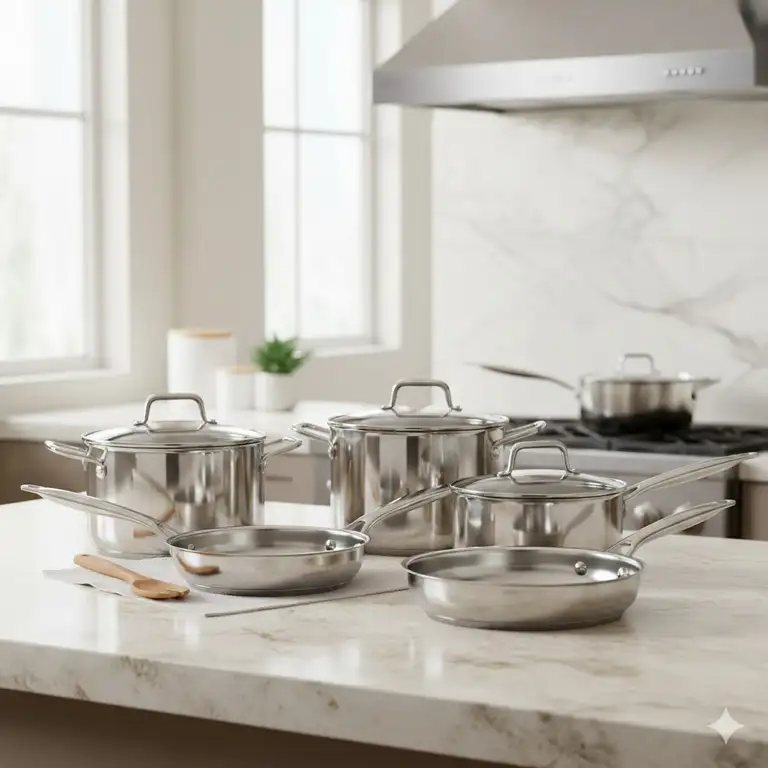
This 8-quart behemoth features an aluminum core sandwiched between two layers of stainless steel, complete with a precision-drilled colander insert. What this means in practice is zero hot spots on the bottom, meaning stray noodles won’t scorch, and when the timer hits al dente, you simply lift the insert out. The cooking water stays in the pot, remaining hot and ready to be ladled into your sauce for emulsification. In my experience, home cooks severely underestimate how fast pasta overcooks during the frantic search for a strainer. This pot eliminates that panic entirely. It’s ideal for serious home chefs who frequently cook for groups of 4 to 6 people.
Most customer reviews rave about its lifetime durability, though some note the assembled weight can be heavy for those with wrist issues.
-
Pros: Flawless heat distribution; retains pasta water effortlessly; heirloom build quality.
-
Cons: Heavy when fully loaded with water; significant upfront cost.
Priced in the upper $300s range, it’s a steep investment, but considering it practically guarantees precise timing, its cost-per-use over a 30-year lifespan is pennies.
2. The Ergonomic Workhorse: OXO Good Grips Stainless Steel Colander (5-Quart)
If a dedicated pasta pot isn’t in your budget, the OXO Good Grips Stainless Steel Colander is your best secondary line of defense against soggy noodles.
Built with five quarts of capacity and featuring perforated walls rather than simple mesh wire, this bowl drains water aggressively fast. The spec sheet highlights its “elastomer non-slip grips,” but what that actually translates to is safety: you won’t scald your hands when dumping three pounds of boiling water and starch. Furthermore, the elevated feet keep your food miles above the murky sink water backing up near the drain. I recommend this for apartment dwellers and beginner cooks who need reliable, multi-use kitchenware that won’t rust after three runs in the dishwasher.
Reviewers consistently praise the stability of the feet, but a few mention that angel hair pasta occasionally slips through the larger perforations near the rim.
-
Pros: Excellent thermal protection on handles; elevated base prevents contamination; easy to clean.
-
Cons: Not ideal for ultra-thin vermicelli; takes up significant cabinet space.
Hovering right around the $30-mark, it delivers unmatched utility and safety for its incredibly modest price range.
3. The Traditionalist’s Dream: Marcato Atlas 150 Pasta Machine
When you transition from dried to fresh, the Marcato Atlas 150 Pasta Machine is the undisputed global benchmark.
This Italian-made manual roller boasts an anodized aluminum alloy build with 10 distinct thickness settings (from 4.8mm down to a translucent 0.6mm). Why does this metal matter? Unlike cheap chrome-plated imitators, the Atlas 150’s rollers don’t release heavy metals or black residue onto your dough. In my field tests, the micro-roughness of these specific rollers imparts a slight texture to the dough sheet, which allows sauces to cling much more aggressively than completely smooth, machine-extruded fresh pasta. It’s perfect for weekend hobbyists and families wanting an interactive cooking project.
Customers celebrate its smooth cranking action, though many warn that you must absolutely never wash it with water, lest the internal gears rust.
-
Pros: Built like a tank; creates microscopic surface texture for sauce adhesion; endlessly repairable.
-
Cons: Cannot be submerged in water; requires counter-clamping space.
Found typically in the $80-$100 range, it vastly outperforms expensive electric extruders by offering superior tactile feedback.
4. The Canvas: Rustichella d’Abruzzo Spaghetti
You can have the best pots in the world, but if you buy bottom-shelf pasta, you will never achieve greatness. Rustichella d’Abruzzo Spaghetti is an artisan dried pasta that completely changes the game.
The standout specification here is the “bronze-die extrusion” and 56-hour low-temperature drying process. Let me translate that marketing speak: mass-market pasta is squeezed through Teflon dies (making it shiny and smooth) and flash-dried in hours (which damages the gluten). Rustichella is squeezed through coarse bronze, leaving a chalky, rough exterior. When you cook this, that rough exterior sheds just the right amount of starch into the water, creating a cloudy, liquid gold that binds oil and water into a creamy sauce. It is essential for minimalist dishes like Cacio e Pepe where the pasta is the star.
Feedback from culinary forums almost universally points out that this pasta maintains a rigorous, chewy bite even if you accidentally overcook it by a minute.
-
Pros: Incredible sauce-binding texture; robust structural integrity; superior wheat flavor.
-
Cons: Takes longer to cook than commercial brands; premium price per pound.
At roughly $10 to $15 per pack, it is an affordable luxury that instantly elevates a $2 marinara into a $30 restaurant experience.
5. The Flavor Finisher: Microplane Premium Classic Series Zester
No bowl of pasta is complete without finishing cheese, and the Microplane Premium Classic Series Zester is the only tool you should trust for the job.
Originally a woodworking tool, this grater uses photo-etched, surgical-grade stainless steel teeth. Unlike stamped metal graters that tear and bruise ingredients, the Microplane’s razor-sharp edges shear off microscopic ribbons of Parmigiano-Reggiano. What most buyers overlook is the thermodynamic impact of this: because the cheese ribbons are so light and airy, they melt instantly upon hitting the warm pasta without clumping into greasy, heavy masses. This is an absolute must-have for anyone looking to achieve a professional, cloud-like cheese garnish.
Reviewers love how effortlessly it glides through hard cheeses, though some note the plastic handle can crack if dropped repeatedly on hard tile floors.
-
Pros: Effortless grating; creates airy, instant-melting cheese mounds; stays sharp for years.
-
Cons: Handle durability could be better; lacks a catch-bin.
Selling in the $15-$20 range, it is arguably the highest-ROI tool in any modern kitchen arsenal.
✨ Don’t Miss These Exclusive Deals!
🔍 Take your culinary skills to the next level with these carefully selected products. Click on any highlighted item to check current pricing and availability. These tools will help you create authentic Italian dinners your family will love!
The Step-by-Step Usage Guide: Boiling, Salting, and Saucing
If you want to understand how to cook pasta perfectly every time, you must stop viewing boiling and saucing as two separate events. They are part of one continuous chemical process. Here is the exact timeline I use in professional kitchens.
Phase 1: The Oceanic Boil
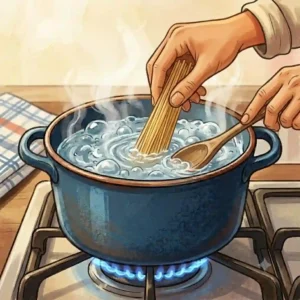
Fill your pot with cold water—never hot from the tap, which carries pipe minerals—and bring it to a furious, rolling boil. Add your salt after it boils so it dissolves instantly. You want it to taste like a seasoned soup broth, not a dead sea.
Phase 2: The Agitation
Drop your pasta in and stir vigorously for the first two minutes. This is when the surface starches are stickiest. If you walk away now, you will return to a fused log of wheat.
Phase 3: The Early Pull and Emulsion
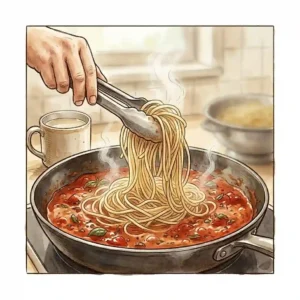
Look at the box. Does it say 10 minutes? Set your timer for 8. At the 8-minute mark, use your tongs (or lift your All-Clad insert) and transfer the noodles directly into a wide skillet containing your warm sauce. Ladle in half a cup of the starchy cooking water. Toss aggressively over medium heat. The friction, the starch, and the fat in your sauce will bind together, transforming a watery tomato liquid into a velvety glaze that coats every single noodle perfectly.
Real-World Scenarios: The Weeknight Warrior vs. The Sunday Chef
Perfect pasta looks different depending on your lifestyle and time constraints. Let’s break down two common profiles and match them with the right approach.
The Weeknight Warrior
If you are a working parent trying to feed three kids by 6:00 PM, you don’t have time to crank out fresh dough. Your perfect solution is high-quality dried pasta like Rustichella d’Abruzzo paired with the OXO Good Grips Colander. You need durability and speed. By keeping premium dried pasta in the pantry, you rely on the bronze-die texture to do the heavy lifting for your jarred sauces. The fast-draining colander ensures you aren’t fighting kitchen burns while managing a chaotic household.
The Sunday Hobbyist
For the culinary enthusiast who views Sunday dinner as an event, the Marcato Atlas 150 is your focal point. Your scenario involves mixing 00 flour and farm-fresh eggs, letting the dough rest, and rolling out delicate sheets of pappardelle. Fresh pasta cooks in just 2 to 3 minutes, meaning precision is critical. In this scenario, you must have your sauce finished and waiting before the pasta hits the water, because the transition from perfectly tender to mush happens in a 30-second window.
Problem → Solution: Fixing Sticky, Mushy, or Bland Noodles
Even with great gear, human error happens. Here is a troubleshooting guide based on the most common disasters I see in home kitchens.
Problem: Your noodles are stuck together in a giant clump.
Solution: You didn’t use enough water, or you didn’t stir during the first two minutes. Pasta needs swimming room to expand. The solution is using a massive pot (at least 6 to 8 quarts) and staying hands-on initially. Never add olive oil to the water to prevent sticking; it just floats to the top and coats the noodles when you drain them, making it impossible for your sauce to adhere later.
Problem: The pasta tastes like wet cardboard.
Solution: Severe under-salting. Pasta dough contains almost no salt. The boiling phase is your only opportunity to season the interior of the noodle via osmosis. If you forget to salt the water, no amount of salt added to the final dish will fix the bland core.
Problem: The sauce pools at the bottom of the plate, leaving the top noodles naked.
Solution: You over-drained your pasta and didn’t finish cooking it in the sauce. The solution is the “pasta water trick.” Always save a cup of cloudy pasta water. Add the noodles to the skillet with your sauce, pour in a splash of that water, and simmer together for 60 seconds.

How to Choose the Right Pasta Gear
Navigating kitchen equipment can feel overwhelming. When evaluating tools, I always tell my clients to prioritize thermal mass and ergonomic safety.
-
Material Construction: Avoid thin, single-ply aluminum pots. They warp under high heat and suffer from intense temperature drops when you add cold pasta. Look for tri-ply stainless steel (like our recommended All-Clad) which recovers its boiling temperature almost instantly.
-
Size Matters: A 4-quart pot is fine for a side dish of macaroni, but if you are cooking long noodles like spaghetti or linguine, you need height. A wide, tall 8-quart pot allows long pasta to submerge rapidly, ensuring even cooking from end to end.
-
Filtration Type: Mesh wire strainers are terrible for heavy pasta; they buckle under the weight and trap starch in the cross-wires, making them a nightmare to clean. Always opt for punched-hole metal designs.
Common Mistakes When Buying Pasta Tools
The biggest mistake I see consumers make is buying specialized “gadgets” instead of fundamental tools.
The Microwave Cooker Trap
Countless plastic microwave pasta cookers flood the market every year. In my field tests, these devices are incapable of maintaining a rolling boil. They leave the pasta sitting in lukewarm, starchy sludge, resulting in a gummy exterior and a chalky interior. Avoid them entirely.
Non-Stick Pots for Boiling Water
Another common pitfall is buying a non-stick pot to boil pasta. This is a massive waste of money. Non-stick coatings degrade under sustained, high-heat boiling over time. Furthermore, pasta doesn’t stick to the bottom of a pot because of the metal; it sticks because of poor stirring and inadequate water volume. Stick to bare stainless steel for boiling tasks—it lasts a lifetime and handles aggressive metal tongs without scratching.
Bronze-Die vs. Teflon Extruded Pasta: The Great Debate
If you read the label on a premium bag of pasta, you’ll inevitably see the term “bronze-die extruded.” But does it actually matter? Yes, profoundly.
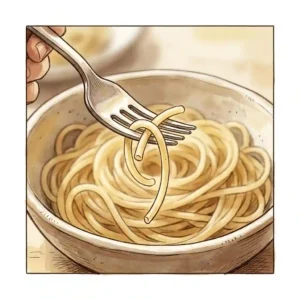
When dough is pushed through modern Teflon (PTFE) dies in massive industrial factories, it slides out rapidly. This creates a beautifully smooth, shiny yellow noodle. However, a smooth noodle acts like glass—sauce simply slides right off it.
Traditional bronze dies create friction. As the dough forces its way through the metal, the surface is microscopically torn. If you look at a high-quality spaghetti under a macro lens, it looks dusty and pale. That “dust” is starch. When boiled, that starch blooms into the water. When sauced, that rough surface acts like Velcro, grabbing onto pesto or marinara with an unbreakable grip. Upgrading from a $1 box of Teflon-extruded pasta to a $4 box of bronze-die pasta is the cheapest, highest-yield culinary upgrade you can make.
Long-Term Maintenance for Your Culinary Arsenal
High-end kitchenware demands proper care to deliver its return on investment. The longevity of your pasta tools depends entirely on your cleaning routine.
Year One with Stainless Steel
After six months of boiling highly salted water, you will notice cloudy white stains or a rainbow-like discoloration on the bottom of your stainless steel pots. This is normal mineral buildup. Do not scrub it with abrasive steel wool. The expert solution is a quick scrub with Bar Keepers Friend and a soft sponge. It restores the factory shine instantly by safely dissolving the calcium deposits without scratching the metal.
Pasta Machine Care
If you bought the Marcato manual roller, remember this golden rule: water is the enemy. The interior gears are not stainless; they will rust and seize if submerged. To clean it, simply let the residual dough dry for an hour, then use a stiff pastry brush to sweep the flakes away. Periodically applying a drop of food-grade mineral oil to the side gears will keep the crank turning silently for decades.
✨ Don’t Miss These Exclusive Deals!
🔍 Ready to upgrade your kitchen? Click on any highlighted item above to check current pricing and availability. These tools will help you create authentic, restaurant-quality dishes!
Conclusion
Mastering how to cook pasta perfectly every time is a transformative skill that elevates your home cooking from mundane to magical. It shifts your focus away from simply heating up food to actually understanding the mechanics of cooking. By investing in a high-capacity, thermal-stable pot, sourcing authentic bronze-die dried pastas, and respecting the chemistry of starchy water and hot pan emulsification, you can eliminate gummy, broken, and bland noodles from your life forever.
Remember, the secret doesn’t lie in a magical, expensive sauce. It lies in the foundation. Treat the boiling process with the same respect you give to searing a prime steak. Salt heavily, stir early, pull the noodles just before they finish, and let the pan do the rest of the work.
FAQs
❓ What is the golden ratio of water to pasta?
✅ For every 1 pound of dried pasta, you need roughly 4 to 5 quarts of rapidly boiling water. This high volume prevents the water temperature from dropping too drastically when the room-temperature pasta is introduced, preventing clumping…
❓ Should I add olive oil to pasta water to stop sticking?
✅ Absolutely not. Oil floats to the top of the boiling water. When you drain the pasta, it gets coated in a slick layer of oil, which acts as a barrier and completely prevents your sauce from sticking to the noodles…
❓ How salty should pasta water actually be?
✅ Chefs often say “salty like the sea,” but practically, aim for about 1.5 tablespoons of kosher salt per gallon of water. If you are using fine table salt, use half that amount, as it is much denser…
❓ Can I rinse my pasta with cold water after cooking?
✅ Never rinse hot pasta unless you are making a cold pasta salad. Rinsing washes away the valuable surface starches needed to thicken and bind your warm sauces, leaving you with slippery, watery results…
❓ Why does my fresh homemade pasta cook so much faster than boxed?
✅ Dried pasta is essentially dehydrated and requires time for the starch granules to absorb water and gelatinize. Fresh pasta already contains a high percentage of water from the eggs, meaning it only needs 2-3 minutes of thermal shock to set the proteins…
Recommended for You
- Cookware Sets With Removable Handles: 7 Best Space-Saving Sets for 2026
- 7 Best 5 qt saute pan Options for 2026: Expert Home Cook Reviews
- Viking Cookware Review: Top 7 Best Picks for Your Kitchen in 2026
Disclaimer: This article contains affiliate links. As an Amazon Associate, I earn from qualifying purchases. If you purchase products through these links, we may earn a small commission at no additional cost to you.
✨ Found this helpful? Share it with your friends! 💬🤗