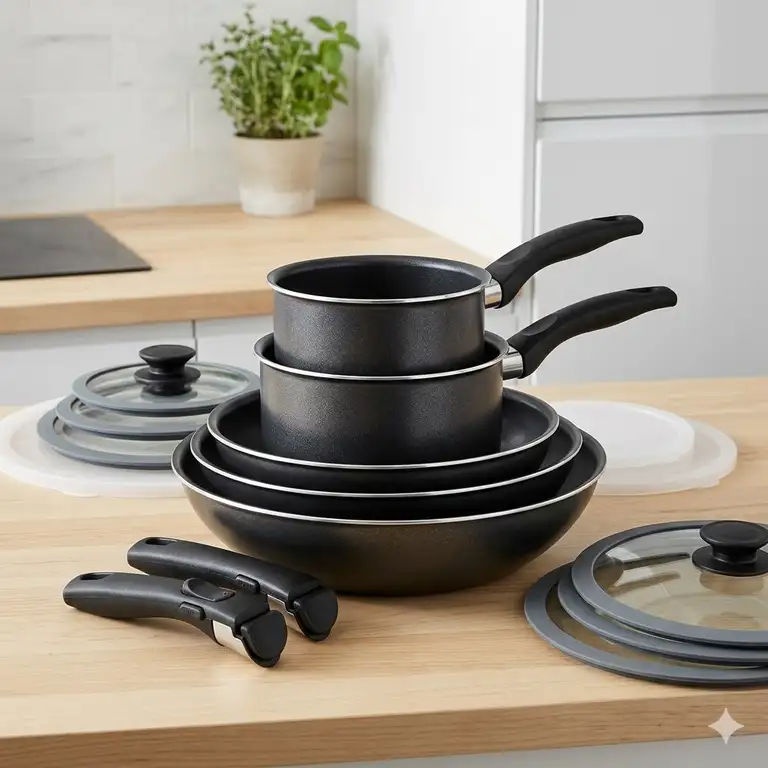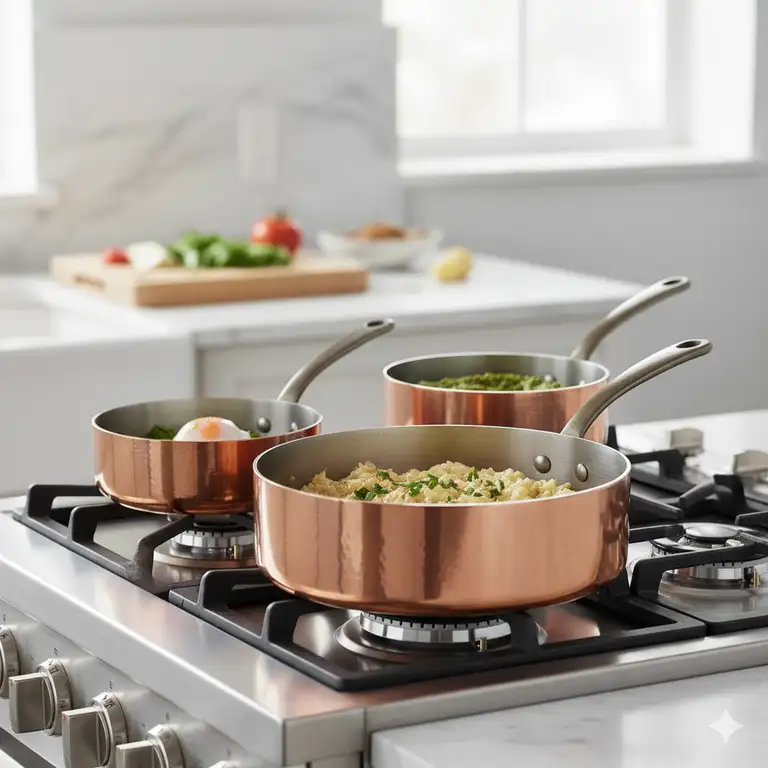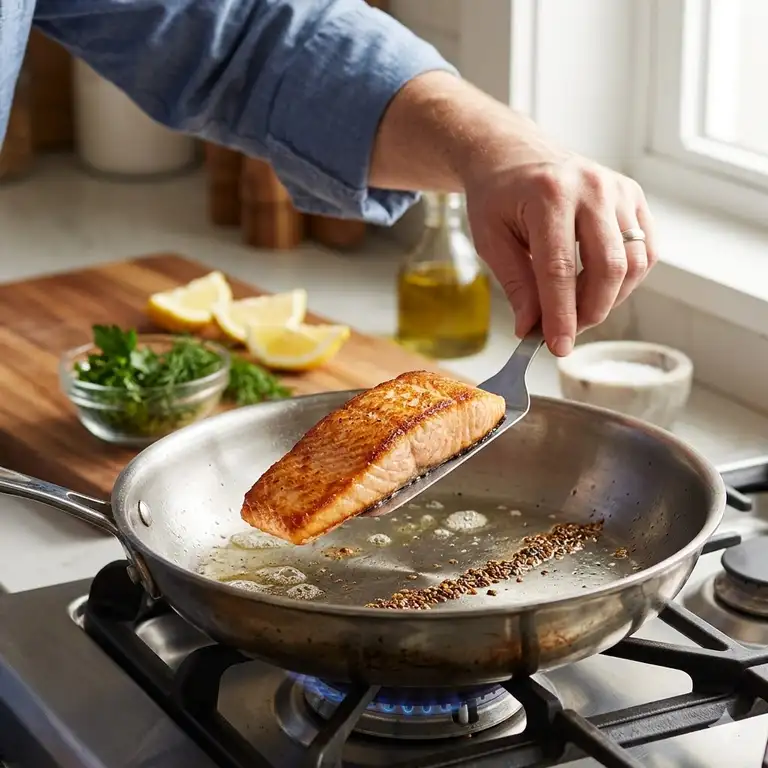
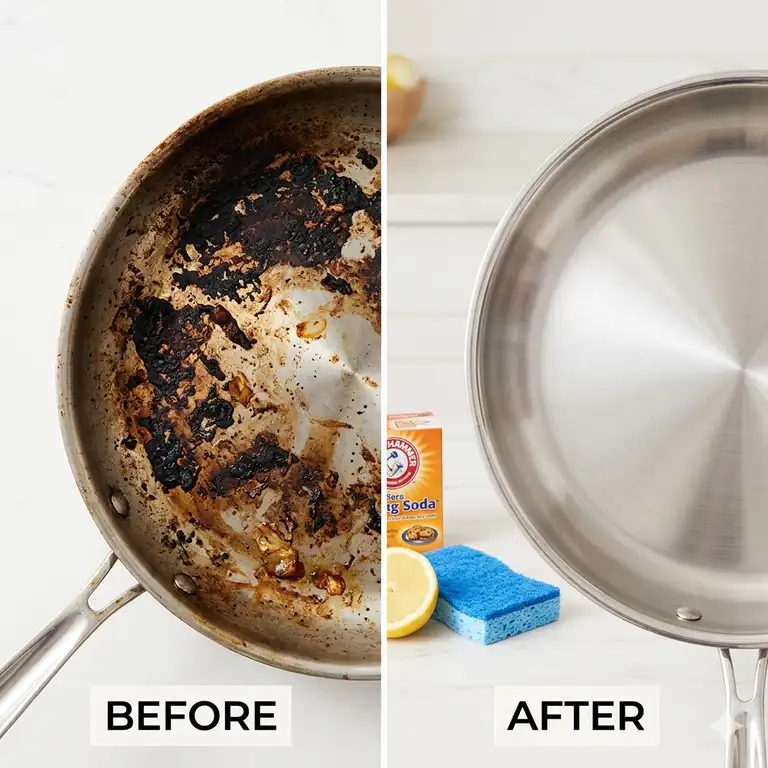
We have all been there. You are searing a beautiful ribeye or perhaps trying your hand at a delicate balsamic reduction, and suddenly, the smoke alarm is screaming, and your favorite $150 stainless steel skillet looks like it was rescued from a volcanic eruption. I know that sinking feeling in the pit of your stomach. You think the pan is toast. You think you have to throw it away or, worse, spend three hours scrubbing until your cuticles bleed.
✨Was this helpful? Spread the word! 🚀
But wait! Before you toss that crusty mess into the trash, I am here to tell you that learning how to clean burnt pan without ruining it is an essential life skill that every home cook needs. Whether you are dealing with a stubborn carbonized crust on stainless steel or a delicate situation with non stick surfaces, there is always a way back. Trust me, I have scorched more pans than I care to admit during my late-night experimental cooking phases, and I have saved every single one of them.
In this exhaustive guide, I am going to walk you through the professional-grade methods, the chemistry of cleaning, and the specific tools you need to achieve a factory-finish shine. We aren’t just going to “wash” the pan; we are going to perform a culinary restoration.
Quick Comparison: Cleaning Methods at a Glance
| Method | Best For | Effort Level | Safety Rating |
| Baking Soda & Vinegar | Stainless Steel | Medium | ⭐⭐⭐⭐⭐ |
| Boiling Water & Dish Soap | Lightly Burnt | Low | ⭐⭐⭐⭐⭐ |
| Bar Keepers Friend | Tough Stains | High | ⭐⭐⭐⭐ |
| Salt & Lemon | Cast Iron | Medium | ⭐⭐⭐⭐⭐ |
| Dryer Sheets | Non Stick | Low | ⭐⭐⭐ |
Top 7 Cleaning Products for Burnt Pans: Expert Analysis
When you are trying to figure out how to clean burnt pan without ruining it, the tools you choose are just as important as the technique. Using a metal scourer on a non stick pan is a recipe for disaster. Here are the top 7 products currently dominating the Amazon charts that I personally vouch for.
1. Bar Keepers Friend Cleanser & Polish (Powder)
This is the gold standard. If you own stainless steel, this is your holy grail. It uses oxalic acid to break down mineral deposits and burnt-on food at a molecular level without the need for harsh scratching.
-
Technical Specifications: 12 oz Powder, Oxalic Acid-based, Bleach-free.
-
Professional Application: Best for removing “rainbow” heat tints and carbonized fats from high-end stainless steel like All-Clad.
-
Customer Review Analysis: Users rave about its ability to make 10-year-old pans look brand new, though some warn it can be drying to the skin.
-
Pros: Extremely effective, very affordable, multi-surface use.
-
Cons: Not for use on non stick or gold/silver plating.
-
Variants: Also available in a liquid cream version for easier application.
2. Lodge Polycarbonate Pan Scrapers (2-Pack)
Sometimes you just need a bit of mechanical force. These scrapers are designed to get into the corners of your pans without gouging the metal.
-
Technical Specifications: Polycarbonate, Heat resistant to 275°F, Dishwasher safe.
-
Professional Application: Ideal for scraping off thick layers of burnt protein before applying chemical cleaners.
-
Customer Review Analysis: Reviewers love the ergonomic grip and the fact that they don’t dull like metal scrapers.
-
Pros: Won’t scratch seasoned cast iron, very durable.
-
Cons: Can melt if left in a hot pan.
-
Variants: Available in various colors; often bundled with silicone handle holders.
3. The Pink Stuff The Miracle Cleaning Paste
This viral sensation is more than just hype. It is a mild abrasive paste that works wonders on the exterior bottoms of pans where grease has baked on over years.
-
Technical Specifications: 17.6 oz Tub, 99% natural ingredients, Quartz-based abrasive.
-
Professional Application: Excellent for the “outside” of the pan where flames leave black soot.
-
Customer Review Analysis: Millions of users testify to its “miracle” status on TikTok and Amazon, noting the pleasant fruity scent.
-
Pros: Non-toxic, smells great, very effective on enamel.
-
Cons: Requires a bit of elbow grease.
-
Variants: Also sold as a multi-purpose liquid spray.
4. Knapp Made CM Scrubber (Stainless Steel Chainmail)
For the cast iron enthusiasts, this is a must-have. It removes burnt bits while leaving the precious seasoning intact.
-
Technical Specifications: 316-grade Stainless Steel, 4×4 inch square, Hand-soldered rings.
-
Professional Application: Heavy-duty cleaning of cast iron skillets and carbon steel pans.
-
Customer Review Analysis: Rated 4.8 stars for durability; users love that it lasts a lifetime.
-
Pros: Germ-resistant, dishwasher safe, indestructible.
-
Cons: Too aggressive for non stick or polished stainless steel.
-
Variants: Available in 6×6 inch and 8×8 inch sizes.
5. Le Creuset Enameled Cast Iron Cookware Cleaner
Enameled cast iron (like your Dutch oven) requires a gentle touch. This specialized cleaner protects the glass-like finish while lifting stains.
-
Technical Specifications: 8.5 fl oz Bottle, Specifically formulated for vitreous enamel.
-
Professional Application: Removing protein stains and dullness from white enamel interiors.
-
Customer Review Analysis: Professionals prefer this over generic cleaners to maintain the warranty of expensive Le Creuset pieces.
-
Pros: Protects the shine, prevents “crazing” of the enamel.
-
Cons: More expensive than generic options.
-
Variants: Standard size only.
6. Scrub Daddy Daddy Caddy & Sponge Set
The FlexTexture material changes based on water temperature. Use it cold for firm scrubbing on burnt areas, and warm for gentle cleaning.
-
Technical Specifications: Polymer foam, Odor-resistant, Scratch-free on over 20 surfaces.
-
Professional Application: Great for everyday maintenance and light scorching on ceramic pans.
-
Customer Review Analysis: Users appreciate that it doesn’t hold onto smells like traditional sponges.
-
Pros: Ergonomic design, changes texture, very versatile.
-
Cons: Wears down faster than chainmail or scrapers.
-
Variants: Scrub Mommy (half foam, half scrubby) is also popular.
7. Dawn Powerwash Dish Spray
This isn’t your average dish soap. The alcohol-based spray penetrates grease 5x faster than traditional liquids, making it perfect for pre-treating burnt pans.
-
Technical Specifications: 16 oz Spray Bottle, Contains Alcohol Denatured and Phenoxyethanol.
-
Professional Application: Initial “soak” phase for pans with oily, burnt residue.
-
Customer Review Analysis: A massive favorite for its “spray and walk away” convenience.
-
Pros: Great for vertical surfaces (sides of pans), fast-acting.
-
Cons: Strong chemical scent.
-
Variants: Scent options include Fresh, Apple, and Lemon.
✨ Don’t Miss These Exclusive Deals!
🔍 Take your kitchen to the next level with these carefully selected products. Click on any highlighted item to check current pricing and availability. These tools will help you restore your cookware and make it look brand new again! 🍳
💬 Just one click – help others make better buying decisions too!😊
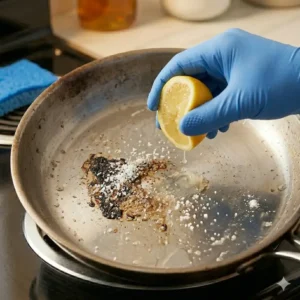
Table: Product Specifications Matrix
| Product | Primary Material | Best Use Case | Lifetime Expectancy |
| Bar Keepers Friend | Powder (Oxalic Acid) | Stainless Steel Restoration | N/A (Consumable) |
| Lodge Scrapers | Polycarbonate | Heavy Scraping | 2-3 Years |
| The Pink Stuff | Paste (Quartz) | Enamel/Exterior Stains | N/A (Consumable) |
| Knapp Made CM | Stainless Steel | Cast Iron Only | Lifetime |
| Le Creuset Cleaner | Specialized Liquid | Enameled Dutch Ovens | N/A (Consumable) |
| Scrub Daddy | Polymer Foam | Daily Multi-surface | 1-2 Months |
| Dawn Powerwash | Spray (Alcohol-base) | Grease Penetration | N/A (Consumable) |
Deep Dive: The Science of Cleaning Burnt Pan Without Damage
When we talk about cleaning burnt pan surfaces, we are essentially dealing with carbonized organic matter. When food is heated past its smoke point, the molecules break down and form incredibly strong bonds with the metal surface. This is why just “soaking” in water often doesn’t work. You need to disrupt those bonds.
The Baking Soda and Vinegar Reaction
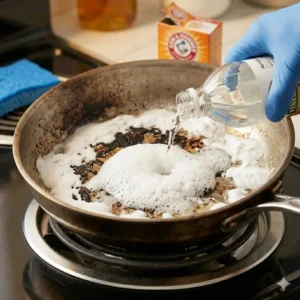
You might remember the “volcano” experiment from 5th grade. When you combine sodium bicarbonate (baking soda) and acetic acid (vinegar), you get a fizzing reaction that produces carbon dioxide gas. While the fizzing itself looks cool, the real magic is the chemical shift. The vinegar helps dissolve minerals, while the baking soda acts as a mild abrasive.
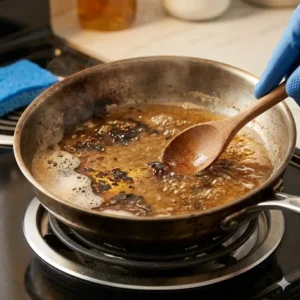
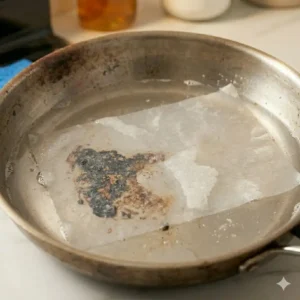
If you are looking for the best way to clean burnt pan interiors, start by filling the pan with a 50/50 mix of water and vinegar. Bring it to a boil. This heat energy helps soften the carbon. Once boiling, remove it from the heat and add 2 tablespoons of baking soda. Let it fizz, then sit for 15 minutes. You will be amazed at how the “black stuff” just lifts off.
Understanding Your Pan’s Anatomy
Before you start scrubbing, you must identify your material.
-
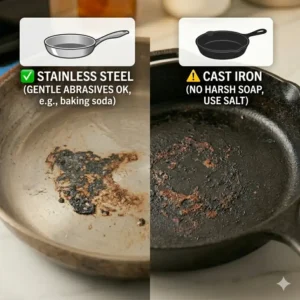
Stainless Steel: Durable, can handle high acidity and moderate abrasion.
-
Non Stick (Teflon): Extremely fragile. No metal, no harsh chemicals.
-
Cast Iron: Robust, but has a “seasoning” (layer of polymerized oil) that can be stripped by soap or high acidity.
-
Ceramic: Naturally non stick but can lose its coating if scrubbed with metal.
Table: User Compatibility & Safety
| Pan Type | Bar Keepers Friend | Chainmail | Vinegar/Lemon | Scrapers |
| Stainless Steel | ✅ Recommended | ❌ Too Harsh | ✅ Safe | ✅ Safe |
| Cast Iron | ❌ Use sparingly | ✅ Recommended | ❌ Strips Seasoning | ✅ Safe |
| Non Stick | ❌ Ruinous | ❌ Ruinous | ✅ Safe | ⚠️ Use Plastic Only |
| Ceramic | ⚠️ Use Cream only | ❌ Ruinous | ✅ Safe | ✅ Safe |
Advanced Methods for Cleaning Burnt Pan Messes
Sometimes, a simple soak isn’t enough. For those “I left the stove on and went for a jog” moments, you need heavy artillery. Here are some of my favorite burnt pan cleaning hacks that go beyond the basics.
The Hydrogen Peroxide and Baking Soda Method
This is a powerful duo for how to clean a burnt pan that has “yellowed” or has a gummy grease residue. Mix baking soda and hydrogen peroxide into a thick paste. Slather it over the burnt areas and let it sit for at least 6 hours. The peroxide acts as a bleaching agent and an oxidizer, breaking down the stubborn oils that glue the carbon to the pan.
The Salt and Potato Trick
This sounds like a weird folk remedy, but it is pure physics. If you need to remove burnt food from pan surfaces that are cast iron, pour a generous amount of coarse kosher salt into the pan. Cut a large potato in half and use the flat side to scrub the salt into the burnt bits. The potato provides moisture and a perfect grip, while the salt acts as a heavy-duty abrasive that won’t ruin your seasoning.
The Boiling Water and Dishwasher Pod Technique
If you are wondering how to clean burnt pan without ruining it when you have absolutely zero energy for scrubbing, try this. Place a single dishwasher pod (like Cascade Platinum) into the burnt pan. Fill it with boiling water and let it sit overnight. Dishwasher pods are highly concentrated with enzymes designed to eat through proteins and fats. In the morning, most of the gunk will simply rinse away.
Table: Performance Metrics – Effort vs. Result
| Method | Time Required | Physical Labor | Success Rate (%) |
| Dishwasher Pod Soak | 12 Hours | Low | 85% |
| Bar Keepers Friend | 10 Minutes | High | 95% |
| Baking Soda Paste | 2 Hours | Medium | 80% |
| Potato & Salt | 15 Minutes | High | 90% |
| Vinegar Boil | 20 Minutes | Medium | 75% |
How to Prevent Ruining Your Pan in the First Place
I always say that the best way to clean burnt pan residue is to never have it in the first place. But life happens. However, understanding the physical limits of your cookware can help.
Temperature Control
Most people cook too hot. If your oil is smoking, you are already on your way to a burnt pan. According to the USDA Food Safety guidelines, high heat doesn’t just burn food; it can also lead to the production of harmful acrylamides. Using a lower heat setting and allowing the pan to preheat properly will prevent the “flash burning” that causes sticking.
The Importance of Deglazing
Deglazing is a professional technique where you add liquid (wine, broth, or even water) to a hot pan after cooking meat. This immediately lifts the “fond” (the tasty brown bits) from the bottom. If you deglaze every time you cook, you are essentially cleaning burnt pan surfaces before the food has a chance to carbonize. It’s a win-win: you get a great sauce, and your cleanup is 90% done.
Table: Budget vs. Premium Cleaning Solutions
| Feature | Budget (DIY) | Premium (Commercial) |
| Core Components | Vinegar, Baking Soda, Salt | Oxalic Acid, Specialized Polymers |
| Ease of Use | Requires mixing/measuring | Ready-to-use formulas |
| Storage | Kitchen pantry staples | Dedicated cleaning cabinet space |
| Cost per Use | < $0.10 | $0.50 – $2.00 |
| Specific Targets | General carbon | Heat tints, rust, specific enamels |
Common Mistakes When Cleaning Burnt Pan Surfaces
Admittedly, I have made all of these mistakes. In my early twenties, I thought a steel wool pad was the solution to everything. I was wrong. My non stick pans ended up looking like they had been through a car wash with gravel.
-
Using Cold Water on a Hot Pan: This causes “thermal shock.” Your pan can warp, or the base can even detach. Always let the pan cool slightly before adding water.
-
Over-Scrubbing Non Stick: Once that coating is scratched, it can release PFOAs or just become useless. If food is burnt on non stick, you must use the “soak and soft sponge” method.
-
Ignoring the Exterior: If you don’t clean the bottom of your pan, that grease will eventually turn into a hard, black lacquer that is nearly impossible to remove and reduces heat efficiency.
-
Using Oven Cleaner: Some people suggest Easy-Off for pans. While it works on stainless steel, it can permanently discolor and pit aluminum pans.
Table: Benefits Quantification – Natural vs. Chemical
| Benefit | Natural (Lemon/Soda) | Chemical (BKF/Dawn) |
| Safety for Hands | 10/10 | 4/10 (Requires gloves) |
| Environmental Impact | Minimal | Moderate |
| Speed of Action | Slow (needs soaking) | Fast (instant reaction) |
| Odor | Pleasant/Neutral | Often strong/chemical |
| Residue | Easy to rinse | Requires thorough washing |
Detailed Step-by-Step: How to Clean Burnt Pan Without Ruining It
Let’s put it all together into a master workflow. This is the exact process I use in my kitchen.
Step 1: The Initial Assessment
Is the food just “stuck” or is it “burnt”? If it’s stuck, a simple soak in hot, soapy water will do. If it’s black and crusty, move to Step 2.
Step 2: The Boil-Off
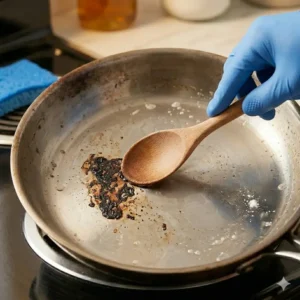
Fill the pan with an inch of water and a splash of vinegar. Bring it to a boil. Use a wooden spoon to gently scrape the bottom as it boils. This is the clean burnt pan without damage gold standard because it uses heat rather than friction.
Step 3: The Paste Application
If Step 2 didn’t get it all, make a paste of Bar Keepers Friend or baking soda. Apply it to the damp pan and let it sit. For cleaning burnt pan messes that are particularly thick, cover the paste with a damp paper towel to keep it from drying out.
Step 4: The Targeted Scrub
Use your Scrub Daddy or a plastic scraper. Work in circular motions. For the exterior, this is where The Pink Stuff shines.
Step 5: The Rinse and Dry
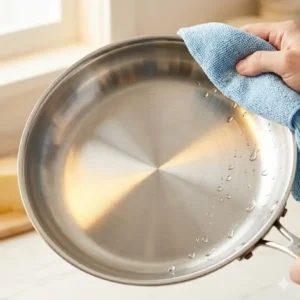
Always dry your pans immediately. This prevents water spots and, in the case of cast iron or carbon steel, prevents rust.
✨ Upgrade Your Cleaning Arsenal Today!
🔍 Don’t let a burnt pan ruin your evening. Invest in the right tools like the Bar Keepers Friend Cleanser or a Knapp Made CM Scrubber to make cleanup a breeze. Click on any of our top-rated recommendations to find the perfect solution for your kitchen. Your cookware deserves the best! 🥘
Conclusion: You’ve Got This!
Cleaning a burnt pan feels like a chore, but honestly, there is something incredibly satisfying about watching that black crust disappear to reveal a shimmering surface underneath. By knowing how to clean burnt pan without ruining it, you are not just saving money on replacement cookware; you are becoming a more confident, capable cook.
Remember, the secret is patience. Don’t reach for the most aggressive tool first. Start with heat and moisture, move to mild abrasives, and only use heavy-duty chemical cleaners when absolutely necessary. Whether you choose the natural route with baking soda and vinegar or the professional power of Bar Keepers Friend, your pans will thank you for the extra TLC.
Now, go forth and rescue those skillets! And maybe… just maybe… set a timer next time you’re making that reduction. 😉
FAQs
✅ While you can use fine steel wool on stainless steel, it's generally not recommended. It can create micro-scratches that make food stick more easily in the future. Instead, use a non-scratch sponge and Bar Keepers Friend for better results...
✅ This usually happens because the pan is too hot or the oil has a low smoke point. It could also mean your pan has a buildup of 'invisible' grease that has carbonized, creating a rough surface where food catches...
✅ Yes, as long as you have removed all the carbonized food residue. If the pan is non stick and the coating is peeling or scratched from the burn, you should discard it as it may release chemicals into your food...
✅ The best way is to soak the pan in a mixture of one part bleach to three parts water for a few hours. Alternatively, use a specialized cleaner like the Le Creuset Enameled Cookware Cleaner to restore the original white finish...
✅ Generally, no. The dishwasher is not powerful enough to remove carbonized food and the harsh detergents can actually 'bake' the stains on further. Hand cleaning with the methods mentioned above is far more effective for heavy burns... ❓ Can I use steel wool on my stainless steel pans?
❓ Why does food keep burning in my pan even with oil?
❓ Is it safe to use a burnt pan after cleaning it?
❓ How do I remove the yellow stains from my white enameled Dutch oven?
❓ Can I put my burnt pan in the dishwasher to clean it?
Recommended for You
- How to use stainless steel pan without sticking: 7 Pro Secrets!
- Copper Skillet Pan: 7 Best Options That Transform Cooking
- 7 Best Cuckoo Low Carb Rice Cooker Models for a Healthier 2026
Disclaimer: This article contains affiliate links. If you purchase products through these links, we may earn a small commission at no additional cost to you.
✨ Found this helpful? Share it with your friends! 💬🤗