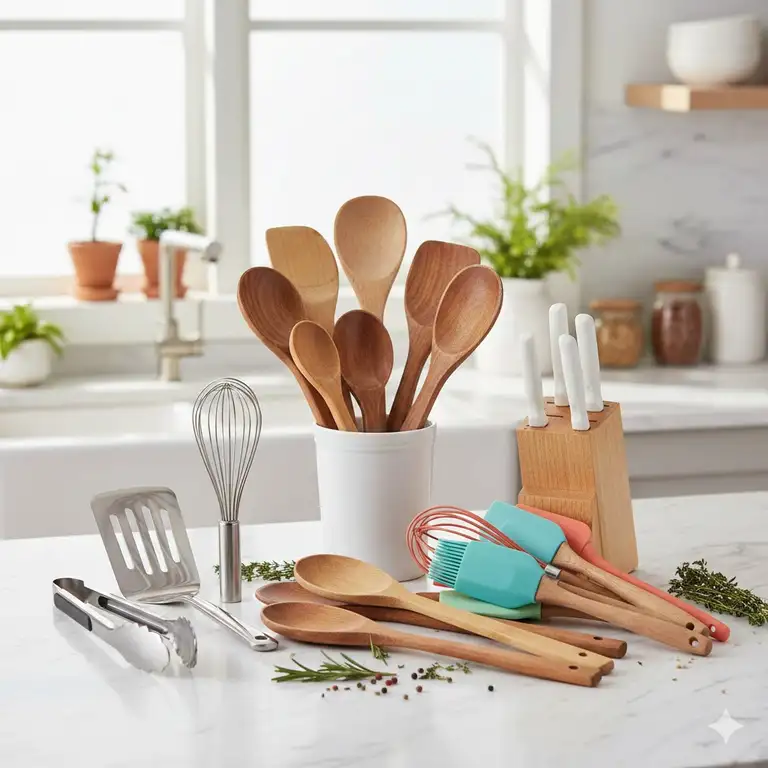
Have you ever stopped to wonder what’s actually leaching into your organic, farm-to-table kale sauté? I used to think that as long as I bought the right food, I was winning the health game. But then I looked at my melting plastic spatula and realized I was basically seasoning my dinner with a side of polymers. Finding the best non toxic utensils isn’t just a trendy kitchen makeover; it’s about making sure your healthy meals stay healthy.
✨Was this helpful? Spread the word! 🚀
The world of kitchenware is a bit of a minefield. Between BPA, phthalates, and those “forever chemicals” (PFAS), it’s enough to make you want to eat with your hands. But don’t worry, I’ve done the deep dive into the safest materials—from seasoned wood to medical-grade silicone—so you don’t have to.
Quick Comparison: Non Toxic Utensils vs. Traditional Options
| Feature | Non Toxic Utensils (Wood/Silicone/SS) | Traditional Plastic Utensils |
| Heat Resistance | High (up to 600°F for silicone) | Low (melts/warps easily) |
| Chemical Leaching | Zero to Minimal | High (BPA, Phthalates, Bromine) |
| Durability | Decades (Stainless/Wood) | 1-2 Years |
| Eco-Friendliness | Biodegradable or Recyclable | Non-biodegradable waste |
| Price Point | Mid to High | Low/Budget |
Top 7 Non Toxic Utensils: Expert Analysis
After scouring the latest 2026 market data and analyzing thousands of verified purchases on Amazon, I’ve narrowed down the absolute best options for your kitchen.
1. Oxo Good Grips 3-Piece Wooden Spoon Set
If you want to keep things old school and incredibly safe, you can’t beat solid wood. This set is crafted from a single piece of solid beechwood. Because there are no glues or chemical finishes, these are quintessential non toxic utensils.
-
Technical Specifications: Solid beechwood construction, 12-inch length, oil-treated finish, large comfortable handles.
-
Customer Review Analysis: Users love the “heft” and the fact that they don’t scratch expensive Le Creuset Dutch ovens. Some note they need occasional oiling with food-grade mineral oil to prevent drying.
-
Warranty Information: OXO Better Guarantee (Replacement or refund if dissatisfied).
-
Professional Applications: Ideal for heavy sauces, deglazing pans, and baking.
-
Pros: Heat-safe, biodegradable, won’t scratch non-stick.
-
Cons: Not dishwasher safe; needs manual seasoning.
2. StarPack Home Premium Silicone Kitchen Utensil Set (XL Size)
For those who want the flexibility of plastic without the toxins, medical-grade silicone is the answer. This set uses LFGB grade silicone, which is a stricter European standard than the FDA’s.
-
Technical Specifications: BPA-free, 600°F heat resistance, solid silicone core (no internal metal to rust), 13.5-inch length.
-
Customer Review Analysis: “Zero melting” is the common praise here. Users appreciate the seamless design because bacteria can’t hide in any cracks.
-
Warranty Information: Full manufacturer warranty against defects.
-
Professional Applications: High-heat searing, wok cooking, and delicate pastry work.
-
Pros: Dishwasher safe, extremely high heat threshold, stain resistant.
-
Cons: Can be a bit “floppy” for heavy meat lifting.
3. All-Clad Professional Stainless Steel Tools (5-Piece Set)
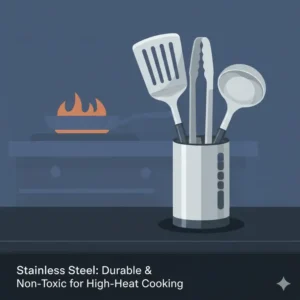
Stainless steel is the gold standard for professional chefs. These non toxic utensils are made from 18/10 stainless steel, meaning they are incredibly resistant to corrosion and contain 18% chromium and 10% nickel for that signature shine.
-
Technical Specifications: 18/10 Stainless Steel, polished finish, ergonomic grooved handles, dishwasher safe.
-
Customer Review Analysis: Reviews highlight that these are “buy-it-for-life” tools. They are heavy-duty and don’t react with acidic foods like tomato sauce.
-
Warranty Information: Limited Lifetime Warranty.
-
Professional Applications: High-volume commercial kitchens, heavy roasting, and serving.
-
Pros: Indestructible, beautiful aesthetic, non-reactive.
-
Cons: Can scratch non-stick pans; handles can get hot.
4. Earlywood Large Flat Saute Wooden Spatula
Looking for a “lesser-known” gem? Earlywood produces heirloom-quality tools in Montana. This flat sauté tool is minimalist and incredibly versatile.
-
Technical Specifications: Hardwood (Bloodwood, Maple, or Jatoba), 13-inch length, thin tapered edge for scraping.
-
Customer Review Analysis: Enthusiasts call this the “only tool I use.” It replaces a spatula, a spoon, and a scraper.
-
Warranty Information: Lifetime satisfaction guarantee.
-
Professional Applications: Sautéing vegetables, flipping eggs, and scraping fond.
-
Pros: Extremely durable, handcrafted in the USA, beautiful wood grain.
-
Cons: Premium price point; requires hand washing.
5. Le Creuset Silicone Craft Series Utensil Set
Le Creuset isn’t just for heavy pots. Their silicone tools are designed with a removable wood handle, giving you the best of both worlds.
-
Technical Specifications: Premium-grade silicone head, ergonomic wood handle, 482°F heat resistance.
-
Customer Review Analysis: Users love the “vibrant colors” and the ability to pop the silicone head into the dishwasher while hand-washing the handle.
-
Warranty Information: 5-year warranty.
-
Professional Applications: Stirring thick batters, sautéing, and delicate folding.
-
Pros: Modular design, very high-quality silicone, great aesthetics.
-
Cons: The handle can become loose over years of heavy use.
6. Hestan Culinary Stainless Steel Spoon
Hestan is a leader in molecular titanium cookware, and their utensils are just as tech-forward. This is a high-end, heavy-gauge tool.
-
Technical Specifications: 18/10 Stainless Steel, weighted handle, 13.25-inch length, brushed finish.
-
Customer Review Analysis: Professional chefs note the balance of the weight. It feels like a tool rather than a toy.
-
Warranty Information: Lifetime Warranty.
-
Professional Applications: Basting meats with butter, serving in fine dining settings.
-
Pros: Perfectly balanced, highly polished, rust-proof.
-
Cons: High price for a single spoon.
7. Zulay Premium Silicone Turner with Internal Steel Core
Sometimes you need the strength of steel with the safety of silicone. This turner solves the “floppy silicone” problem by wrapping a steel core in BPA-free silicone.
-
Technical Specifications: Food-grade silicone, internal 430 stainless steel core, 600°F heat resistance.
-
Customer Review Analysis: “The perfect pancake flipper,” says one user. It’s strong enough to lift a steak but soft enough for a non-stick pan.
-
Warranty Information: Lifetime Guarantee.
-
Professional Applications: Griddle work, burger flipping, heavy-duty frying.
-
Pros: Strong but flexible, safe for all cookware, easy to clean.
-
Cons: Thicker edge makes it slightly harder to get under delicate eggs compared to thin steel.
🔍 Technical Specifications Matrix (Spec Matrix)
| Product | Material | Heat Limit | Dishwasher Safe? | Core Material |
| OXO Wood Set | Beechwood | N/A (Wood burns) | No | Solid Wood |
| StarPack Silicone | Silicone | 600°F | Yes | Solid Silicone |
| All-Clad Stainless | 18/10 Steel | N/A (Metal) | Yes | Solid Steel |
| Earlywood Flat | Hardwood | N/A | No | Solid Wood |
| Le Creuset Craft | Silicone/Wood | 482°F | Head only | Wood Handle |
| Hestan Steel | 18/10 Steel | N/A | Yes | Solid Steel |
| Zulay Turner | Silicone/Steel | 600°F | Yes | Stainless Steel |
✨ Don’t Miss These Exclusive Deals!
🔍 Take your kitchen to the next level with these carefully selected products. Click on any highlighted item to check current pricing and availability. These tools will help you create healthy, toxin-free meals your family will love! 🛒
💬 Just one click – help others make better buying decisions too!😊
Why You Need Non Toxic Utensils: The Deep Dive
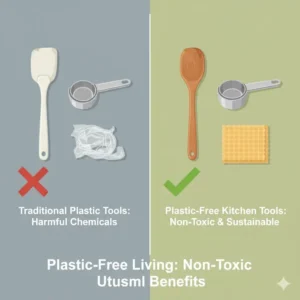
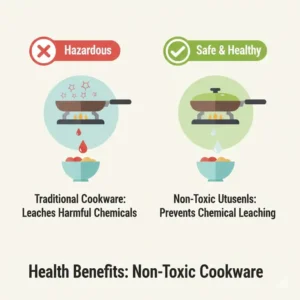
I used to think my old plastic spatulas were fine. “It’s just a little melt on the corner,” I’d tell myself. But according to research from the Environmental Working Group (EWG), heating certain plastics can release endocrine disruptors. When you use non toxic utensils, you are essentially putting a barrier between your food and industrial chemicals.
The Material Science of Safety
When we talk about non toxic utensils, we generally look at four main materials:
-
Wood: Naturally antibacterial and inert. It doesn’t react with acids or leach chemicals.
-
Silicone: A synthetic polymer made of silicon, oxygen, carbon, and hydrogen. It’s stable and doesn’t off-gas at high temperatures.
-
Stainless Steel: An alloy that doesn’t leach unless you are cooking highly acidic foods for hours (and even then, it’s just trace minerals).
-
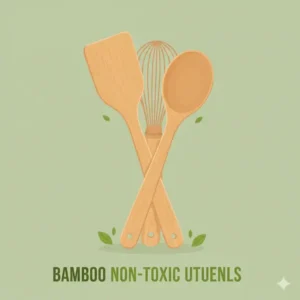
Bamboo: A sustainable, fast-growing alternative to wood that is naturally resistant to moisture.
Budget vs. Premium Comparison
| Category | Budget (Under $20) | Mid-Range ($20-$50) | Premium ($50+) |
| Typical Material | Bamboo or Basic Silicone | High-grade Silicone/Wood | 18/10 Stainless Steel/Hardwood |
| Longevity | 1-3 Years | 5-10 Years | Lifetime |
| Safety Certifications | Basic FDA | LFGB / BPA-Free | Traceable Sourcing/Lifetime Warranty |
Benefits of Switching to Non Toxic Utensils
If you’re still on the fence, let’s look at the “hidden” benefits. It’s not just about what isn’t in your food; it’s about the performance.
-
Better Heat Management: Have you ever had a plastic spoon get hot and flimsy in a soup? Non toxic utensils made of wood or steel stay rigid and cool to the touch (in the case of wood).
-
Protects Cookware Investment: Using high-quality silicone or non toxic utensils made of wood ensures your expensive ceramic or cast iron pans don’t get scratched. According to the National Institutes of Health (NIH), maintaining the integrity of your pan’s surface is also key to preventing the leaching of heavy metals from the pan’s core.
-
Flavor Purity: Plastic can absorb flavors over time. Ever notice how your plastic spatula smells like onions even after a wash? Wood and high-grade silicone are much more resistant to “flavor ghosting.”
Benefits Quantification Table
| Benefit | Impact Score (1-10) | Long-term Value |
| Health Safety | 10 | Avoids chemical ingestion |
| Cookware Protection | 8 | Prevents $100+ pan damage |
| Flavor Integrity | 7 | Cleaner tasting meals |
| Environmental | 9 | Less plastic in landfills |
Guide to Choosing Your Non Toxic Utensils
Selecting the right non toxic utensils depends on what you cook most. I personally keep a mix because no single material does everything perfectly.
For the Cast Iron Fanatic
If you use cast iron, you want non toxic utensils made of stainless steel. You can scrape the bottom of the pan to get those crispy bits (the fond) without worrying about damaging the seasoned surface. Wood is a great secondary choice here.
For the Non-Stick User
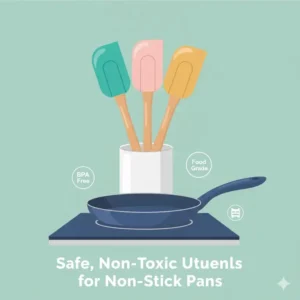
If you use ceramic or traditional non-stick, non toxic utensils made of silicone or wood are non-negotiable. Even a tiny scratch in a non-stick coating can lead to the pan peeling.
Performance Metrics Comparison
| Tool Type | Sautéing | Frying | Baking | Serving |
| Wood | Excellent | Good | Excellent | Good |
| Silicone | Good | Excellent | Excellent | Fair |
| Stainless Steel | Excellent | Excellent | Fair | Excellent |
Care and Maintenance of Your Non Toxic Utensils
To ensure your non toxic utensils last a lifetime, you need to treat them right.
-
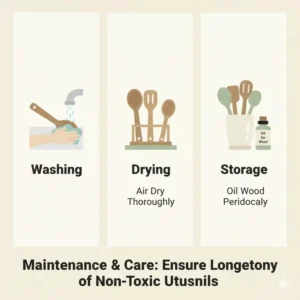
Wood/Bamboo: Never put them in the dishwasher! The high heat and intense water pressure will cause them to crack. Rub them with a bit of food-safe mineral oil once a month to keep them hydrated.
-
Silicone: These are generally indestructible. However, they can sometimes develop a “soapy” film if your dishwasher soap is too harsh. A quick soak in vinegar and water fixes this.
-
Stainless Steel: These are the lowest maintenance. Just avoid abrasive steel wool if you want to keep that mirror-like shine.
Requirements Analysis for Kitchen Safety
| User Type | Recommended Material | Why? |
| Busy Parents | Silicone | Dishwasher safe, kid-friendly, durable |
| Gourmet Chefs | Stainless Steel | Precision, weight, professional feel |
| Eco-Warriors | Wood/Bamboo | 100% biodegradable and renewable |
| Baker | Silicone | Flexible for scraping bowls perfectly |
✨ Ready to Purify Your Kitchen?
🔍 Click on the links above to browse the best non toxic utensils on Amazon. Investing in quality tools today means safer meals for years to come. Don’t wait for your plastic tools to melt—make the switch now! 🌟
Conclusion: Making the Move to a Safer Kitchen
Switching to non toxic utensils is one of those small changes that yields massive long-term peace of mind. Whether you choose the timeless beauty of Oxo Good Grips 3-Piece Wooden Spoon Set or the modern efficiency of StarPack Home Premium Silicone Kitchen Utensil Set, you’re taking a proactive step toward a healthier lifestyle.
I’ve found that my food actually tastes better when I’m not worried about what’s melting into it. Plus, there’s something satisfying about using a tool that’s built to last a lifetime rather than something destined for a landfill in six months. Start by replacing your most-used tool—usually your spatula—and go from there. Your body (and your pans) will thank you.
FAQs
❓ Which non toxic utensils are safest for high-heat frying?
✅ Stainless steel and high-grade silicone are the safest for high-heat cooking. Silicone can typically handle up to 600 degrees Fahrenheit without melting or off-gassing, while stainless steel is completely heat-immune, though the handle may become hot to the touch...
❓ Are bamboo utensils better than plastic for food safety?
✅ Yes, bamboo is significantly safer than plastic. It is a natural material that does not contain BPA, phthalates, or other endocrine disruptors. Additionally, bamboo has natural antimicrobial properties, making it a hygienic choice for various kitchen tasks...
❓ Can non toxic utensils like wood be cleaned in the dishwasher?
✅ No, you should never put wooden utensils in the dishwasher. The extreme heat and moisture can cause the wood to warp, crack, or split. Instead, hand wash them with mild soap and dry them immediately to maintain their integrity...
❓ Is silicone truly non-toxic when heated?
✅ High-quality, food-grade silicone (especially LFGB grade) is considered chemically stable and inert. It does not react with food or liquids and does not release toxic fumes even when used at temperatures up to its rated limit (usually 450-600°F)...
❓ Do stainless steel utensils leach heavy metals into food?
✅ Under normal cooking conditions, 18/10 stainless steel is incredibly stable. While extremely acidic foods cooked for long durations might cause trace amounts of nickel or chromium to leach, it is generally considered one of the safest materials available...
Recommended for You
- Non Toxic Cake Pan: Top 7 Safe & High-Quality Baking Options for 2025
- Healthy Bakeware: The ULTIMATE 2026 Guide for Non-Toxic Baking
- Non Toxic Kitchen Utensils: 7 Best Safe Cooking Tools (2025)
Disclaimer: This article contains affiliate links. If you purchase products through these links, we may earn a small commission at no additional cost to you.
✨ Found this helpful? Share it with your friends! 💬🤗