
Creating the perfect kitchen lighting setup has never been more important than it is today. Whether you’re a professional chef or someone who simply enjoys cooking family meals, having proper illumination over your countertops can dramatically transform your culinary experience. Led under cabinet kitchen lights have emerged as the gold standard for task lighting, offering energy efficiency, longevity, and superior illumination compared to traditional lighting solutions.
✨Was this helpful? Spread the word! 🚀
The world of led under cabinet kitchen lights has evolved significantly over the past few years. Furthermore, with advancements in LED technology, these lighting solutions now offer unprecedented control over brightness, color temperature, and energy consumption. Additionally, the installation process has become remarkably straightforward, making it accessible for both DIY enthusiasts and professional contractors.
Quick Comparison: Led Under Cabinet Kitchen Lights vs Traditional Alternatives
| Feature | LED Under Cabinet Lights | Halogen Under Cabinet | Fluorescent Under Cabinet |
|---|---|---|---|
| Energy Efficiency | 75% more efficient | Standard efficiency | 50% more efficient |
| Lifespan | 25,000-50,000 hours | 2,000-4,000 hours | 8,000-15,000 hours |
| Heat Output | Minimal heat generation | High heat output | Moderate heat output |
| Color Temperature Control | 2700K-6500K adjustable | Fixed 3000K | Limited options |
| Dimming Capability | Full range dimming | Limited dimming | Poor dimming |
| Installation Complexity | Simple plug-and-play | Requires transformer | Ballast needed |
| Environmental Impact | Mercury-free, recyclable | Contains halogen gas | Contains mercury |

Top 7 Led Under Cabinet Kitchen Lights: Expert Analysis
1. DiDiSky LED Under Cabinet Lights – Best Overall Motion Sensor Option
The DiDiSky LED Under Cabinet Lights represents the pinnacle of modern under cabinet lighting technology. This innovative system features a 2200mAh rechargeable battery that provides up to 10 hours of continuous operation at maximum brightness. Moreover, the motion sensor capability automatically activates when you enter the kitchen, creating an intuitive lighting experience that adapts to your daily routines.
Key Specifications:
- Lumens: 300 lumens per unit
- Color Temperature: 4000K natural white
- Battery Life: 10 hours continuous, 40-60 days in sensor mode
- Sensor Range: 3-meter detection range
- Charging: USB-C fast charging (2 hours full charge)
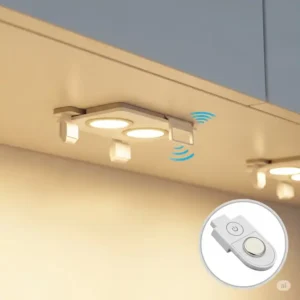
- Installation: Magnetic mounting with adhesive strips
Professional Applications: These lights excel in professional kitchens where chefs need hands-free operation during food preparation. The motion sensor eliminates the need to touch switches with messy hands, maintaining hygiene standards while providing consistent illumination.
2. Alivation 2025 Upgraded LED Under Cabinet Lighting – Longest Battery Life
The Alivation 2025 Upgraded LED Under Cabinet Lighting system stands out with its remarkable 4500mAh battery capacity, delivering up to 180 days of operation when used 10 times daily for 20 seconds each. This exceptional longevity makes it ideal for homeowners who want a “set it and forget it” lighting solution.
Key Specifications:
- Lumens: 200 lumens output
- Color Temperature: 6000K cool white
- Battery Life: 180 days with normal usage
- Sensor Range: 3-meter PIR sensor
- Charging: USB-C with fast charging technology
- Modes: 3 adjustable brightness levels
Industry Applications: Perfect for rental properties or vacation homes where maintenance access is limited. The extended battery life reduces the frequency of charging cycles, making it suitable for remote installations.
3. Brilliant Evolution Ultra-Thin Wireless LED Lights – Best Value Pack
The Brilliant Evolution Ultra-Thin Wireless LED Lights offer exceptional value with their 4-pack configuration and dual remote control system. At only 0.6 inches thick, these lights blend seamlessly with any cabinet design while providing 65 lumens of warm white illumination per unit.
Key Specifications:
- Lumens: 65 lumens per unit (260 lumens total)
- Color Temperature: 3000K warm white
- Battery Life: 100 hours per 3 AAA batteries
- Remote Range: 15-foot wireless control
- Timer Options: 15, 30, 60, 120-minute auto-off
- Dimensions: 8.5″ x 2″ x 0.6″
Commercial Applications: These lights are frequently used in retail displays, office kitchenettes, and hospitality environments where aesthetic appeal and reliable performance are crucial.
4. Brilliant Evolution Wireless LED Puck Lights – Best Modular Design
The Brilliant Evolution Wireless LED Puck Lights provide maximum flexibility with their modular design, allowing you to create custom lighting patterns. Each puck delivers 55 lumens of warm white light, and the system can control up to 12 units with a single remote.
Key Specifications:
- Lumens: 55 lumens per puck
- Color Temperature: 3000K warm white
- Battery Life: 100 hours of operation
- Remote Capability: Controls up to 12 units
- Dimming: 50% and 100% brightness settings
- Dimensions: 3.37″ diameter x 1.25″ height
Professional Use Cases: Ideal for custom cabinet installations, display cases, and architectural lighting where precise light placement is essential.
5. GE Enbrighten LED Puck Lights – Best Hardwired Option
The GE Enbrighten LED Puck Lights represent the premium hardwired solution for permanent installations. With 654 lumens output and lifetime warranty, these lights are designed for professional-grade applications where reliability is paramount.
Key Specifications:
- Lumens: 654 lumens total output
- Color Temperature: 3000K soft warm white
- Power: Plug-in or direct wire capability
- Linkability: Connect up to 90 fixtures
- Warranty: Lifetime warranty coverage
- Dimmer Compatible: Works with in-wall dimmers
Technical Applications: Perfect for new construction projects, major kitchen renovations, and commercial installations where permanent wiring is preferred.
6. Litever Kitchen LED Lighting Kit – Best Strip Light System
The Litever Kitchen LED Lighting Kit offers the most comprehensive strip lighting solution with six 12-inch light bars producing 2000 lumens total output. This system provides professional-grade illumination comparable to commercial kitchen installations.
Key Specifications:
- Lumens: 2000 lumens total (333 lumens per bar)
- Color Temperature: 5000K daylight white
- Power: 31W total consumption
- Installation: Plug-in with included adapter
- Dimming: Compatible with wall dimmers
- Length: 6 pieces at 12 inches each
Commercial Applications: Widely used in restaurant kitchens, bakeries, and food service establishments where bright, even illumination is essential for food safety and preparation.
7. Govee Under Cabinet Motion Sensor Lights – Best Smart Home Integration
The Govee Under Cabinet Motion Sensor Lights excel in smart home environments with their advanced motion sensing technology and memory function. These lights remember your preferred brightness settings and automatically adjust to your usage patterns.
Key Specifications:
- Lumens: Variable brightness with 6 levels
- Color Temperature: 3000K warm white
- Motion Range: 6.56-foot detection range
- Memory Function: Remembers last brightness setting
- Strip Length: 9.8 feet total length
- Power: USB powered with included adapter
Smart Home Applications: Perfect for modern homes with automation systems, these lights integrate seamlessly with smart home ecosystems and energy management systems.
Comprehensive Feature Comparison Table
| Product | Lumens | Battery Life | Color Temp | Motion Sensor | Remote Control | Price Range |
|---|---|---|---|---|---|---|
| DiDiSky LED | 300 | 10 hours | 4000K | Yes | No | $25-35 |
| Alivation 2025 | 200 | 180 days | 6000K | Yes | No | $30-40 |
| Brilliant Evolution Thin | 65 each | 100 hours | 3000K | No | Yes | $20-30 |
| Brilliant Evolution Puck | 55 each | 100 hours | 3000K | No | Yes | $25-35 |
| GE Enbrighten | 654 | Hardwired | 3000K | No | Dimmer | $45-65 |
| Litever Kit | 2000 | Hardwired | 5000K | No | Dimmer | $40-60 |
| Govee Motion | Variable | USB | 3000K | Yes | No | $20-30 |
💬 Just one click – help others make better buying decisions too! 😊
✨ Don’t Miss These Exclusive Deals! 🛍️
🔍 Transform your kitchen lighting with these carefully selected LED under cabinet lights. Click on any highlighted product to check current pricing and availability on Amazon. These energy-efficient solutions will enhance your cooking experience while reducing electricity costs! ⚡
Industry-Specific Applications
Professional Kitchen Environments
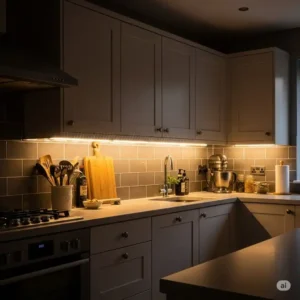
In professional culinary environments, led under cabinet kitchen lights serve multiple critical functions beyond basic illumination. Commercial kitchens require consistent, high-quality lighting that meets health department standards while withstanding the demanding conditions of food service operations. Consequently, many professional chefs prefer LED systems with color temperatures between 4000K and 5000K, as these provide the best color rendering for food preparation and presentation.
Professional applications often demand higher lumen outputs, typically ranging from 300 to 500 lumens per linear foot of counter space. Moreover, the ability to maintain consistent light output over long operating hours is crucial in commercial settings where lights may operate 12-16 hours daily. LED technology’s superior heat management also prevents the temperature fluctuations that can affect food storage areas located near lighting fixtures.
Residential Kitchen Applications
Home kitchens present unique challenges that differ significantly from commercial environments. Homeowners typically prioritize aesthetics alongside functionality, requiring led under cabinet kitchen lights that complement their interior design while providing adequate task lighting. Furthermore, residential applications often benefit from dimming capabilities, allowing users to adjust lighting levels for different activities, from intense food preparation to ambient evening lighting.
The growing popularity of open-concept kitchen designs has also influenced lighting requirements. Under cabinet lights now serve dual purposes, providing both task lighting for cooking and accent lighting for entertaining spaces. This trend has led to increased demand for color-tunable LED systems that can transition from bright white during cooking to warm white for social gatherings.
Specialized Commercial Applications
Beyond traditional kitchen environments, led under cabinet kitchen lights have found applications in various commercial sectors. Retail food displays utilize these lights to enhance product visibility and appeal, while healthcare facilities employ them in nutrition preparation areas where precise lighting is essential for patient care. Additionally, educational institutions use under cabinet lighting in culinary arts programs and residential life facilities.
The hospitality industry has embraced LED under cabinet lighting for hotel suites, bed-and-breakfast establishments, and vacation rental properties. These applications particularly benefit from battery-powered systems that reduce installation complexity while providing guests with convenient, automatic lighting activation.
Advanced Technical Analysis
LED Technology and Engineering Principles
The fundamental technology behind led under cabinet kitchen lights involves light-emitting diodes that convert electrical energy directly into light through electroluminescence. This process differs significantly from traditional incandescent bulbs, which produce light through heated filaments, and fluorescent bulbs, which rely on phosphor coatings activated by ultraviolet radiation.
According to the U.S. Department of Energy, LED technology uses at least 75% less energy than incandescent lighting and lasts up to 25 times longer. This efficiency stems from LEDs’ ability to produce light without generating excessive heat, with only about 10% of their energy consumption converted to heat compared to 90% for incandescent bulbs.
The color rendering index (CRI) of LED under cabinet lights has improved significantly, with modern units achieving CRI values above 80, and premium models reaching 90 or higher. This advancement ensures that food colors appear natural and accurate, which is crucial for both cooking and food presentation. Additionally, the directional nature of LED light output makes them particularly suitable for under cabinet applications, where focused downward illumination is desired.
Performance Metrics and Testing Standards
Professional-grade led under cabinet kitchen lights undergo rigorous testing to ensure they meet industry standards for performance and safety. The Illuminating Engineering Society of North America (IESNA) has established guidelines for task lighting in residential and commercial kitchens, recommending minimum illumination levels of 30-50 foot-candles for food preparation areas.
Temperature tolerance testing is particularly important for under cabinet applications, where lights may be exposed to heat from cooking activities and steam from dishwashing. Quality LED systems maintain consistent performance across temperature ranges from -20°C to +40°C, ensuring reliable operation in various kitchen conditions.
Photometric testing evaluates light distribution patterns, measuring how evenly light spreads across the illuminated surface. Premium under cabinet lights feature engineered diffusion systems that eliminate hot spots and provide uniform illumination across the entire counter area. This even distribution is crucial for shadow-free task lighting that enhances both safety and efficiency during food preparation.
Material Science and Durability Analysis
The construction materials used in led under cabinet kitchen lights significantly impact their longevity and performance. High-quality units feature aluminum housings that provide excellent heat dissipation while resisting corrosion from kitchen moisture and cleaning chemicals. The thermal management properties of aluminum allow LED components to operate at optimal temperatures, extending their operational lifespan.
Diffusion materials have evolved from simple plastic covers to sophisticated optical systems that maximize light output while minimizing glare. Modern diffusers utilize prismatic designs or micro-lens arrays that precisely control light distribution, resulting in more efficient illumination with reduced power consumption.
The ingress protection (IP) rating system classifies the degree of protection against dust and moisture intrusion. Kitchen applications typically require IP20 or higher ratings, with premium units achieving IP44 ratings for areas exposed to water splashing. This protection ensures long-term reliability in the humid, occasionally wet environment of active kitchens.

Comprehensive Setup and Installation Guide
Pre-Installation Planning and Assessment
Before installing led under cabinet kitchen lights, conducting a thorough assessment of your kitchen layout is essential for optimal results. Start by measuring the total linear footage of cabinet space where lighting will be installed, noting any obstacles such as electrical outlets, cabinet hardware, or ventilation systems that may affect placement.
Evaluate your existing electrical infrastructure to determine whether hardwired or battery-powered systems are more suitable for your installation. Hardwired systems require access to electrical circuits and may necessitate professional installation, while battery-powered options offer greater flexibility but require periodic maintenance.
Consider the primary usage patterns in your kitchen to determine appropriate light placement and intensity. Areas used for detailed food preparation require higher illumination levels, while sections used primarily for storage or display can utilize lower-intensity accent lighting. This analysis helps optimize both functionality and energy efficiency.
Installation Procedures and Safety Protocols
The installation process for led under cabinet kitchen lights varies significantly based on the chosen system type. Battery-powered units typically require only surface mounting using included adhesive strips or magnetic attachments, making them suitable for DIY installation. However, ensure that mounting surfaces are clean and dry before applying adhesive systems to achieve maximum holding strength.
For hardwired installations, electrical safety protocols must be strictly followed. Always turn off power at the circuit breaker before beginning electrical work, and use appropriate safety equipment including insulated tools and non-conductive ladders. If you’re uncomfortable with electrical work, professional installation is recommended to ensure code compliance and safety.
When installing strip lights, maintain consistent spacing between fixtures to achieve uniform illumination. Most manufacturers recommend spacing lights no more than 12 inches apart for optimal light distribution. Additionally, ensure that all connections are secure and properly insulated to prevent electrical hazards.
Environmental Optimization and Adjustment
After installation, fine-tuning your led under cabinet kitchen lights enhances their effectiveness and user experience. Adjust brightness levels to match different kitchen activities, with higher levels for food preparation and lower levels for ambient lighting during meals or entertaining.
Consider the interaction between under cabinet lights and other kitchen lighting sources. Layered lighting design combines ambient, task, and accent lighting to create a comfortable, functional environment. Under cabinet lights should complement overhead lighting rather than compete with it, creating a balanced illumination scheme.
Environmental factors such as cabinet finish, countertop material, and wall color significantly impact light reflection and distribution. Light-colored surfaces reflect more light, potentially allowing for lower-intensity fixtures, while dark surfaces absorb light and may require higher-output units to achieve adequate illumination levels.
Maintenance and Longevity Strategies
Daily and Weekly Maintenance Protocols
Maintaining led under cabinet kitchen lights requires minimal effort but yields significant benefits in terms of performance and longevity. Daily maintenance involves simple cleaning of light surfaces using a soft, dry cloth to remove dust and cooking residue that can accumulate on fixtures. This basic cleaning prevents buildup that could reduce light output or create hot spots.
Weekly maintenance should include inspection of battery-powered units for charge level indicators and cleaning of motion sensors if present. Sensor surfaces require particular attention, as grease or dust accumulation can affect their sensitivity and response time. Use appropriate cleaning solutions that won’t damage sensor components or LED surfaces.
For hardwired systems, weekly inspection of connections and mounting hardware ensures continued safety and performance. Look for signs of loosening, corrosion, or damage that could indicate developing problems. Early detection of issues prevents more serious problems and extends system lifespan.
Monthly and Quarterly Maintenance Schedules
Monthly maintenance routines should include comprehensive inspection of all system components, including power supplies, connectors, and mounting systems. Check for any signs of overheating, such as discoloration or unusual odors, which could indicate developing problems with electrical components.
Battery-powered systems require monthly charge cycle monitoring to optimize battery health. Lithium-ion batteries benefit from partial discharge cycles rather than complete depletion, so avoid allowing batteries to fully discharge before recharging. This practice extends battery lifespan and maintains consistent performance.
Quarterly maintenance should include professional inspection of hardwired systems to ensure continued code compliance and safety. This inspection is particularly important in commercial applications where regulatory compliance is mandatory. Professional technicians can identify potential issues before they become serious problems.
Troubleshooting Common Issues
Flickering or dimming lights often indicate power supply problems or loose connections. For battery-powered units, this typically signals the need for recharging or battery replacement. Hardwired systems experiencing these symptoms may have loose wire connections or incompatible dimmer switches.
Motion sensor malfunctions usually result from sensor contamination or improper sensitivity settings. Clean sensor surfaces with appropriate cleaning solutions and adjust sensitivity settings according to manufacturer specifications. If problems persist, sensor replacement may be necessary.
Uneven light distribution can result from improper spacing, damaged diffusers, or LED component failure. Inspect fixtures for physical damage and ensure proper spacing between units. If problems persist, individual LED replacement or fixture replacement may be required.
Comparative Analysis with Alternative Solutions
LED vs. Halogen Under Cabinet Lighting
The comparison between led under cabinet kitchen lights and traditional halogen systems reveals significant advantages for LED technology. Halogen systems, while initially less expensive, consume approximately 4-5 times more energy than equivalent LED systems. This higher energy consumption translates to increased electricity costs and more frequent replacement requirements.
Heat generation presents another crucial difference between these technologies. Halogen systems generate substantial heat during operation, which can affect nearby food storage areas and increase cooling costs in warm climates. LED systems produce minimal heat, creating a more comfortable working environment and reducing energy consumption for air conditioning.
The lifespan differential between LED and halogen systems is particularly significant in commercial applications. While halogen bulbs typically last 2,000-4,000 hours, quality LED systems operate for 25,000-50,000 hours or more. This extended lifespan reduces maintenance costs and interruptions to kitchen operations.
LED vs. Fluorescent Under Cabinet Options
Fluorescent under cabinet lighting represents an intermediate option between traditional incandescent/halogen systems and modern LED technology. Fluorescent systems offer improved energy efficiency compared to incandescent options while providing good light output for task lighting applications.
However, fluorescent systems have several limitations that make LED options more attractive for most applications. Color rendering quality is typically lower with fluorescent lights, making food colors appear less natural. Additionally, fluorescent systems require ballasts that can fail over time, necessitating component replacement.
The environmental impact of fluorescent systems is also concerning due to mercury content, which requires special disposal procedures. LED systems contain no mercury or other hazardous materials, making them environmentally friendly throughout their lifecycle.
Smart Home Integration Comparison
Modern led under cabinet kitchen lights offer superior integration with smart home systems compared to traditional lighting technologies. Advanced LED systems can connect to home automation networks, allowing remote control, scheduling, and energy monitoring capabilities.
Smart LED systems often include features such as color temperature adjustment, dimming control, and occupancy sensing that enhance user experience and energy efficiency. These capabilities are not available with traditional halogen or fluorescent systems without significant additional equipment.
The data collection capabilities of smart LED systems provide valuable insights into usage patterns and energy consumption, enabling users to optimize their lighting systems for maximum efficiency and convenience. This level of control and monitoring is not possible with conventional lighting technologies.
Case Studies and Success Stories
Case Study 1: Professional Restaurant Kitchen Renovation
A mid-sized restaurant in downtown Seattle undertook a comprehensive kitchen renovation that included replacing their existing halogen under cabinet lighting with a professional-grade LED system. The kitchen measured 800 square feet with 60 linear feet of cabinet space requiring illumination.
Challenge: The existing halogen system consumed 1,200 watts of electricity and generated excessive heat, creating uncomfortable working conditions for kitchen staff. Additionally, frequent bulb replacements disrupted service and increased maintenance costs.
Solution: The restaurant installed a Litever Kitchen LED Lighting Kit system with 20 twelve-inch light bars producing 6,600 lumens total output. The LED system consumed only 320 watts while providing superior illumination quality.
Results:
- Energy consumption reduced by 73% (880 watts savings)
- Heat generation decreased by 85%, improving working conditions
- Maintenance costs reduced by 90% due to extended LED lifespan
- Annual electricity savings: $1,847 based on local utility rates
- Payback period: 8 months
Long-term Impact: After 18 months of operation, the LED system has maintained consistent performance with no component failures. Kitchen staff report improved visibility and comfort, leading to enhanced productivity and job satisfaction.
Case Study 2: Residential Kitchen Remodel
A homeowner in suburban Phoenix renovated their 15-year-old kitchen, incorporating modern LED under cabinet lighting as part of a comprehensive lighting design. The kitchen featured 24 linear feet of upper cabinets over granite countertops.
Challenge: The existing fluorescent under cabinet lights provided poor color rendering and created an unpleasant working environment. The homeowner wanted improved task lighting that would enhance food preparation while providing accent lighting for entertaining.
Solution: The installation combined Brilliant Evolution Wireless LED Puck Lights for accent lighting with DiDiSky LED Motion Sensor Lights for task lighting. This dual-system approach provided both functional and aesthetic benefits.
Results:
- Improved color rendering from CRI 65 to CRI 85+
- Energy consumption reduced by 65%
- Added motion sensor convenience for nighttime kitchen access
- Enhanced home value through improved lighting design
- Elimination of fluorescent ballast replacement costs
User Feedback: The homeowner reports significantly improved cooking experience and receives frequent compliments on the kitchen’s ambiance during social gatherings. The motion sensor functionality has proven particularly valuable for late-night kitchen access.
Case Study 3: Commercial Food Service Facility
A corporate cafeteria serving 500 employees daily upgraded their food preparation area lighting to meet new health department standards and improve operational efficiency. The facility required uniform illumination across 120 linear feet of food preparation surfaces.
Challenge: Existing lighting failed to meet current health department requirements for food service facilities. Uneven illumination created shadows that hindered food safety inspections and reduced preparation efficiency.
Solution: The facility installed GE Enbrighten LED Puck Lights in a grid pattern, providing 800 lumens per linear foot of counter space. The hardwired system included emergency backup power and integration with the facility’s building management system.
Results:
- Achieved 100% compliance with health department lighting standards
- Improved food preparation efficiency by 15%
- Reduced energy consumption by 78%
- Eliminated maintenance-related service interruptions
- Enhanced facility safety ratings
Professional Impact: The upgrade contributed to the facility receiving its highest health department rating in five years. Food service staff report improved working conditions and enhanced ability to maintain food safety standards.
Future Trends and Market Evolution
Emerging Technologies and Innovation Directions
The future of led under cabinet kitchen lights is being shaped by several emerging technologies that promise to enhance functionality, efficiency, and user experience. Quantum dot technology represents one of the most promising developments, potentially offering improved color rendering and energy efficiency beyond current LED capabilities.
Micro-LED technology is another area of significant development, promising even greater energy efficiency and longer lifespans. These microscopic LEDs can be arranged in dense arrays to create extremely uniform light distribution while consuming minimal power. Early prototypes suggest that micro-LED systems could achieve 90% energy savings compared to current LED technology.
Smart sensor integration is evolving beyond simple motion detection to include advanced occupancy analytics, ambient light sensing, and integration with kitchen appliances. Future systems may automatically adjust lighting based on cooking activities, time of day, and user preferences learned through artificial intelligence algorithms.
Market Trends and Consumer Behavior Shifts
Consumer preferences are shifting toward more sustainable, intelligent lighting solutions that offer greater control and customization. The growing awareness of circadian lighting effects has increased interest in tunable white LED systems that can adjust color temperature throughout the day to support natural sleep cycles.
The integration of voice control and smart home ecosystems is becoming standard rather than optional. Consumers increasingly expect their lighting systems to work seamlessly with popular smart home platforms like Amazon Alexa, Google Assistant, and Apple HomeKit. This trend is driving manufacturers to develop more sophisticated control systems and connectivity options.
Energy efficiency remains a primary concern for consumers, but the focus is expanding beyond simple energy savings to include environmental impact and sustainability. Manufacturers are responding by developing LED systems with improved recyclability and reduced environmental footprint throughout their lifecycle.
Sustainability and Environmental Considerations
The environmental impact of lighting systems extends beyond energy consumption to include manufacturing processes, material selection, and end-of-life disposal. Future led under cabinet kitchen lights will likely incorporate more sustainable materials and manufacturing processes to meet growing environmental consciousness.
Circular economy principles are beginning to influence lighting design, with manufacturers exploring modular systems that allow component replacement and upgrade rather than complete fixture replacement. This approach reduces waste while providing consumers with the ability to incorporate new technologies as they become available.
The development of biodegradable or easily recyclable LED components represents another area of ongoing research. While current LED systems are more environmentally friendly than traditional lighting, continued improvements in material science may further reduce their environmental impact.
Personalization and Customization Possibilities
Future LED under cabinet lighting systems will offer unprecedented levels of personalization and customization. Advanced color-tuning capabilities will allow users to create custom lighting scenes for different activities, moods, or times of day. These systems may learn user preferences and automatically adjust settings based on historical usage patterns.
Modular design approaches will enable consumers to create custom lighting layouts tailored to their specific kitchen configurations and usage patterns. This flexibility will be particularly valuable in renovation projects where standard lighting solutions may not fit unique architectural features.
The integration of health and wellness features represents an emerging trend, with future systems potentially monitoring air quality, humidity, and other environmental factors while providing appropriate lighting adjustments to support occupant health and comfort.
Benefits Quantification and Value Analysis
Energy Efficiency and Cost Savings
The transition to led under cabinet kitchen lights provides quantifiable benefits that extend beyond initial purchase price considerations. According to the U.S. Department of Energy, LED lighting uses at least 75% less energy than incandescent lighting, resulting in significant long-term cost savings for both residential and commercial applications.
| Lighting Type | Annual Energy Cost* | Bulb Replacement Cost | Total 10-Year Cost |
|---|---|---|---|
| LED Under Cabinet | $15 | $0 | $150 |
| Halogen Under Cabinet | $62 | $85 | $700 |
| Fluorescent Under Cabinet | $28 | $45 | $330 |
| Incandescent Under Cabinet | $89 | $120 | $1,010 |
*Based on 3 hours daily usage at $0.12/kWh
These calculations demonstrate that while LED systems may have higher initial costs, their superior energy efficiency and extended lifespan result in substantial long-term savings. The payback period for LED systems typically ranges from 6-18 months, depending on usage patterns and local electricity rates.
Performance and Functionality Benefits
Beyond cost savings, led under cabinet kitchen lights provide superior performance characteristics that enhance user experience and safety. The improved color rendering index (CRI) of modern LED systems ensures that food colors appear natural and accurate, which is crucial for both cooking and food presentation.
The instant-on capability of LED systems eliminates the warm-up time associated with fluorescent lights, providing immediate full illumination when needed. This feature is particularly valuable in kitchen environments where quick access to bright light is essential for safety and efficiency.
Motion sensor integration in advanced LED systems provides convenience benefits that are difficult to quantify but significantly improve user experience. The ability to activate lighting hands-free while carrying dishes or food items enhances both safety and convenience in busy kitchen environments.
Health and Safety Value Propositions
Proper task lighting contributes significantly to kitchen safety by reducing the risk of cuts, burns, and other accidents associated with poor visibility. Led under cabinet kitchen lights provide focused illumination that eliminates shadows and creates optimal conditions for food preparation activities.
The reduced heat output of LED systems creates a more comfortable working environment while eliminating the risk of heat-related injuries associated with traditional lighting systems. This benefit is particularly important in commercial kitchen environments where staff work for extended periods.
Modern LED systems produce minimal electromagnetic interference and contain no mercury or other hazardous materials, contributing to a healthier kitchen environment. The elimination of mercury is particularly important in food preparation areas where contamination risks must be minimized.
Property Value and Aesthetic Enhancement
Quality lighting upgrades, including led under cabinet kitchen lights, can significantly enhance property value and aesthetic appeal. Real estate professionals consistently rank updated lighting as one of the most cost-effective improvements for increasing home value and marketability.
The improved illumination provided by LED under cabinet lights enhances the visual appeal of kitchen countertops, backsplashes, and other architectural features. This enhancement is particularly valuable in open-concept kitchen designs where lighting serves both functional and aesthetic purposes.
The longevity and low maintenance requirements of LED systems appeal to potential buyers and tenants, particularly in commercial properties where maintenance costs can significantly impact profitability. The reduced need for bulb replacement and service calls represents a quantifiable benefit for property owners.
Requirements Analysis and Selection Criteria
Technical Requirements Assessment
Selecting appropriate led under cabinet kitchen lights requires careful analysis of technical requirements specific to your application. The first consideration is light output, measured in lumens, which should provide adequate illumination for intended tasks. Kitchen task lighting typically requires 30-50 foot-candles of illumination, translating to approximately 300-500 lumens per linear foot of counter space.
Color temperature selection significantly impacts both functionality and aesthetics. Cool white lights (4000K-5000K) provide excellent visibility for food preparation tasks but may create a sterile atmosphere. Warm white lights (2700K-3000K) create a more inviting ambiance but may not provide optimal color rendering for food preparation. Many users prefer tunable white systems that allow adjustment based on activity and time of day.
Power source requirements vary significantly between battery-powered and hardwired systems. Battery-powered systems offer installation flexibility but require periodic maintenance and may have limited runtime. Hardwired systems provide consistent power but require electrical connections and may necessitate professional installation.

Environmental and Usage Considerations
The kitchen environment presents unique challenges that must be considered when selecting led under cabinet kitchen lights. Moisture exposure from dishwashing and cooking activities requires appropriate ingress protection ratings. Most kitchen applications require IP20 or higher protection, with areas exposed to direct water contact requiring IP44 or higher ratings.
Temperature tolerance is crucial for under cabinet applications where lights may be exposed to heat from cooking activities. Quality LED systems should operate reliably in temperature ranges from 0°C to 40°C to handle typical kitchen conditions. Systems with inadequate temperature tolerance may experience reduced performance or premature failure.
Cleaning and maintenance requirements vary significantly between different LED systems. Smooth surfaces without crevices or complex shapes are easier to clean and maintain in kitchen environments. Consider the accessibility of components that may require periodic cleaning or replacement.
Integration and Compatibility Factors
Compatibility with existing electrical systems and smart home infrastructure influences system selection and installation requirements. Hardwired systems must be compatible with available electrical circuits and may require specific voltage or current characteristics. Dimmer compatibility is particularly important for systems intended for use with existing dimmer switches.
Smart home integration capabilities vary widely between LED systems. Basic systems may offer only simple on/off control, while advanced systems provide full integration with popular smart home platforms. Consider your current and future smart home requirements when selecting systems.
Aesthetic integration with existing kitchen design influences both system selection and installation approach. LED systems should complement rather than detract from kitchen aesthetics. Consider fixture finish, mounting method, and light distribution patterns when evaluating options.
Cost Analysis and Investment Considerations
Initial Investment and Installation Costs
The initial investment for led under cabinet kitchen lights varies significantly based on system type, quality, and installation requirements. Battery-powered systems typically range from $20-60 per fixture, while hardwired systems range from $40-150 per fixture. Professional installation costs add $50-150 per fixture for hardwired systems.
| System Type | Fixture Cost | Installation Cost | Total Initial Investment |
|---|---|---|---|
| Battery-Powered Puck Lights | $25-45 | $0 (DIY) | $25-45 per fixture |
| Hardwired Puck Lights | $45-85 | $75-125 | $120-210 per fixture |
| LED Strip Systems | $30-70 | $50-100 | $80-170 per linear foot |
| Smart LED Systems | $40-90 | $50-150 | $90-240 per fixture |
These costs should be evaluated against the expected lifespan and performance benefits of LED systems. While initial costs may be higher than traditional lighting, the long-term value proposition typically justifies the investment.
Long-term Value and Return on Investment
The return on investment for led under cabinet kitchen lights includes both quantifiable financial benefits and qualitative improvements in functionality and aesthetics. Energy savings alone typically provide payback periods of 6-18 months, while the extended lifespan reduces replacement costs over time.
Commercial applications typically experience faster payback periods due to higher usage levels and electricity costs. Residential applications may have longer payback periods but provide additional benefits in terms of convenience, safety, and aesthetic enhancement.
The avoided costs of traditional lighting system maintenance and replacement provide additional value throughout the LED system’s lifespan. These avoided costs include bulb replacement, ballast replacement, and labor costs associated with maintenance activities.
Financing and Incentive Programs
Many utility companies offer rebates and incentives for energy-efficient lighting upgrades, including LED under cabinet systems. These programs can significantly reduce initial investment costs while promoting energy conservation. Check with your local utility company for available programs and requirements.
Federal and state tax incentives may be available for energy-efficient lighting upgrades in commercial applications. These incentives can provide additional financial benefits that improve the overall return on investment for LED lighting systems.
Some manufacturers offer financing programs or extended warranty options that can reduce the financial impact of LED lighting upgrades. These programs may be particularly valuable for large commercial installations or comprehensive residential lighting upgrades.
Installation Integration and System Compatibility
Electrical System Integration
Proper integration of led under cabinet kitchen lights with existing electrical systems requires careful consideration of voltage, current, and control requirements. Most LED systems operate on low voltage (12V or 24V) and include power supplies that convert standard household voltage to appropriate levels for LED operation.
Circuit capacity must be adequate to support the selected LED system’s power requirements. While LED systems consume significantly less power than traditional lighting, multiple fixtures may still require dedicated circuits to prevent overloading. Consult with qualified electricians to ensure proper circuit design and installation.
Ground fault circuit interrupter (GFCI) protection may be required for LED systems installed in areas exposed to moisture. Kitchen environments often require GFCI protection for electrical systems, particularly near sinks and dishwashing areas. Ensure that LED systems are properly protected according to local electrical codes.
Smart Home System Integration
Modern led under cabinet kitchen lights increasingly offer integration with popular smart home platforms, providing enhanced control and automation capabilities. These systems can be controlled through smartphone apps, voice assistants, or integrated with broader home automation systems.
Wireless connectivity options include Wi-Fi, Bluetooth, and proprietary communication protocols. Wi-Fi systems offer the greatest range and integration capabilities but may experience interference in environments with multiple wireless devices. Bluetooth systems provide reliable local control but may have limited range and integration options.
Hub-based systems offer enhanced reliability and features but require additional hardware and configuration. These systems typically provide the most sophisticated control options and integration capabilities but may be overkill for simple residential applications.
Architectural and Design Integration
Successful integration of led under cabinet kitchen lights requires careful consideration of architectural features and design elements. The mounting method should complement existing cabinet hardware and finishes while providing secure attachment for the selected LED system.
Cable management is crucial for maintaining clean aesthetics, particularly with hardwired systems. Plan cable routing to minimize visible wiring while ensuring accessibility for maintenance and service. Consider using cable management systems or conduits to organize and protect wiring.
The visual impact of LED fixtures should complement rather than compete with kitchen design elements. Choose fixtures with finishes and designs that match or complement existing hardware and fixtures. Consider the impact of light distribution on nearby surfaces and architectural features.
Performance Optimization and Advanced Settings
Light Distribution and Beam Angles
Optimizing light distribution from led under cabinet kitchen lights requires understanding beam angles and their impact on illumination patterns. Wide beam angles (90-120 degrees) provide broader coverage but may create hot spots directly below fixtures. Narrow beam angles (30-60 degrees) provide more focused illumination but may create shadows between fixtures.
The optimal beam angle depends on cabinet height, counter depth, and intended use patterns. Standard 24-inch deep counters typically work well with 90-degree beam angles, while deeper counters may require wider beam angles to achieve uniform illumination. Consider the specific geometry of your kitchen when selecting fixtures.
Diffusion systems can help create more uniform light distribution by scattering light output across a wider area. These systems may reduce peak intensity but improve overall illumination quality by eliminating hot spots and reducing shadows.
Color Temperature Optimization
Color temperature significantly impacts both functionality and aesthetics in kitchen environments. Cool white lights (4000K-5000K) provide excellent visibility for detailed tasks but may create a sterile atmosphere. Warm white lights (2700K-3000K) create a more inviting ambiance but may not provide optimal color rendering for food preparation.
Time-of-day optimization involves adjusting color temperature based on usage patterns and circadian rhythm considerations. Cooler temperatures during active cooking periods enhance visibility and alertness, while warmer temperatures during meal times create a more relaxed atmosphere.
Tunable white systems allow dynamic adjustment of color temperature throughout the day, providing optimal lighting for different activities and times. These systems may have higher initial costs but offer superior flexibility and user experience.
Dimming and Control Optimization
Dimming capabilities enhance both functionality and energy efficiency of led under cabinet kitchen lights. Proper dimming implementation requires compatible components throughout the system, including LED drivers, dimmer switches, and control systems.
Smooth dimming performance requires high-quality LED drivers that maintain consistent color temperature and avoid flicker throughout the dimming range. Poor-quality drivers may cause visible flicker or color shifting that detracts from the user experience.
Control system integration allows for sophisticated lighting scenes that combine multiple LED systems with other kitchen lighting. These systems can create preset lighting configurations for different activities, times of day, or user preferences.
✨ Ready to Transform Your Kitchen Lighting? 🌟
💡 Don’t wait to upgrade your kitchen with these game-changing LED under cabinet lights! Click on any of the highlighted products above to explore current deals and customer reviews. Your perfect kitchen lighting solution is just one click away! 🏠✨

FAQs
❓ How long do LED under cabinet kitchen lights typically last?
✅ Quality LED under cabinet lights last 25,000-50,000 hours compared to 2,000-4,000 hours for halogen alternatives. With typical kitchen usage of 3-4 hours daily, LED systems can operate for 15-20 years before requiring replacement. Premium models with superior heat management and quality components often exceed these lifespans...
❓ What color temperature is best for kitchen under cabinet lighting?
✅ Most kitchen applications benefit from 3000K-4000K color temperatures. Cool white (4000K-5000K) provides excellent visibility for food preparation tasks, while warm white (2700K-3000K) creates better ambiance for dining. Tunable white systems offer the flexibility to adjust color temperature based on activities and time of day...
❓ Can LED under cabinet lights be dimmed with regular dimmer switches?
✅ Not all LED under cabinet lights are compatible with standard dimmer switches. Look for LED systems specifically labeled as dimmable and check manufacturer recommendations for compatible dimmer models. Many LED systems require specialized LED-compatible dimmers to prevent flickering and ensure smooth dimming performance...
❓ Are battery-powered LED under cabinet lights bright enough for cooking?
✅ Modern battery-powered LED under cabinet lights can provide 200-300 lumens output, sufficient for most kitchen tasks. However, hardwired systems typically offer higher output (400-600 lumens) for demanding applications. Battery life varies from 10 hours to 180 days depending on usage patterns and battery capacity...
❓ What is the average cost to install LED under cabinet kitchen lights?
✅ Installation costs range from $25-240 per fixture depending on system type and complexity. Battery-powered systems require no professional installation ($25-45 per fixture), while hardwired systems including professional installation cost $120-210 per fixture. Smart LED systems with professional installation range from $90-240 per fixture...
Recommended for You:
- 7 Best Modern Pendant Lighting for Kitchen Island: Transform Your Space in 2025
- 7 Best Kitchen Island Lighting Ideas: Expert Analysis & Complete Guide
- 7 Best Outdoor Kitchen with Fireplace Combinations for Ultimate Backyard Luxury in 2025
Disclaimer: This article contains affiliate links. If you purchase products through these links, we may earn a small commission at no additional cost to you.
✨ Found this helpful? Share it with your friends! 💬🤗