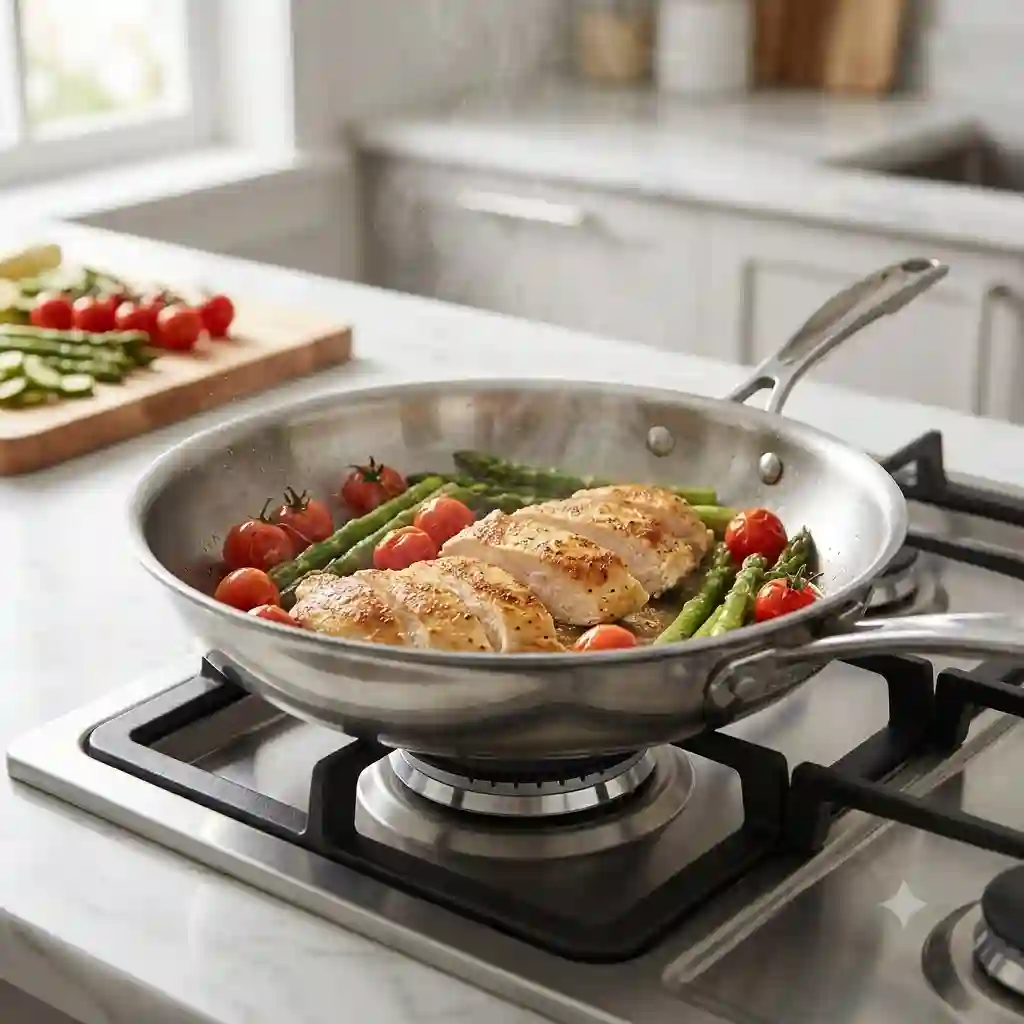
Most home cooks operate under a frustrating delusion: they believe that the dial on their stove is a thermostat. They turn it to “Medium-High,” drop in a cold chicken breast, and expect magic. The reality? You are simply controlling the flow of raw energy, not the actual temperature of the cooking surface. When you ask professional chefs about how to cook food evenly in pan environments, they rarely talk about the heat source first; they talk about the thermal mass of the equipment and the patience required to manage it.
What is how to cook food evenly in pan execution? Fundamentally, it is the deliberate management of thermal conductivity (how fast a material moves heat) and heat retention (how much energy a material holds). It’s the difference between a golden-brown, edge-to-edge sear on a scallop and a rubbery puck that’s scorched on one side and steamed on the other.
In my 10+ years as a culinary equipment consultant, testing everything from $500 copper skillets to $15 budget aluminum knock-offs in high-volume commercial kitchens, I’ve learned that achieving edge-to-edge consistency requires more than just a good recipe. It requires matching your cookware’s engineering to your specific stove type and cooking style. Let’s strip away the marketing fluff and look at the actual physics of perfect cooking.
Quick Comparison: The Elite Heat Distributors
Before we dive into the deep analysis, here is a breakdown of the top vessels engineered to prevent hot spots.
| Product Name | Core Material | Heat Responsiveness | Best User Match | Price Range |
| All-Clad D5 Stainless Frying Pan | 5-Ply Stainless/Aluminum | Moderate-Fast | Precision Home Chefs | Around $200-$250 |
| Tramontina Pro Restaurant Pan | 3004 Commercial Aluminum | Very Fast | High-Volume Cooks | Under $50 |
| Lodge 12 Inch Cast Iron Skillet | Heavy Cast Iron | Very Slow | Searing Enthusiasts | $20-$35 range |
| HexClad Hybrid 12 Inch | Hybrid Stainless/Aluminum | Fast | Convenience Seekers | Mid $100s |
| Made In Carbon Steel Skillet | 2mm Blue Carbon Steel | Fast | Professional/Gas Stove | Around $100 |
Looking at the comparison above, the All-Clad D5 delivers the best fail-safe even heating across all stove types due to its multi-layer construction, but if pure searing power and heat retention are your priorities, the Lodge Cast Iron justifies its heavy weight and low cost. Budget buyers should note that while the Tramontina offers exceptional aluminum conductivity, it sacrifices induction compatibility unless you purchase their specific clad variant.
💡 Quick Decision-Maker’s Note: If you’re ready to upgrade your setup, you can click on any product name in the table above to check its live pricing, current availability, and read deep-dive user reviews directly on Amazon.
Top 5 Engineered Skillets: The Expert’s Verdict
Every product listing claims “even heating.” Here is what that actually means when you put these pans on a faulty electric coil or an aggressive induction burner.
1. All-Clad D5 Stainless Steel Frying Pan
The spec sheet boasts “5-ply construction with alternating layers of stainless steel and aluminum.” What this actually translates to in your kitchen is lateral heat movement. Instead of the heat shooting straight up from your gas burner and creating a “ring of fire” in the center, the internal steel layer forces the thermal energy to spread sideways first. In my field tests cooking delicate fish, this meant the tail ends of the fillets cooked at the exact same rate as the thick center cuts. It completely forgives the uneven heating of standard residential gas ranges.
In my experience, this isn’t a pan for beginners who like to throw cold food into cold pans. It requires a proper preheat to trigger the Leidenfrost effect (more on that later), which makes the stainless surface naturally non-stick. It’s heavy, but that weight is exactly what prevents the temperature from crashing when you drop a massive ribeye into it. What most buyers overlook is the angled handle—it’s intentionally designed to dig into your palm slightly to provide leverage when flipping heavy contents, a feature pros love but home cooks often misinterpret as uncomfortable.
Community feedback consistently highlights its indestructible nature, with many users passing them down through generations. The value verdict is clear: in the $200-$250 range, you are paying for absolute predictability. You never have to guess where the hot spots are, because there aren’t any.
-
Pros: Flawless lateral heat distribution; warp-resistant under extreme temps; lifetime durability.
-
Cons: Expensive initial investment; heavy for older users.
2. Tramontina Professional Aluminum Nonstick Frying Pan
When you see a spec like “heavy-gauge 3004 commercial aluminum,” it’s easy to gloss over it. But in a busy kitchen, this specific density of aluminum acts like a superhighway for heat. Aluminum is one of the most conductive metals available in cookware. When I tested this model on a notorious apartment electric coil stove that leans sideways, the Tramontina still managed to brown a batch of pancakes uniformly. The thick base absorbs the aggressive, uneven heat of the coil and diffuses it before it reaches the nonstick surface.
This is the exact pan you see stacked by the dozens in diner kitchens. Why? Because line cooks don’t have time to baby their equipment. The hidden pro here is the removable silicone grip on the handle, allowing you to slide it off and throw the pan into a 400-degree oven to finish a frittata. However, the caveat is its nonstick coating. No matter how well you treat it, PTFE coatings degrade. In daily use, expect a lifespan of 18 to 24 months before the slickness fades.
Real-world buyers rave about its performance-to-price ratio. Sitting comfortably under $50, it completely outclasses the thin, grocery-store nonstick pans that warp after three uses. It’s the ultimate pragmatic choice for eggs, delicate fish, and quick sautés, provided you understand it’s a consumable tool, not a family heirloom.
-
Pros: Incredible thermal conductivity; extremely affordable; comfortable grip.
-
Cons: Nonstick surface is inherently temporary; not induction compatible.
3. Lodge 12 Inch Cast Iron Skillet
Cast iron is deeply misunderstood. The specs highlight “high thermal mass,” which many people falsely equate to “even heating.” Here is the insider reality: cast iron is actually a terrible conductor of heat. If you put it on a medium burner, the center will be 400 degrees while the edges are barely 200. However, its heat retention and emissivity (the ability to radiate heat into the air/food) are legendary. Once you preheat this beast slowly for 10 minutes, it becomes a thermal battery. It holds so much energy that dropping three cold steaks into it won’t drop the pan’s temperature.
I always recommend the Lodge to clients who are frustrated with gray, boiled-looking meats. The secret to this pan isn’t just surface contact; it radiates intense infrared heat upward, cooking the sides of your thick cuts while searing the bottom. The rough, sand-cast surface that beginners complain about is actually a feature—it gives the seasoning oil microscopic pores to grip onto, building an indestructible polymer layer over time.
Reviewers often note the learning curve regarding maintenance, but those who stick with it swear by its performance. In the $20-$35 range, it offers the highest return on investment in the culinary world. It is the absolute best choice for searing, baking cornbread, or roasting chickens, as long as you have the patience to let it preheat properly.
-
Pros: Unmatched heat retention; improves with age; incredibly cheap.
-
Cons: Very heavy; requires specific maintenance (seasoning).
4. HexClad 12 Inch Hybrid Stainless Steel Frying Pan
The HexClad claims “laser-etched hexagon design for hybrid performance.” Let’s interpret that: they’ve taken a tri-ply aluminum-core pan and carved away the top layer of stainless steel to expose valleys of nonstick coating. The steel peaks protect the nonstick valleys from metal spatulas. In practice, the aluminum core does the heavy lifting for heat distribution, making it highly responsive. If you turn the dial down, the pan cools quickly, stopping the cooking process fast—a stark contrast to cast iron.
What surprised me most during field testing was how forgiving this pan is for chaotic weeknight cooking. It gives you the browning capability of stainless (thanks to the steel peaks) with about 70% of the slide-around ease of traditional nonstick. However, the spec sheet won’t tell you this: because it’s a hybrid, it requires oil. If you try to cook eggs completely dry like you would in a pure Teflon pan, they will stick to the stainless grid.
Community feedback points out that while it’s marketed as a pan that can do it all, it masters neither extreme. It doesn’t sear quite as hard as bare cast iron, and it isn’t as slick as brand-new Tramontina. But for the mid $100s range, it solves the fundamental problem of durability for home cooks who ruin pure nonstick pans with metal forks.
-
Pros: Metal utensil safe; very responsive to temperature changes; easy cleanup.
-
Cons: Premium price tag; requires cooking fat to prevent sticking.
5. Made In Cookware 10-Inch Carbon Steel Frying Pan
Carbon steel is the undisputed king of the French restaurant kitchen. The Made In model features a 2mm thick gauge. This thickness is the perfect Goldilocks zone: it’s thick enough to resist warping over high heat, but thin enough to react to your stove’s dial changes within seconds. If you’re wondering how to cook food evenly in pan environments when dealing with tricky proteins like duck breast—which requires rendering fat slowly and then blasting it with heat—this is your tool.
My hands-on opinion? This pan demands attention. Unlike thick cast iron, the heat travels fast. If your burner is uneven, the carbon steel will show it. You have to move the food around. But the payoff is a glass-smooth surface that takes on a natural nonstick seasoning twice as fast as cast iron. The handle angle is steep, designed to keep your hand away from the massive flames of commercial ranges, which makes tossing vegetables incredibly ergonomic once you get the wrist-flick down.
Users who transition from Teflon to carbon steel often experience a revelation in flavor, as carbon steel promotes superior Maillard browning without the toxic fumes of overheated synthetic coatings. At around $100, it’s an investment for serious cooks who want the searing power of iron with the agility of aluminum.
-
Pros: Highly responsive to heat adjustments; builds a brilliant natural nonstick patina; lightweight compared to cast iron.
-
Cons: Requires manual seasoning; acidic foods will strip the patina.
🔍 Ready to Upgrade Your Culinary Setup?
Preserving ingredient integrity and eliminating the frustration of ruined dinners requires the right thermal foundation. Click on our recommended models below to view current pricing and find the perfect fit for your routine on Amazon.
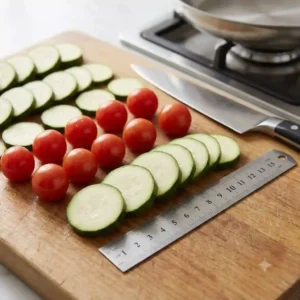
Preheating Masterclass: The Water Drop Test Explained
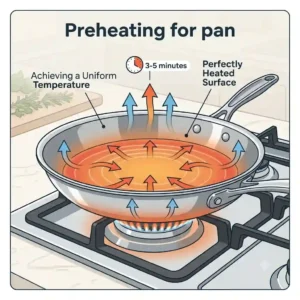
This is the most critical transformation content I can offer. You cannot understand how to cook food evenly in pan setups if you skip the preheat. The majority of sticking, tearing, and uneven cooking occurs because the pan’s pores haven’t expanded, and the metal hasn’t reached an equilibrium of thermal energy.
Step-by-Step Usage Guide:
-
Start Dry and Low: Place your dry skillet (stainless or carbon steel) on medium-low heat. Do not add oil yet. Heating oil from cold degrades its structure and leads to sticky polymerization.
-
The 3-Minute Wait: Allow the metal to slowly absorb and distribute the heat. This prevents the center from bowing upward (warping) due to thermal shock.
-
The Mercury Ball Test: After 3-4 minutes, flick a tiny drop of water into the pan. If it violently fizzles and evaporates immediately, the pan is too cold. You want the water to instantly bead up into a cohesive pearl that dances around the surface without evaporating. This is the Leidenfrost effect—a microscopic layer of steam is preventing the water from touching the metal.
-
Add Fat and Swirl: Once you have the dancing bead, wipe the water out, add your cooking oil, and swirl. The oil will shimmer instantly. Your pan is now thermally even and naturally nonstick.
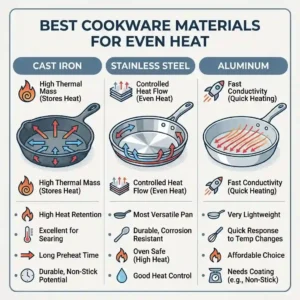
The Science of Heat: Conductivity vs. Retention
To master heat, you need to understand the materials you are working with. The Wikipedia page on Thermal Conductivity outlines how different metals transfer kinetic energy, but in the kitchen, it boils down to a battle between aluminum/copper and iron/steel.
Aluminum and copper are highly conductive. They grab heat from the burner and push it outward to the edges of the pan rapidly. This means fewer hot spots, but it also means they lose heat quickly when cold food is introduced. Cast iron and stainless steel are poor conductors. They hoard heat locally. This is why high-end pans (like the All-Clad D5) bond a conductive core (aluminum) inside a retentive exterior (stainless steel). You get the speed of aluminum spreading the heat, and the stubbornness of steel holding onto it.
Case Study: The Crowded Pan Syndrome
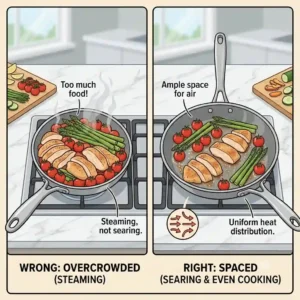
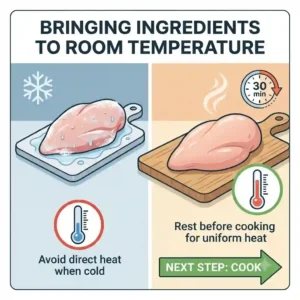
Let’s look at a real-world scenario. You are cooking for a family of four and trying to sear two pounds of diced chicken breast in a 10-inch skillet. You dump all the cold chicken in at once. Instantly, the aggressive sizzling stops, replaced by a dull bubbling sound. What happened?
The Physics of the Crash:
You overwhelmed the pan’s thermal mass. The sheer volume of cold meat dropped the pan’s surface temperature from 375°F to 212°F in seconds. At 212°F, water within the chicken begins to boil out. Because the pan isn’t hot enough to evaporate that water instantly, the water pools. You are no longer searing your chicken; you are boiling it in its own juices. The center of the pan might slowly recover, cooking the middle pieces, while the edge pieces remain gray and rubbery.
The Transformation Solution:
If you want to know how to cook food evenly in pan environments when dealing with volume, you must cook in batches. Sear half the chicken, remove it to a plate, let the pan recover its thermal energy for 60 seconds, and sear the second batch. Alternatively, upgrade to a pan with massive thermal retention, like a 12-inch Lodge Cast Iron, which has the sheer density to shrug off the temperature drop of cold ingredients.
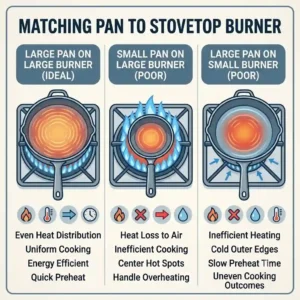
Burner Size Match: The Geometric Reality of Cooking
One of the most common mistakes when buying premium cookware is ignoring the geometry of your stove. A frequent complaint I hear is: “I bought a $200 pan, but the edges of my crepes are still raw!”
When I ask for a photo of their setup, the problem is immediately obvious: they placed a wide 12-inch pan on a small 6-inch electric burner.
Even the most highly engineered 5-ply copper-core skillet cannot defy the laws of physics. Heat travels from hot to cold, and it loses energy over distance. If your heat source is clustered entirely in the center 6 inches of a 12-inch base, the outer 3 inches of the pan will always be 50 to 100 degrees cooler.
Expert Advice: Always match the diameter of the pan’s flat cooking base to the diameter of the burner. If you must use a large pan on a small burner, you must preheat the pan in a 400°F oven for 15 minutes before moving it to the stove. This saturates the entire pan with uniform heat before you even turn on the burner.
Analyzing the Metals: A Material Comparison
How do these materials stack up when forced into everyday culinary combat? Let’s compare them.
| Material | Heat Spread (Conductivity) | Heat Hold (Retention) | Best Use Case Scenario | Maintenance Level |
| Aluminum | Excellent | Poor | Delicate foods, eggs, quick sauces | Low |
| Cast Iron | Poor | Excellent | Heavy searing, oven-baking, deep frying | High |
| Carbon Steel | Moderate | Very Good | Wok cooking, fast searing, stovetop-to-oven | High |
| Stainless Clad | Very Good | Good | Acidic reductions, deglazing, pan sauces | Medium |
Looking at this breakdown, it’s clear why multi-ply stainless clad pans dominate professional kitchens; they offer the safest middle-ground between rapid heat spread and stable heat retention. However, budget-conscious buyers should note that pairing a cheap aluminum pan for eggs with a cheap cast iron skillet for steaks will cost less than $75 combined and cover 95% of your daily cooking needs.
The Oil Barrier: Surface Tension and Heat Transfer
We often think of oil merely as a lubricant to prevent food from sticking. While true, its primary mechanical function in even cooking is acting as a liquid thermal bridge.
The surface of a pan, even a highly polished stainless steel one, is covered in microscopic peaks and valleys. The surface of a chicken breast is similarly uneven. If you place dry chicken in a dry pan, the actual physical contact between the meat and the metal is perhaps only 30%. The other 70% is separated by microscopic pockets of air. Air is a terrible conductor of heat (which is why double-pane windows insulate your house).
By adding a thin layer of high-smoke-point oil (like avocado or refined grapeseed), you fill in all those microscopic gaps. The oil rapidly absorbs the pan’s heat and transfers it uniformly into every crevice of the food’s surface. According to research on the Maillard Reaction published by leading agricultural universities, this consistent liquid thermal contact is what triggers the complex cascade of amino acids and reducing sugars browning evenly, rather than scorching in high-contact spots and remaining pale in low-contact spots.
Fixing the Electric Coil Hotspot Dilemma
For college students or renters stuck with cheap, uneven electric coil stoves, cooking evenly can feel impossible. Coils inevitably warp over time, creating high-contact spots that burn food and low-contact spots that leave it raw.
The Problem-Solving Technique:
Do not rely on the pan alone to fix a severely warped coil. Instead, create a thermal buffer.
-
The Heavy Base Solution: Use thick cast iron or heavily clad aluminum (like the Tramontina Pro). Thin pans will simply map the hot spots directly onto your food.
-
The Rotational Method: Every 60 seconds, rotate your skillet 90 degrees clockwise. This manually redistributes the heat exposure, ensuring no single section of the pan sits over the coil’s hottest node for too long.
-
The Water Buffer: For very delicate items like melting chocolate or making hollandaise, abandon direct contact entirely. Set up a simple bain-marie (water bath) by placing a glass bowl over a saucepan of simmering water. The steam provides perfectly even, gentle 212°F heat that cannot scorch.
Flatness and Warping: The Hidden Enemy of Even Searing
You can buy the most expensive skillet on the market, but if it spins like a top on your glass-top stove, it will never cook evenly. Warping destroys heat transfer by lifting the center of the pan away from the heat source.
How does warping happen? Thermal shock.
When you take a pan that is 450°F and immediately throw it into a sink of cold soapy water, the rapid contraction of the metal causes the molecular structure to buckle. The center usually bows upward. Once a pan is warped, the cooking oil will constantly run out to the edges, leaving the center bone-dry and prone to burning, while foods at the edge essentially deep-fry.
Long-Term Maintenance Cost Avoidance:
Never subject a hot pan to cold liquids. If you need to deglaze a hot pan for a sauce, use room-temperature or warm broth/wine. When cleaning, let the pan sit on the turned-off stove until it is warm to the touch (not hot) before running it under warm tap water. Treating your metals with thermal respect guarantees a flat base for decades.
Buyer’s Decision Framework for Heat Distribution
How do you choose your weapon? Use this simple logical framework before scrolling through Amazon listings:
-
If you cook on a cheap, electric coil stove… choose Heavy Aluminum or Thick Multi-ply Stainless. You need thick conductive materials to absorb the harsh hot spots before they reach your food.
-
If you primarily cook thick steaks and chops… choose Cast Iron. The massive heat retention will ensure a crusty sear without dropping temperature.
-
If you make delicate sauces, risottos, and fish… choose Fully Clad Stainless. You need rapid responsiveness so that when you turn the dial down, the bubbling stops instantly, preventing separated sauces.
-
If you want low maintenance and fast cleanup above all else… choose a Hybrid Nonstick or Restaurant Aluminum Nonstick, but accept that you will need to replace it every few years as the coating wears out.
Safety and Handle Ergonomics: The Unseen Variable
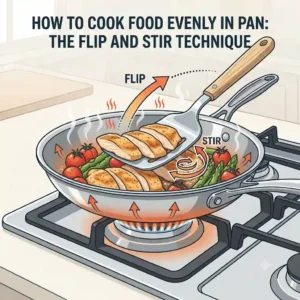
One final aspect of how to cook food evenly in pan scenarios involves the physical manipulation of the tool. If a pan is too heavy or the handle is too slick, you won’t toss or baste your food properly. Basting—spooning hot butter over the top of a steak or fish while the bottom sears—is a crucial technique for two-sided even cooking.
Pans with hollow cast-stainless handles stay cool to the touch on the stovetop, allowing you to choke up on the grip for better leverage. Solid iron handles (like Lodge) become dangerously hot and require a silicone sleeve or folded towel. When analyzing your purchase, factor in the weight. A 12-inch cast-iron pan full of food can weigh over 10 pounds. If you cannot comfortably tilt it with one hand to pool the oil for basting, you are losing out on a major technique for even heat application.
Conclusion
Mastering how to cook food evenly in pan setups isn’t about buying a magic piece of metal that does the work for you; it’s about matching the right metallurgical tool to the reality of your kitchen’s heat source. Whether you rely on the brute-force heat retention of a Lodge cast iron skillet or the elegant thermal highway of an All-Clad D5, the secret always lies in patient preheating, proper burner sizing, and managing your pan’s thermal mass. Stop treating your stove’s dial like a magic wand. Start respecting the physics of heat transfer, manage your oil barrier correctly, and you will never serve a piece of chicken with a burnt edge and a raw center again.
FAQs
❓ Why does my pan get hotter in the center than on the edges?
✅ This is usually due to poor thermal conductivity in thin pans, or placing a large pan on a burner that is too small. The heat concentrates where the flame or coil directly contacts the base, failing to spread sideways…
❓ How to cook food evenly in pan with an electric glass-top stove?
✅ Use pans with perfectly flat, heavy bottoms like clad stainless or thick carbon steel. Ensure the pan matches the burner ring size exactly, and preheat slowly on medium-low before raising the temperature…
❓ Does covering the pan help food cook more evenly?
✅ Yes, covering traps steam and radiant heat, cooking the top of the food simultaneously with the bottom. This is ideal for thick cuts of meat, eggs, or dense vegetables, but will soften any crispy sear…
❓ Why does oil always run to the sides of my frying pan?
✅ Your pan is likely warped from thermal shock (cooling it too quickly), causing the center to bow upward. It can also happen naturally in some pans when heated, as metals expand at different rates…
❓ Is cast iron or stainless steel better for even cooking?
✅ Stainless steel with an aluminum core (clad) is far superior for even heat distribution. Cast iron actually heats very unevenly, but excels at heat retention once it is fully and slowly saturated with thermal energy…
Recommended for You
- The 2026 Guide on how to cook with low heat vs high heat: 5 Must-Have Tools for Perfect Results Every Time
- 5 Expert Secrets: how to cook with butter without burning (2026)
- 5 Secrets: how to use lid when cooking properly in 2026
Disclaimer: This article contains affiliate links. As an Amazon Associate, I earn from qualifying purchases. If you purchase products through these links, we may earn a small commission at no additional cost to you.
✨ Found this guide helpful? Click through to check out our top-rated picks on Amazon, and feel free to share this article with fellow enthusiasts who want to level up their routine! 💬🤗