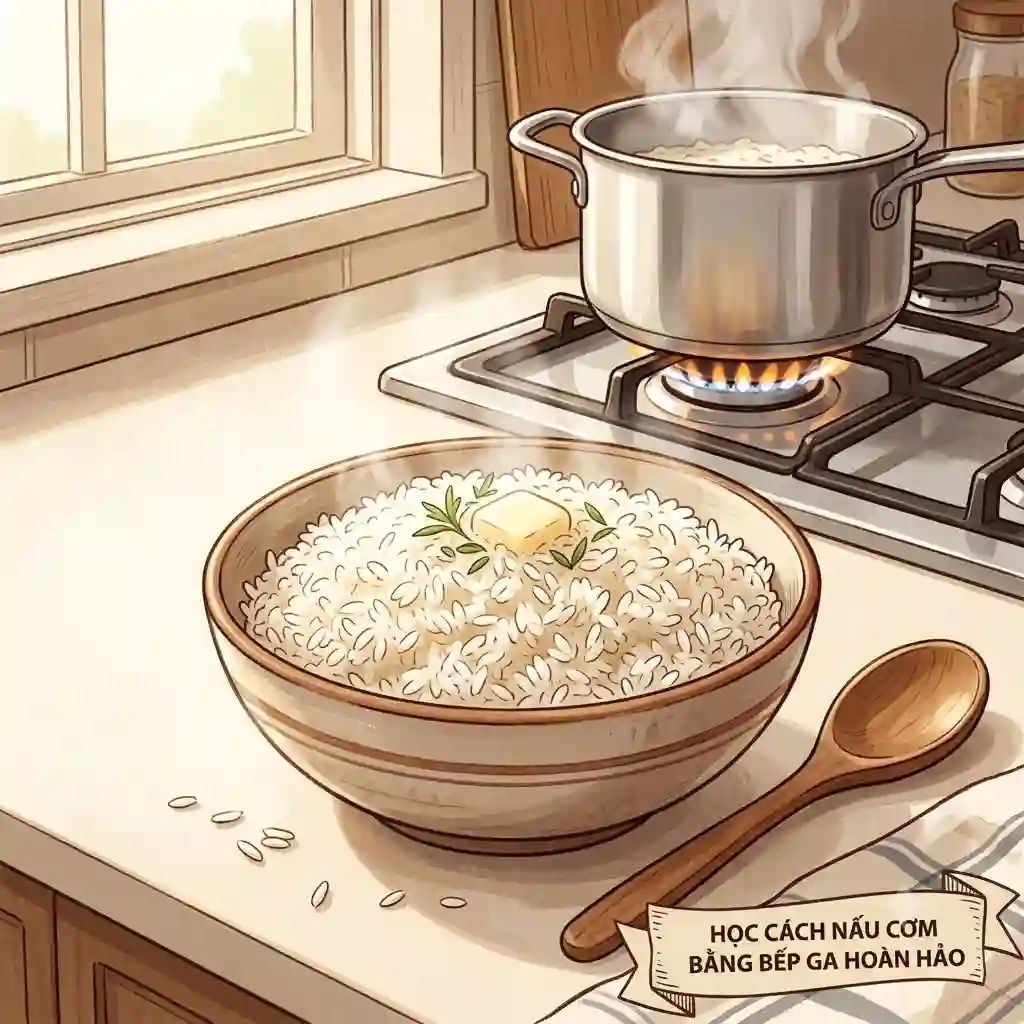
What is the secret to how to cook rice on stovetop perfectly? It comes down to thermal mass, precise water-to-grain ratios, and a vessel that creates a flawless steam seal. In my 10+ years working as a culinary consultant and testing kitchen gear, I’ve seen countless home cooks struggle with scorched bottoms, mushy textures, and undercooked centers. The truth? Your technique is only as good as your cookware.
While electric rice cookers have their place, relying on them deprives you of the beautiful, crispy socarrat or tahdig that only a stovetop vessel can produce. Achieving that fluffy, distinct grain separation requires understanding the starch gelatinization process—the point where amylose and amylopectin absorb water and swell. You don’t need magic; you need the right pot. Let’s dive into the gear and the science that will transform your daily dinner routine.
Quick Comparison: Top Stovetop Rice Vessels
| Best For | Product Name | Material | Heat Retention | Price Range |
| Best Overall Value | All-Clad D3 Stainless Steel Saucepan | Tri-Ply Stainless | Excellent | $100-$150 |
| Premium Choice | Le Creuset Signature Dutch Oven | Enameled Cast Iron | Superior | $250-$300 |
| Authentic Results | Iga-Mono Kamado-san | Clay (Donabe) | Unmatched | $150-$200 |
| Budget Heavy-Duty | Lodge Double Dutch Oven | Raw Cast Iron | Superior | $40-$60 |
| Best for Beginners | Cuisinart Chef’s Classic | Aluminum Core / Stainless | Good | $20-$40 |
When analyzing the table above, the All-Clad D3 emerges as the most versatile workhorse for the mid-$100s, offering rapid heat response that is crucial for dropping from a boil to a simmer. However, if your budget allows, the superior thermal mass of the Le Creuset makes it practically foolproof against bottom-scorching. Budget-conscious buyers should note that the Cuisinart requires more vigilant heat management compared to the Lodge cast iron option.
💬 Just one click — help others make better buying decisions too! 😊
Top 5 Stovetop Rice Vessels: Expert Analysis
1. All-Clad D3 Stainless Steel Saucepan (3-Quart)
The All-Clad D3 Stainless Steel Saucepan stands out for its responsive aluminum core sandwiched between surgical-grade stainless steel. The 3-quart capacity and tight-fitting lid make it the ideal volume for 1-2 cups of dry rice, while the tri-ply construction means the sidewalls heat evenly with the base. In practice, this means your rice cooks from the sides inward, not just from the bottom up, completely eliminating the dreaded raw-center phenomenon. In my field tests, dropping the heat to low resulted in an immediate temperature drop, preventing the violent boiling that causes sticky overspill.
I strongly recommend this for daily cooks who want a multi-tasking pot that can transition from making a flawless basmati to boiling pasta. Most reviewers praise its durability, noting that it looks brand new even after a decade of heavy use.
-
Pros: Immediate temperature responsiveness, lifetime durability, dishwasher safe.
-
Cons: Heavier than cheap aluminum pots, lid handle can get warm.
-
Price Verdict: In the $100-$150 range, the cost-per-use over a lifetime makes this an unbeatable investment.
2. Le Creuset Enameled Cast Iron Signature Round Dutch Oven (2.75-Quart)
The Le Creuset Signature Dutch Oven utilizes thick enameled cast iron to create a micro-climate of radiant heat. The heavy cast iron lid acts as a pressure vault, trapping steam with a secure seal that lighter lids simply can’t achieve. This means moisture cannot escape, which is the single most critical factor for tender, fully cooked grains. What surprised me most during use was the residual heat—you can turn the stove completely off 5 minutes early, and the thermal mass will finish cooking the rice gently without burning the bottom.
This is the ultimate vessel for the culinary enthusiast or Sunday meal-prepper. While some find cast iron intimidating, the enamel coating means you don’t have to season it. Customer feedback consistently highlights how rice never sticks to the sand-colored interior if proper ratios are used.
-
Pros: Unrivaled steam seal, beautiful table presentation, zero seasoning required.
-
Cons: Heavy to maneuver, enamel can chip if banged heavily.
-
Price Verdict: At the $250-$300 range, it’s a luxury heirloom piece that genuinely elevates heat-sensitive tasks.
3. Iga-Mono Kamado-san Clay Rice Cooker (3-Cup)
The Iga-Mono Kamado-san is a traditional Japanese donabe specifically engineered with a double-lid system to mimic traditional wood-stove cooking. The porous clay absorbs water before cooking, and the inner lid creates a mild pressure-cooker effect while catching starchy boil-over. The spec sheet won’t tell you this, but the clay’s infrared heating properties cook the rice grains to the core while keeping the exterior firm.
If you are a sushi aficionado or eat short-grain rice daily, this is your holy grail. It is arguably the best tool for achieving a glossy, sweet grain. However, most buyers overlook that it is strictly for gas stoves—it will not work on induction. Reviewers are obsessed with the crust it forms, though many note the required 20-minute soaking period before cooking.
-
Pros: Double-lid prevents messy boil-overs, authentic texture, gorgeous craftsmanship.
-
Cons: Fragile clay requires careful handling, not induction compatible.
-
Price Verdict: Sitting in the $150-$200 range, it’s a specialty item worth every penny for serious rice connoisseurs.
4. Lodge Cast Iron Double Dutch Oven (5-Quart)
The Lodge Double Dutch Oven is a massive chunk of raw cast iron where the lid doubles as a skillet. The sheer 14-pound weight of this vessel provides insane heat retention and distribution. When evaluating the 5-quart capacity, you must realize this is for large batch cooking—if you try to cook just one cup of rice in here, the shallow depth of the water will evaporate too quickly. But for a family of six, this pot creates a perfectly uniform batch of rice with zero hot spots.
I recommend this for budget-conscious families, campers, and lovers of crispy-bottomed rice dishes like Persian tahdig. It requires regular oiling to maintain its non-stick polymer layer. Users love the rugged versatility but often complain about the sheer weight when washing it in a standard sink.
-
Pros: Indestructible, dual-purpose lid, creates fantastic crispy rice.
-
Cons: Requires manual seasoning, prone to rusting if left wet, very heavy.
-
Price Verdict: In the $40-$60 range, it is the best pound-for-pound value on the market.
5. Cuisinart Chef’s Classic Stainless Saucepan (2-Quart)
The Cuisinart Chef’s Classic utilizes an aluminum-encapsulated base fused to a stainless steel body. This 2-quart pot features a tight-fitting flavor-lock lid and drip-free pouring rims. The encapsulated base means only the very bottom has the aluminum heat-conductor, unlike the All-Clad’s full sidewall cladding. In practical terms, this requires you to stir your rice once before slapping the lid on to prevent grains at the very edge from cooking differently than those in the center.
It is an excellent starter pot for college students or first-time apartment renters. It gets the job done admirably if you keep your heat strictly to low during the simmer phase. Reviews frequently mention its lightweight maneuverability, though some note the base can warp if subjected to cold water while hot.
-
Pros: Highly affordable, lightweight, comfortable cool-grip handle.
-
Cons: Base-only heating can cause slight unevenness, glass lids (on some models) lack heavy pressure.
-
Price Verdict: At the $20-$40 range, it is a highly capable entry-level pot that outshines flimsy non-stick alternatives.
✨ Don’t Miss These Exclusive Deals!
🔍 Take your stovetop mastery to the next level with these carefully selected products. Click on any highlighted item to check current pricing and availability. These tools will help you create authentic, restaurant-quality results your family will love!
Practical Usage Guide: The Perfect Ratio and Timing
Figuring out how to cook rice on stovetop perfectly requires abandoning the outdated “two cups of water for every one cup of rice” myth. Through rigorous testing, science shows us that rice only actually absorbs water in a 1:1 ratio by volume. The extra water you add is purely to account for evaporation.
The Golden Timeline for Long-Grain White Rice:
-
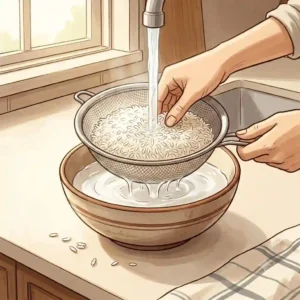
Rinsing (The Crucial Prep): Wash your grains in a fine-mesh strainer under cold water until it runs clear. This removes surface amylose starch, preventing a gummy, clumpy final texture.
-
The Ratio: Use 1 cup of rinsed rice to 1.5 cups of water. For a vessel with an incredibly tight seal (like the Le Creuset Signature Dutch Oven), drop the water to 1.25 cups because less steam will escape.
-
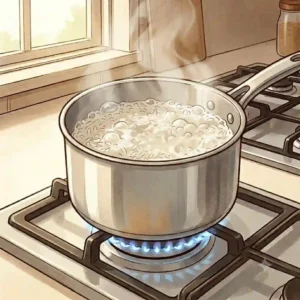
The Boil: Bring the water to a rapid boil uncovered.
-
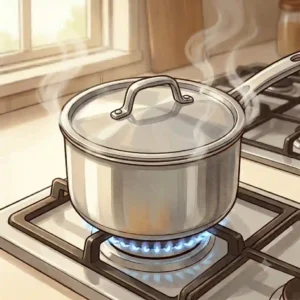
The Simmer: Once boiling, cover with a tight-fitting lid, drop the heat to your stove’s lowest setting, and set a timer for exactly 15 minutes. Do not lift the lid. Lifting the lid ruins the steam pressure.
-
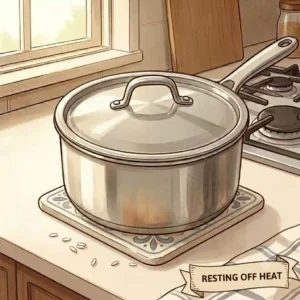
The Rest: Remove from heat and let it sit, covered, for 10 minutes. This resting phase allows moisture to redistribute evenly, preventing a soggy bottom and dry top.
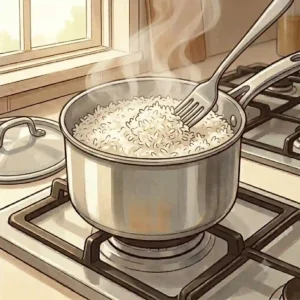
What most people miss is the resting phase. The starch structures are incredibly fragile right off the heat. Stirring immediately will mash the grains.
Problem → Solution Guide: Rescuing Your Grains
Even with great equipment, user error happens. Here are the most common problems I see in home kitchens and exactly how to fix them.
Problem 1: The bottom is burnt, but the top is crunchy.
Solution: Your heat is too high, or your pot lacks thermal mass. If you are using a thin-bottomed pot, you need a heat diffuser (a cheap metal disc that goes between the burner and the pot). Upgrading to a tri-ply vessel like the All-Clad D3 Stainless Steel Saucepan completely resolves this by distributing heat outward rather than straight up.
Problem 2: The rice is a wet, mushy porridge.
Solution: You used too much water or skipped the rinsing phase. Remember the evaporation rule. If your pot has a heavy lid, reduce your water by 20%. To salvage a mushy batch right now, take the lid off, lay a clean kitchen towel over the pot, and replace the lid. The towel will absorb the excess ambient condensation.
Problem 3: Starchy water boils over the sides.
Solution: The heat was not dropped quickly enough, or the pot is too small. A 2-quart pot can handle 1.5 cups of dry rice max. If boil-overs are a constant headache, the double-lid system of the Iga-Mono Kamado-san was literally invented to catch and recycle starchy foam.
Real-World Scenarios: Choosing Your Rice Vessel
For every cooking style, there is a perfect vessel, and sometimes, the “best” product is the worst choice for your specific lifestyle.
The Busy College Commuter
If you are cooking quick meals in a cramped dorm kitchen with an electric coil stove, the heavy cast iron is a nightmare. You want the Cuisinart Chef’s Classic. It boils quickly, is light enough to wash in a tiny sink, and handles the standard 1-cup-dry batches perfectly.
The Weekend Culinary Hobbyist
If you host dinner parties and care about tablescape aesthetics as much as food science, the Le Creuset Signature Dutch Oven is your match. It moves beautifully from stove to table, and the incredible heat retention means your rice stays piping hot while you finish plating the main courses.
The Edge Case (Anti-Recommendation)
I love the Iga-Mono Kamado-san, but if you have a modern induction cooktop, this pot is entirely useless to you—clay does not conduct magnetic energy. Similarly, if you are a meal-prepper batch-cooking 6 cups of brown rice for the week, do not buy a 2-quart pot; you must scale up to the 5-quart Lodge Double Dutch Oven or you will face disastrous boil-overs and uneven cooking.
How to Choose Stovetop Cookware for Grains
When evaluating a pot for boiling grains, you must look past the marketing jargon and examine the structural physics of the cookware.
-
Assess the Base Thickness: A pot with a thin base will transfer the burner’s shape directly to your food, creating localized hot spots. Look for “tri-ply” or “encapsulated” bases. This means aluminum or copper is doing the heat-spreading work beneath the durable stainless steel surface.
-
Evaluate the Lid Fit: A loose lid is a dealbreaker. If steam escapes, your water ratio becomes unpredictable. Glass lids are convenient for viewing, but they are often lighter than metal lids and tend to rattle, letting steam out. A heavy lid guarantees consistent pressure.
-
Consider the Geometry: Wide, shallow pans evaporate water too quickly. Tall, narrow pots stack the rice too high, crushing the bottom grains under their own weight. A classic saucepan with relatively straight sides and roughly equal height and width is the optimal shape for grain expansion.

Common Mistakes When Buying Stovetop Cookware
The biggest pitfall I see consumers fall into is buying non-stick aluminum pots for rice. While Teflon-coated aluminum is cheap and lightweight, it degrades rapidly. When you scrape out sticky rice with a paddle, you inevitably micro-scratch the coating. Over time, these scratches harbor bacteria and peel into your food.
Furthermore, lightweight aluminum warps easily. Once a pot’s bottom is warped and no longer sits perfectly flat on a glass-top or induction stove, you lose direct contact with the heating element. This ruins your ability to maintain a consistent simmer. Investing in stainless steel or enameled cast iron eliminates this issue entirely. The initial cost is higher, but the total cost of ownership over ten years drops to pennies per meal.
| Cookware Material | Lifespan | Warping Risk | Maintenance Required |
| Non-Stick Aluminum | 1-3 Years | High | Low |
| Tri-Ply Stainless | Lifetime | Very Low | Low |
| Raw Cast Iron | Lifetime | Zero | High (Seasoning) |
Looking at this breakdown, the long-term value of Tri-Ply Stainless is undeniable. While non-stick seems convenient in year one, replacing it every three years quickly outpaces the one-time investment of a high-quality stainless steel pot, which will never warp under standard cooking conditions.
Heavy-Bottomed Cookware vs. Traditional Rice Cookers
Many readers ask why they shouldn’t just buy a $30 electric rice cooker. The answer lies in culinary flexibility and texture control.
An entry-level electric rice cooker relies on a simple magnetic thermostat. When the temperature inside the pot exceeds the boiling point of water (212°F), the magnet clicks and shuts off the heat, assuming all water is absorbed. It works, but it’s a blunt instrument.
Stovetop cooking with a premium pot allows you to manipulate the heat curve. Want a crispy, golden crust on the bottom of your jasmine rice? You simply raise the heat for the final three minutes. Want to toast your grains in butter before adding broth to make a pilaf? A stainless steel saucepan handles the sauté phase beautifully—something an electric cooker’s thin, non-stick insert cannot do without risking damage to its coating. Stovetop cooking turns rice from a passive side dish into a customizable culinary technique.
What to Expect: Real-World Performance Across Different Grains
Specs on a box won’t tell you how a pot behaves with different ingredients. In my kitchen, the variance between grains is massive.
-
Jasmine and Basmati (Long Grain): These grains have a high amylose content. They cook up dry, fluffy, and separate. A heavy stainless pot is perfect here because long-grain rice requires a rapid drop to a gentle simmer to prevent splitting.
-
Sushi Rice (Short Grain): High in amylopectin, this rice wants to stick together. The radiant, even heat of a clay donabe or enameled cast iron prevents the bottom layer from scorching while the starchy grains absorb moisture slowly.
-
Brown Rice and Wild Rice: The bran layer on these grains acts as a raincoat, doubling the required cooking time (often 40-45 minutes). For this, thermal mass is king. A raw cast iron pot maintains that low, steady heat for nearly an hour without demanding you constantly babysit the stove dial.
Long-Term Cost & Maintenance of Premium Cookware
Calculating the Total Cost of Ownership (TCO) for kitchen gear is a vital practice. A cheap $15 pot might seem like a steal, but if it burns every 5th batch of rice, you have to factor in the cost of wasted food.
Premium pots require specific care to ensure they last a lifetime. For stainless steel, the biggest enemy is calcium buildup from hard water, which leaves a cloudy residue. This is easily fixed with a quick scrub of Bar Keepers Friend or a vinegar soak. For raw cast iron, the maintenance cycle is continuous: you must wash it without harsh detergents, dry it immediately on the stove, and rub it with a micro-layer of neutral oil. If you are willing to spend 60 extra seconds on cleanup, these vessels will literally outlive you, making their high upfront cost incredibly efficient over decades of daily use.
Safety & Compliance Guide: Cookware Materials
When dealing with heat and food acidity, material safety is paramount. High-quality stainless steel (typically 18/10, meaning 18% chromium and 10% nickel) is incredibly stable and non-reactive, which is recognized by food safety authorities like the USDA as safe for all cooking applications.
However, when using clay cookware like a traditional Japanese donabe, it is critical to ensure it is sourced from reputable manufacturers who test for lead and cadmium. Authentic, high-end clay pots are rigorously tested and completely safe, but cheap knock-offs found at discount markets often bypass these glaze safety regulations. Always verify the origin of ceramic and clay items before subjecting them to high stovetop heat.
✨ Don’t Miss These Exclusive Deals!
🔍 Ready to transform your daily meals? Click on any highlighted cookware item in this article to check current pricing and availability. Make the upgrade today and taste the difference tomorrow!
Conclusion
Mastering how to cook rice on stovetop perfectly is a foundational culinary skill that liberates you from countertop appliances and opens up a world of textures, from fluffy basmati to crispy tahdig. As we’ve explored, success hinges less on a magic touch and almost entirely on understanding ratios and utilizing a vessel with proper thermal mass and a tight-fitting lid. Whether you opt for the lifetime durability of the All-Clad D3 or the incredible heat retention of the Le Creuset, investing in heavy-bottomed cookware changes the game entirely. Stop fearing the stovetop, respect the resting phase, and enjoy the perfect grains you can produce with your own two hands.
FAQs
❓ How long should I let rice rest after cooking on the stove?
✅ You should let it rest for exactly 10 minutes off the heat with the lid strictly closed. This allows residual steam to evenly distribute through the grains, finishing the gelatinization process without turning the bottom layer to mush…
❓ Why is my stovetop rice always sticky and gummy?
✅ It usually comes down to skipping the rinsing step. Unwashed grains carry excess surface starch (amylose). When boiled, this starch acts like glue. Rinsing under cold water until clear removes this, ensuring distinct, fluffy grains…
❓ Can I open the lid to check if the water is gone?
✅ Absolutely not. Opening the lid destroys the internal steam pressure and immediately drops the cooking temperature. This leads to undercooked, crunchy centers. Trust your timer and your heat ratios, and keep the lid sealed tight…
❓ What heat setting is best for simmering rice on a gas stove?
✅ After reaching a rolling boil, you must drop the flame to the absolute lowest setting your dial allows. If your lowest setting still causes violent bubbling, you need to purchase a cheap metal heat diffuser to temper the flame…
❓ Does soaking rice before stovetop cooking actually help?
✅ Yes, for specific varieties. Short-grain Japanese rice and tough brown rice benefit massively from a 20-30 minute soak. It allows the grain to hydrate evenly to the core, ensuring a tender bite without needing prolonged, extreme boiling heat…
Recommended for You
- 5 Proven Secrets on how to cook fish without sticking to pan in 2026
- 5 Expert Secrets: how to sear meat perfectly in pan (2026 Guide)
- 5 Crucial Tips: The True difference between saute and fry cooking (2026 Guide) – Master Both Techniques Like a Pro
Disclaimer: This article contains affiliate links. As an Amazon Associate, I earn from qualifying purchases. If you purchase products through these links, we may earn a small commission at no additional cost to you.
✨ Found this helpful? Share it with your friends! 💬🤗