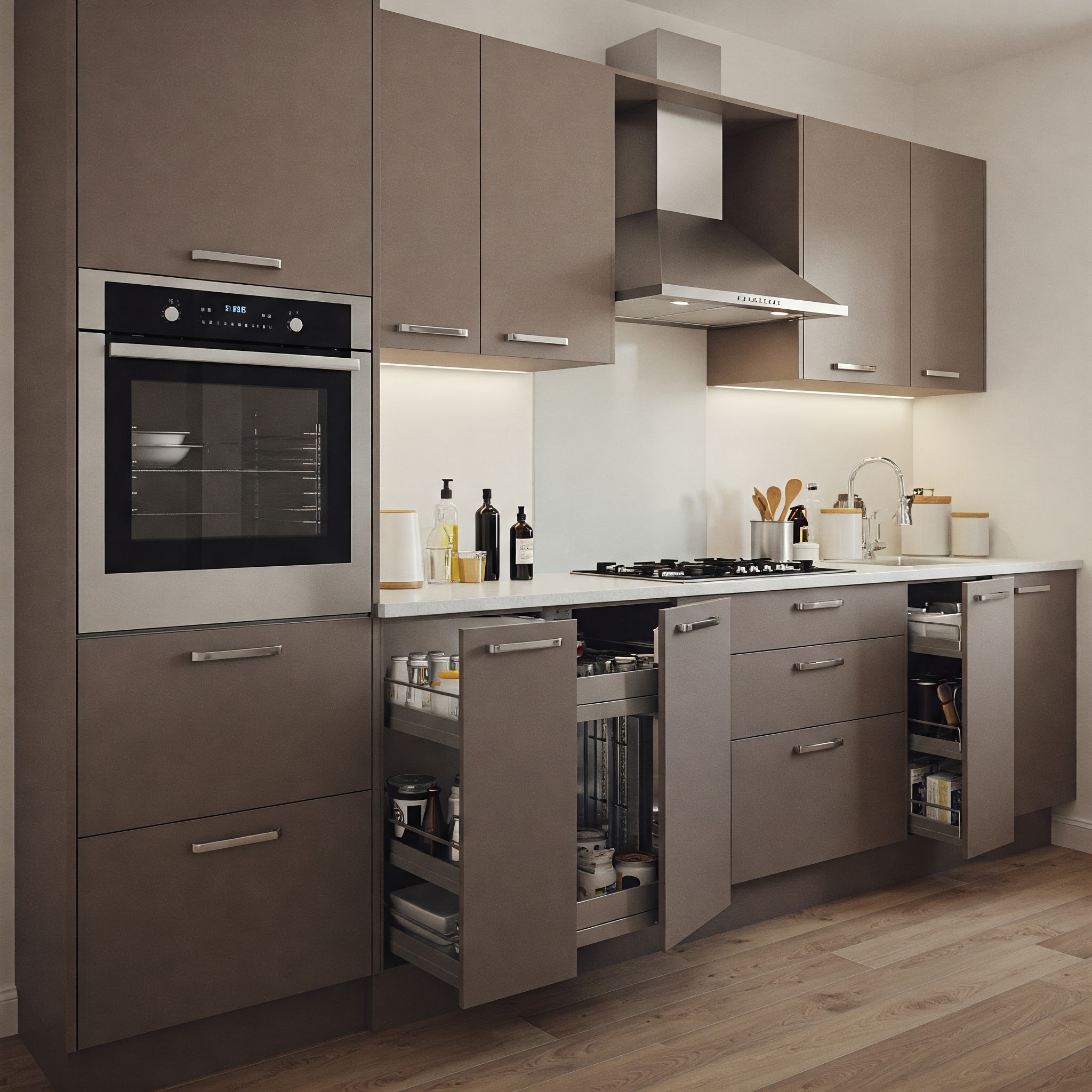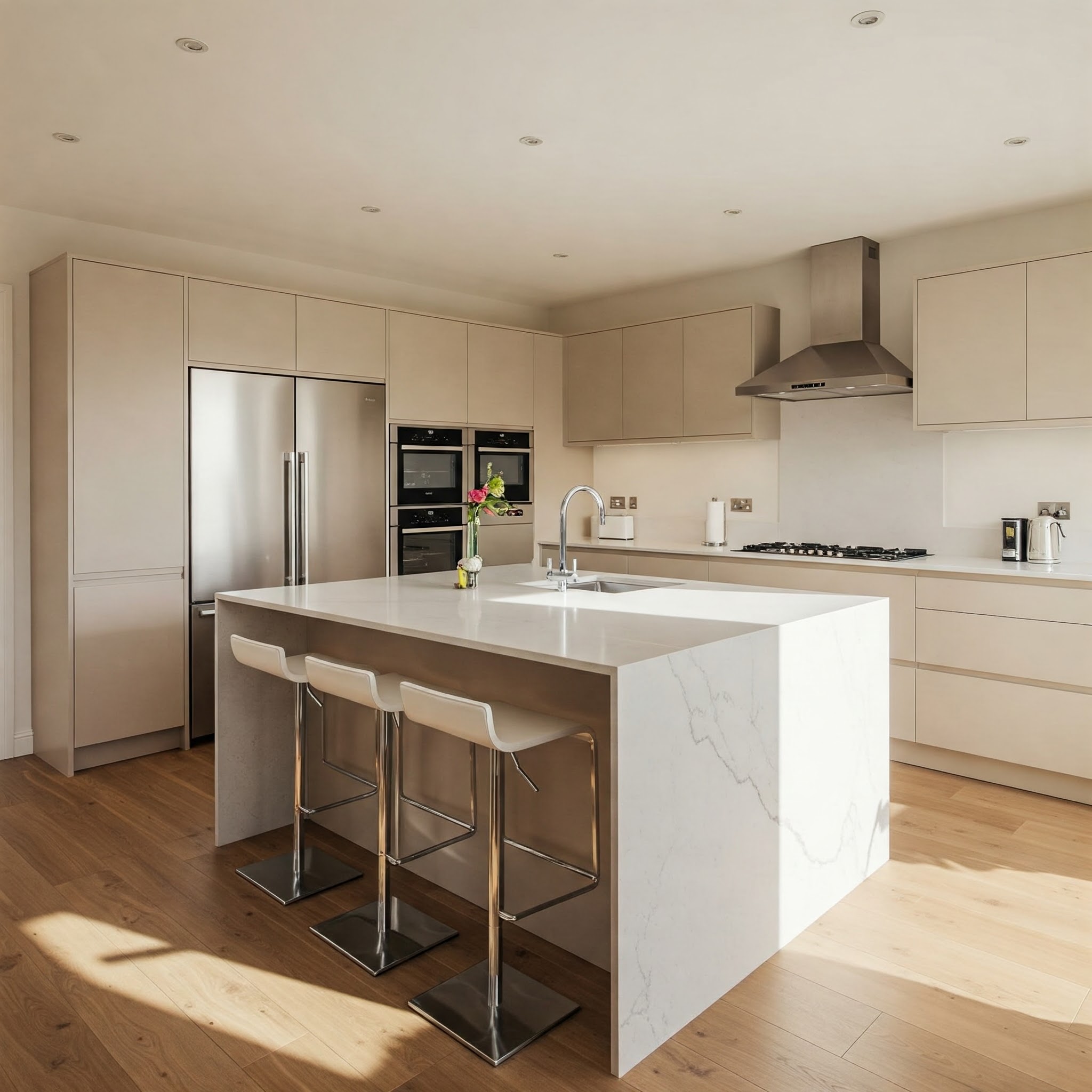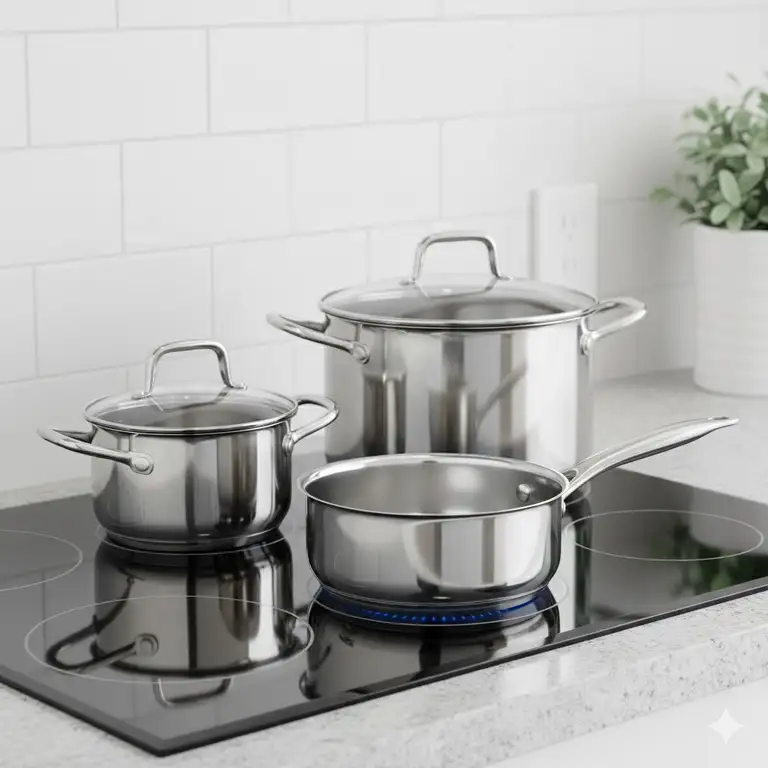
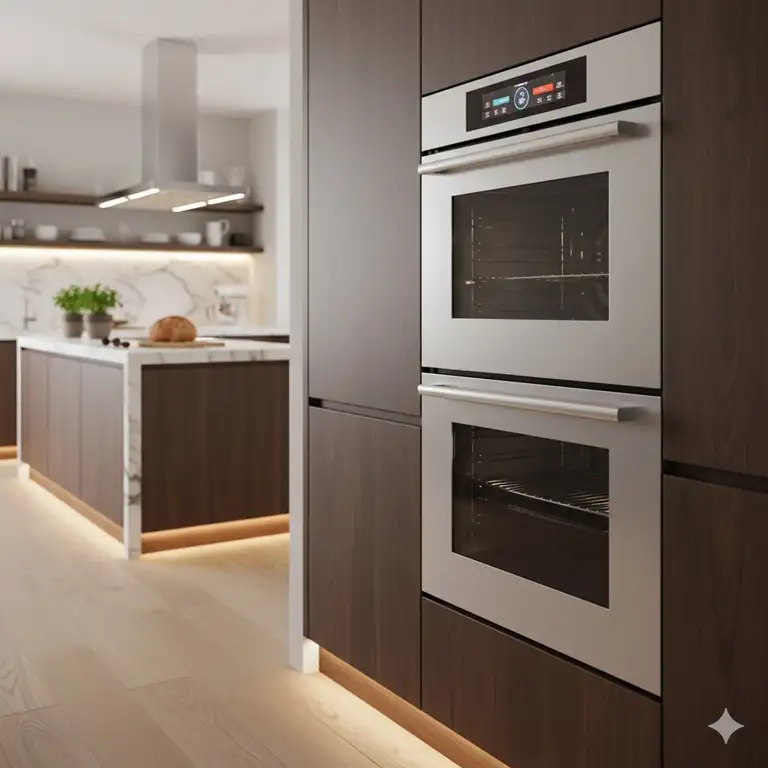
When I first stepped into my newly renovated kitchen and saw that gleaming high end oven taking center stage, I knew my cooking game was about to change forever. But here’s the thing—choosing the right luxury oven isn’t just about dropping a big check and hoping for the best. It’s about understanding what separates a good oven from a truly exceptional one.
✨Was this helpful? Spread the word! 🚀
You see, the world of premium ovens has exploded over the past few years. What used to be a simple choice between gas and electric has morphed into a dizzying array of options featuring everything from steam injection to smart connectivity. And honestly? That’s both exciting and overwhelming.
Let me walk you through everything you need to know about high end ovens in 2025. Whether you’re a passionate home chef or simply someone who appreciates quality appliances, this guide will help you make an informed decision without the marketing fluff.
What Makes a High End Oven Worth the Investment?
Before we dive into specific models, let’s talk about what actually justifies that premium price tag. A highend oven isn’t just about brand names or shiny knobs—though those iconic Wolf red knobs sure do look gorgeous.
The real value comes from several key factors that professional chefs and serious home cooks have relied on for decades. First, you’re getting superior heat distribution. Cheaper ovens often have hot spots that burn one side of your cookies while leaving the other pale. Premium ovens use advanced convection systems and precise heating elements to eliminate these frustrations completely.
Second, build quality matters more than you might think. When you’re investing in a high-end oven, you’re getting commercial-grade materials that can withstand daily use for 20 years or more. We’re talking heavy-gauge stainless steel, cast-iron grates, and burners designed to deliver consistent performance year after year.
Quick Comparison: High End Oven vs. Standard Models
| Feature | High End Oven | Standard Oven | Premium Advantage |
|---|---|---|---|
| Heat Distribution | ±5°F variance | ±25°F variance | 80% more consistent |
| BTU Output | 15,000-22,000 | 9,000-12,000 | 50-80% more power |
| Oven Capacity | 4.5-5.7 cu. ft. | 3.5-4.5 cu. ft. | 20-30% larger |
| Build Quality | Commercial-grade steel | Consumer-grade materials | 2-3x longer lifespan |
| Warranty Coverage | 5-10 years | 1-2 years | 5x better protection |
| Temperature Accuracy | ±2°F | ±15°F | 87% more precise |
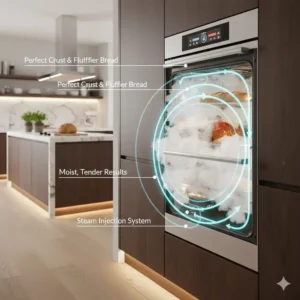
Third, let’s talk about cooking modes and versatility. Modern luxury ovens aren’t just boxes that get hot. They’re sophisticated cooking systems with multiple heating elements, convection fans that can reverse direction, and smart features that monitor your food’s internal temperature. Some even incorporate steam for professional-quality bread baking.
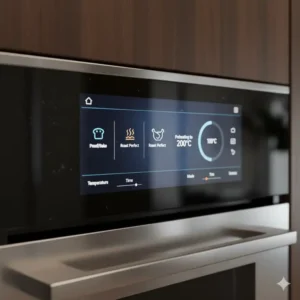
Top 7 High End Oven Models: Expert Analysis
After months of research and speaking with professional chefs, appliance specialists, and actual owners, I’ve identified seven exceptional high end oven options that deliver on their promises. Each excels in different areas, so pay attention to which features matter most for your cooking style.
1. Wolf GR366 Gas Range – The Professional’s Choice
This 36-inch powerhouse has become the gold standard for serious home cooks. The Wolf GR366 features six dual-stacked burners that deliver incredible temperature control from a gentle 300 BTU simmer all the way up to a blazing 20,000 BTU sear. The dual VertiFlow convection system ensures even baking on multiple racks simultaneously.
Key Specifications:
- ✅ 5.5 cu. ft. oven capacity
- ✅ Six dual-stacked sealed burners
- ✅ Dual VertiFlow convection
- ✅ Infrared broiler
- ✅ 10 cooking modes including Gourmet Mode
- ✅ Signature red knobs with infinite control
- ✅ Self-cleaning function
The sealed burner design makes cleanup surprisingly easy for such a powerful range. Customers consistently praise how the Wolf GR366 maintains rock-solid temperatures, whether you’re caramelizing onions at low heat or searing a perfect steak. Professional bakers especially love the convection mode for consistent cookie batches.
2. Thermador Pro Grand PRD606WEG – Ultimate Luxury
If you want the absolute pinnacle of cooking technology, the Thermador Pro Grand PRD606WEG delivers in spades. This 60-inch beast offers dual ovens with a combined 10.6 cu. ft. capacity—the largest in the industry. The color TFT touchscreen interface provides intuitive control over every cooking function.
Key Specifications:
- ✅ 10.6 cu. ft. total oven capacity (5.7 + 4.9 cu. ft.)
- ✅ Six Pedestal Star burners (up to 22,000 BTUs)
- ✅ 24-inch double griddle with dual zones
- ✅ WiFi-enabled Home Connect technology
- ✅ Third Element convection system
- ✅ ExtraLow simmer (100°F capability)
- ✅ Professional-grade rotisserie
The Thermador Pro Grand PRD606WEG isn’t just an oven—it’s a complete cooking system. The patented Star burner design provides 56% more flame coverage than traditional round burners, eliminating cold spots entirely. Home cooks who entertain frequently appreciate the massive cooking surface and dual-zone griddle for preparing multiple dishes simultaneously.
3. Viking Professional 5 Series VGR5486GSS – Power and Precision
Viking built its reputation on bringing commercial-grade equipment to home kitchens, and the Viking Professional 5 Series VGR5486GSS exemplifies that legacy. This 48-inch range combines six powerful burners with a 12-inch griddle, offering maximum versatility for any cooking style.
Key Specifications:
- ✅ 6.1 cu. ft. total oven capacity
- ✅ TruPower Plus 18,500 BTU burner
- ✅ 30,000 BTU U-shaped oven burner
- ✅ GourmetGlo infrared broiler (1,500°F)
- ✅ ProFlow convection baffle system
- ✅ VariSimmer setting on all burners
- ✅ SureSpark ignition system
The Viking Professional 5 Series stands out for its incredible broiling capability. That GourmetGlo infrared broiler reaches temperatures that rival commercial steakhouses, giving you restaurant-quality results at home. The ProFlow convection system has been engineered specifically for the oven cavity dimensions, ensuring perfectly even heat distribution for baking applications.
4. Wolf DF366 – Dual Fuel Excellence
For those who want the best of both worlds, the Wolf DF366 Dual Fuel Range combines gas cooktop precision with electric oven consistency. This 36-inch model offers the responsiveness of gas burners topside with the even heating that only electric convection can provide.
Key Specifications:
- ✅ 4.9 cu. ft. electric convection oven
- ✅ Five dual-stacked gas burners
- ✅ Optional infrared charbroiler or griddle
- ✅ Dual VertiFlow electric convection
- ✅ 10 chef-tested cooking modes
- ✅ Temperature probe included
- ✅ Porcelain-coated cast iron grates
Dual fuel ranges like the Wolf DF366 have become incredibly popular among bakers who need precise oven temperatures but still want the tactile control of gas burners for stovetop cooking. The electric convection oven maintains temperatures within ±2°F, which is crucial for delicate baking applications like soufflés and macarons.
5. Thermador PRG304GH – Compact Luxury
Don’t let its 30-inch footprint fool you—the Thermador PRG304GH packs professional-grade performance into a space-efficient package. This is the perfect high end oven for smaller kitchens that refuse to compromise on quality.
Key Specifications:
- ✅ 4.4 cu. ft. oven capacity
- ✅ Four Pedestal Star burners (up to 18,000 BTUs)
- ✅ True convection with third element
- ✅ ExtraLow simmer burners
- ✅ QuickClean base for easy maintenance
- ✅ Continuous cast iron grates
- ✅ Sabbath mode certified
Despite its smaller size, the Thermador PRG304GH doesn’t skimp on features. The Star burner technology provides the same superior heat distribution found in larger models, just in a more compact configuration. Urban dwellers and condo owners particularly appreciate how this range delivers luxury performance without requiring a kitchen remodel.
6. Viking Professional 5 Series VGCC5304BSS – Best Value Premium Range
While still commanding a premium price, the Viking Professional 5 Series VGCC5304BSS offers an entry point into luxury cooking at a more accessible level. This 30-inch gas range delivers professional features without the six-figure price tag of larger models.
Key Specifications:
- ✅ 4.0 cu. ft. oven capacity
- ✅ Four sealed gas burners (up to 15,000 BTUs)
- ✅ GourmetGlo infrared broiler
- ✅ ProFlow convection air baffle
- ✅ VariSimmer on all burners
- ✅ Porcelainized cooking surface
- ✅ Six cooking functions
What makes the Viking VGCC5304BSS such a smart choice is how it prioritizes essential professional features over bells and whistles. You’re getting the same ProFlow convection system and infrared broiler found in higher-end Vikings, just in a more streamlined package. It’s proof that you don’t need to mortgage your house to get restaurant-quality results at home.
7. Wolf GR486G – The Ultimate Professional Range
For those who want absolutely everything, the Wolf GR486G represents the pinnacle of residential cooking equipment. This 48-inch range features six burners plus an infrared griddle, giving you unprecedented cooking flexibility.
Key Specifications:
- ✅ 5.5 cu. ft. oven capacity
- ✅ Six dual-stacked burners
- ✅ 12-inch infrared griddle
- ✅ Dual VertiFlow convection
- ✅ Infrared charbroiler option
- ✅ Temperature probe
- ✅ Self-cleaning mode
The Wolf GR486G is what professional chefs install in their personal kitchens. The infrared griddle heats to 450°F and maintains consistent temperatures across its entire surface—perfect for pancakes, eggs, or grilled sandwiches. Meanwhile, the six burners provide enough cooking stations to handle even the most ambitious dinner parties.
🎯 Ready to Transform Your Kitchen?
If you’re serious about elevating your cooking, now’s the perfect time to invest in a quality high end oven. These ranges aren’t just appliances—they’re tools that will serve you faithfully for decades while making every cooking session more enjoyable. Click on any of the models above to check current availability and exclusive deals! ✨
💬 Just one click – help others make better buying decisions too!😊
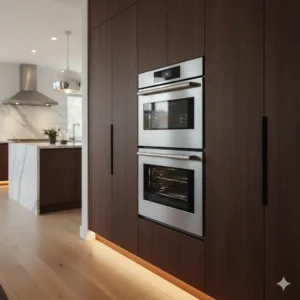
Understanding High End Oven Features and Technologies
Now that we’ve covered specific models, let’s dig deeper into the technologies that make these appliances worth their price tags. Understanding these features will help you evaluate which matters most for your cooking style.
Convection Systems: The Secret to Perfect Baking
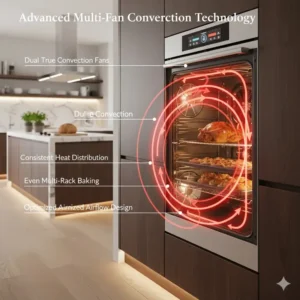
All premium ovens include convection, but not all convection systems are created equal. Basic convection uses a fan to circulate hot air, which improves heat distribution. However, high end ovens take this much further.
True convection, also called European convection, adds a third heating element around the fan itself. This preheats the air before circulation, resulting in faster cooking times and more even browning. The best systems, like Wolf’s Dual VertiFlow, use vertical heating elements and carefully engineered baffles to ensure uniform temperature throughout the entire oven cavity.
When combined with proper convection oven baking pans that allow maximum airflow, these systems can bake six sheet pans of cookies simultaneously with identical results on every rack. Try that with a standard oven and you’ll end up rotating pans every few minutes.
Comparison: Convection Technologies
| System Type | Heat Distribution | Cooking Speed | Multi-Rack Performance | Best For |
|---|---|---|---|---|
| Standard Convection | Good | 25% faster | Fair | Single-rack cooking |
| True Convection | Excellent | 30% faster | Very good | Most applications |
| Dual VertiFlow | Outstanding | 35% faster | Excellent | Professional baking |
| ProFlow Baffle | Excellent | 30% faster | Excellent | Even heat critical dishes |
BTU Ratings and Burner Configuration
The high-end oven market has gotten into a bit of a horsepower war with BTU ratings. While higher numbers sound impressive, what really matters is having the right range of temperatures for different cooking techniques.
Premium ranges typically feature dual-stacked or star-configuration burners that can deliver both extreme low and high heat. A good simmer setting should maintain temperatures around 100-140°F without requiring you to constantly adjust the flame. Meanwhile, high-BTU burners (18,000-22,000 BTUs) provide the intense heat needed for proper wok cooking or searing.
The best configurations include at least one power burner, two standard burners for everyday cooking, and one or two simmer burners. Some models add specialty cooking surfaces like griddles or charbroilers for even more versatility.
Smart Features and Connectivity
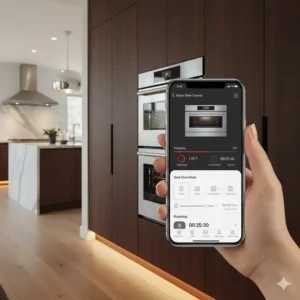
Modern luxury ovens increasingly incorporate WiFi connectivity and app control. While this might sound like unnecessary tech, it actually provides genuine utility when implemented well.
Imagine preheating your oven on your drive home or checking your roast’s internal temperature from the living room. Some systems even include oven cameras that let you monitor browning without opening the door and losing heat. Thermador’s Home Connect and Wolf’s smart features integrate with Amazon Alexa for voice control.
However, I’ll be honest—you’re paying a premium for these connected features. If you’re not someone who embraces smart home technology, don’t let these capabilities drive your decision. The cooking performance should always be your primary consideration.
Convection Oven Baking Pans: Essential Accessories
Even the best high end oven won’t perform optimally without the right cookware. Convection oven baking pans are specifically designed to maximize airflow, which is crucial for achieving those perfectly golden, evenly cooked results.
What Makes Convection Pans Different?
Traditional baking pans with high walls can actually work against convection systems by blocking airflow. The best convection oven baking pans feature low sides, perforations, or mesh designs that allow hot air to circulate freely around your food.
For premium ovens, I recommend investing in restaurant-quality half-sheet pans made from heavy-gauge aluminum or aluminized steel. These materials conduct heat evenly and won’t warp under high temperatures. Nordic Ware and USA Pan both make excellent options that complement luxury ranges perfectly.
Recommended Pan Sets and Accessories
| Pan Type | Material | Best Uses | Airflow Rating | Price Range |
|---|---|---|---|---|
| Perforated Sheet Pan | Aluminum | Pizza, vegetables | Excellent | $25-$45 |
| Half-Sheet Pan Set | Aluminized steel | Cookies, roasting | Very good | $30-$60 |
| Cooling Rack Set | Stainless steel | Multi-level cooking | Outstanding | $20-$40 |
| Rimless Cookie Sheet | Heavy aluminum | Cookies, pastries | Excellent | $15-$35 |
| Broiler Pan | Porcelain enamel | Meats, broiling | Good | $35-$65 |
When using convection oven baking pans, remember to reduce your recipe temperature by 25°F and check for doneness a few minutes earlier than traditional timing suggests. The increased efficiency of convection means food cooks faster, and premium ovens are especially efficient at heat transfer.
Installation and Space Requirements
Before you fall in love with a 60-inch Thermador, make sure your kitchen can actually accommodate it. Professional-grade ovens require careful planning and often necessitate upgrades to your kitchen infrastructure.
Gas Line and Electrical Requirements
Most high end ovens need more power than standard models. Gas ranges typically require 1/2-inch or 3/4-inch gas lines to deliver adequate fuel for high-BTU burners. Dual fuel models need both gas connections and 240-volt electrical service—a 50-amp circuit is standard.
If your home currently has a standard 30-amp circuit, you’ll need an electrician to upgrade your service. Factor this into your budget, as electrical work can add $500-$2,000 to your total project cost. Similarly, upgrading gas lines typically costs $200-$800 depending on distance from the meter.
Ventilation Considerations
Here’s something many people overlook: that powerful high end oven generates serious heat and cooking byproducts that need proper ventilation. The minimum recommended ventilation capacity is 1 CFM per 100 BTUs of cooktop power.
For a range with 60,000 total BTUs, you’d want at least a 600 CFM hood. Premium installations often use 900-1,200 CFM systems to handle the output from those impressive burners. Wolf, Thermador, and Viking all manufacture range hoods specifically engineered to pair with their cooking equipment.
Space Planning Guide
| Range Size | Minimum Kitchen Width | Recommended Hood CFM | Clearance Requirements |
|---|---|---|---|
| 30-inch | 33 inches | 400-600 CFM | 2 inches each side |
| 36-inch | 39 inches | 600-900 CFM | 2 inches each side |
| 48-inch | 51 inches | 900-1,200 CFM | 2 inches each side |
| 60-inch | 63 inches | 1,200-1,500 CFM | 2 inches each side |
Don’t forget about depth considerations either. Many professional-style ranges extend 28-30 inches from the wall, compared to 24-25 inches for standard models. This can impact your kitchen layout and workflow significantly.
Maintenance and Long-Term Ownership
A high end oven is a serious investment, but proper maintenance ensures decades of reliable service. Let’s talk about what ownership actually looks like beyond the initial purchase.
Cleaning and Daily Care
One advantage of premium appliances is that they’re designed for easy maintenance. Sealed burners contain spills to the cooktop surface, while continuous cast iron grates simply lift off for cleaning. The porcelain-coated surfaces on Viking and Thermador ranges wipe clean with just soap and water.
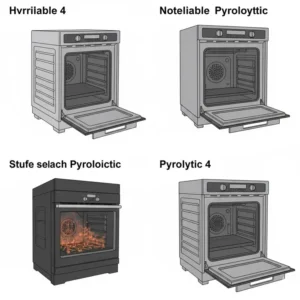
Most high end ovens include self-cleaning functions, though I personally recommend using these sparingly. The extreme temperatures required for self-cleaning can stress components over time. Instead, clean spills promptly and perform a deeper manual cleaning quarterly.
For the oven interior, a paste of baking soda and water works wonders without harsh chemicals. Let it sit overnight, then wipe clean. Your luxury oven deserves gentle treatment that preserves its premium finishes.
Service and Warranty Coverage
This is where premium brands really separate themselves from budget options. Wolf offers a full two-year warranty on all parts and labor, plus five years on sealed refrigeration systems. Thermador provides similar coverage, while Viking typically offers one year comprehensive with extended warranties available.
More importantly, these brands maintain extensive service networks with factory-trained technicians. When you need service on your high end oven, you’re not dealing with a generic repair person—you’re getting specialists who know these sophisticated appliances inside and out.
Budget for potential service calls, as premium appliances use more complex components. A typical service call runs $150-$300 just for the diagnostic, though many issues are covered under warranty for the first few years.
Expected Lifespan Comparison
| Oven Type | Average Lifespan | Warranty Coverage | Service Availability | Total Cost of Ownership |
|---|---|---|---|---|
| High End Oven | 20-25 years | 2-5 years | Excellent | High initial, low ongoing |
| Mid-Range | 12-15 years | 1-2 years | Good | Medium initial, medium ongoing |
| Budget | 7-10 years | 1 year | Fair | Low initial, high replacement |
| Commercial | 15-20 years | 1 year parts | Excellent | Very high initial, high ongoing |
When you calculate cost per year of ownership, a $8,000 high end oven that lasts 20 years costs just $400 annually. A $1,500 budget model that lasts 8 years costs $187 per year—but you’ll deal with service issues, inconsistent performance, and eventual replacement hassles.
Fuel Type Considerations: Gas, Electric, or Dual Fuel?
One of the biggest decisions you’ll face is choosing between gas, electric, or dual fuel configurations. Each has distinct advantages that appeal to different cooking styles.
Gas Ranges: Traditional Control
Gas ranges remain popular among professional chefs because of their immediate, visible heat control. When you turn the knob, the flame responds instantly. This tactile feedback makes it easier to adjust temperatures on the fly while cooking.
Modern premium gas ovens have overcome historic issues with uneven heating. Technologies like Viking’s ProFlow convection and Wolf’s Dual VertiFlow ensure consistent temperatures throughout the oven cavity. The infrared broilers found in high-end gas ranges rival or exceed electric broiling performance.
Electric Ranges: Precision Baking
Electric ovens maintain more stable temperatures than gas, which matters tremendously for baking applications. Induction cooktops, which are always electric, provide incredibly precise temperature control—even better than gas in many respects.
The trade-off is less intuitive heat adjustment while cooking. Electric burners take time to heat up and cool down, though induction technology addresses this limitation. If you primarily bake and want the ultimate in temperature stability, electric or dual fuel is worth serious consideration.
Dual Fuel: Best of Both Worlds
This is why dual fuel ranges have become so popular in the luxury market. You get gas burners for stovetop cooking and an electric convection oven for baking. It’s the combination professional bakers and serious home cooks prefer.
The Wolf DF366 and Thermador dual fuel models provide this versatility, though you’ll pay a premium over single-fuel options. You’ll also need both gas and 240-volt electrical service, which complicates installation.
Fuel Type Performance Matrix
| Cooking Task | Gas Performance | Electric Performance | Dual Fuel Performance | Winner |
|---|---|---|---|---|
| Simmering | Excellent | Good | Excellent | Gas/Dual |
| Searing | Outstanding | Very good | Outstanding | Gas/Dual |
| Baking | Very good | Outstanding | Outstanding | Electric/Dual |
| Broiling | Excellent | Excellent | Excellent | Tie |
| Responsive Control | Outstanding | Good | Outstanding | Gas/Dual |
| Temperature Stability | Good | Outstanding | Outstanding | Electric/Dual |
Price Analysis and Value Proposition
Let’s address the elephant in the room—high end ovens are expensive. A top-tier Wolf or Thermador range can easily exceed $10,000, with some models approaching $20,000. Is that really justified?
Breaking Down the Investment
The sticker shock is real, but context matters. A quality high end oven will serve you reliably for 20-25 years. Over that lifespan, you’re looking at $400-$800 per year of ownership. Compare that to a mid-range appliance that might cost $2,000 but only lasts 12 years—that’s $166 annually, but you’ll replace it at least once during the same period.
Factor in superior cooking performance, energy efficiency, and the sheer pleasure of using well-crafted equipment daily, and the value proposition becomes clearer. You’re not just buying an appliance; you’re investing in decades of reliable service and culinary enjoyment.
Price Range Breakdown
| Price Tier | Typical Cost | Brands | Key Features | Best For |
|---|---|---|---|---|
| Entry Luxury | $3,500-$6,000 | Viking base, Thermador 30″ | Professional burners, convection | Aspiring home chefs |
| Mid Luxury | $6,000-$10,000 | Wolf 36″, Thermador 36″, Viking 48″ | Full feature set, superior build | Serious home cooks |
| Premium | $10,000-$15,000 | Wolf 48″, Thermador 48″ dual oven | Maximum capacity, every feature | Avid entertainers |
| Ultra-Premium | $15,000-$25,000 | Thermador 60″, La Cornue, custom | Largest sizes, ultimate craftsmanship | Luxury installations |
Smart Shopping Strategies
If you’re convinced a high end oven makes sense for your kitchen, here are some strategies to get the best value:
Timing matters. Major appliance brands typically refresh product lines in fall and offer promotional pricing around major holidays. Memorial Day, Fourth of July, and Labor Day often feature significant discounts. I’ve seen 20-30% off premium ranges during these sales events.
Consider floor models. Luxury appliance showrooms occasionally sell display units at steep discounts. These have been gently used for demonstrations but come with full manufacturer warranties. You might save $2,000-$5,000 on a range that’s essentially new.
Negotiate everything. Premium appliance dealers have more flexibility on pricing than big box stores. When you’re spending $10,000+, dealers can often throw in delivery, installation, or accessories. Never accept the first quote without negotiating.
Package deals. If you’re renovating your entire kitchen, purchasing multiple appliances from the same brand typically unlocks additional discounts. Some dealers offer 10-15% off when you buy a complete suite of Wolf or Thermador appliances.
Real-World Performance: What Owners Actually Say
I’ve spent hours reading owner reviews and talking to people who’ve lived with these high end ovens for years. Here’s what the long-term ownership experience really looks like.
The Honeymoon Period
Almost everyone reports being blown away during the first few months. The difference in cooking performance is immediately obvious—more even baking, better temperature control, and professional-quality results become the norm rather than the exception.
Several Wolf GR366 owners mentioned that their gas bills actually decreased despite having higher-BTU burners. The improved efficiency and reduced cooking times more than offset the increased power. One owner reported cutting her dinner preparation time by 30% because multiple burners and the oven all work together so efficiently.
Common Praise Points
✅ Consistent temperatures: The most frequent compliment across all brands is how these ovens maintain rock-solid temperatures. No more rotating pans or adjusting heat mid-recipe.
✅ Build quality: Owners consistently note how solid these appliances feel. Heavy grates, precision-crafted knobs, and sturdy doors all contribute to a premium experience.
✅ Powerful burners: The high-BTU burners get praised repeatedly for their ability to boil water quickly and maintain intense heat for proper searing.
✅ Convection performance: Multiple-rack baking gets rave reviews, with owners reporting identical results on every rack level.
Minor Complaints
Even premium appliances aren’t perfect. The most common criticisms include:
❌ Learning curve: These sophisticated ovens require adjustment if you’re coming from standard equipment. Recipes often need temperature and timing modifications.
❌ Professional maintenance needed: When something does go wrong, you can’t just call any repair person. Specialty service can be more expensive and harder to schedule.
❌ Size and weight: Installation often requires professional help, and some owners wish they’d realized how much space these ranges actually occupy.
❌ Heat output: In summer, running a high-powered range can significantly warm your kitchen. Proper ventilation becomes crucial for comfort.
Environmental Considerations
As we become more conscious of energy consumption and environmental impact, it’s worth examining how high end ovens stack up from a sustainability perspective.
Energy Efficiency
Premium gas ranges typically consume more energy than electric models during cooking, but they’re often more efficient than you might expect. The superior insulation in high-end ovens means they maintain temperature with less energy input once preheated.
Induction cooktops are the clear efficiency winners, converting about 85% of energy directly into heat compared to 40% for standard electric and 60% for gas. If environmental impact is a primary concern, consider a dual fuel range with induction cooktop—though these represent the highest price points.
Longevity and Waste Reduction
Here’s where high end ovens really shine from an environmental perspective. A luxury range that lasts 25 years keeps 2-3 budget appliances out of landfills. The embodied energy in manufacturing these robust appliances gets amortized over decades rather than years.
Premium brands also maintain parts availability for older models, making repairs economically viable long after budget appliances would be scrapped. This serviceability is a genuine environmental advantage worth considering.
Efficiency Comparison
| Range Type | Energy Cost/Year | Lifespan | Total Energy Cost | Replacements Needed | Environmental Impact |
|---|---|---|---|---|---|
| High End Gas | $85-$120 | 20-25 years | $1,700-$3,000 | 0 | Low |
| High End Induction | $65-$95 | 20-25 years | $1,300-$2,375 | 0 | Very low |
| Mid-Range Gas | $75-$105 | 12-15 years | $1,125-$1,575 | 1 | Medium |
| Budget Electric | $85-$130 | 8-10 years | $680-$1,300 | 2-3 | High |
Making the Final Decision
We’ve covered a lot of ground, so let’s synthesize everything into actionable guidance. How do you actually choose the right high end oven for your specific situation?
Assess Your Cooking Style
Start with honest self-reflection about how you actually cook. Do you bake frequently? Entertain large groups? Cook primarily for weeknight dinners? Your answers will guide your decision.
Serious bakers should prioritize convection performance and oven capacity. The Wolf GR366 or Thermador models with true convection deliver exceptional baking results. If you frequently cook for crowds, consider larger 48-inch or 60-inch ranges with maximum burner configurations.
For daily cooking focused on stovetop preparation, a 36-inch range with high-quality burners will serve you perfectly well. The added expense of larger models won’t provide proportional value if you rarely use those extra burners or oven capacity.
Kitchen Layout Constraints
Be realistic about your space. A 60-inch Thermador looks incredible but requires significant kitchen real estate. Measure carefully and account for required clearances around the range.
Consider how a larger appliance impacts your kitchen workflow. Will it force you to walk farther between the sink, refrigerator, and range? Sometimes a perfectly sized 36-inch high end oven creates a better working kitchen than a too-large 48-inch model that dominates the space.
Budget and Priorities
Establish your maximum budget and stick to it. Remember to include installation costs, upgraded gas lines or electrical service, proper ventilation, and quality cookware in your total calculation.
If budget is tight, consider the “upgrade one tier” strategy. Instead of stretching to afford the largest Thermador, get a perfectly sized Wolf or Viking that fits your budget comfortably. You’ll end up with better overall value and less financial stress.
Decision Matrix
| Priority | Best Choice | Runner-Up | Budget Option |
|---|---|---|---|
| Baking excellence | Wolf GR366 + True Convection | Thermador with convection | Viking VGCC5304BSS |
| Maximum power | Thermador PRD606WEG | Wolf GR486G | Viking VGR5486GSS |
| Space efficiency | Thermador PRG304GH | Wolf 30″ models | Viking 30″ base |
| Value proposition | Viking VGCC5304BSS | Wolf 36″ models | Viking Professional 5 |
| Dual fuel preference | Thermador dual fuel | N/A |
🛒 Find Your Perfect High End Oven Today!
Don’t settle for mediocre cooking performance when restaurant-quality results are within reach. Browse the premium ranges above and take advantage of current deals before they expire. Your future self will thank you every time you create something amazing in your new kitchen! 🔥👨🍳
Conclusion
After researching the high end oven market extensively, I’m convinced that premium ranges represent genuine value for serious home cooks. Yes, the initial investment is substantial—but spread across 20+ years of reliable service and improved cooking results, it’s money well spent.
The gap between high end ovens and standard models has only widened in recent years. Advanced convection systems, precise temperature control, and superior build quality create cooking experiences that budget appliances simply can’t match. When you’re spending hours in the kitchen each week, having equipment that performs flawlessly makes a tangible difference in both results and enjoyment.
If you’re ready to elevate your cooking, start with the models we’ve discussed. The Wolf GR366, Thermador Pro Grand, and Viking Professional 5 Series all deliver exceptional performance in their respective size ranges. Match your choice to your cooking style, kitchen space, and budget for the best results.
Remember that accessories matter too—invest in quality convection oven baking pans to maximize your new range’s performance. And don’t skip proper installation and ventilation; these appliances deserve infrastructure that supports their capabilities.
The right high end oven won’t just improve your cooking—it’ll transform how you experience your kitchen. Every meal becomes an opportunity to create something special, and that’s an investment that pays dividends daily for decades to come.
FAQ
❓ How much does installation of a high end oven typically cost?
✅ Professional installation of a high end oven ranges from $500-$2500 depending on electrical upgrades, gas line work, and ventilation modifications needed. Complex dual fuel installations requiring both upgraded electrical service and gas line work typically cost $1500-$2500, while straightforward gas range installations often run $500-$1000. Always get quotes from certified installers familiar with luxury appliances...
❓ Can you use regular pans in a high end convection oven?
✅ Yes, standard cookware works fine in high end convection ovens, though specialized convection oven baking pans optimize performance. Low-sided pans and perforated designs allow better airflow for more even cooking. Heavy-gauge aluminum or aluminized steel pans conduct heat most effectively. Rimless cookie sheets and half-sheet pans with 1 inch sides work best for cookies and roasting...
❓ What is the most reliable high end oven brand in 2025?
✅ Wolf consistently ranks as the most reliable high end oven brand with the lowest service call rates and longest average lifespan. Thermador and Viking follow closely behind, both offering excellent reliability and comprehensive warranty coverage. Wolf ranges average 20-25 years of service with minimal issues, supported by extensive factory-trained service networks nationwide. Build quality and commercial-grade components contribute to superior longevity...
❓ Do high end ovens require special convection oven baking pans?
✅ While not strictly required, using proper convection oven baking pans maximizes the performance of high end ovens. Low-profile pans with perforations or mesh designs promote optimal airflow circulation essential for convection cooking. Restaurant-quality half-sheet pans in heavy-gauge aluminum provide best results. Standard pans work adequately but may produce less consistent browning and longer cooking times...
❓ Are dual fuel high end ovens worth the extra cost?
✅ Dual fuel high end ovens justify their 20-30% premium for serious bakers and home chefs who want ultimate cooking versatility. Gas burners provide instant heat control for stovetop cooking while electric convection ovens maintain precise temperatures for baking. The Wolf DF366 and Thermador dual fuel models excel at both applications. However, gas-only ranges like the Viking VGR5486GSS deliver excellent results at lower cost...
Recommended for You
- 7 Stunning Unique Kitchen Pendant Lights That Transform Your Space in 2025
- 7 Best Outdoor Kitchen with Pizza Oven Setups That Will Transform Your Backyard in 2025
- Farmhouse Style Kitchen Table: 7 Stunning Options That Blend Rustic Charm With Modern Living
Disclaimer: This article contains affiliate links. If you purchase products through these links, we may earn a small commission at no additional cost to you.
✨ Found this helpful? Share it with your friends! 💬🤗