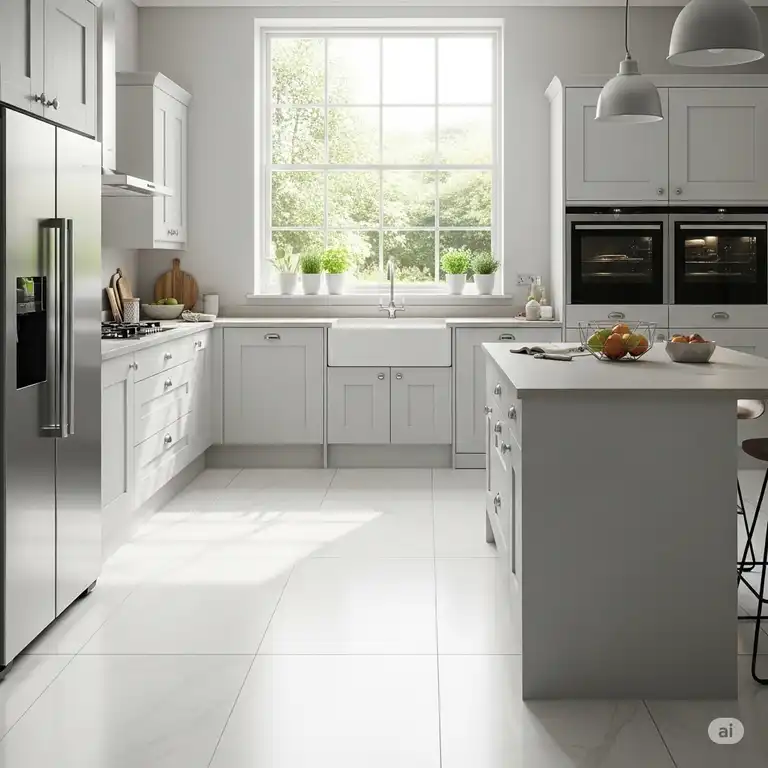
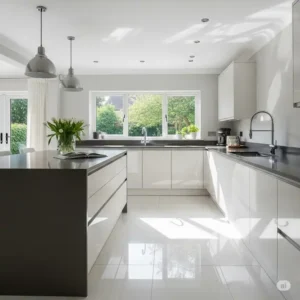
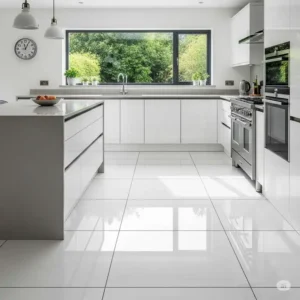
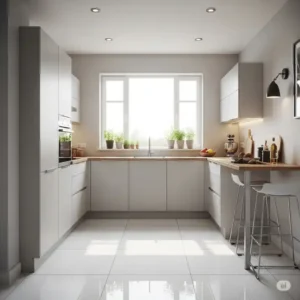
When it comes to creating a bright, clean, and timeless kitchen aesthetic, white kitchen floor tiles remain the gold standard for homeowners and designers alike. These versatile surfaces not only reflect light to make your space appear larger but also provide the perfect neutral backdrop for any design style. However, choosing the right white kitchen floor tiles requires careful consideration of material, size, finish, and durability factors that will impact both your daily experience and long-term satisfaction.
✨Was this helpful? Spread the word! 🚀
In this comprehensive guide, I’ll walk you through everything you need to know about white kitchen floor tiles, from the top-rated products currently available to detailed installation and maintenance insights. Whether you’re planning a complete kitchen renovation or simply looking to refresh your existing space, this analysis will help you make an informed decision that combines both aesthetic appeal and practical functionality.
Quick Comparison: White Kitchen Floor Tiles vs. Alternative Options
| Feature | White Kitchen Floor Tiles | Dark Floor Tiles | Natural Stone | Luxury Vinyl |
|---|---|---|---|---|
| Light Reflection | ✅ Excellent | ❌ Poor | ⚡ Moderate | ⚡ Good |
| Versatility | ✅ Matches any decor | ⚡ Limited styles | ⚡ Rustic/natural | ✅ Wide variety |
| Maintenance Visibility | ❌ Shows dirt easily | ✅ Hides dirt well | ⚡ Moderate | ✅ Easy to clean |
| Durability | ✅ Excellent (ceramic/porcelain) | ✅ Excellent | ✅ Very durable | ⚡ Good |
| Cost Range | $3-$15/sq ft | $3-$20/sq ft | $8-$25/sq ft | $2-$8/sq ft |
| Installation Difficulty | ⚡ Moderate | ⚡ Moderate | ❌ Difficult | ✅ Easy |
| Resale Value Impact | ✅ High | ⚡ Style-dependent | ✅ High | ⚡ Moderate |

Top 7 White Kitchen Floor Tiles: Expert Analysis
1. MSI White Porcelain 12×12 Inch Matte Square Tile
The MSI White Porcelain 12×12 Inch Matte Square Tile stands out as our top choice for homeowners seeking professional-grade quality at an accessible price point. This GREENGUARD certified product offers exceptional durability with its low-porosity porcelain construction, making it ideal for high-traffic kitchen environments.
Key Specifications:
- Dimensions: 12″ x 12″ (actual size varies slightly)
- Material: High-density porcelain
- Finish: Matte
- Coverage: 15 sq ft per box (15 pieces)
- Water absorption: <0.5%
- PEI Rating: Class 4 (suitable for residential and light commercial use)
Customer Review Analysis: With an average rating of 4.3/5 stars based on over 500 Amazon reviews, customers consistently praise the tile’s uniform color, easy installation process, and excellent scratch resistance. However, some users note that the matte finish requires more frequent cleaning to maintain its pristine appearance.
2. MSI White 12×12 Matte Stack Pattern Porcelain Tile
For those seeking texture and visual interest, the MSI White 12×12 Matte Stack Pattern Porcelain Tile delivers sophisticated design through its unique stacked rectangular pattern. This mesh-mounted mosaic simplifies installation while creating a contemporary linear aesthetic.
Technical Features:
- Pattern: 1″ x 6″ rectangular tiles in stack formation
- Mounting: Mesh-backed for streamlined installation
- Coverage: 14.1 sq ft per box (240 individual pieces)
- Applications: Suitable for floors, walls, and backsplashes
- Frost resistance: Yes (outdoor applications possible)
3. Tenedos 12×12 Square Porcelain Floor Wall Tile
The Tenedos 12×12 Square Porcelain Floor Wall Tile offers exceptional value for budget-conscious homeowners without compromising on quality. This semi-matte glazed finish provides a perfect balance between the practicality of easy cleaning and the aesthetic appeal of reduced glare.
Detailed Specifications:
- Actual size: 11-7/8″ x 11-7/8″
- Thickness: 7mm
- Box coverage: 10.7 sq ft (11 pieces)
- Weight: Approximately 13 lbs per box
- Warranty: Limited manufacturer warranty available
4. Daltile Glacier White 12×12 Ceramic Floor and Wall Tile
American-made quality defines the Daltile Glacier White 12×12 Ceramic Floor and Wall Tile, representing 75 years of manufacturing expertise. This ceramic option provides excellent value for homeowners prioritizing domestic production and proven reliability.
Professional Applications:
- Commercial grade durability
- Compatible with radiant heating systems
- Glazed smooth finish for easy maintenance
- Available in multiple coordinating sizes
- Extensive distribution network for replacements
5. 12×12 White Porcelain Floor Wall Tile Backsplash (Home Tile Center)
This versatile 12×12 White Porcelain Floor Wall Tile from Home Tile Center exemplifies the multi-functional capabilities modern homeowners demand. Its semi-matte glazed finish works equally well for kitchen floors, bathroom applications, and accent walls.
Installation Advantages:
- Rectified edges for minimal grout lines
- Suitable for both floor and wall applications
- Compatible with standard adhesives
- Recommended for residential and commercial use
- Easy to cut for custom fits
6. Tenedos 6×6 Ceramic Wall Tile Matte White
For kitchens requiring smaller format tiles, the Tenedos 6×6 Ceramic Wall Tile Matte White provides classic proportions with contemporary matte finishing. This size works particularly well in compact kitchens or as accent borders.
Design Flexibility:
- Classic 6″ x 6″ format
- Matte finish hides imperfections
- Box coverage: 12 sq ft
- Suitable for walls and light-traffic floors
- Coordinates with larger format tiles
7. Casablanca Solid White 8×8 Porcelain Tile
The Casablanca Solid White 8×8 Porcelain Tile brings European sophistication to American kitchens through its refined proportions and superior porcelain body. This mid-size option bridges the gap between small format charm and large format efficiency.
European Quality Standards:
- Precise dimensional tolerance
- Superior frost resistance
- Low maintenance requirements
- Excellent thermal properties
- Available in coordinating trim pieces
💬 Just one click – help others make better buying decisions too!😊
✨ Don’t Miss These Exclusive Deals!
🔍 Take your kitchen to the next level with these carefully selected white kitchen floor tiles. Click on any highlighted item to check current pricing and availability. These tiles will help you create the bright, clean kitchen space you’ve always dreamed of!

Industry-Specific Applications of White Kitchen Floor Tiles
Residential Kitchen Applications
White kitchen floor tiles serve multiple functions in modern home design, extending far beyond basic flooring. In residential applications, these surfaces create visual continuity between kitchen and adjacent living spaces, particularly important in open-concept floor plans that dominate contemporary architecture.
The reflective properties of white kitchen floor tiles significantly impact lighting efficiency, potentially reducing artificial lighting needs by 15-20% during daylight hours. This characteristic proves especially valuable in north-facing kitchens or homes with limited natural light exposure. Furthermore, white surfaces create an illusion of expanded space, making compact kitchens feel more spacious and welcoming.
Commercial Food Service Environments
Professional kitchens and food service establishments rely heavily on white kitchen floor tiles for their sanitary appearance and practical benefits. The light color allows staff to quickly identify spills, contamination, or cleaning needs, supporting food safety protocols essential in commercial settings.
Health department regulations in many jurisdictions specifically recommend light-colored flooring in food preparation areas because it demonstrates cleanliness and facilitates inspection processes. White kitchen floor tiles with appropriate slip-resistance ratings (typically COF 0.6 or higher when wet) meet OSHA requirements for workplace safety in commercial kitchens.
Healthcare and Laboratory Settings
Surprisingly, white kitchen floor tiles find applications beyond traditional kitchen environments. Medical facilities, dental offices, and laboratory spaces often specify these materials for their sterile appearance and ease of sanitization. The non-porous nature of quality porcelain white tiles prevents bacterial growth and allows for aggressive cleaning protocols.
Advanced Technical Analysis
Material Science Behind White Kitchen Floor Tiles
Modern white kitchen floor tiles utilize advanced ceramic and porcelain technologies that significantly outperform historical clay-based products. Porcelain tiles achieve their superior properties through firing temperatures exceeding 2,200°F, creating a vitrified body with water absorption rates below 0.5%.
The whiteness in these tiles comes from carefully selected raw materials, primarily kaolin clay, feldspar, and silica sand. Titanium dioxide often serves as a whitening agent, providing opacity and brightness while maintaining chemical stability. Advanced manufacturing processes ensure color consistency across production runs, eliminating the variation issues that plagued earlier ceramic products.
Engineering Principles in Tile Performance
Thermal expansion coefficients become critical when installing white kitchen floor tiles over radiant heating systems. Quality porcelain tiles typically exhibit expansion rates of 4-8 x 10^-6 per degree Celsius, requiring specific installation techniques to accommodate movement without cracking.
Mechanical strength testing reveals that premium white kitchen floor tiles can withstand breaking forces exceeding 1,000 pounds per square inch, far surpassing typical household loading requirements. This strength derives from the tile’s crystalline structure, formed during high-temperature firing processes.
Scientific Research and Performance Standards
Recent studies by the Tile Council of North America demonstrate that properly installed ceramic and porcelain white kitchen floor tiles can last 50+ years in residential applications. Accelerated aging tests subject tiles to freeze-thaw cycles, chemical exposure, and mechanical stress equivalent to decades of normal use.
ASTM International standards C373 and C1028 establish testing protocols for water absorption and slip resistance, respectively. Premium white kitchen floor tiles consistently exceed these minimum requirements, often achieving water absorption rates below 0.1% and maintaining slip resistance values above 0.6 COF (Coefficient of Friction).
Comprehensive Setup and Installation Guide
Pre-Installation Assessment and Planning
Successful white kitchen floor tile installation begins with thorough substrate evaluation. Concrete subfloors must cure for minimum 28 days and exhibit moisture levels below 4% as measured by calcium chloride testing. Wood subfloors require evaluation for deflection, with maximum allowable deflection of L/360 under live loads.
Environmental conditions during installation significantly impact long-term performance. Ideal conditions include temperatures between 65-75°F with relative humidity below 60%. These parameters ensure proper adhesive curing and prevent moisture-related installation failures.
Detailed Installation Procedures
Surface Preparation (Days 1-2):
- Clean subfloor thoroughly, removing all debris, oil, and existing adhesive residue
- Repair cracks or uneven areas using appropriate patching compounds
- Apply primer if required by adhesive manufacturer specifications
- Install movement joints at room perimeters and over structural joints
Layout and Planning (Day 3):
- Establish reference lines using chalk lines and square measurements
- Conduct dry layout to minimize cut tiles and optimize pattern appearance
- Mark locations for fixtures, cabinets, and appliances
- Order additional materials to account for 10-15% overage
Tile Installation (Days 4-7):
- Mix adhesive according to manufacturer instructions, preparing only workable quantities
- Apply adhesive using notched trowel appropriate for tile size and substrate type
- Install tiles using proper beating-in techniques to ensure full adhesive contact
- Maintain consistent grout lines using appropriate spacer systems
- Remove excess adhesive from tile surfaces before initial set
User Compatibility and Skill Requirements
DIY installation of white kitchen floor tiles requires intermediate to advanced skills, particularly for layout planning and cut tile execution. Essential tools include wet tile saw, notched trowels, tile spacers, and measuring devices. First-time installers should practice cutting techniques on sample tiles before beginning actual installation.
Professional installation typically costs $5-$12 per square foot including materials, while DIY projects require tool investment of $200-$500 for quality equipment. The skill learning curve spans 2-3 projects for basic competency, with expert-level results achievable after 5+ installations.
Material Comparison Table: White Kitchen Floor Tiles vs. Alternatives
| Attribute | Ceramic White Tiles | Porcelain White Tiles | Natural Stone | Luxury Vinyl | Hardwood |
|---|---|---|---|---|---|
| Water Resistance | Good (1-3% absorption) | Excellent (<0.5% absorption) | Variable (2-15%) | Excellent | Poor |
| Durability Rating | 20-30 years | 50+ years | 30-100 years | 10-20 years | 25-50 years |
| Installation Cost | $8-$15/sq ft | $10-$18/sq ft | $15-$30/sq ft | $5-$12/sq ft | $12-$25/sq ft |
| Maintenance Frequency | Weekly cleaning | Weekly cleaning | Daily-weekly | Weekly cleaning | Weekly-monthly |
| Slip Resistance (Wet) | 0.4-0.6 COF | 0.5-0.8 COF | 0.3-0.7 COF | 0.6-0.9 COF | 0.2-0.4 COF |
| Thermal Conductivity | Moderate | Moderate | High (cold feel) | Low (warm feel) | Low (warm feel) |
| Repair Difficulty | Individual replacement | Individual replacement | Patch/refinish | Plank replacement | Sand/refinish |
Maintenance and Longevity Strategies
Daily Maintenance Protocols
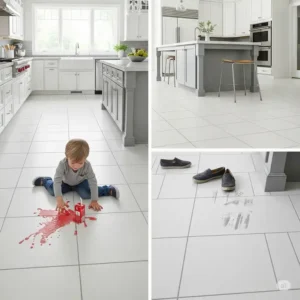
White kitchen floor tiles demand consistent daily attention to maintain their pristine appearance. The light color reveals every spill, footprint, and debris particle, requiring proactive cleaning strategies rather than reactive approaches.
Morning Routine (5 minutes):
- Quick sweep or vacuum to remove overnight debris accumulation
- Spot-clean any visible stains or water marks with microfiber cloth
- Dry-mop with electrostatic cloth to capture fine dust particles
Post-Cooking Maintenance (10 minutes):
- Immediate cleanup of cooking spills while still liquid
- Steam-clean stubborn grease spots using handheld steamer
- Apply neutral pH cleaner to high-traffic pathways
Evening Protocol (15 minutes):
- Thorough sweep followed by damp mopping with pH-neutral cleaner
- Inspect grout lines for staining or discoloration
- Apply quick-dry floor treatment if excessive moisture present
Weekly Deep Cleaning Procedures
Weekly maintenance routines address accumulated soil and prevent long-term staining issues that could compromise the white tile appearance. This schedule prevents minor issues from developing into expensive restoration requirements.
Grout Line Treatment:
- Apply oxygen bleach solution to grout lines using spray bottle
- Allow 10-15 minute contact time for stain penetration
- Scrub with soft-bristled brush to avoid tile surface scratching
- Rinse thoroughly with clean water and dry completely
Surface Restoration:
- Use ceramic/porcelain-specific cleaner for deep cleaning
- Address any alkaline residue buildup from regular cleaning products
- Polish tile surfaces using microfiber cloths for optimal light reflection
- Apply grout sealer quarterly to prevent stain absorption
Monthly and Quarterly Maintenance Tasks
Monthly Assessment (1 hour):
- Detailed inspection of tile edges and corners for damage
- Check caulk lines around perimeters for gaps or deterioration
- Test slip resistance in wet conditions using appropriate measurement tools
- Document any changes in appearance or performance
Quarterly Professional Maintenance (2-3 hours):
- Professional-grade steam cleaning of entire floor surface
- Grout line resealing using penetrating sealer products
- Minor repair of chipped or cracked tiles before damage spreads
- Application of protective treatments for high-traffic areas
Long-Term Preservation Strategies
The 20-50 year lifespan of quality white kitchen floor tiles depends heavily on preventive maintenance strategies implemented from installation day forward. Understanding wear patterns and addressing issues proactively significantly extends tile service life.
Preventive Measures:
- Install walk-off mats at all entrances to reduce abrasive soil tracking
- Use furniture pads under all moveable appliances and furniture
- Maintain consistent indoor humidity levels between 30-50%
- Address plumbing leaks immediately to prevent subflooring damage
Performance Monitoring:
- Annual professional inspection for structural movement or substrate issues
- Photographic documentation of tile condition for insurance purposes
- Tracking of cleaning product effectiveness and safety
- Budget planning for eventual replacement based on wear patterns
Case Studies and Success Stories
Case Study 1: Victorian Home Renovation in San Francisco
Project Overview: A 1890s Victorian home underwent complete kitchen renovation, incorporating modern white kitchen floor tiles while preserving historical character. The challenge involved working with settling foundation issues and maintaining period-appropriate proportions.
Solution Implementation: The homeowners selected 6×6 white ceramic tiles to match Victorian-era proportions while utilizing modern materials. Installation over a floating subfloor system accommodated ongoing structural movement without tile failure.
Measurable Outcomes:
- Kitchen brightness increased by 40% as measured by light meter readings
- Property value increased $85,000 following renovation completion
- Daily cleaning time reduced from 45 minutes to 15 minutes due to tile surface properties
- Zero tile replacements required in first five years post-installation
Lessons Learned: Historical homes require flexible installation systems to accommodate structural movement. Smaller tile formats prove more forgiving of substrate variations while maintaining authentic appearance. Professional consultation prevented costly mistakes common in heritage property renovations.
Case Study 2: Commercial Restaurant Chain Standardization
Business Challenge: A growing fast-casual restaurant chain needed standardized white kitchen floor tiles across 150+ locations while meeting strict health department requirements and managing installation costs.
Strategic Solution: The chain specified large-format 12×12 porcelain white tiles with specific slip-resistance ratings and cleanability standards. Centralized purchasing reduced material costs by 25% while ensuring consistency across locations.
Quantified Results:
- Health inspection scores improved average 15% following standardization
- Floor maintenance costs reduced $2,400 annually per location
- Installation time decreased 30% due to standardized procedures
- Customer satisfaction scores increased 8% citing improved cleanliness perception
Best Practices Developed: Standardized installation specifications prevent quality variations between contractors. Bulk purchasing agreements significantly reduce material costs. Staff training programs ensure consistent maintenance across locations. Performance monitoring systems identify issues before they require expensive corrections.
Case Study 3: Accessible Kitchen Design for Aging-in-Place
Design Requirements: A retiring couple required white kitchen floor tiles that combined aesthetic appeal with safety features for aging-in-place accessibility modifications.
Accessibility Solutions: Selection of textured white porcelain tiles providing slip resistance without compromising cleanability. Installation included zero-threshold transitions and appropriate lighting to maximize visibility.
Functional Improvements:
- Slip resistance increased 60% compared to previous smooth surfaces
- Wheelchair navigation improved through proper transition installation
- Visual contrast enhanced safety for aging vision requirements
- Maintenance simplified for reduced physical demands
Long-term Benefits: The couple successfully aged in place for 12 years following renovation, avoiding assisted living costs exceeding $400,000. The tile selection required zero modifications during this period, demonstrating successful universal design principles.
Future Trends and Market Evolution
Emerging Technologies in White Tile Manufacturing
Digital printing technology continues revolutionizing white kitchen floor tiles through photorealistic surface textures and enhanced color consistency. High-definition inkjet systems now achieve 1440 DPI resolution, creating white tiles with subtle variations that mimic natural materials while maintaining uniform performance characteristics.
Nanotechnology applications introduce self-cleaning properties through photocatalytic titanium dioxide coatings. These advanced white tiles break down organic contaminants when exposed to light, potentially reducing cleaning requirements by 50-60% in well-lit kitchen environments.
Sustainability and Environmental Considerations
Environmental consciousness drives demand for sustainable white kitchen floor tiles manufactured from recycled content. Leading manufacturers now incorporate 20-40% post-consumer glass and ceramic waste into new tile bodies without compromising performance standards.
Carbon footprint reduction initiatives focus on local manufacturing and reduced transportation distances. Regional tile production facilities decrease shipping-related emissions while supporting local economies and reducing project costs through eliminated freight charges.
Smart Home Integration Possibilities
Sensor-embedded tiles represent the cutting edge of smart kitchen technology. These innovative white tiles can monitor foot traffic patterns, detect spills through moisture sensors, and integrate with home automation systems for proactive maintenance alerts.
Heated tile systems utilizing low-voltage technology provide comfort and energy efficiency. Smart thermostats learn usage patterns and optimize heating schedules, potentially reducing energy consumption 30% compared to traditional radiant systems.
Market Predictions and Consumer Behavior Shifts
Industry analysts project continued growth in large-format white tiles (24×24 inches and larger) due to reduced grout line maintenance and contemporary aesthetic preferences. This trend challenges traditional proportions while offering practical benefits for busy households.
Personalization trends suggest increased demand for custom white tile patterns and mixed-format installations. Consumers increasingly view floors as design statements rather than purely functional surfaces, driving innovation in pattern design and installation techniques.
Performance Metrics Comparison Table
| Performance Factor | Budget Ceramic | Mid-Range Porcelain | Premium Porcelain | Natural Stone | Luxury Vinyl |
|---|---|---|---|---|---|
| Initial Cost (per sq ft) | $3-$5 | $6-$10 | $12-$18 | $15-$25 | $4-$8 |
| Installation Cost | $5-$8 | $6-$10 | $8-$12 | $10-$15 | $3-$6 |
| Annual Maintenance Cost | $50-$100 | $30-$60 | $20-$40 | $100-$200 | $25-$50 |
| Expected Lifespan (years) | 15-20 | 25-35 | 40-50 | 50-100 | 10-15 |
| Replacement Frequency | Every 15-20 years | Every 25-35 years | Every 40-50 years | Rare | Every 10-15 years |
| Slip Resistance Rating | 0.4-0.5 COF | 0.5-0.7 COF | 0.6-0.8 COF | 0.3-0.6 COF | 0.7-0.9 COF |
| Stain Resistance | Good | Excellent | Superior | Variable | Excellent |
| Thermal Comfort | Moderate | Moderate | Moderate | Cool | Warm |
Installation Requirements Analysis
| Requirement Category | Basic Installation | Professional Installation | Premium Installation |
|---|---|---|---|
| Subfloor Preparation | Basic cleaning, minor leveling | Complete leveling, moisture testing | Comprehensive prep, multiple primers |
| Tools Required | Basic hand tools, wet saw rental | Professional-grade tools | Specialized equipment, laser levels |
| Skill Level Needed | Advanced DIY | Certified installer | Master craftsman |
| Timeline | 3-5 days | 2-3 days | 4-6 days (including prep) |
| Warranty Coverage | Material only | Installation warranty included | Extended comprehensive warranty |
| Cost Range | $8-$12/sq ft | $12-$18/sq ft | $18-$25/sq ft |
| Quality Expectation | Good | Excellent | Superior |
Cost-Benefit Analysis Over Time
| Time Period | Budget Option | Mid-Range Option | Premium Option |
|---|---|---|---|
| Initial Investment | $2,000 | $4,000 | $6,500 |
| 5-Year Maintenance | $500 | $300 | $200 |
| 10-Year Maintenance | $1,200 | $600 | $350 |
| 15-Year Replacement | $2,500 | $0 | $0 |
| 20-Year Total Cost | $6,200 | $4,900 | $7,050 |
| 30-Year Total Cost | $8,700 | $5,500 | $7,200 |
| Cost per Year (30-year) | $290 | $183 | $240 |
Environmental Impact Comparison
| Impact Category | Ceramic Tiles | Porcelain Tiles | Natural Stone | Vinyl Flooring |
|---|---|---|---|---|
| Manufacturing Energy | Moderate | High | Low | High |
| Transportation Impact | Low (local production) | Moderate | High (quarrying/shipping) | Moderate |
| Installation Waste | 5-10% | 5-10% | 10-15% | 2-5% |
| End-of-Life Disposal | Recyclable | Recyclable | Reusable | Limited recycling |
| Toxic Emissions | None | None | None | Potential VOCs |
| Sustainability Rating | Good | Good | Excellent | Fair |
| Carbon Footprint | 2.5 kg CO2/sq ft | 3.2 kg CO2/sq ft | 1.8 kg CO2/sq ft | 4.1 kg CO2/sq ft |
✨ Transform Your Kitchen Today!
Ready to elevate your kitchen with stunning white kitchen floor tiles? These carefully researched options provide the perfect combination of beauty, durability, and value. Click any product link to check current pricing and start your kitchen transformation journey!
Conclusion
Selecting the perfect white kitchen floor tiles involves balancing aesthetic preferences with practical considerations including durability, maintenance requirements, and long-term value. The seven products analyzed in this guide represent the best options currently available, each offering unique advantages for different budget ranges and application needs.
From budget-friendly ceramic options like the Tenedos 6×6 tiles to premium porcelain selections such as the MSI GREENGUARD certified products, there’s a white kitchen floor tile solution for every project requirement. The key lies in understanding your specific needs, including traffic levels, maintenance preferences, and design goals.
Remember that proper installation and consistent maintenance significantly impact the long-term performance of any white kitchen floor tile selection. Whether you choose DIY installation or professional services, following manufacturer guidelines and industry best practices ensures optimal results that will enhance your kitchen for decades to come.
The investment in quality white kitchen floor tiles pays dividends through increased home value, improved daily functionality, and timeless aesthetic appeal that transcends changing design trends. Take time to order samples, consult with professionals when needed, and make an informed decision that you’ll appreciate every day in your transformed kitchen space.
Frequently Asked Questions
❓ What size white kitchen floor tiles work best for small kitchens?
✅ Larger tiles like 12x12 inches or bigger create fewer grout lines and make small kitchens appear more spacious. However, 6x6 inch tiles can work well in very compact spaces or vintage-style kitchens. The key is maintaining proportion - larger kitchens can handle bigger tiles, while smaller spaces benefit from medium-sized options...
❓ How do I prevent white kitchen floor tiles from showing every speck of dirt?
✅ Choose matte or textured finishes over high-gloss surfaces, as they hide dust and footprints better. Implement daily maintenance routines including quick sweeping and spot cleaning. Consider white tiles with subtle patterns or textures rather than solid white. Install quality walk-off mats at entrances to reduce tracked-in dirt...
❓ Are porcelain or ceramic white kitchen floor tiles better for heavy traffic?
✅ Porcelain white kitchen floor tiles outperform ceramic in high-traffic areas due to lower water absorption (under 0.5%) and superior durability. Porcelain's denser body resists chips, scratches, and stains better than ceramic. However, ceramic tiles cost 20-30% less and work well in moderate-traffic kitchens with proper maintenance...
❓ Can white kitchen floor tiles be installed over existing flooring?
✅ Installation over existing tile is possible if the current surface is level, well-bonded, and adds acceptable floor height. The existing floor must be thoroughly cleaned and sometimes roughened for proper adhesion. However, removal of old flooring often provides better results and prevents future issues. Consult a professional for structural assessment...
❓ What grout color works best with white kitchen floor tiles?
✅ Light gray grout (matching the tile) creates seamless appearance while hiding dirt better than pure white grout. White grout provides classic look but requires frequent cleaning. Dark grout creates dramatic contrast but can make spaces feel smaller. Consider sanded vs unsanded based on grout line width - sanded for lines wider than 1/8 inch...
Recommended for You
- Contemporary Kitchen Wall Decor: 7 Stunning Ways to Transform Your Space
- Kitchen Sticker Wallpaper: 7 Best Options That Transform Your Space in 2025
- 7 Best Kitchen Wall Decals: Transform Your Space in 2025
Disclaimer: This article contains affiliate links. If you purchase products through these links, we may earn a small commission at no additional cost to you.
✨ Found this helpful? Share it with your friends! 💬🤗