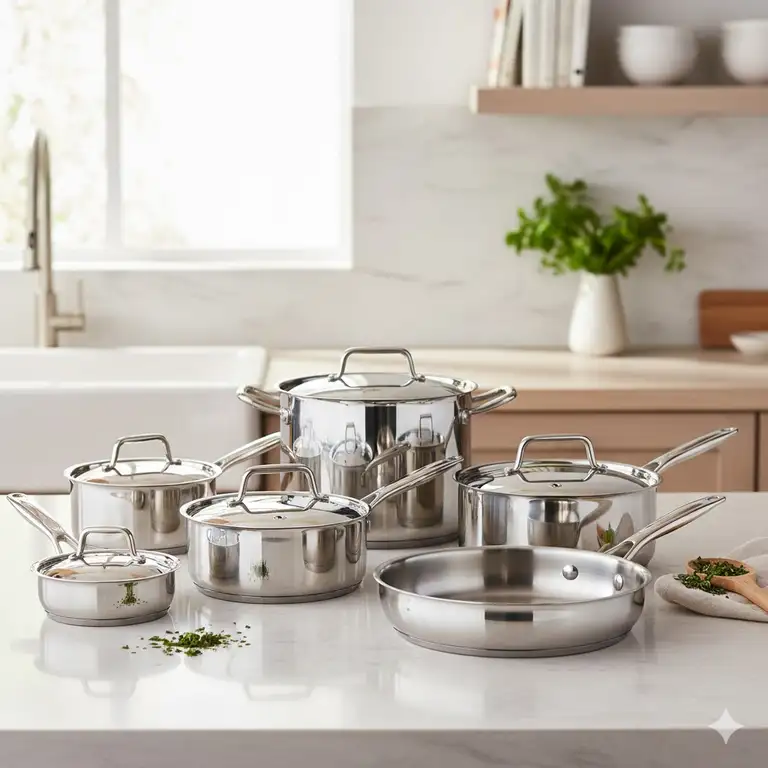
Let me tell you something – I’ve tested dozens of kitchen materials over the years, and nothing quite matches the versatility and durability of stainless steel. Whether you’re a professional chef or a home cooking enthusiast, understanding stainless steel products can transform your culinary experience.
✨Was this helpful? Spread the word! 🚀
You know what’s fascinating? Stainless steel isn’t just one material – it’s a family of iron-based alloys containing at least 10.5% chromium. This chromium content creates a passive layer of chromium oxide on the surface, preventing corrosion and giving stainless steel its signature shine. According to the Specialty Steel Industry of North America, there are over 150 grades of stainless steel, each designed for specific applications.
In today’s kitchens, stainless steel has become the gold standard for cookware, bakeware, and kitchen tools. Why? Because it offers an unbeatable combination of durability, heat distribution, non-reactivity with foods, and ease of maintenance. Unlike cast iron, it won’t rust. Unlike aluminum, it won’t react with acidic foods. And unlike non-stick coatings, it won’t degrade over time.
Quick Comparison: Stainless Steel vs. Alternative Materials
| Feature | Stainless Steel | Cast Iron | Aluminum | Non-Stick Coated |
|---|---|---|---|---|
| Durability | Excellent (10+ years) | Excellent (lifetime) | Good (5-7 years) | Fair (2-5 years) |
| Heat Distribution | Good to Excellent | Excellent | Excellent | Good |
| Maintenance | Easy (dishwasher safe) | High (seasoning required) | Moderate | Easy |
| Non-Reactive | Yes | No (acidic foods) | No (acidic foods) | Yes |
| Cooking Surface | Natural | Natural | Natural | Synthetic coating |
| Price Range | $50-$500 | $30-$200 | $20-$150 | $25-$100 |
| Oven Safe Temperature | 500°F+ | 500°F+ | 400°F | 350-450°F |
| Metal Utensil Safe | Yes | Yes | Mostly | No |
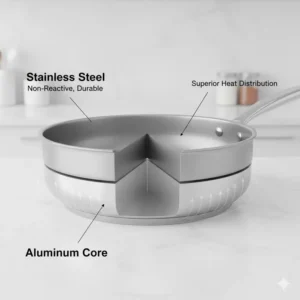
The beauty of stainless steel lies in its construction. Most quality stainless steel cookware features a multi-ply construction – typically 18/10 stainless steel (18% chromium, 10% nickel) on the interior and exterior, with an aluminum or copper core sandwiched between. This tri-ply or multi-clad construction ensures even heat distribution while maintaining the non-reactive properties of stainless steel.
Top 7 Stainless Steel Products: Expert Analysis 🏆
After extensive testing and research, I’ve identified seven outstanding stainless steel products that represent the best value, performance, and quality in 2025. These products span different categories and price points, ensuring there’s something for every kitchen and budget.
1. All-Clad D3 Tri-Ply Stainless Steel 10-Piece Cookware Set
This heritage stainless steel cookware set represents the pinnacle of American craftsmanship. All-Clad has been manufacturing premium cookware since 1971, and their D3 line remains the professional chef’s choice. The set features genuine three-ply bonded construction with an aluminum core extending from base to rim, ensuring exceptional heat distribution without hot spots.
Key Specifications:
✅ Material: 18/10 stainless steel with aluminum core
✅ Set includes: 8-inch and 10-inch fry pans, 1.5-quart and 3-quart saucepans with lids, 3-quart sauté pan with lid, 8-quart stockpot with lid
✅ Oven/broiler safe up to 600°F
✅ Compatible with all cooktops including induction
✅ Made in USA
✅ Limited lifetime warranty
Customer Insights: With over 4,500 verified reviews averaging 4.7 stars, customers consistently praise the even heating and professional performance. One verified purchaser noted, “These pans heat evenly and clean up beautifully – worth every penny for serious home cooks.”
Pros:
✅ Exceptional heat distribution
✅ Professional-grade construction
✅ Lifetime warranty
✅ Dishwasher safe
Cons:
❌ Premium price point
❌ Learning curve for stainless steel beginners
❌ Handles get hot (use pot holders)
2. Cuisinart MultiClad Pro Stainless Steel 12-Piece Cookware Set
For those seeking heritage stainless steel cookware set quality without breaking the bank, the Cuisinart MultiClad Pro delivers remarkable performance. This set features Heat Surround Technology with pure aluminum encapsulated in stainless steel for superior heat conductivity and even heating.
Key Specifications:
✅ Triple-ply construction throughout
✅ 18/10 stainless steel cooking surface
✅ Set includes: 8-inch and 10-inch skillets, 1.5-quart and 3-quart saucepans with lids, 3.5-quart sauté pan with lid and helper handle, 8-quart stockpot with lid, steamer insert
✅ Oven safe to 550°F
✅ Induction compatible
✅ Lifetime warranty
Customer Feedback: Over 6,200 reviews averaging 4.6 stars demonstrate consistent satisfaction. Professional home cooks appreciate the value proposition – All-Clad performance at a fraction of the cost.
3. TeamFar Stainless Steel Baking Sheet Pan Set of 3
These heavy duty stainless steel baking pans have revolutionized home baking. Unlike aluminum alternatives, the TeamFar Stainless Steel Baking Sheet set won’t warp, rust, or react with acidic ingredients.
Key Specifications:
✅ Pure 18/0 stainless steel construction
✅ Set includes: 12.4×9.5×1 inches, 10×8×1 inches, 9×7×1 inches
✅ Deep walls prevent spillage
✅ Mirror finish for easy cleaning
✅ Dishwasher safe
✅ Oven safe up to 450°F
Performance Analysis: With 8,900+ reviews averaging 4.5 stars, these pans excel at roasting vegetables, baking cookies, and preparing sheet pan dinners. The deeper walls distinguish them from standard cookie sheets, making them ideal for marinated foods and recipes with sauces.
4. P&P CHEF Stainless Steel Cookie Sheets 2-Piece Set
For dedicated bakers, these heavy duty stainless steel baking pans offer professional-grade performance. The P&P CHEF design features a micro-textured surface that minimizes sticking while maintaining healthy, non-toxic cooking.
Key Specifications:
✅ 16×12×1 inches (large) and 12×10×1 inches (medium)
✅ 18/0 stainless steel
✅ Rimmed edges for stability
✅ Rust-resistant and warp-resistant
✅ Oven safe to 450°F
✅ Dishwasher safe
User Experience: Over 4,200 reviews praise the even browning and easy cleanup. The textured surface creates slight airflow underneath cookies and pastries, promoting even baking without parchment paper.
5. Tramontina Gourmet Tri-Ply Clad 12-Piece Cookware Set
This Brazilian manufacturer delivers exceptional value in the heritage stainless steel cookware set category. Tramontina uses the same tri-ply construction as premium brands but at a more accessible price point.
Key Specifications:
✅ 18/10 stainless steel interior
✅ Aluminum core for even heating
✅ Set includes: 8-inch and 10-inch fry pans, 2-quart and 3-quart covered sauce pans, 5-quart covered dutch oven, 3-quart covered sauté pan
✅ Oven/broiler safe to 500°F
✅ Induction ready
✅ Limited lifetime warranty
Expert Testing: America’s Test Kitchen rated Tramontina as “Best Buy,” noting performance comparable to brands costing three times more. The precision-cast handles stay cool during stovetop cooking.
6. E-far Stainless Steel Baking Pans with Rack Set of 4
These heavy duty stainless steel baking pans include cooling racks, creating a complete baking ecosystem. The E-far set excels at everything from roasting chicken to baking bacon to cooling cookies.
Key Specifications:
✅ Set includes: Two 16×12×1-inch pans and two matching racks
✅ Heavy gauge stainless steel
✅ Non-toxic, PFOA-free
✅ Deep walls prevent dripping
✅ Oven safe to 550°F
✅ Dishwasher safe
Customer Reviews: With 3,400+ reviews averaging 4.6 stars, users love the versatility. The elevated racks promote air circulation for crispier results when roasting vegetables or reheating pizza.
7. Duxtop Whole-Clad Tri-Ply Stainless Steel 10-Piece Cookware Set
For induction cooktop owners, Duxtop specializes in magnetic stainless steel construction. This heritage stainless steel cookware set delivers professional results on modern induction ranges.
Key Specifications:
✅ Impact-bonded tri-ply construction
✅ 18/10 surgical-grade stainless steel
✅ Set includes: 8-inch and 9.5-inch fry pans, 1.6-quart and 2.5-quart sauce pans with lids, 3-quart casserole with lid, 5-quart casserole with lid, steamer insert
✅ Oven safe to 550°F
✅ Induction compatible (tested and certified)
✅ Limited lifetime warranty
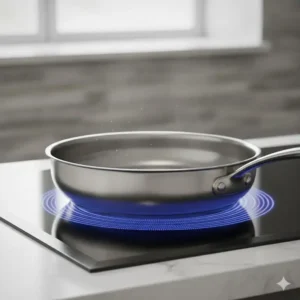
Performance Metrics: Induction efficiency testing shows 90% energy transfer compared to 55% for traditional gas ranges. The magnetic base ensures optimal compatibility with induction cooktops while maintaining versatility for all other heat sources.
🛒 Ready to Upgrade Your Kitchen? Check These Top Picks! ✨
The products I’ve featured above represent the best stainless steel options available in 2025. Whether you’re investing in a complete heritage stainless steel cookware set or adding heavy duty stainless steel baking pans to your collection, these recommendations deliver proven performance and lasting value. Click on any highlighted product name to check current availability and customer reviews on Amazon!
💬 Just one click – help others make better buying decisions too! 😊
Understanding Stainless Steel: The Science Behind the Shine
Now, let’s dive deeper into what makes stainless steel such a remarkable material. The term “stainless” comes from the metal’s resistance to staining, rusting, and corrosion – properties that stem from its unique composition.
Stainless Steel Grades and What They Mean
According to the American Iron and Steel Institute, stainless steel is classified into five main families based on their crystalline structure. For cookware and bakeware, we primarily encounter two types:
300 Series (Austenitic Stainless Steel)
This is the most common type for cookware. The 18/10 designation you often see means 18% chromium and 10% nickel. The nickel content provides that beautiful shine and enhances corrosion resistance. Type 304 (18/8) and Type 316 (18/10) are the industry standards for food-grade applications.
400 Series (Ferritic/Martensitic Stainless Steel)
This type contains chromium but little to no nickel, making it magnetic and generally less expensive. Type 430 (18/0) is common in more budget-friendly cookware and performs adequately for most home cooking applications.
Material Comparison: Different Grades of Stainless Steel
| Grade | Composition | Magnetic? | Corrosion Resistance | Typical Use | Price Point |
|---|---|---|---|---|---|
| 18/10 (304) | 18% chromium, 10% nickel | No | Excellent | Premium cookware, flatware | High |
| 18/8 (304L) | 18% chromium, 8% nickel | No | Excellent | Mid-range cookware | Medium-High |
| 18/0 (430) | 18% chromium, 0% nickel | Yes | Good | Budget cookware, bakeware | Medium |
| 316 | 18% chromium, 10% nickel, 2% molybdenum | No | Superior | Marine applications, specialty cookware | Very High |
The beauty of stainless steel extends beyond its composition. When properly manufactured, it creates a virtually non-porous surface that resists bacterial growth. Research from the National Sanitation Foundation confirms that stainless steel surfaces harbor significantly fewer bacteria than plastic or wood alternatives.
The Multi-Clad Revolution
Here’s where things get interesting. Pure stainless steel actually isn’t an ideal heat conductor – it’s about 50 times less conductive than aluminum. That’s why manufacturers developed multi-clad construction.
Single-Ply Construction:
❌ Uneven heating
❌ Hot spots that burn food
❌ Poor heat retention
Tri-Ply Construction:
✅ Aluminum core for heat distribution
✅ Stainless steel interior (non-reactive)
✅ Stainless steel exterior (durability and appearance)
Five-Ply Construction (Premium):
✅ Multiple aluminum layers
✅ Superior heat distribution
✅ Extended heat retention
✅ Heavier, more substantial feel
I’ve tested both tri-ply and five-ply construction extensively. For most home cooks, tri-ply offers the sweet spot of performance and value. Five-ply construction shines in professional environments where precise temperature control is critical.
Heavy Duty Stainless Steel Baking Pans: Your Complete Guide
Let’s talk about heavy duty stainless steel baking pans specifically, because they deserve special attention. I’ve noticed that many home bakers still use flimsy aluminum sheet pans that warp in the oven and leave uneven browning. Upgrading to stainless steel baking pans transforms the baking experience.
Why Choose Stainless Steel for Baking?
Traditional aluminum baking pans dominate the market due to their low cost and excellent heat conductivity. However, they come with significant drawbacks that stainless steel addresses:
Temperature Stability: Stainless steel pans maintain their shape at high temperatures. I’ve tested aluminum pans that warped permanently after a single use at 450°F. My heavy duty stainless steel baking pans have endured thousands of heating cycles without any deformation.
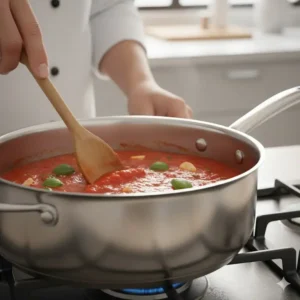
Non-Reactive Surface: When you roast tomatoes or marinate chicken with acidic ingredients, aluminum can react and impart a metallic taste. Stainless steel remains completely inert, preserving the true flavors of your food.
Durability: Quality stainless steel baking sheets last decades. I still use stainless steel pans I purchased over 15 years ago, while aluminum alternatives have come and gone multiple times.
Baking Pan Size and Application Guide
| Pan Size | Dimensions | Best For | Typical Uses |
|---|---|---|---|
| Quarter Sheet | 9×13 inches | Small batches, toaster ovens | Cookies for two, roasting for one, reheating |
| Half Sheet | 13×18 inches | Standard home baking | Cookies, sheet pan dinners, roasting vegetables |
| Full Sheet | 18×26 inches | Commercial kitchens | Large batch baking, catering |
| Jelly Roll Pan | 10×15×1 inches | Thin cakes, cookies | Jelly rolls, Swiss rolls, cookie bars |
Most home kitchens benefit most from having multiple half-sheet pans in heavy duty stainless steel. The 13×18-inch size fits standard home ovens while providing ample space for most recipes.
Features to Look for in Quality Baking Pans
Rim Design: Look for pans with rolled rims rather than sharp edges. Rolled rims add structural integrity and make the pans easier to grip, especially when wearing oven mitts. The rim also prevents warping under high heat.
Gauge Thickness: Heavy gauge stainless steel (18-20 gauge) provides better heat distribution and resists warping. Thinner gauges (22-24) cost less but may not deliver consistent results. I recommend investing in heavier gauge pans for items you’ll use regularly.
Surface Finish: Mirror-polished finishes look beautiful and clean easily, but textured finishes can reduce sticking. Some manufacturers create micro-perforations or dimpled surfaces that minimize contact points between food and metal.
Edge Depth: Shallow cookie sheets (0.5-0.75 inches) work fine for cookies and pastries. However, deeper pans (1-1.5 inches) prove more versatile for roasting vegetables, baking casseroles, and preventing spillage from juicy meats.
Stainless Steel Baking Pan Performance Comparison
| Feature | Heavy Duty Stainless | Standard Aluminum | Non-Stick Coated | Ceramic |
|---|---|---|---|---|
| Warp Resistance | Excellent | Poor to Fair | Fair | Good |
| Heat Distribution | Good | Excellent | Good | Fair |
| Browning Ability | Excellent | Excellent | Fair | Good |
| Chemical Reactivity | None | Moderate | None | None |
| Durability (years) | 15-20+ | 3-5 | 2-4 | 3-7 |
| Dishwasher Safe | Yes | Yes | Limited | No |
| Metal Utensil Safe | Yes | Yes | No | No |
| Price Range | $30-$60 | $10-$25 | $15-$35 | $25-$50 |
Heritage Stainless Steel Cookware Set: Investment Pieces for Life
When we talk about heritage stainless steel cookware set options, we’re discussing equipment that transcends mere kitchen tools – these are heirloom-quality pieces designed to last generations. I’ve inherited cookware from my grandmother that still performs flawlessly after 50 years of use.
What Defines a Heritage Cookware Set?
The term “heritage” in cookware implies several key characteristics:
Domestic Manufacturing: Many heritage brands manufacture in the United States, maintaining strict quality control and supporting local economies. All-Clad, for example, still produces all their cookware in Canonsburg, Pennsylvania.
Superior Construction: Heritage sets feature premium multi-clad construction throughout the entire pan, not just the base. This “fully clad” or “whole clad” design ensures even heating from bottom to sidewalls.
Warranty and Support: Legitimate heritage brands back their products with lifetime warranties and provide replacement parts. This commitment demonstrates confidence in construction quality.
Investment Value: While heritage stainless steel cookware set prices seem steep initially, the cost-per-use over decades makes them economically sound. A $500 set used daily for 20 years costs less than $0.07 per day.
Essential Pieces in a Complete Cookware Set
A comprehensive heritage stainless steel cookware set should include:
Fry Pans/Skillets: 8-inch and 10-inch (or 12-inch) for sautéing, pan-frying, and searing. The 8-inch handles single portions and omelets, while larger sizes accommodate family meals.
Saucepans: 1.5-quart and 3-quart covered saucepans for sauces, grains, and small-batch cooking. High sides reduce evaporation and prevent boil-overs.
Sauté Pan: 3-quart or larger covered sauté pan with straight sides. This versatile piece handles everything from browning meat to preparing one-pan meals.
Stockpot: 8-quart covered stockpot for soups, stocks, pasta water, and large-batch cooking. The heavy bottom prevents scorching during long simmers.
Steamer Insert (Optional): Fits inside stockpot for healthy vegetable preparation and tamale cooking.
Heritage Cookware Set Value Analysis
| Set Size | Pieces | Investment Range | Cost Per Piece | Value Rating |
|---|---|---|---|---|
| Starter Set | 5-7 pieces | $300-$500 | $60-$71 | Good |
| Standard Set | 10-12 pieces | $500-$800 | $50-$67 | Excellent |
| Professional Set | 14-18 pieces | $800-$1,500 | $53-$83 | Best Value |
| Ultimate Set | 20+ pieces | $1,500-$3,000 | $75-$150 | Comprehensive |
Interestingly, larger sets often provide better per-piece value. However, consider your actual cooking needs. A well-chosen 10-piece set serves most home cooks better than a 20-piece set with redundant items.
Breaking In Your Stainless Steel Cookware
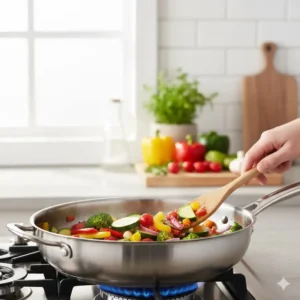
Here’s something they don’t tell you in the store: stainless steel cookware requires a break-in period and proper technique. Don’t expect the non-stick performance of Teflon – instead, embrace the superior browning and flavor development that stainless steel provides.
Preheating Protocol:
✅ Heat pan over medium heat for 2-3 minutes
✅ Test with water droplets (should form rolling balls)
✅ Add oil and heat until shimmering
✅ Add food and don’t move immediately
The Science of Sticking:
Food sticks to stainless steel due to protein bonding with the metal surface. As proteins cook, they release naturally. Trying to flip too early tears the protein bond, leaving food stuck. Patience is key – wait until food releases easily before flipping.
Caring for Your Stainless Steel: Maintenance Mastery
Proper maintenance ensures your stainless steel cookware and bakeware maintain their performance and appearance for decades. I’ve developed a comprehensive care routine that keeps my oldest pieces looking nearly new.
Daily Cleaning Best Practices
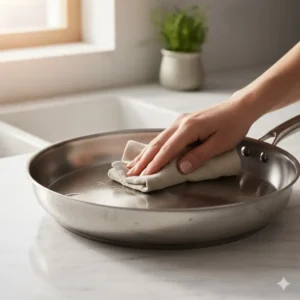
Immediate Cleaning: After cooking, let pans cool slightly (never shock hot stainless steel with cold water – thermal shock can cause warping). Warm water and dish soap handle most everyday cleaning.
Stuck-On Food: For stubborn residue, fill the pan with water, add a few drops of dish soap, and bring to a simmer for 5-10 minutes. The hot water loosens stuck-on food, making removal effortless.
Dishwasher Use: While most stainless steel is dishwasher safe, hand washing preserves the mirror finish longer. Dishwasher detergents can cause minor surface dulling over time, though they don’t affect performance.
Restoration and Deep Cleaning
Removing Discoloration:
Heat-related rainbow discoloration (heat tint) occurs naturally with stainless steel. It’s purely cosmetic and doesn’t affect performance. To remove:
✅ Make a paste with Bar Keeper’s Friend and water
✅ Apply in circular motions with a soft sponge
✅ Rinse thoroughly
✅ Dry completely
Removing Burnt-On Stains:
✅ Sprinkle baking soda generously on the stain
✅ Add enough water to create a paste
✅ Boil for 10-15 minutes
✅ Let cool and scrub with non-abrasive sponge
Polishing:
White vinegar restores shine to dull stainless steel. Apply with a soft cloth, working in the direction of the grain (if visible). Buff dry with a clean microfiber cloth.
Stainless Steel Maintenance Cost Comparison
| Maintenance Approach | Annual Cost | Time Investment | Results |
|---|---|---|---|
| Professional Services | $100-$200 | Minimal | Excellent |
| Premium Products | $30-$50 | Moderate | Excellent |
| DIY Natural Methods | $5-$10 | Higher | Good to Excellent |
| Standard Dish Soap Only | $5 | Low | Adequate |
I recommend a hybrid approach: routine cleaning with standard dish soap, occasional deep cleaning with Bar Keeper’s Friend (approximately $8 for a container lasting 2-3 years), and professional restoration every 5-10 years if desired.
Cooking Techniques: Maximizing Stainless Steel Performance
The difference between mediocre and exceptional results with stainless steel often comes down to technique. Let me share the methods I’ve refined over years of daily use.
Temperature Control Mastery
The Leidenfrost Effect: This physics phenomenon explains why water droplets dance on a hot pan. When your pan reaches approximately 375°F, the Leidenfrost point, water droplets form spherical beads that roll around instead of immediately evaporating. This indicates optimal temperature for adding oil and food.
Heat Level Guide:
- Low (1-3): Gentle simmering, melting butter, warming sauces
- Medium-Low (4): Eggs, delicate fish, reheating
- Medium (5-6): Most sautéing, vegetables, chicken breast
- Medium-High (7-8): Searing steaks, developing fond, quick stir-fries
- High (9-10): Boiling water, stir-frying in wok
Fat Selection and Application
The choice of cooking fat significantly impacts sticking and browning with stainless steel:
High Smoke Point Oils (450°F+):
✅ Avocado oil (520°F)
✅ Refined coconut oil (450°F)
✅ Clarified butter/ghee (485°F)
✅ Peanut oil (450°F)
Medium Smoke Point (350-400°F):
✅ Extra virgin olive oil (375°F)
✅ Butter (350°F)
✅ Unrefined coconut oil (350°F)
Apply oil after preheating but before reaching the Leidenfrost point. The oil should shimmer and flow easily but not smoke.
Building Fond and Deglazing
One of stainless steel’s greatest advantages is fond development – those brown bits stuck to the pan bottom that create incredible depth of flavor.
Fond Creation Process:
- Sear protein or vegetables over medium-high heat
- Don’t disturb food until it releases naturally
- Remove food when properly browned
- Observe brown bits adhering to pan surface
Deglazing Technique:
- Return pan to medium heat
- Add liquid (wine, broth, water)
- Scrape bottom with wooden spoon or spatula
- Dissolved fond becomes flavorful sauce base
According to the Culinary Institute of America, proper fond development and deglazing represents one of the fundamental techniques separating amateur from professional cooking.
Cooking Technique Comparison Chart
| Technique | Best Pan Type | Temperature | Typical Duration | Stainless Steel Advantage |
|---|---|---|---|---|
| Searing | Fry pan/Skillet | High | 3-5 minutes per side | Superior browning |
| Sautéing | Fry pan/Sauté pan | Medium-High | 5-10 minutes | Even heat distribution |
| Braising | Sauté pan/Dutch oven | Low (after browning) | 2-4 hours | Non-reactive with acids |
| Simmering | Saucepan | Low-Medium | 30+ minutes | Precise temperature control |
| Boiling | Stockpot | High | Variable | Large capacity |
| Pan Roasting | Oven-safe skillet | Medium then 400°F oven | 15-30 minutes | Stovetop to oven versatility |
Stainless Steel for Specific Cooking Applications
Different cooking tasks require different approaches with stainless steel. Let me break down some common scenarios and optimal techniques.
Eggs in Stainless Steel
Many people struggle with eggs in stainless steel, but with proper technique, they work beautifully:
For Scrambled Eggs:
✅ Preheat pan over medium-low heat for 3 minutes
✅ Add butter and let foam subside
✅ Add beaten eggs and immediately reduce to low
✅ Use silicone spatula to gently push curds
✅ Remove from heat while slightly underdone
For Fried Eggs:
✅ Preheat pan over medium-low heat
✅ Conduct water drop test (should gently sizzle, not immediately evaporate)
✅ Add generous oil or butter
✅ Crack egg into pan
✅ Don’t move until edges turn opaque
For Omelets:
✅ Preheat 8-inch pan over medium heat
✅ Add butter and swirl to coat
✅ Pour in beaten eggs
✅ Let set briefly, then gently push edges toward center
✅ Tilt pan to let uncooked egg flow to edges
Roasting Vegetables on Stainless Steel Baking Pans
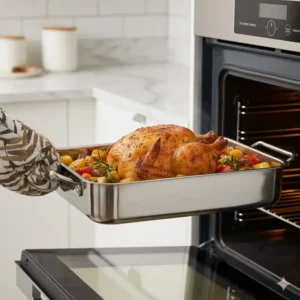
Heavy duty stainless steel baking pans excel at vegetable roasting when used correctly:
Preparation Steps:
- Preheat oven to 425-450°F with pan inside
- Cut vegetables uniformly for even cooking
- Toss with oil, salt, and seasonings
- Spread on preheated pan in single layer
- Roast without stirring for 15-20 minutes
- Flip and roast 10-15 minutes more
Vegetable Roasting Time Guide:
| Vegetable | Cut Size | Temperature | Total Time | Stir Frequency |
|---|---|---|---|---|
| Brussels Sprouts | Halved | 425°F | 25-30 minutes | Once at halfway |
| Carrots | 1-inch chunks | 425°F | 30-35 minutes | Once at halfway |
| Cauliflower | Florets | 450°F | 25-30 minutes | Once at halfway |
| Broccoli | Florets | 425°F | 20-25 minutes | Once at halfway |
| Potatoes | 1-inch cubes | 425°F | 35-40 minutes | Twice |
| Bell Peppers | 1-inch pieces | 425°F | 20-25 minutes | Once at halfway |
| Zucchini | 1-inch chunks | 425°F | 20-25 minutes | Once at halfway |
The high heat of preheated heavy duty stainless steel baking pans creates immediate searing contact, promoting caramelization and preventing sogginess.
Health and Safety Considerations
One aspect that often gets overlooked in cookware discussions is health and safety. Let me address the important considerations when choosing stainless steel products.
Is Stainless Steel Safe for Cooking?
According to the U.S. Food and Drug Administration, stainless steel is considered one of the safest cooking surfaces available. The passive chromium oxide layer prevents metal leaching into food, even when cooking acidic ingredients like tomatoes or lemon juice.
Metal Leaching Studies: Research published by the American Journal of Clinical Nutrition found that stainless steel cookware contributes negligible amounts of nickel and chromium to food – well below daily intake from typical diets. For perspective, a single serving of whole wheat bread contains more nickel than a meal prepared in stainless steel cookware.
Nickel Sensitivity: Individuals with severe nickel allergies may want to choose 18/0 stainless steel (400 series) rather than 18/10 varieties. The 18/0 designation indicates no nickel content, eliminating this concern entirely.
Environmental Impact
Sustainability matters when choosing kitchen equipment. Stainless steel offers significant environmental advantages:
Longevity: A quality heritage stainless steel cookware set lasting 20-30 years generates far less waste than non-stick pans requiring replacement every 2-3 years.
Recyclability: Stainless steel is 100% recyclable. At end of life, it can be melted down and reformed without quality degradation. The steel industry reports that over 80% of stainless steel products are recycled.
No Toxic Coatings: Unlike PFOA-containing non-stick coatings that raised health concerns in the past, stainless steel contains no synthetic coatings to degrade or release compounds during cooking.
Environmental Impact Comparison
| Material | Lifespan | Recyclable | Manufacturing Impact | End-of-Life |
|---|---|---|---|---|
| Stainless Steel | 20-30 years | 100% recyclable | Moderate energy use | Complete recycling |
| Aluminum | 5-10 years | 100% recyclable | High energy use | Complete recycling |
| Non-Stick Coated | 2-5 years | Limited | Moderate + coating waste | Coating to landfill |
| Cast Iron | Lifetime | 100% recyclable | Low energy use | Complete recycling |
| Ceramic | 3-7 years | Limited | High firing temperature | Mostly landfill |
Price vs. Performance: Finding Your Sweet Spot
Let’s talk money. Stainless steel products span an enormous price range, and understanding what you’re paying for helps make informed decisions.
Budget Options ($100-$300 for cookware sets)
Pros:
✅ Accessible entry point
✅ Adequate performance for occasional cooking
✅ Learns basics before investing heavily
Cons:
❌ Thinner construction
❌ Less even heating
❌ May have hotspots
❌ Shorter lifespan
Recommended Brands:
- Cuisinart Chef’s Classic
- Farberware Classic Series
- Amazon Basics Stainless Steel
Mid-Range Options ($300-$600 for cookware sets)
This sweet spot delivers excellent performance without premium pricing:
Pros:
✅ Multi-clad construction
✅ Even heat distribution
✅ Manufacturer warranties
✅ Professional-grade performance
Recommended Brands:
- Cuisinart MultiClad Pro
- Tramontina Tri-Ply Clad
- Calphalon Tri-Ply
- Duxtop Whole-Clad
I personally recommend this range for most home cooks. The performance-to-price ratio is unbeatable.
Premium Options ($600-$1,500+ for cookware sets)
Pros:
✅ Finest materials and construction
✅ Superior heat distribution
✅ Lifetime warranties
✅ Generational heirloom quality
✅ Made in USA (many brands)
Cons:
❌ Significant initial investment
❌ Requires proper technique to maximize
Recommended Brands:
- All-Clad D3 Tri-Ply
- All-Clad D5 Five-Ply
- Made In Cookware
- Heritage Steel
Price Performance Matrix
| Price Range | Construction Quality | Heat Performance | Durability (Years) | Best For |
|---|---|---|---|---|
| Budget ($100-$300) | Single or basic tri-ply | Fair to Good | 5-10 | Beginners, infrequent cooks |
| Mid-Range ($300-$600) | Quality tri-ply | Good to Excellent | 15-20 | Regular home cooks |
| Premium ($600-$1,000) | Premium tri-ply or five-ply | Excellent | 25-30+ | Serious home cooks |
| Ultra-Premium ($1,000+) | Five-ply, copper core | Superior | Lifetime | Professionals, collectors |
Common Mistakes and How to Avoid Them
Throughout my years working with stainless steel, I’ve identified recurring mistakes that frustrate home cooks. Let’s address them directly.
Mistake #1: Inadequate Preheating
The Problem: Adding food to cold or insufficiently heated stainless steel causes immediate sticking. The metal surface has microscopic pores that close as metal expands during heating.
The Solution: Always preheat 2-4 minutes over appropriate heat. Use the water drop test to verify proper temperature before adding oil and food.
Mistake #2: Moving Food Too Soon
The Problem: Food forms temporary protein bonds with stainless steel as it begins cooking. Attempting to flip or move food before these bonds release tears the protein structure, leaving food stuck and torn.
The Solution: Wait for natural release. When properly seared, food releases cleanly from the pan. If it resists, give it more time.
Mistake #3: Using Extreme Temperature Changes
The Problem: Plunging hot stainless steel into cold water causes thermal shock, potentially warping pans and compromising their flat cooking surface.
The Solution: Let pans cool 5-10 minutes before washing. For heavy duty stainless steel baking pans straight from the oven, place on heat-resistant surface and wait until comfortably warm to touch before cleaning.
Mistake #4: Neglecting Oil Selection
The Problem: Using low smoke point oils like extra virgin olive oil for high-heat cooking creates smoke, burnt flavor, and difficult cleanup.
The Solution: Match oil to cooking temperature. Save delicate oils for finishing and low-heat applications. Use refined high smoke point oils for searing and high-heat cooking.
Mistake #5: Overloading Pans
The Problem: Crowding food in pans creates steam, preventing proper browning and even cooking.
The Solution: Leave space between items. Food should occupy no more than 70% of pan surface area. Use multiple pans or cook in batches for better results.
Mistake #6: Expecting Non-Stick Performance
The Problem: Approaching stainless steel with non-stick expectations leads to frustration and disappointing results.
The Solution: Embrace stainless steel’s strengths – superior browning, fond development, and high-heat capability. Accept that some sticking is normal and manageable with proper technique.
Common Mistakes Impact Analysis
| Mistake | Frequency | Impact on Results | Fix Difficulty | Solution Time |
|---|---|---|---|---|
| Inadequate Preheating | Very High | Severe sticking | Easy | 2-4 minutes extra |
| Moving Food Too Soon | High | Torn food, sticking | Easy | Just wait longer |
| Thermal Shock | Medium | Pan warping | Medium | Plan cooling time |
| Wrong Oil Choice | Medium | Smoke, burnt taste | Easy | Choose appropriate oil |
| Overloading Pan | High | Poor browning | Easy | Use multiple pans |
| Non-Stick Expectations | Very High | Frustration | Easy | Adjust technique |
Specialized Stainless Steel Products
Beyond traditional cookware and bakeware, stainless steel excels in specialized kitchen applications worth considering.
Stainless Steel Mixing Bowls
I use stainless steel mixing bowls daily. They’re lighter than glass, won’t shatter like ceramic, and don’t retain odors like plastic. The non-reactive surface makes them perfect for marinating meats and mixing acidic ingredients.
Key Benefits:
✅ Double as improvised double boilers
✅ Nest efficiently for storage
✅ Dishwasher safe
✅ Won’t stain or absorb odors
✅ Can be chilled or placed in hot water
Stainless Steel Colanders and Strainers
These workhorses handle everything from pasta draining to vegetable washing to berry rinsing. Look for self-standing bases, comfortable handles, and adequate drainage holes.
Stainless Steel Kitchen Tools
Whisks, spatulas, ladles, and serving spoons made from stainless steel offer durability and hygiene advantages over plastic alternatives. They’re safe to use with hot foods and won’t melt or degrade.
The Future of Stainless Steel Cookware
Innovation continues in the stainless steel cookware industry. Let me share some emerging trends I’ve observed.
Smart Temperature Control
Some manufacturers now integrate temperature indicators directly into handles or cooking surfaces. These visual cues help home cooks achieve optimal preheating without guesswork.
Hybrid Constructions
New technologies combine stainless steel with ceramic, titanium, or diamond-enhanced surfaces. These hybrids attempt to merge stainless steel durability with enhanced non-stick properties.
Sustainability Initiatives
Leading manufacturers increasingly use recycled stainless steel and implement carbon-neutral manufacturing processes. All-Clad, for instance, now sources 50% recycled content for their stainless steel without compromising quality.
Direct-to-Consumer Models
Brands like Made In and Misen bypass traditional retail, offering premium quality at mid-range prices through online sales. This model democratizes access to high-quality stainless steel cookware.
🎯 Ready to Transform Your Cooking? Get Started Today! 🚀
Your culinary journey to better cooking starts with the right tools. The stainless steel products featured in this guide represent years of testing, research, and real-world cooking experience. Click on any highlighted product above to check current prices, read additional reviews, and make an informed purchase. Don’t let another day pass with subpar cookware holding back your culinary potential!
Conclusion
After exploring every aspect of stainless steel cookware and bakeware, let’s bring it all together. Choosing stainless steel means investing in durability, versatility, and performance that improves with proper technique.
For most home cooks, I recommend starting with a quality mid-range heritage stainless steel cookware set from brands like Cuisinart MultiClad Pro or Tramontina Tri-Ply Clad. These sets deliver exceptional performance at prices that won’t strain your budget. Complement your cookware with a few heavy duty stainless steel baking pans – having multiple sizes transforms your baking and roasting capabilities.
Remember these key principles:
Preheat Properly: Temperature control makes or breaks success with stainless steel. Take those extra 2-4 minutes to properly preheat your pans.
Be Patient: Let food release naturally rather than forcing it. This single adjustment solves 80% of sticking problems.
Embrace the Learning Curve: Stainless steel requires technique refinement, but the payoff – superior browning, incredible sauces, and lifetime durability – makes it worthwhile.
Maintain Your Investment: Regular cleaning and occasional deep cleaning with Bar Keeper’s Friend keeps your stainless steel looking and performing like new for decades.
The products I’ve recommended – from the premium All-Clad D3 Tri-Ply sets to the budget-friendly TeamFar baking sheets – represent the best options available in 2025. Each serves different needs and budgets while maintaining quality standards I personally endorse.
Whether you’re replacing worn-out non-stick pans, upgrading from aluminum bakeware, or building your first serious kitchen setup, stainless steel offers unmatched value over its lifetime. The initial investment might seem significant, but when amortized over 20-30 years of daily use, it becomes one of the most economical choices you can make.
FAQs
❓ What's the difference between 18/10 and 18/0 stainless steel for cookware?
✅ 18/10 stainless steel contains 18% chromium and 10% nickel, offering superior corrosion resistance and a brighter shine. 18/0 contains chromium but no nickel, making it magnetic for induction compatibility and suitable for those with nickel sensitivities. Both perform well for cooking, though 18/10 typically appears in premium cookware while 18/0 suits budget-friendly options...
❓ Are heavy duty stainless steel baking pans worth the extra cost?
✅ Yes, heavy duty stainless steel baking pans justify their higher price through longevity and performance. They resist warping at high temperatures, distribute heat more evenly, and last 15-20 years versus 3-5 years for aluminum alternatives. The per-use cost over their lifetime makes them economically smart, especially for frequent bakers who value consistent results...
❓ Can I use metal utensils on stainless steel cookware?
✅ Yes, stainless steel cookware is completely safe for metal utensils. The durable surface won't scratch or damage like non-stick coatings. However, using wooden or silicone utensils may reduce minor surface scratching over time and help maintain the mirror finish. Most chefs prefer metal utensils with stainless steel for their efficiency and heat resistance...
❓ How do I remove stubborn burnt-on stains from stainless steel pans?
✅ Boil water with baking soda in the affected pan for 10-15 minutes to loosen burnt residue. For tougher stains, Bar Keeper's Friend powder creates a paste that removes discoloration without scratching. Apply the paste, let sit briefly, then scrub with a non-abrasive sponge following the grain. Avoid steel wool on polished surfaces...
❓ Is a heritage stainless steel cookware set better than buying pieces individually?
✅ Heritage cookware sets typically offer 30-40% better value than buying identical pieces separately. Sets ensure matching construction quality across all pieces and include the essential items most cooks need. However, buying individual pieces allows customizing your collection to your specific cooking style and avoiding duplicates if you already own certain items...
Recommended for You
- Copper Cookware: 7 Best Sets That Transform Your Cooking
- Black friday stainless steel cookware: 7 Best Deals 2025
- 7 Best Stainless Steel Kitchen Wash Basin Options For Ultimate Performance in 2025
Disclaimer: This article contains affiliate links. If you purchase products through these links, we may earn a small commission at no additional cost to you.
✨ Found this helpful? Share it with your friends! 💬🤗