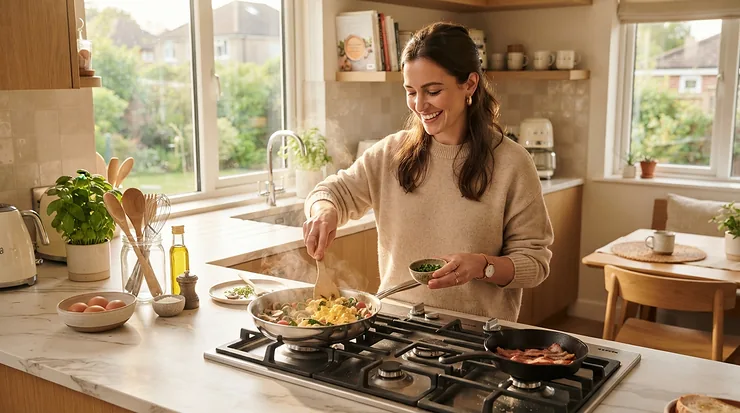
Preheating the skillet feels like the right first move, yet writers at The Takeout and Food Republic both point to it as the reason bacon comes out burnt in one spot and limp in another. Bacon fat holds the cold longer than the lean meat around it, so a scorching pan browns the surface before the fat has melted. Learning how to cook bacon well in 2027 therefore starts with gentle, even heat, and four methods deliver it: oven, skillet, broiler and microwave.
The timings below rest on three published kitchen tests (Food52, Apartment Therapy and Reviewed), USDA’s bacon guidance and a handful of owner threads. No strip was cooked for this guide, so treat every minute count as a range and let color overrule the clock.
Short answer: 400°F, one layer, first check at 12 minutes
For a hands-off batch, lay the strips in a single layer on a rimmed sheet and bake at 400°F. Recipe sites such as Evolving Table give 15 to 25 minutes depending on thickness, and Reviewed’s tester pulled crisp-but-bendable strips close to the 12-minute mark. Apartment Therapy’s parchment-lined pan needed about 18 minutes for regular-cut and 24 for thick-cut, after roughly 10 minutes of preheating.
Prefer the stovetop? Start the strips in a cold skillet over medium heat and expect 8 to 12 minutes. In a hurry, the microwave finishes in about 4 minutes, though the texture pays for it.
What you are actually cooking: thickness, cure and the pink-color question
Plain pork bacon is raw. USDA’s bacon guidance says to cook it until crisp, because its temperature is hard to measure and cured bacon can stay pink even after it reaches a safe temperature. The same page lists “fully cooked” and “ready to eat” versions separately, so read the label before you start.
Thickness shifts every timing in this guide. America’s Test Kitchen measured raw thick-cut strips at 3.1 to 4.5 millimeters and regular strips at 1.7 to 3 millimeters, and notes there is no industry standard for the term “thick-cut.” Two packages with the same label can behave differently.
One more USDA point shapes how dark to go. Well-done or burned bacon may contain more nitrosamines than lightly cooked bacon, and microwaved bacon contains less than fried. Aim for golden-brown and crisp, not black.
How to cook bacon: steps for each method
Any of the how to cook bacon steps below works with cold bacon straight from the refrigerator. Separate the strips first and keep them from overlapping, because The Art of Manliness warns that overlapping slices leave the covered parts uncooked.
How to cook bacon in the oven: the sheet-pan method
Set an oven rack in the middle and heat the oven to 400°F. Preheating adds about 10 minutes in both the Food52 and Apartment Therapy tests.
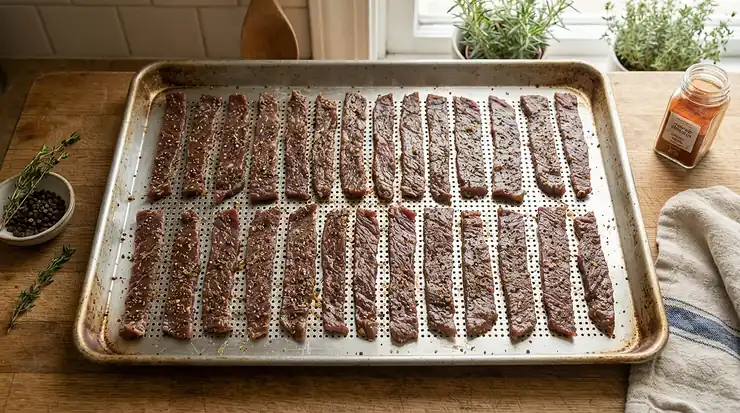
Line a rimmed sheet pan with parchment or foil. Optional: set a wire rack on top, which lifts the strips out of the grease.
Lay the bacon in one layer. Budget Bytes says the strips can sit close but should not overlap.
Bake and check at 12 minutes. Regular-cut usually finishes between 15 and 20 minutes, thick-cut closer to 20 to 25, according to Evolving Table.
Move the strips with tongs to a paper-towel-lined plate and pour the drippings into a heat-safe container.
Racks are contested. Apartment Therapy’s rack-over-towels batch gave the meatiest strips with the least shrinkage but took 24 minutes for regular-cut against 18 on parchment. A Discuss Cooking poster concluded the rack added nothing, and the author at Dishes and Dustbunnies reports very little difference with or without one. Treat a rack as optional.
For less spatter in the oven, Budget Bytes suggests laying a loose sheet of parchment over the bacon as it bakes.
Skillet: the cold-start method
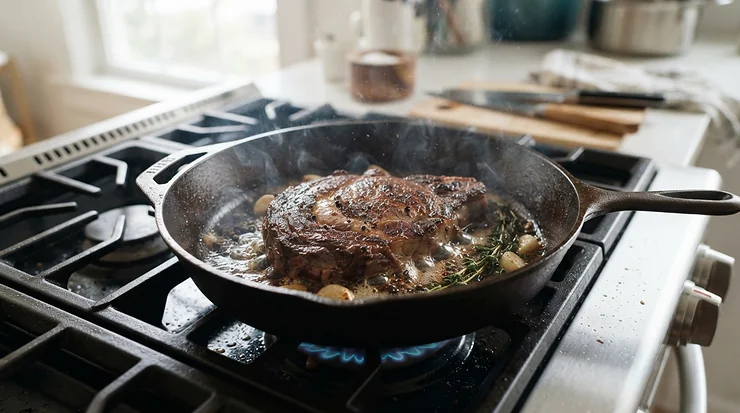
Lay the strips in a single layer in a cold skillet. Work in batches rather than crowding.
Turn the heat to medium or medium-low. Food52’s testers used medium; Apartment Therapy used moderate heat.
Flip and move the strips as they cook. Food52’s cast iron batch took about 12 minutes, while Apartment Therapy clocked cast iron at 8 minutes for regular-cut and 11 for thick-cut.
Drain on paper towels, then pour off the fat and keep it.
The Takeout explains the cold start as giving the fatty strips time to sweat gently, which also cuts splatter. Tasting Table adds that it prevents curling. Food52’s testers still reported heavy grease splatter from both cast iron and nonstick pans, and a screen helps (see the gear section below).
How to cook bacon under the broiler: close, hot, and watched
Move the rack so the strips will sit 3 to 4 inches from the heat, and switch the broiler to high. This distance comes from a University of Minnesota Extension instruction as relayed by MacMyths.
Spread the strips on a foil-lined pan, or on a broiler rack. Hip Hip Gourmet’s recipe notes that some readers reported parchment catching fire under the broiler, so foil is the safer liner.
Broil the first side for 2 to 3 minutes, until lightly browned, then flip.
Finish the second side while standing at the oven. The same MacMyths page cites a Whirlpool oven manual that lists 6 to 10 minutes total at four inches, so published totals vary.
This is the fastest oven route and the least forgiving one. Stay put.
Microwave: fastest, with a texture cost
Place the strips between layers of paper towels on a plate.
Cook on high. Apartment Therapy needed 4 to 4.5 minutes for regular-cut and 4.5 to 5.5 for thick-cut. Reviewed’s tester found that for ten slices about 3.5 minutes was best, with 3 minutes leaving raw spots and 4 minutes overcooked and brittle.
Blot, and use right away.
Microwave results depend on wattage and slice count, so start low and add time in short bursts. Food52’s testers called the result extremely crispy but possibly too crispy, and noted the fat could not be saved. Apartment Therapy added that the oven walls ended up with an oily film.
How to cook bacon: how long each method takes
Method
Setup
Regular-cut
Thick-cut
Source
Oven, parchment-lined sheet
400°F, about 10 min preheat
about 18 min
about 24 min
Apartment Therapy
Oven, rack over paper towels
400°F, same preheat
about 24 min
about 29 min
Apartment Therapy
Oven, bare sheet
400°F, no flipping
about 18 min
not tested
Food52
Oven, foil-lined sheet
400°F
first check near 12 min
not tested
Reviewed
Cast iron skillet
cold start, moderate heat
about 8 min
about 11 min
Apartment Therapy
Nonstick skillet
cold start, medium heat
about 10 min
about 10 min
Apartment Therapy
Broiler
high, 3 to 4 inches from heat
2 to 3 min first side, then flip
not given
University of Minnesota Extension, via MacMyths
Microwave
high, between paper towels
4 to 4.5 min
4.5 to 5.5 min
Apartment Therapy
The skillet wins on speed and the oven wins on attention: oven batches ran 18 to 29 minutes but needed almost no handling, while skillet batches finished in 8 to 12 minutes and needed flipping. The spread inside the oven rows is the reason for the 12-minute first check. Apartment Therapy’s full comparison also scored the parchment-lined sheet pan 10 out of 10, the cast iron skillet 8 and the microwave 6.
How to cook bacon for BLT sandwiches that do not tear apart
A BLT needs bacon crisp enough to snap and flat enough to lie across the bread. Experts disagree on thickness. Hilda Ysusi Salgado, culinary director at The Goddess & Grocer, told Mashed that thin-cut is the way to go because it crisps quickly, while a pitmaster quoted by Chowhound prefers thick slab bacon for its crunchy outside and chewy center. The Takeout sides with thin, warning that thick-cut or dry-cured bacon can be too chewy and risks pulling the fillings out with each bite.
Flatness has a method. The Takeout suggests sliding the strips between two sheets of parchment and setting them between two baking sheets, and Food Republic gives the same second-pan idea against curling. Food52’s tests point the same direction: the bare sheet pan batch stayed flatter than the parchment batch, which curled more.
How to cook bacon and eggs in one breakfast: bacon first, fat second
Cook the bacon first. Girls Can Grill explains that the drippings keep the eggs from sticking and add flavor. The Daily Meal suggests straining the fat before frying eggs, because leaving all of it in can leave them swimming. Fifteen Spatulas, a site that fries eggs in bacon grease, wants at least a quarter cup of fat, or enough to coat the bottom of the pan, if you are basting.
With oven bacon, pour a spoonful or two of the drippings into a skillet over medium-low and fry the eggs there. With skillet bacon, lift the strips onto towels, leave a thin film of fat and crack the eggs straight in. Food52’s testers advised keeping the fat either way.
Burnt edges, curling and soggy centers: where bacon goes wrong
Reviewed’s stovetop test showed the failure plainly. Without rendered fat to start, the first few pieces burned and the tester struggled to find a heat that avoided heavy splatter. Mashed describes the cold-meat-in-a-hot-pan result as gummy fat, and Food Republic as bacon that is burnt and undercooked at the same time. A cold start is the fix.
Timing is the second trap. One reader comment on the Budget Bytes oven recipe reports bacon completely burnt after 20 minutes at 400°F, which fits the 12-to-29-minute spread above. Ovens run hot, and thin strips go fast.
Two equipment mistakes come from owners. A poster in a QVC community thread warns against using the air fryer setting for oven bacon, saying the grease ended up on the oven floor instead of in the pan. And the parchment fires that Hip Hip Gourmet’s readers reported under the broiler are a reason to use foil there.
Water in the pan is the last one. Food52’s testers found the Cook’s Illustrated water method inconsistent and not recommended, and Apartment Therapy scored it 5 out of 10.
Leftover bacon: how long it keeps and how to warm it up
USDA gives raw bacon seven days in the refrigerator and up to four months in the freezer for best quality. Cooked leftovers last four to five days refrigerated or about a month frozen. The agency also warns against partly cooking raw bacon and refrigerating it to finish later: cook it fully before taking it off the heat. To warm cooked strips, microwave them on a paper towel for about 10 seconds each, or follow the package directions.
The pans and tools that match each step
Nothing in the method section requires special gear, and the recipe sites cited above cook bacon on a plain foil-lined sheet pan. These four items are tied to specific steps, and each has a limit worth knowing. Star ratings and review counts are left out because the mirrored retailer pages could not be matched to Amazon’s own. Prices below are ranges from retailer pages; check the current price on Amazon.com.
A bare aluminum sheet is the least exotic item here and the one the test evidence leans on hardest. Apartment Therapy’s top-scoring method was a parchment-lined sheet pan at 400°F that needed no flipping and no rinsing afterward, because folded parchment overhang caught the drippings. Nordic Ware’s customer service lists this half sheet at 17.9 by 12.9 by 1 inch outside, made of 20-gauge uncoated aluminum, with a general maximum of 500°F and the go-ahead to use it under the broiler. That last figure is what lets one pan serve both the oven and broiler steps.
Care is by hand. A ShopSavvy Q&A page says dishwashers leave aluminum with a gray residue, which affects looks rather than cooking. Single pans appear at roughly $12 to $21 on retailer pages, with two-packs sold as well. Food52’s testers saw bacon stick to a bare pan in a couple of spots, so plan on parchment or foil.
Nordic Ware Natural Aluminum Commercial Baker’s Half SheetSee current price, sizes and reviews on Amazon.
Two sources, two heat ceilings. Nordic Ware’s customer service tells Target shoppers that the half sheet with oven-safe nonstick grid tops out at 400°F, while a separate listing for a similar pan-and-rack set says broiler-safe to 500°F. The lower figure is the safer one to follow, which keeps this grid out of the broiler.
The set pairs the 17.9 by 12.9-inch pan with a steel grid whose cooking surface measures about 16.3 by 11.5 inches. The case for it is texture. Apartment Therapy’s rack-over-towels bake gave the meatiest strips with the least shrinkage, a 7 out of 10, yet the same tester said the rack needed hard scrubbing and the drippings were hard to save. On the Egghead Forum, one poster calls cleaning a rack a hassle, while another keeps a quarter-sheet pan and rack that both go into the dishwasher; for this nonstick grid, follow the maker’s care instructions before trusting the dishwasher. Retailer pages show roughly $23 to $32 for the set. Apartment Therapy’s rack batch ran 24 minutes for regular-cut against 18 on parchment.
Nordic Ware Naturals Half Sheet with Oven-Safe Nonstick GridSee current price, sizes and reviews on Amazon.
Food52’s testers liked cast iron’s flavor best of all six methods, partly crediting the char spots, then docked it for heavy splatter and slow cleanup. Apartment Therapy scored the cast iron skillet 8 out of 10, noting that the seasoned pan did not stick and that the drippings could be saved.
Lodge’s 12-inch skillet (model L10SK3) arrives pre-seasoned, with a helper handle, and is listed at about 12 inches across and 2 inches deep, made in the USA, hand wash only, and safe on induction, in the oven and over a campfire. One retailer lists it near 8 pounds. Mashed adds that each batch of bacon grease helps season cast iron. Retailer pages show around $26 to $30.
Pros:
Seasoned surface that kept bacon from sticking in Apartment Therapy’s test
Holds the rendered fat for eggs
Cons:
Heavy splatter and a slow cleanup in Food52’s test
Regular-cut strips curled in the same test
Lodge 12 Inch Cast Iron SkilletSee current price, sizes and reviews on Amazon.
Pan size sets the limit here: OXO’s splatter screen fits frying pans up to 13 inches wide, so it covers a 12-inch skillet with room to spare. The perforated stainless steel lets steam out, a raised surface clears pan handles, concentric rings center it, and the handle folds flat for storage. Retailers list it as dishwasher safe.
Opinion on the details is mixed. One buyer on a retailer listing says it is too big for most dishwashers unless laid flat and that stainless collects grease stains, and another wishes the handle locked open, even though one retailer’s description says it locks in place. A poster in a Tiger Droppings thread keeps a splatter screen on the skillet while a press flattens the strips. Retailer pages show roughly $23 to $30.
Compare size and temperature ratings on each listing before you order.
OXO Good Grips Splatter ScreenSee current price, sizes and reviews on Amazon.
Frozen strips, pink centers and water in the pan: quick answers
Can you cook bacon straight from the freezer?
Yes. USDA says bacon can be cooked from frozen and that safe thawing means the refrigerator, cold water or the microwave, never the counter. Frozen strips need extra minutes, so separate them as they soften and judge by color rather than the clock.
Is bacon safe to eat if it is still pink?
Color is not a reliable test. USDA notes that cured bacon can stay pink even after it reaches a safe temperature, so the advice is to cook it until crisp. Burned strips may carry more nitrosamines than lightly cooked ones, so aim for golden.
Do you have to flip bacon in the oven?
Not on a rack, according to Evolving Table, because air circulates under the strips; without one, the same site says to flip halfway. Apartment Therapy's parchment-lined pan batch also needed no flipping, and the strips stayed flat.
How long does cooked bacon last in the fridge?
USDA puts leftover cooked bacon at four to five days in the refrigerator or about a month in the freezer. To reheat, microwave strips on a paper towel for roughly ten seconds each. Raw bacon has its own clock: use it within seven days.
Does adding water to the pan make better bacon?
Two tests say no. Food52's testers found the Cook's Illustrated water method inconsistent, with brittle middles and undercooked ends, and did not recommend it at about 22 minutes. Apartment Therapy scored it 5 out of 10 and found a sticky film bonded to the pan.
Which method to pick tonight
Choose by what the next 20 minutes look like. If you are feeding several people or want to walk away, bake strips at 400°F on a parchment-lined Nordic Ware Natural Aluminum Commercial Baker’s Half Sheet and check at 12 minutes. If you want the pan flavor and the fat for eggs, start cold in the Lodge 12 Inch Cast Iron Skillet, keep the OXO Good Grips Splatter Screen on top, and flip as it browns. Reserve the broiler and microwave for days when speed matters more than texture. Whichever you use, how to cook bacon so it comes out evenly crisp comes down to one rule: let the fat melt first, pull the strips while they are golden, and drain them on towels before serving.
Disclaimer: This post contains affiliate links. As an Amazon Associate, we earn from qualifying purchases made through these links, at no additional cost to you.
Before you buy any pan or screen from this list, compare the exact model number on the listing with the one you read about here.
SmartCookLab is an independent buying-guide site for cookware, pots, pans, range hoods and kitchen appliances. Our editorial team compares products using manufacturer specifications, independent tests from specialist kitchen media, owner reports and retailer listings. We do not claim to have tested the products ourselves; see How We Choose Gear for our method.